
Energy
Oando opens ultra-modern petrol station in Lagos

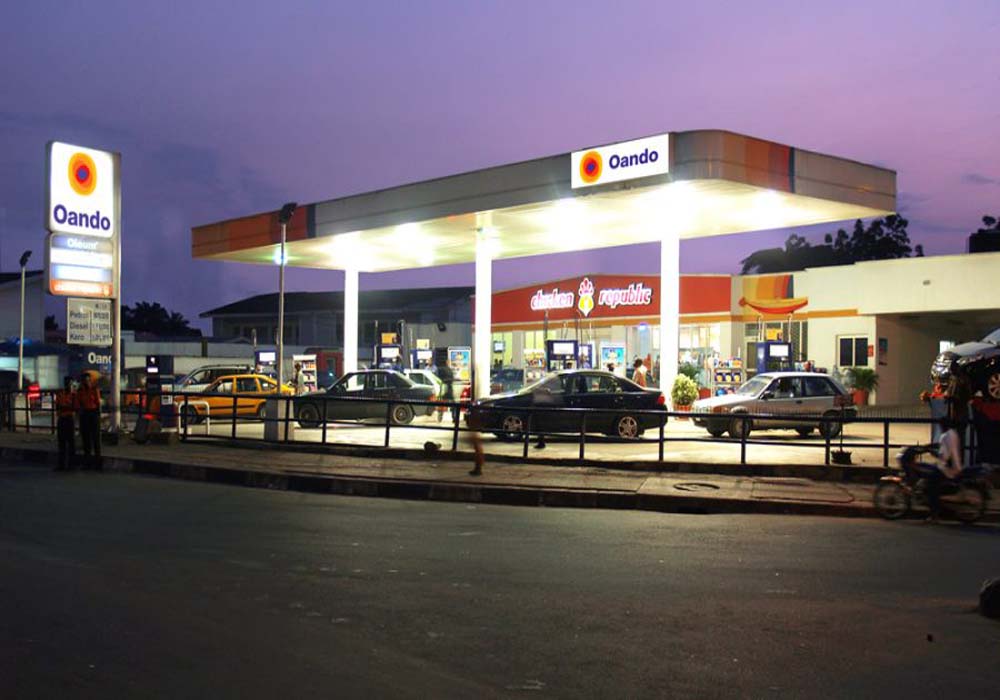
LAGOS-OANDO Marketing Limited, a subsidiary of Oando PLC has commissioned a new retail station at KM3, Orile, on the Lagos – Badagry expressway. The quality of the upgraded service station is consistent with the company’s commitment to lead in the area of fuel retailing in Nigeria, especially as they already lead the pack in most other areas of the energy value chain.
With a current fuel distribution capacity of over 2bn liters annually, Oando has retained its leading market share for fuel retailing and is poised to continue to expand leveraging its strong brand affinity, efficient distribution capacity, and entrepreneurial heritage.
Oando KM3, Orile Lagos as the station is called boasts of modern, contemporary, and eye-pleasing design with detailing infused to specifically meet the needs of customers and travelers on the Lagos-Badagry expressway axis. The station upgrade was timely executed to complement the new 10-lane super highway which is billed for completion in less than 24 months, specifically, the station is situated very close to one of the passenger train stations on the new highway.
Equipped to service over 2000 cars per day, the station’s arsenal of silent, ultra-fast premium fuel dispensing units has been specially configured to deliver accurate quantities at all times to ensure consumers receive value for money at every visit to the retail outlet. In addition to liquid fuels, Oando KM3 Orile will also retail Oando’s full basket of petroleum products including car maintenance services via its advanced auto-care center, which was also commissioned for immediate use by customers. Altogether KM3 Orile will deliver the most premium service to customers in the Ijora, Orile & Iganmu axis.
Speaking at the launch, the CEO of Oando Marketing Limited, Mr. Abayomi Awobokun expressed satisfaction with the quality of the station upgrade, its visual contribution to the neighborhood, the environmental considerations in its design, and most important the value it would bring to customers and travelers on the Lagos-Badagry super highway when it’s completed. In his remarks, he acknowledged the hospitality of the host community, led by the Ojora of Ijora, HRM Oba Abdulfatai Oyeyinka Aremu Aromire, ably represented at the station launch by a distinguished bench of high chiefs and nobles. Furthermore, he commented on the positive outcomes from the efforts of the State government as the entire area was already showing signs of increased commercial activities as a result of the huge investments in infrastructure in the area.
Speaking on the downstream Oil & Gas sector, Awobokun noted that “despite industry challenges, Oando Marketing Ltd is still able to compete favorably amongst its peers evidenced not only by its market share and current station footprint but also by its ability to continue upgrading and growing its network right across the country”.
Oando Marketing is also leading in the area of the development of blue collar workers, having so far trained over 1000 auto-mechanics via its Oleum Academy which commenced in 2014 to boost the competencies of mechanics all over Nigeria. In addition to class room and on-the-job training, the company also provides car diagnostic tools to graduating mechanics to boost their ability not only to ply their trade but to do so in a sustainable manner.
Similarly, Oando Marketing Ltd is the leading retailer of LPG in Nigeria, successfully distributing the product in every state of the country. In addition to the sales of LPG, it launched an LPG awareness campaign for teenagers” called “Teens Can Cook” in 2014, to educate and encourage the use of LPG for domestic use in schools, hospitals, restaurants and homes across the country. “The Teens Can Cook” initiative has successfully carried out cooking campaigns involving over 70 schools and at 10 NYSC camps across the country including Rivers & Kogi States. Oando intends to switch 5m homes to LPG for domestic use over a 5 year period from dirty fuels like coal and firewood.
The company recently announced the recapitalization of its downstream business through a joint venture arrangement consisting of renowned international firms with experience and proven track record in raising the standards in technology and the Oil and gas downstream sectors. Oando Marketing boasts of businesses and operations in key West African countries including Ghana and Togo.
Led by energetic and dynamic leadership and guided by international processes in operational standards and service offerings, Oando Marketing is poised to enhance its leadership as Nigeria’s premier downstream company and ultimately revolutionize the way the business is run on the African continent.



In a confirmation of expectations that more policy adjustments will not occur until 2027, OPEC+ oil-producing countries have voted to keep December production targets steady.
The OPEC+ alliance, yesterday, agreed in principle to keep its combined December oil output targets unchanged at 30.9 million barrels per day (bpd), with Saudi Arabia’s individual target held at 10.5 million bpd.
The resolution was passed at a virtual meeting attended by seven core OPEC+ members- Saudi Arabia, Russia, Iraq, Kuwait, Algeria, Kazakhstan and Oman.
This is as the group continues to struggle with export disruptions from the Middle East crisis, while Gulf members have been boosting exports that have been disrupted for months by the conflict, most are still pumping well below their targets.
OPEC+ comprises the Organisation of the Petroleum Exporting Countries (OPEC) and allies including Russia. Only the seven members — plus the United Arab Emirates (UAE) until it quit OPEC in May — have been involved in monthly output decisions in recent years.
READ ALSO: Gas Infrastructure Fund Sets Terms for Indigenous Access to Funding
All members of the 21-country group are due to meet on November 29, when it will decide 2027 quotas.
“Today’s decision was the easy one,” said Jorge Leon, an analyst at Rystad. “The much more important test comes at the November 29 ministerial meeting, when OPEC+ will decide its 2027 production framework.”
Oil prices jumped more than two per cent on Friday, with Brent crude settling at almost $118 a barrel, the highest since April, as traders braced for a potential escalation in the Iran war after the US midterm elections.
“OPEC+ faces an extremely difficult call for 2027,” Leon added. “The group has to plan around huge uncertainty over the US-Iran war, the pace of recovery through the Strait of Hormuz, and the size of the surplus that could emerge once disrupted barrels return.”
The seven members have been boosting output targets for much of 2026 and in September completed the phased rollback of a 1.65 million-barrel-per-day supply cut first agreed in 2023. At earlier meetings, they kept the targets steady for October and November.
OPEC+ still has one more layer of production cuts of about two million bpd covering most members through the end of 2026.
The group needs to complete a review of members’ production capacity during the fourth quarter before setting the 2027 baselines that will determine future quotas and shape plans to unwind those cuts, sources have said.
The Iran war has disrupted projects to expand capacity across the Middle East, throwing estimates of future production potential into uncertainty, Reuters reported in October. As a result, the review is now expected to be completed by mid-November.
With a view to accelerating infrastructure development and reducing operating costs, the U.S. Department of Transportation is contemplating a new set of safety regulations for liquefied natural gas facilities.
This is coming as American exporters prepare for another major expansion in global natural gas markets.
It was gathered that the proposal, issued by the Pipeline and Hazardous Materials Safety Administration (PHMSA), would modernize federal LNG safety requirements by incorporating standards developed by the National Fire Protection Association.
READ ALSO: Investors Embrace DPRP IPO Globally, 120 Countries, 54 African Nations
The changes are to address facility location, engineering, construction, operations, and maintenance, with greater flexibility to adopt newer technologies.
Transportation Secretary, Sean Duffy estimates that the updated framework could save LNG operators approximately $100 million annually while maintaining safety protections. The projected savings are an agency estimate, and the proposal has not yet become a final regulation.
The initiative comes as the United States strengthens its position as the world’s largest LNG exporter. American export capacity is expected to increase by approximately 100 million metric tons annually by the end of the decade, supported by projects already under development and additional planned investments.
Global LNG demand has also become more sensitive to geopolitical disruptions. Interruptions to Middle Eastern gas shipments associated with the conflict involving Iran have encouraged international buyers to evaluate alternative suppliers and diversify long-term procurement arrangements.
U.S. LNG developers have responded with additional investment commitments. Projects representing more than 50 million metric tons of annual capacity have reached final investment decisions since the beginning of 2025.
Major exporters, including Cheniere Energy and Venture Global, are pursuing additional development opportunities as federal policy places greater emphasis on expanding domestic energy infrastructure.
However, regulatory modernization does not eliminate the financial or operational challenges associated with LNG construction.
Developers must still secure the Federal Energy Regulatory Commission (FERC) approvals, complete environmental reviews, arrange financing, and address potential legal challenges. Pipeline connections, specialized equipment availability, construction costs, and long-term customer contracts also influence project schedules.
Delfin LNG, which is developing a floating export facility, illustrates the importance of infrastructure safety approvals. Its associated pipeline has not received publicly confirmed PHMSA clearance to resume operations following an explosion earlier this year.
Separately, FERC has proposed a streamlined authorization framework for certain modifications and expansions at existing LNG facilities, including activities that could qualify for automatic approval or shortened review periods.
For energy investors, the combined regulatory initiatives could improve development visibility and reduce some costs, although their financial impact will depend on final requirements and individual project circumstances.
Additional LNG export capacity could support demand for U.S. natural gas production, particularly from major producing regions connected to Gulf Coast terminals.
Midstream operators, engineering companies, compression equipment manufacturers, and construction contractors could also benefit from continued infrastructure investment.
At the same time, greater export demand may increase domestic natural gas price sensitivity to international markets, creating different implications for producers, utilities, and industrial consumers.
Investors will be monitoring the final PHMSA regulations, FERC permitting developments, LNG project financing decisions, and the pace at which proposed export capacity enters commercial service.
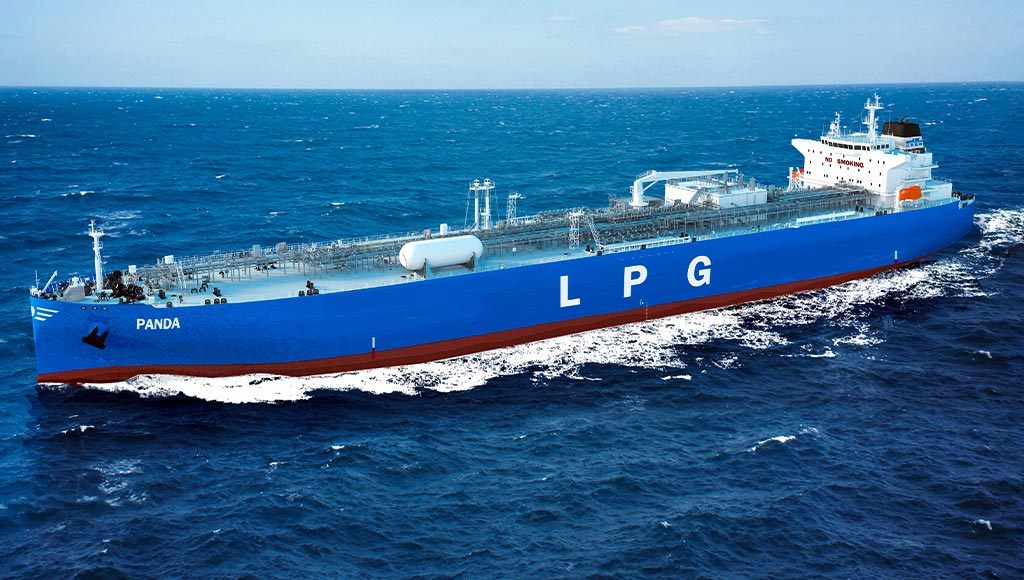
The Nigerian Association of Liquefied Petroleum Gas Marketers (NALPGAM) has urged operators in Nigeria’s liquefied petroleum gas (LPG) industry to strengthen safety standards, improve regulatory compliance and adopt digital technologies to reduce operational losses and drive business growth.
The association said improved operational practices would help protect investments, enhance efficiency, build consumer confidence and support the sustainable expansion of C.
The call followed its 2026 webinar, themed “Downstream LPG Operational Excellence and Compliance,” which brought together industry operators, regulators and other stakeholders to discuss safety risks, market volatility, operational inefficiencies and regulatory requirements in the downstream LPG sector.
Speaking at the event, NALPGAM National President, Edu Inyang, said the industry’s long-term growth would depend on more than increased consumption and supply volumes, stressing the need to embed safety and operational efficiency in everyday business practices.
“The future of Nigeria’s LPG industry cannot be achieved by increasing volumes alone. We must grow safely, responsibly, efficiently and sustainably. Safety is not an occasional campaign; it must become a continuous industry culture,” he said.
READ ALSO: Tinubu Promises to Boost Local Production with NNPC Refineries
A major outcome of the webinar was a proposal for a NALPGAM Standard of Operational Excellence, anchored on four principles: safe and well-maintained facilities, competent and adequately trained operators, regulatory-compliant processes, and consumer protection.
Participants urged operators to integrate safety into routine operations, strengthen preventive maintenance and comply with licensing and incident-reporting requirements.
They also called for an end to unsafe practices, including unauthorised propane blending and illegal decanting, warning that such activities could expose businesses and consumers to avoidable risks.
Inyang said compliance should be viewed as a means of strengthening business performance rather than merely fulfilling regulatory obligations.
“Compliance is not merely a regulatory burden; it is a business advantage. Well-managed LPG operations reduce accidents, improve efficiency, protect investments and strengthen public confidence in our industry,” he said.
The webinar also highlighted the role of digital technologies in improving operational efficiency and accountability across the LPG value chain.
Participants identified smart filling systems, automated tank gauges, load cells, flow meters and vehicle-tracking systems as practical tools for monitoring product movements, reducing losses and improving inventory management.
Wider adoption of these technologies, they said, could help operators strengthen operational controls, minimise discrepancies and improve the reliability of LPG distribution.
The discussions come as Nigeria seeks to expand LPG consumption to approximately five million tonnes annually by 2030, a target that will require increased investment, stronger distribution networks and wider consumer access.
Stakeholders called for greater industry participation in the Decade of Gas LPG penetration programme, alongside stronger collaboration to expand access, improve cylinder traceability and promote certified local manufacturing.
The NALPGAM also urged regulators and programme coordinators to involve its members more actively in implementing LPG penetration and cylinder recirculation initiatives.
According to the association, its members’ nationwide presence and proximity to consumers could help improve the reach and effectiveness of programmes designed to increase LPG adoption.
Reiterating the association’s position, Inyang said the industry must establish clear operational standards that protect consumers while supporting efficient and sustainable business practices.
“Our aspiration is clear: every LPG facility must be safe and properly maintained, every operator competent and adequately trained, every process compliant, and every customer protected. This is the standard of operational excellence we must collectively pursue,” he said.
The NALPGAM reaffirmed its commitment to working with government agencies, regulators and industry stakeholders to develop a safer, more efficient and competitive LPG market.
The association maintained that embedding safety, strengthening compliance and deploying appropriate technologies would be critical to improving operational performance and supporting the long-term growth of Nigeria’s LPG industry.






Shettima Heads to Ebonyi for APC Presidential Campaign Rally
Flamingos Return To Abuja After Historic U-17 World Cup Triumph

FCT Police Chief Inspects Worship Centres, Commends Residents for Peaceful Conduct
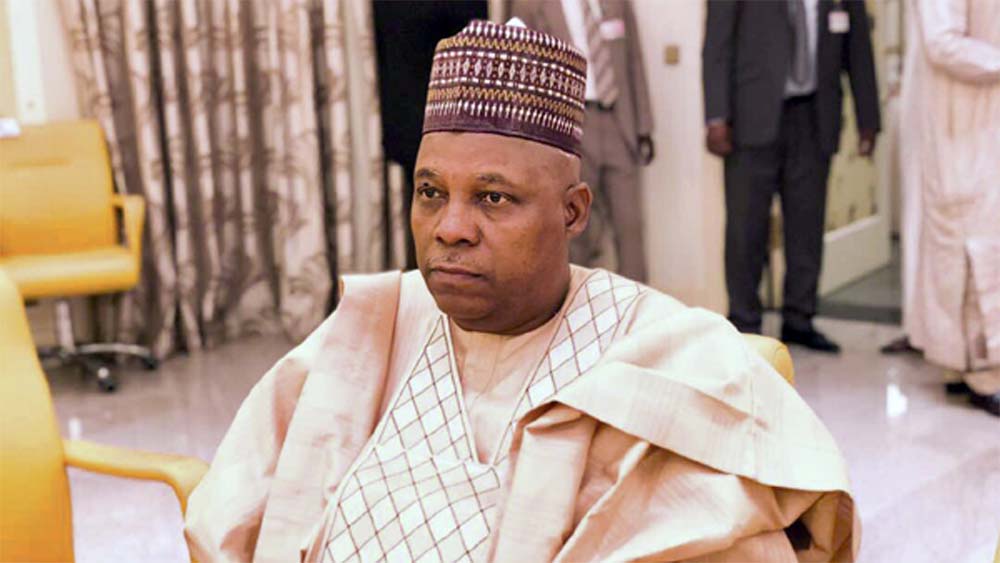
2027: Shettima Arrives in Uyo for APC Presidential Campaign Rally

NDC Warns Judiciary Against Turning Courts Into Tools for Political Opposition

Elohor Aiboni Honoured with DTN@100 Changemaker Award

Trump’s Family Unveils New Cryptocurrency Platform

Senate Denies Receiving Petitions Against Tinubu’s Ambassadorial Nominees

Dangote Cement Lights Up Benue Host Communities With CSR Initiatives

Reps Recommend 3-year Jail Term For Aviation minister

Tems Sets New Record On Billboard Hot 100 Chart

ysrzrv
a6td7i
l1jv7x
x3djse
Hey there! I know this is somewhat off topic but I was wondering if you knew where I could get a captcha plugin for my comment form? I’m using the same blog platform as yours and I’m having trouble finding one? Thanks a lot!
usib5q
8jo4pt
m7gg0q
7gprjf
Can I just say what a reduction to find someone who actually knows what theyre talking about on the internet. You definitely know find out how to bring a difficulty to light and make it important. More individuals have to learn this and understand this facet of the story. I cant imagine youre not more common since you positively have the gift.
ypdszw
oe1gt2
eut26f
s5wn9q
gb2nh1
xj0jj6
I have been surfing online more than 3 hours today, yet I never found any interesting article like yours. It’s pretty worth enough for me. Personally, if all web owners and bloggers made good content as you did, the net will be a lot more useful than ever before.
I just couldn’t depart your web site prior to suggesting that I really enjoyed the usual information a person supply for your visitors? Is going to be again ceaselessly to check out new posts
Hello! Do you know if they make any plugins to safeguard against hackers? I’m kinda paranoid about losing everything I’ve worked hard on. Any suggestions?
Just a smiling visitor here to share the love (:, btw great pattern. “Reading well is one of the great pleasures that solitude can afford you.” by Harold Bloom.
Great write-up, I am regular visitor of one’s blog, maintain up the excellent operate, and It is going to be a regular visitor for a long time.
I am curious to find out what blog system you have been utilizing? I’m experiencing some minor security problems with my latest blog and I’d like to find something more risk-free. Do you have any solutions?
The other day, while I was at work, my sister stole my iPad and tested to see if it can survive a forty foot drop, just so she can be a youtube sensation. My apple ipad is now destroyed and she has 83 views. I know this is entirely off topic but I had to share it with someone!
Good info. Lucky me I reach on your website by accident, I bookmarked it.
I would like to thank you for the efforts you have put in writing this site. I’m hoping the same high-grade website post from you in the upcoming as well. Actually your creative writing skills has encouraged me to get my own site now. Really the blogging is spreading its wings fast. Your write up is a good example of it.