
Energy
Shell launches Nigeria campaign on energy efficiency

Yemie ADEOYE
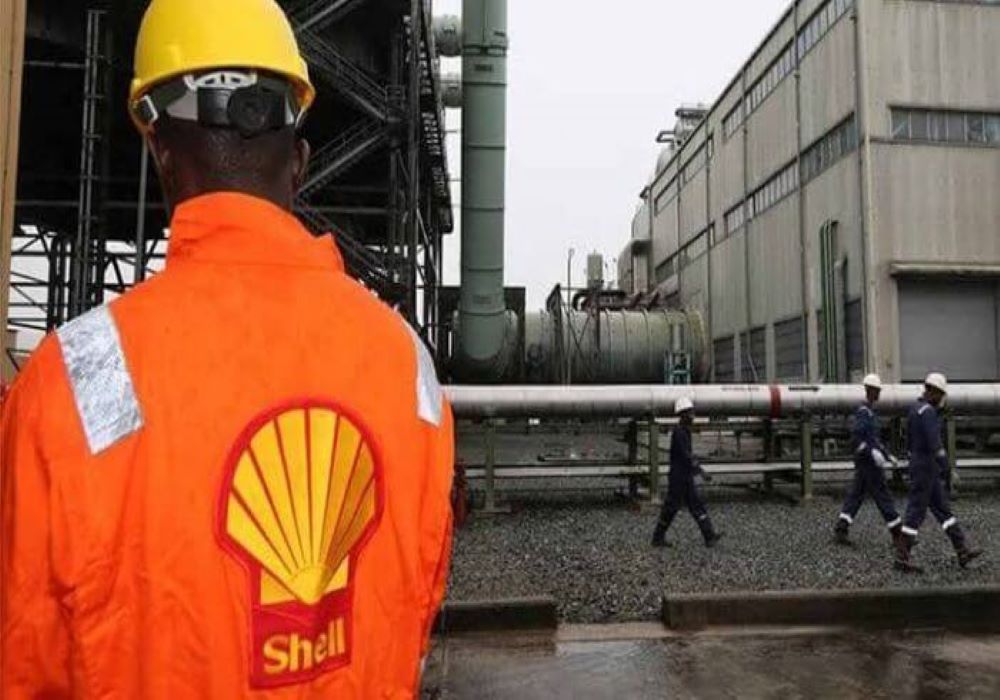
LAGOS, Nigeria- AS part of a global effort to encourage debate on how a rapidly expanding world population can meet its energy needs Shell has announced the launching of a major public service campaign in Nigeria on Tuesday, 31st May 2016.
Using traditional and social media advertising and other targeted activities, the 2016 campaign, christened #makethefuture, follows from the ‘Let’s Go’ outreach and seeks to promote advocacy and partnership for Bright Energy Ideas as part of Shell’s thought leadership on the Future of Energy. The primary target of the campaign is the Energy Engaged Millennials (aged roughly between 18 and 34) who are expected to lead the debate on energy efficiency.
“The campaign is an important contribution to the debate on the future of energy, especially in Nigeria,” said Osagie Okunbor, Managing Director of The Shell Petroleum Development Company of Nigeria Ltd (SPDC) and Country Chair, of Shell Companies in Nigeria. “Like everyone else, we are keen to see how a growing population will provide for its energy needs. Studies show that energy use has increased globally at the same time that we face the challenges of climate change and the reduction of CO2 emissions. The campaign, therefore, seeks to challenge assumptions and spark imaginative thinking on how to make today’s energy go further and to find cleaner energy for the future.”
The campaign starts with advertising on print, electronic and online media in the six geopolitical zones in Nigeria. A key feature is a build-up from the kinetic football pitch built by Shell at the Federal College of Education, Akoka, Lagos.
The pitch is powered by a combination of player activity and solar energy and is the first of its type in Africa, and second only to Brazil globally. It was launched in Lagos in November 2015 as a signpost for Bright Energy Ideas thinking among Nigerian youth, along with their counterparts worldwide. Akon, an international music star partnered with Shell for the launch in line with his vision of powering Africa.
As part of the campaign, there will be simultaneous football matches in Lagos, London, and Brazil which will be played on the pitches on June 30, 2016, in a bid to further arouse public awareness of the bright energy ideas. The campaign which also holds in several other countries including the United States, United Kingdom, China, and Brazil, ends in August 2016, but Shell hopes that the resultant discussions and debates will lead to ideas that contribute to sustainable solutions to the global energy challenge.
In 2014, Shell commissioned a “Future of Energy Survey” which revealed that more than four out of five Nigerian respondents were interested in the topic of energy, with reliable electricity ranking alongside employment and job security as their most important issue of concern. Shell has conducted Future of Energy surveys in numerous countries since 2013 in an attempt to obtain a better understanding of the aspirations and hopes of people with regard to energy and related development themes.




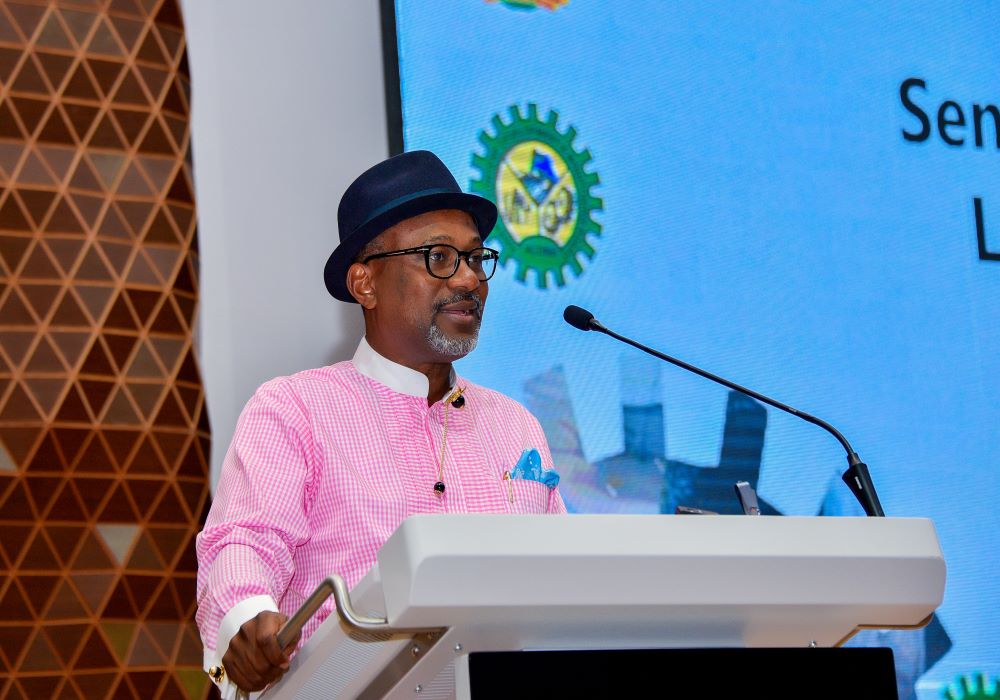


For the first time in 20 years, Nigeria has recorded 100 percent availability of its major pipelines.
According to the Nigerian National Petroleum Company Limited (NNPC Ltd) the development is predicated on the implementation of an integrated pipeline security framework involving security agencies, pipeline operators and host communities.
The Group Chief Executive Officer of NNPC Ltd, Bayo Ojulari, disclosed this at the 2026 Nigeria International Pipelines Technology and Security Conference (NIPITECS 2026) in Abuja.
READ ALSO: Shell Commends Oil Industry Reforms as Key to Unlocking More Barrels
The two-day event was organised by the Pipelines Professionals Association of Nigeria (PLAN) under the theme: “Financing the Future: Unlocking Capital for Resilient Pipeline Infrastructure in Nigeria.”
Ojulari, who was represented by the Head of NNPC Gas, Audu Ibrahim, said pipeline availability had remained between 95 and 100 percent over the preceding 18 months, attributing the improvement to the security framework coordinated by the Office of the National Security Adviser, alongside enhanced surveillance and community engagement.
He said the improved security situation had contributed to increased crude oil production, which rose to 1.71 million barrels per day, the highest level recorded in five years.
The NNPC Ltd boss also disclosed that recovery across Nigeria’s five crude oil terminals averaged 98 percent between April 2025 and May 2026, reflecting improved operational efficiency across the country’s oil infrastructure.
According to him, the progress recorded in pipeline security and availability underscores the importance of sustained collaboration among government agencies, industry operators and host communities in protecting critical national energy assets.
On gas infrastructure development, Ojulari said Nigeria’s gas production had reached 7.5 billion standard cubic feet per day, with the government targeting 10 billion standard cubic feet daily by 2027 and 12 billion by 2030.
He said the targets were backed by Nigeria’s estimated 215 trillion cubic feet of gas reserves, the Petroleum Industry Act (PIA), the Decade of Gas Framework and the Gas Master Plan.
Ojulari further disclosed that the NNPC Ltd had signed gas sales and purchase agreements covering 1.29 billion standard cubic feet per day for long-term supply and 750 million standard cubic feet per day for domestic industrial use.
He said the agreements represented more than $20 billion in associated investments, adding that reliable pipeline infrastructure remained critical to translating the country’s gas resources into electricity, industrial development and economic growth.
On major gas transportation projects, he said the 640-kilometre Ajaokuta-Kaduna-Kano (AKK) gas pipeline had reached about 95 per cent completion, with gas delivery to Abuja expected before the end of 2026, followed by Kaduna and Kano.
The 40-inch pipeline, valued at approximately $2.8 billion, is designed to transport up to 2.2 billion standard cubic feet of gas daily to support power generation, fertiliser production and manufacturing.
He also highlighted progress on the 130-kilometre Obiafu-Obrikom-Oben (OB3) gas pipeline, designed to transport up to two billion standard cubic feet of gas daily.
According to him, the NNPC Ltd completed the technically challenging Niger River crossing on April 3, 2026, using horizontal directional drilling technology, while pre-commissioning was completed in August.
Ojulari said the project would strengthen connectivity across Nigeria’s eastern and western gas networks and improve the country’s overall gas transportation capacity.
He stressed that sustained investment in pipeline infrastructure, technology and security would be essential to achieving Nigeria’s energy ambitions.
Meanwhile, the President of PLAN, Engineer Ngozi Adeleke, called for increased investment, stronger collaboration and the deployment of advanced technology to strengthen the country’s pipeline infrastructure.
Adeleke said pipelines remained the backbone of the energy value chain, connecting producing fields to processing facilities, power plants, industrial centres, export terminals and consumers.
She said the association would continue to promote professionalism, operational excellence, safety, integrity and capacity development across the pipeline industry.
According to her, PLAN would also sustain its advocacy for policies and practices that encourage local and international investment in critical pipeline infrastructure.
She urged operators, financiers, regulators, technology companies, service providers, academia and host communities to work together to develop practical solutions to the sector’s financing, security and operational challenges.
Adeleke said the association would use the conference as a platform to foster partnerships, stimulate innovation and encourage knowledge sharing capable of advancing Nigeria’s pipeline ecosystem.

The Senate has confirmed the appointments of six Executive Directors of the Nigerian Midstream and Downstream Petroleum Regulatory Authority (NMDPRA).
The confirmation followed the consideration and adoption of a report by the Senate Committees on Petroleum Resources (Downstream) and Petroleum Resources (Gas), presented by Senator Suleiman Kawu (Kano South), on Tuesday.
Those confirmed for reappointment are Abiodun Adeniji, Executive Director, Finance and Accounts; Ogbugo Ukoha, Executive Director, Distribution Systems, Storage and Retailing Infrastructure; and Dr Mustapha Lamorde, Executive Director, Health, Safety, Environment and Community.
READ ALSO: Atiku Accuses Tinubu of Seeking Plateau’s Forgiveness Only for 2027 Votes
The three nominees approved for new appointments are Mobolaji Musa, Executive Director, Hydrocarbon Processing Plants, Installation and Partnership; Ogechukwu Modie, Executive Director, Economic Regulation and Strategic Planning; and Said Abutalib, Executive Director, Corporate Services and Administration.
The confirmation followed a request by President Bola Tinubu to the Senate to screen and confirm the appointments of the executive directors and the Secretary of the NMDPRA Board.
Tinubu’s request was conveyed in a letter addressed to Senate President Godswill Akpabio and read during plenary last week.
The sum of $1.5 billion was raised to finance the Ajaokuta-Kaduna-Kano (AKK) Gas Pipeline Project, on the basis of the projected throughput from the facility.
The Nigerian National Petroleum Company Limited (NNPC Ltd) made the disclosure, as the state oil major moves towards completing the 614-kilometre infrastructure designed to expand gas supply across northern Nigeria.
Group Chief Executive Officer of the NNPC Ltd, Bashir Ojulari, stated this in an interview with the News Agency of Nigeria (NAN) in Abuja at the weekend, explaining that the financing was secured solely on the basis of anticipated gas transportation volumes through the pipeline.
According to Ojulari, the mainline section of the project had been completed, with overall execution reaching 95 percent, while the outstanding 5 percent involved completing some stations and connecting the pipeline to end-users.
READ ALSO: Axxela Expands Ogun Gas Network with New 17km Pipeline
He said the company was targeting the delivery of gas to Abuja before the end of 2026, with Kaduna and Kano expected to receive supplies in 2027.
“The AKK gas pipeline, all the way from Ajaokuta, Kaduna to Kano, the main pipeline has been completed. The remaining 5 percent has to do with some of the stations where we need to then link offtakes from the main pipeline to users.
“We are hoping that before the end of the year, we will get the gas to Abuja, which is the first step, and by 2027 we will get the gas to Kaduna and Kano,” Ojulari said.
The $1.5 billion financing is significant as it demonstrates the potential of the country’s gas transportation infrastructure to attract funding based on projected commercial flows, rather than relying exclusively on conventional government-backed financing.
Ojulari said the pipeline would support power generation, factories, data centres and industrial hubs, while also improving the availability of Compressed Natural Gas (CNG) across the northern region.
He explained that the completion of the mainline would make it easier to extend gas supply to additional locations, reducing the difficulty and cost associated with transporting gas from southern Nigeria to the North.
“We already solved the first line because we now have the Abuja power plant. As we move north and we build those connections, the CNG availability will increase phenomenally.
“But keep in mind that we still then have to go towards Maiduguri and Sokoto, right? So there’ll be more work to be done, but it’s now much easier than just taking gas from all the way from Port Harcourt to those locations,” he added.
The NNPC Ltd chief explained that although the main pipeline had been completed, additional infrastructure would be required to extend distribution to other northern locations, particularly Maiduguri and Sokoto.
The AKK project is a 40-inch, 614-kilometre pipeline system running from Ajaokuta in Kogi State to Kano, with associated intermediate and terminal gas facilities and other equipment designed to transport natural gas to industrial and other off-takers.
Its completion is expected to expand access to domestic gas, support electricity generation and provide feedstock for industries, while opening up opportunities for greater CNG penetration in northern Nigeria.






Drug Abuse Fuels Criminal Activities, NDLEA Commander Warns During EFCC Visit
COAS Commissions 20 Transit Flats, Modern Officers’ Mess in Bauchi

Plateau Killings: Peter Obi Questions Intelligence Failure After 261 Deaths in Two Weeks

NNPC Ltd Declares 100% Pipeline Availability for First Time in 2 Decades

Five Key Considerations When Choosing Nigeria’s President in 2027

Verdant Capital Wins Two Africa Global Funds Awards

Trump’s Family Unveils New Cryptocurrency Platform
Senate Denies Receiving Petitions Against Tinubu’s Ambassadorial Nominees

Dangote Cement Lights Up Benue Host Communities With CSR Initiatives

Reps Recommend 3-year Jail Term For Aviation minister

Tems Sets New Record On Billboard Hot 100 Chart
