
NEWS
2023: Governors Contributing To Political Violence – IGP

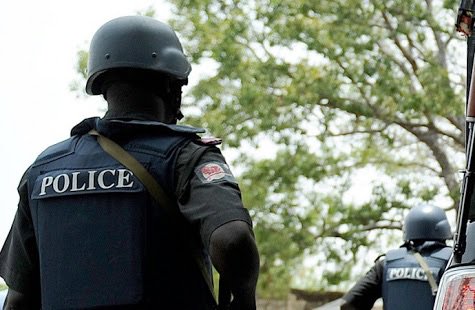
Usman Baba, the Inspector-General of Police (IGP), has accused some state governors of contributing to the rise in political violence in the nation.
This was said by Mr. Baba on Thursday in Abuja during a meeting with the heads of political parties and other stakeholders.
In a recent meeting of the Inter-Agency Consultative Committee on Electoral Security (ICCES), Babagana Monguno, the national security adviser, revealed that 52 instances of electoral violence had occurred in 22 states in the country during that month.
According to Mr. Monguno, President Muhammadu Buhari has authorized the security services to take decisive action against anyone or any organization attempting to thwart the peaceful conduct of the general election.
Mr. Baba stated on Thursday that the conference was held to educate the leadership of the political parties on the rising trend of political violence and to present a united front in tackling the concerns.
“We have been receiving reports of some state governors who encourage political thugs.
“They use sub-national security outfits under their control to disrupt seamless and statutorily guaranteed campaign activities of parties or candidates with whom they hold opposing political views.
“In so doing, they deploy their powers and influence to either prevent the mounting of campaign billboards or pull them down.
“They also deny political opponents of spaces to undertake their campaigns or peaceful political congregations in contravention of the provisions of the Electoral Act 2022 (As amended),” he said.
The IGP attributed the majority of violent occurrences to political extremism, false information, intolerance, incorrect political orientation, hate speech, incitement, and strategic actors’ desperation.
He claims that these individuals typically mislead their party supporters, equip them, refocus them, and encourage them to use threats, violence, and other illegal tactics to thwart rival political parties.
According to him, political violence in any way, shape, or expression is illegal under the country’s current criminal legislation as well as the election act.
According to Mr. Baba, the Nigeria Police and other security agencies will continue to be required by law to take enforcement actions to re-establish order within the political and national security systems.
At political rallies or any other political engagement, he promised to take proactive measures to identify, isolate, apprehend, and bring any political actor and their thugs to justice.
“We have also resolved to emplace firm actions that will deter targeted attacks on INEC assets across the country.
“More than a stern warning, this is a clarion call for us all, both as security agencies and political actors to speak out with one voice in condemning political violence,” he said.
According to Mr. Baba, political party leaders play a crucial role in eradicating political intolerance, intimidation, violence, and other detrimental tendencies in democratic processes.
He claimed that this was so because they were the tactical gatekeepers of our democracy, whose actions or inactions had a ripple impact on others who followed them.
The IGP urged political party leaders to be resolute in displaying the proper leadership qualities and publicly separating themselves from acts of political brigandage and violence.






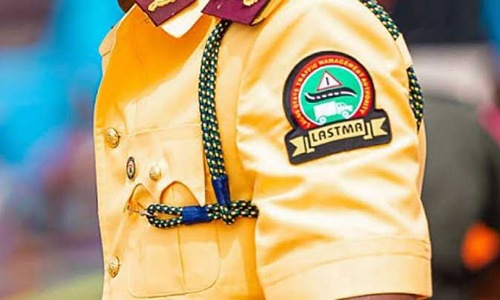
The Lagos State Traffic Management Authority (LASTMA) on Saturday announced a temporary road closure near Apostolic Church, inward Toll Gate, to allow engineers to install a beam on a height-restriction structure.
The agency said the installation was aimed at preventing high-rise trailers from accessing the newly constructed pedestrian bridge.
ALSO READ: LASTMA Alerts Motorists to Traffic Delays on Ogunnusi Road
“Currently, one lane has been occupied to facilitate the ongoing construction work, while the remaining two lanes are available to motorists,” LASTMA stated.
The agency advised road users to approach the affected corridor with caution and follow the directions of its personnel deployed to the area.
“Road users are advised to approach the affected corridor with caution and follow the directions of our personnel who are on ground to ensure the smooth flow of vehicular movement,” the statement added.
LASTMA also urged motorists to remain patient while the installation work continued.
“Motorists are encouraged to exercise patience while the installation work is in progress,” the agency stated.
Nigerian national Ekene Chukwuma has said he returned to Nigeria with assistance linked to Oseni Rufai rather than the Nigerians in Diaspora Commission (NiDCOM), while renewing allegations against the commission’s chairperson, Abike Dabiri-Erewa, over his travel documents.
Chukwuma made the remarks in an interview in which he explained how he returned to Nigeria after spending months at a deportation camp in India.
RELATED NEWS: Rufai Oseni Row: NiDCOM Breaks Silence on Nigerians Detained in India, Addresses Ekene’s Case
“My name is Kenneth Chukwu, from Enugu State,” he said, introducing himself before explaining how he returned to the country.
“I came back here with the assist of Osini Roufai, a good friend of him,” he said.
Chukwuma denied that NiDCOM facilitated his return, alleging that the commission had published false information about his case.
“NiDCOM made a lots of false, uh, news acquisition against me, which is still in Abike Dabiri handle in Twitter,” he said.
He also accused Dabiri-Erewa of sharing his expired international passport and a travel certificate he claimed was issued six months after he entered the detention camp.
“He also, she also posted my international passport that expired. He also, she also posted my TC that issued after 6 months,” he said.
His comments renew questions surrounding the handling of his case and the circumstances under which he obtained the documents needed to return to Nigeria.
Chukwuma’s detention in India previously sparked a public disagreement between ARISE News presenter Oseni Rufai and Dabiri-Erewa over NiDCOM’s response to reports of his situation.
Oseni raised concerns about Chukwuma’s detention and the commission’s handling of the case, while Dabiri-Erewa defended NiDCOM’s position and explained the process for submitting information to the commission.
NiDCOM subsequently issued its account of Chukwuma’s detention, stating that he had been arrested in India over a visa overstay and addressing the circumstances surrounding his travel documents.
The differing accounts prompted public debate about the commission’s response to Nigerians facing immigration difficulties abroad.
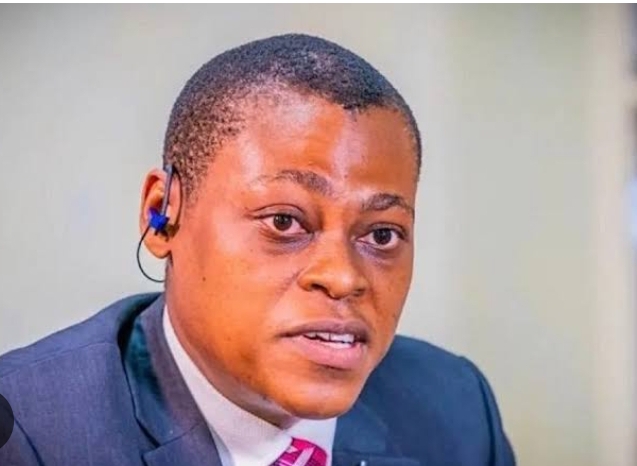
Rufai Oseni has challenged political analyst Olabode Sowunmi over the Federal Government’s 30-day petrol discount, questioning whether the intervention amounts to a return of fuel subsidy despite claims that the discount is being borne by the Nigerian National Petroleum Company Limited (NNPC).
The exchange occurred during an edition of The Morning Show on Arise News, where Oseni questioned Sowunmi about the financial implications of the petrol discount and other measures introduced to cushion the impact of fuel prices.
Oseni argued that several elements of the government’s intervention could be regarded as forms of subsidy, insisting that NNPC’s ownership structure must be considered when determining who ultimately bears the cost.
SEE MORE: ‘Another Speech to Tell Us, It Is Well’ — Oseni Rufai Reacts to Tinubu’s Address
“No matter how you try to explain it away, a subsidy is a subsidy,” Oseni said.
He challenged the argument that the discount should not be classified as a government subsidy simply because NNPC was responsible for providing it.
“We’re talking like NNPC is not owned by [the government] and heavily equity-based by the Ministry of Finance Incorporated,” he said.
Oseni identified the 30-day discount, forward sales of crude oil to domestic refineries, a proposed price ceiling, the removal of road levies and the consideration of an excess-profit tax among the measures he believed could amount to different forms of subsidy.
He argued that forward sales of crude oil to domestic refineries, with increased volumes as production grows, could help shield petrol pump prices from fluctuations in the international market.
Oseni also questioned the proposed negotiation of a price ceiling of ₦1,350 on landing and ex-country costs, arguing that government intervention to moderate prices contradicted the principle of allowing market forces to determine them.
“You are not supposed to come in to do this. Let me go back to your words: forces of market supply and demand should do this, but you have now come in to do this. That’s another form of subsidies,” he said.
He further cited the removal of road levies and cooperation with state governments under new tax laws as part of the measures requiring scrutiny.
After listing the interventions, Oseni demanded that Sowunmi explain their financial implications and identify who would ultimately pay for the petrol discount.
“But tie this with the most important question, actually, that you skipped: How much will this cost NNPC, and who pays for it? Don’t evade that question. Tell us the cost item and how much, who will pay for it,” Oseni said.
Sowunmi Defends His Position
In his response, Sowunmi argued that a government subsidy should be determined by whether the government bears the difference between the total cost of a product and its selling price.
He explained that a subsidy occurs when the government assumes the financial burden created by the gap between the cost of a product and the price at which it is sold.
“In the case of the discount that has been announced, it is borne by NNPC. So that cannot be…” Sowunmi said before Oseni interrupted.
Oseni challenged the distinction, insisting that NNPC’s ownership made it necessary to establish whether the cost could ultimately be linked to the government.
“Wait, not—who owns NNPC? Please answer. No, no, a straight question, and you can go ahead. Who owns NNPC?” Oseni asked.
Sowunmi responded that he had been invited to contribute to the discussion and should be allowed to complete his explanation.
“You asked, you asked NNPC because you believe—you asked me a question because you believe I have something to say. You cannot—you cannot tell me how to talk, so just be…” he said.
Oseni subsequently repeated his question about NNPC’s ownership, prompting Sowunmi to urge him to exercise patience.
“Basically, you need to be a bit patient and just…” Sowunmi responded.
The available transcript ends during the exchange, with no further explanation of the financial arrangements or conclusion to the discussion provided.






Aircraft Averts Crash, After Losing Door Mid-Air in Abuja

Bandits Kill 70-Year-Old Man in Katsina, 27 Victims Rescued

‘Nigeria Is Doomed Under Tinubu’ — Kenneth Okonkwo Backs Atiku for 2027

Lagos: LASTMA Announces Traffic Restrictions Along Route to Toll Gate

Two Suspected Bandits in Police Net in Katsina

Iheanacho Flaunts Turkish Nickname

Trump’s Family Unveils New Cryptocurrency Platform

Senate Denies Receiving Petitions Against Tinubu’s Ambassadorial Nominees

Dangote Cement Lights Up Benue Host Communities With CSR Initiatives

Reps Recommend 3-year Jail Term For Aviation minister

Tems Sets New Record On Billboard Hot 100 Chart
