
Business
Adeshina Hinges Nigeria’s Energy Growth on Technical Expertise, Quality Investment

Players in Nigeria’s oil industry have been advised to focus on technical capacity, quality investment, while consistently innovating to translate assets into economic value.
These views were expressed by the Chairman of Sahara Group, Kola Adeshina, who pointed out that ownership of oil and gas assets alone will not drive growth in Nigeria’s energy sector.
Adeshina, represented by head of Corporate Communications, Sahara Group, Bethel Obioma, stated this at the 2026 Energy Conference of the Nigerian Association of Energy Correspondents (NAEC).
He said the ongoing restructuring of ownership across parts of Nigeria’s energy industry, with indigenous companies taking on greater responsibilities, presented opportunities that must be matched with the capacity to develop and operate the assets effectively.
“Ownership without capability creates little value. Ownership without financing limits potential. Ownership without innovation eventually loses relevance,” he said.
READ ALSO: NNPC Ltd Anchors Meeting Crude Production Target on Sustained Drilling
According to him, the focus should not be on asset ownership alone but on how the assets can be deployed to create value, strengthen local capacity, attract investment, create jobs and improve energy security.
Adeshina said Nigeria was at a critical point in its energy history, with new investors and indigenous companies assuming bigger roles while technology was changing how energy was produced, distributed and consumed.
He said the central question should therefore be how to create conditions that would allow more people and businesses to benefit from opportunities in the sector.
“Access to assets should not be viewed as an end in itself,” he said.
The Sahara chairman said Nigeria had significant energy resources, with over 37 billion barrels of proven crude oil reserves and more than 200 trillion cubic feet of natural gas reserves.
However, he said the country’s greatest resource remained the ingenuity, resilience and entrepreneurial spirit of its people.
“If we can unlock the full potential of our people while expanding access to opportunity across the energy value chain, the possibilities for our country are immense,” he said.
Adeshina identified government, financial institutions, industry players and the media as having important roles to play in creating an environment where indigenous businesses could grow.
According to him, the government must provide enabling policies and regulatory certainty, while financial institutions should develop innovative solutions to unlock capital for businesses in the sector.
He also urged industry leaders to invest in talent, governance and operational excellence, while the media should continue to provide platforms for informed dialogue and accountability.
Adeshina said Nigeria had professionals capable of solving complex energy challenges, entrepreneurs willing to invest and innovate, and young people bringing fresh perspectives and technological expertise.
“What they need is an environment that enables them to succeed,” he said.
He also acknowledged the Federal Government’s ongoing reforms, saying progress in recent years showed what could be achieved when policy, industry and investment moved in the same direction.
Adeshina said the ultimate objective of asset ownership should be the expansion of opportunities and improvement in the lives of Nigerians.
“The true measure of success will not be how many assets change hands, but how many lives are transformed because those assets were put to productive use,” he said.
He urged stakeholders at the conference to focus on practical solutions that would ensure access to assets translated into prosperity for millions of Nigerians.








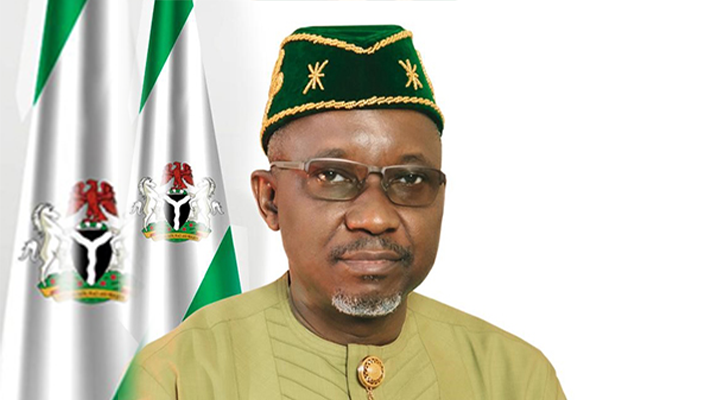
The minister of state, Petroleum Resources (Gas), Ekperikpe Ekpo, has said that Nigeria is fast-tracking efforts to transform the country’s gas resources to increasingly serve as a catalyst for industrialisation, power generation, transportation, manufacturing, fertiliser production, LPG adoption and other productive activities across our economy.
Speaking at the 2026 energy conference of the Nigeria Association of Energy Correspondents of Nigeria (NAEC) with the theme,”
Access to Assets: Empowering Players and Driving Growth” the minister represented by his technical adviser, Abel Nsa, said currently the federal government has continued to prioritise critical gas infrastructure.
He listed some of the initiative to include the AKK and OB3 Gas Pipelines which he described as critical to strengthening the national gas network and connecting supply with major demand centres.
He said the ongoing transformation is considered essential as infrastructure is the bridge between our resources and the industries, power plants, businesses and households that need them.
The Minister espouse that access to assets, therefore, must be understood more broadly than access to licences or acreage.
READ ALSO: Adeshina Hinges Nigeria’s Energy Growth on Technical Expertise, Quality Investment
According to him, An investor may have an asset but still be unable to develop it because of inadequate infrastructure, financing constraints, regulatory uncertainty, limited evacuation capacity or insufficient market access, adding, “Our objective must consequently be to create an ecosystem where access to resources is matched by access to infrastructure, capital, markets and predictable regulation.”
He further informed the audience that “We are also focused on creating a more attractive environment for investment.
“The reforms introduced under the Petroleum Industry Act 2021, together with targeted fiscal and regulatory measures for gas development, are intended to improve competitiveness, reduce barriers and enhance project bankability. Our message to credible investors is clear: Nigeria is open for responsible investment in its gas sector.”
In achieving its target, he said government recognises that it cannot develop the sector alone as it needs the capital, technology, expertise and commercial discipline of the private sector.
“We also need stronger collaboration among regulators, financial institutions, development partners and industry players to ensure that viable gas projects can move from concept to final investment decision and, ultimately, production.” he added.
Ekpo, said the opportunities created by the gas resources must not be limited to a few large players, pointing out “We want to see greater participation by indigenous companies, independent producers, infrastructure developers, technology providers and emerging energy businesses.”
Therefore he noted that empowering more capable Nigerian players will deepen competition, strengthen local capacity and ensure that a greater share of the value created within the energy sector remains in the Nigerian economy.
The minister also added, “Our objective is also to maximise domestic gas utilisation. We must increasingly convert our gas resources into value-added products rather than viewing gas solely as a commodity for export. Gas-to-power, LNG, LPG, CNG, fertiliser, petrochemicals and other gas-based industries offer enormous opportunities for investment, industrial development and job creation.
“In this regard, the government’s initiatives to expand LPG access and promote CNG adoption demonstrate our commitment to bringing the benefits of gas closer to ordinary Nigerians. Our ambition is to ensure that gas is not simply produced in Nigeria, but that Nigerians can use it, build businesses around it and benefit economically from it.:
He also added that government will ensure that access to assets translates into meaningful Nigerian participation and community development.
He said the Nigerian Content must continue to evolve from participation in contracts to ownership of capabilities, technology, capital and assets and host communities must also see tangible benefits from petroleum operations.
This is essential for building an industry that is sustainable, inclusive and supported by the people. Ekpo added.
He reaffirmed the commitment of the government to provide the policy certainty, regulatory clarity, infrastructure and enabling environment that allow investors and operators to succeed.
In return, he said government expect industry players to bring capital, innovation, efficiency and a commitment to developing Nigeria’s resources responsibly.
The partnership between government and industry must therefore be built around a shared objective: turning Nigeria’s energy potential into measurable economic growth, he said.
He noted that Nigeria has the resources; but what is need led now is to unlock their full value and move from access to assets, to development of assets; from development to utilisation; and from utilisation to broad-based economic growth.
The federal government, he said remains committed to creating the conditions for this transformation and urged all stakeholders to work with government to build a gas sector that is investable, competitive, inclusive and capable of powering Nigeria’s next phase of growth.
He said that Access to assets must ultimately become access to opportunity, prosperity and national development. I thank you, and God bless the Federal Republic of Nigeria.

Emeritus Professor of Economics, Akpan Ekpo, has said Nigeria needs to achieve and sustain double-digit economic growth for between 15 and 20 years to make a significant impact on poverty.
Ekpo made the submission while reacting to the latest World Bank assessment of Nigeria’s economic outlook, which raised the country’s 2026 growth forecast to 4.3 per cent.
ALSO READ: Obi Asks World Bank, Banks to Verify Anambra Debt Claims
Recall that the World Bank, in its October 2026 Africa Economic Update, projected that Nigeria’s economy would grow by 4.3 per cent in 2026, up from an estimated 4.0 per cent in 2025, before rising to 4.4 per cent annually in 2027 and 2028.
The lender attributed the improved outlook to improving macroeconomic stability, stronger investor confidence and a gradual recovery in private investment.
However, Ekpo cautioned against celebrating single-digit growth, arguing that economic growth alone does not amount to development.
“I don’t think we should celebrate the 4.1% growth. The World Bank itself knows that growth is not development,” Ekpo said.
According to the economist, Nigeria needs to grow at least 10 per cent annually and sustain such expansion for about 15 to 20 years to make a meaningful dent in poverty.
“You have to grow at least double-digit, sustained for about 15–20 years to have a dent on poverty,” he said.
‘4% Growth Is Too Weak’
Ekpo said even the World Bank’s assessment indicates that the current pace of growth remains insufficient to create the jobs and opportunities Nigeria needs.
He noted that the World Bank had identified electricity, reliable internet access, infrastructure and human capital development among the areas requiring attention.
“But the problem is that the 4.1% growth cannot achieve those things,” he said.
The World Bank has similarly stressed that stronger growth must translate into better living standards, productive jobs and poverty reduction, with investment in infrastructure, human capital and productivity needed to sustain the gains.
Ekpo said Nigeria therefore needs to move beyond celebrating modest improvements in GDP and focus on achieving structural economic transformation.
Ekpo Faults Manufacturing Contribution
The economist also criticised the structure of Nigeria’s economy, particularly the limited contribution of manufacturing.
According to him, Nigeria’s economic transformation should involve movement from agriculture and mining into industry and manufacturing before services become dominant.
“They left out the issue of manufacturing, that is where the crux of the matter is,” he said.
Ekpo argued that manufacturing should contribute at least 40 per cent of Nigeria’s GDP for the economy to undergo meaningful structural transformation.
“An economy has—the structure has to be transformed where that sector called manufacturing contributes at least 40% to GDP,” he said.
He claimed that manufacturing had contributed less than 12 per cent to Nigeria’s GDP over the past 60 years.
The economist also pointed to Nigeria’s trade structure, saying manufactured exports account for about two per cent of total exports, while manufactured imports account for about 48 per cent.
“So you cannot say with that that the economy has been transformed,” he said.
Ekpo Questions Macroeconomic Stability
Ekpo also questioned the description of Nigeria’s economy as enjoying broad macroeconomic stability.
He acknowledged improvements on the monetary side but said significant challenges remained on the fiscal side.
“On the monetary side, yes, the CBN has restored some integrity in that sub-sector. But on the fiscal side, we still have challenges,” he said.
He argued that economic stability should also be assessed from the perspective of households and businesses, which collectively form the broader economy.
“You can’t have stability on only one side of the economy, that is relative stability, and say the economy is stable,” Ekpo said.
‘It Is a Warning Signal’
While describing the World Bank report as balanced, Ekpo said it should be treated as a warning to policymakers rather than a reason for celebration.
“The report, in my view, is balanced. I’m not a World Bank fan, but it’s balanced because they raised fundamental issues that those who manage the economy, we have to do for us to make progress,” he said.
He maintained that although growth is necessary for development, growth alone does not guarantee development.
“Yes, you need to grow to develop, but you can grow and not be developed. And that growth must be double-digit, 10% and above, and sustained for about 15 or 20 years,” Ekpo said.
He called for deliberate government action to fix electricity, tackle insecurity and reduce poverty, while also warning that persistent double-digit inflation remains a challenge.
“I don’t think the report is what we should celebrate, but it’s a warning signal that we should do more,” he said.
“Inflation is still double-digit, so the report has to be treated cautiously.”
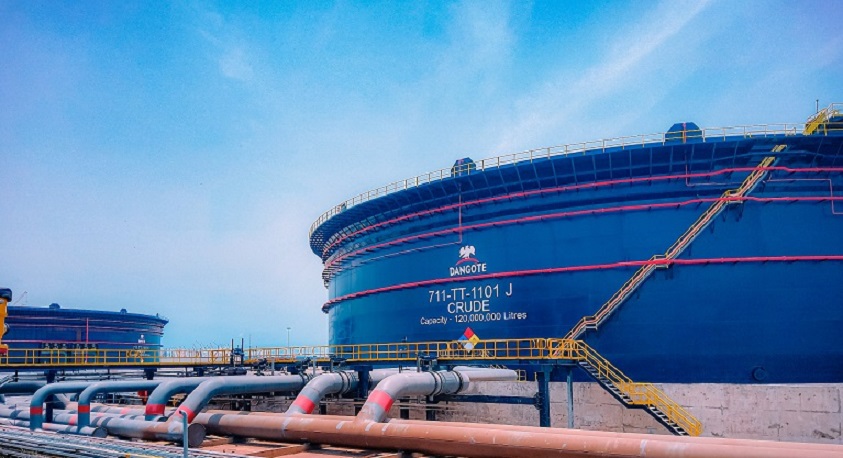
The Aliko Dangote Foundation (ADF) has unveiled the Women’s Share Subscription Grant Initiative (WSSGI), a pioneering financial inclusion programme aimed at increasing women’s participation in Nigeria’s capital market through the ongoing Initial Public Offering (IPO) of Dangote Petroleum Refinery and Petrochemicals FZE (DPRP).
The nationwide initiative is designed to support up to two million Nigerian women, with a special focus on low- and middle-income earners, as well as vulnerable women. Through the programme, ADF seeks to expand access to equity ownership, promote a culture of savings and long-term investing, and empower women with greater opportunities for wealth creation through responsible participation in the capital market.
The initiative is open to several categories of beneficiaries, including independent applicants earning ₦100,000 or less per month, verified participants in designated ADF programmes such as CRoWN, ADFIN, and Mu Shuka Iri, eligible non-commissioned servicewomen and service spouses, as well as verified service widows.
To accommodate different categories of participants, the initiative provides two pathways for entry: Matching Grant Track: Eligible independent applicants who subscribe to a minimum of 10 shares will receive an ADF-funded application for an additional 10 shares in their name.
Unconditional Grant Track
The ADF will fund an application for 20 shares on behalf of eligible beneficiaries who satisfy programme eligibility, investor identification, and Know Your Customer (KYC) requirements.
This category covers verified beneficiaries from designated ADF programmes and verified service widows.
Under both tracks, grant funds will be applied directly through the designated issuing house. No cash payments will be made to beneficiaries, government agencies, or sponsors. Any shares successfully allotted will be credited solely to the beneficiary and held in her name.
Eligibility Requirements
Applicants must be Nigerian women aged 18 years and above; resident in Nigeria; meet the eligibility requirements of their respective participation category; successfully complete all required identity verification and KYC processes; and receive no more than one ADF share grant across all Foundation share grant schemes.
The ADF is implementing the initiative in partnership with Vetiva Capital Management and the Nigerian Exchange Group (NGX) through the Securities and Exchange Commission (SEC)-approved IPO subscription infrastructure.
The Foundation will not receive, collect, or hold applicants’ or sponsors’ subscription funds. All applications, payments, allotments, and refunds will be handled in accordance with the IPO Prospectus, applicable regulatory requirements, and the approved basis of allotment.
Participation in the programme is entirely voluntary. Prospective investors should note that share prices may fluctuate, dividends are only payable when declared, and neither allotment nor investment returns are guaranteed.
To facilitate broad participation, applicants are not required to have an existing Central Securities Clearing System (CSCS) account. Where necessary, accounts will be created through Vetiva upon successful completion of the IPO’s KYC requirements.
Eligible independent applicants may submit their applications exclusively through the official ADF portal at ipo.alikodangotefoundation.org.
READ ALSO: 40 Oil Blocks up for Grabs as NUPRC Opens 2026 Bid Round
Beneficiaries affiliated with the ADF programmes and verified service widows will receive application guidance through approved Foundation channels.
The offer closes on 13 October 2026.
The ADF urges prospective participants to remain vigilant against fraud. Applicants should not make payments to agents, individuals, or personal bank accounts in exchange for grants or promises of guaranteed allotment. Passwords, PINs, and one-time passwords (OTPs) should never be shared, and any unexpected payment request or online link should be verified through official channels before action is taken.
Through this initiative, the ADF is reinforcing its commitment to inclusive economic empowerment, broadening access to investment opportunities, and enabling more Nigerian women to participate meaningfully in the nation’s wealth creation journey.






NUPRC Shares Priorities for Next Phase of Growth

Nigeria Resorting to Gas for Speedy Industrialisation — Ekpo
Adeshina Hinges Nigeria’s Energy Growth on Technical Expertise, Quality Investment

NNPC Ltd Anchors Meeting Crude Production Target on Sustained Drilling
World Bank Report: ‘Nigeria Needs 10% Growth for 20 Years to Reduce Poverty’ — Ekpo
Yenagoa Hosts NCDMB 2026 Content Forum

Trump’s Family Unveils New Cryptocurrency Platform

Senate Denies Receiving Petitions Against Tinubu’s Ambassadorial Nominees

Dangote Cement Lights Up Benue Host Communities With CSR Initiatives

Reps Recommend 3-year Jail Term For Aviation minister

Tems Sets New Record On Billboard Hot 100 Chart
