
Business
AELP Now Live on Cross-Border Trading

By Edozie Obasi-Eze
The African Exchanges Linkage Project (AELP) has gone live on integrating the African capital markets for facilitating cross-border trading and free movement of investments in the continent through the AELP Link platform.
The go-live happened when the platform was officially switched on at 0000 UTC, according to a statement from the African Securities Exchanges Association (ASEA), made available electronically to Biztellers on Saturday.
Biztellers reports that a ceremonial launch of Phase 1 and demonstration of live cross-border trades will be held alongside the 2022 ASEA Annual General Meeting & Annual Conference on December 7, 2022 at 9:00am GMT in Abidjan, Cote d’Ivoire.
It was gathered that the interconnectivity platform would enable the trading of exchange-listed securities across 7 participating securities exchanges.
On the go-live, President, ASEA, Dr. Edoh Kossi Amenounve, described the go-live of the AELP as a great milestone towards achieving ASEA’s mission to engage African capital market ecosystems in order to foster capital mobilization, promote sustainability, and enhance financial inclusion for the benefit of Africa’s economic development.
He said, “Trading infrastructure harmonization through the Link is expected to ease existing trading processes and potentially reduce the cost of trading across African capital markets.
“I therefore congratulate all the participating exchanges and the respective brokers for being front-runners in this great pan-African integration initiative.”
In the same vein, the Chief Executive Officer, Nigerian Exchange Limited (NGX), Temi Popoola lauded the efforts of stakeholders in the actualization of the project.
“The AELP Link is a testament to the will of African capital market participants, particularly exchanges to effectively collaborate and drive cross-border trading and capital formation.
“It willl significantly facilitate capital flows between African countries and further move us closer to the accomplishment of the goals of the African Continental Free Trade Area Agreement via the fusion of our respective financial markets,” he said.
The AELP, a flagship project of the ASEA and the African Development Bank (AfDB) is aimed at facilitating cross-border trading among seven participating Exchanges and select broker firms.
The statement revealed that the seven Exchanges participating in Phase 1 of the AELP include, Bourse Regionale des Valeurs Mobilieres (BRVM), Bourse de Casablanca, The Egyptian Exchange (EGX), Johannesburg Stock Exchange (JSE), Nairobi Securities Exchange (NSE), Nigerian Exchange Limited (NGX), and Stock Exchange of Mauritius (SEM).
Biztellers reports that in July 2021, ASEA signed a contract with DirectFN Ltd for the design and implementation of the AELP Link trading system in the seven markets. The Link which is hosted on the Oracle Cloud Infrastructure (OCI) has been designed to integrate with exchange and broker trading systems, and is available in English, French and Arabic.
It aggregates live market data from the Exchanges and enables brokers to access information and see the market depth and liquidity of the foreign market of interest.
Stockbrokers and Securities Dealers are critical stakeholders in the Linkage process. Through the coordination of the Exchanges and the African Stockbrokers and Securities Dealers Association (ASSDA), each exchange will connect 5 stockbrokers or securities dealers to the AELP Link.
In the first phase of the project 33 Stockbrokers have connected as at go-live.
Future phases of the project are expected to include automated cross-border payment systems, participation of additional ASEA member Exchanges and their respective brokers and additional brokers from the current participating Exchanges after the pilot phase.
Botswana Stock Exchange (BSE) and Ghana Stock Exchange (GSE) will kick off Phase 2 of the AELP with technical connectivity to the Link expected to commence in 2023.

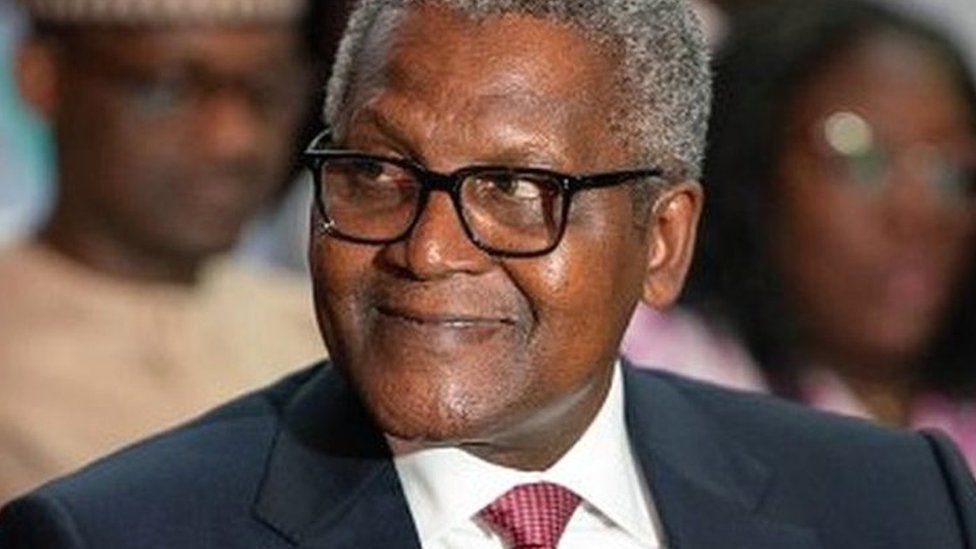
Up to 30% equity in the upcoming Dangote Refinery in Kenya, has been placed on the table for East African countries, which makes about $1.5 billion worth of the planned project available to regional investors.
David Ndii, Kenyan President William Ruto’s economic adviser, disclosed this on Thursday at a capital markets forum in Nairobi, where he said Kenya would take a 10% stake while Ethiopia and Rwanda had also expressed interest.
Dangote’s planned refinery is expected to be developed in Lamu, a coastal town in southeastern Kenya, though the project was initially proposed for Tanga in Tanzania.
According to the billionaire industrialist, the decision to move the proposed location to Kenya was informed by commercial and technical considerations.
Ndii disclosed that Kenya’s proposed 10% participation would be worth approximately $500 million.
READ ALSO: Shell Endorses Regional Action Plan for Safe Helicopter Services
He said the combined regional participation could amount to about $1.5 billion, with Dangote prepared to support the project if some participating countries are unable to commit as crude off-takers.
“The total for the region is about $1.5 billion,” he said. “I don’t actually see a challenge in doing that, and if some of them are not off-taking we will backstop.”
The proposed regional participation would give East African countries a direct equity interest in a major energy infrastructure project while potentially securing access to refined petroleum products for participating markets.
The United Nations Geoscheme (UNG) for Africa defines Eastern Africa as comprising 18 sovereign countries, alongside two French overseas territories, meaning the proposed 30% allocation could potentially involve a broader regional investor base beyond Kenya, Ethiopia and Rwanda.
The Nigerian authorities have been called upon to focus on strengthening domestic refining capacity.
The Petroleum and Natural Gas Senior Staff Association of Nigeria (PENGASSAN) made the call in a communiqué issued at the end of the three-day PENGASSAN Energy and Labour Summit (PEALS 2026).
It stressed the need for adequate protection for refineries operating in the country.
The PENGASSAN said Nigeria must reduce the economic inefficiency of exporting crude oil while importing significant volumes of refined petroleum products by creating an environment that supports domestic refining and other value‑adding activities.
The communiqué, signed by the union President, Festus Osifo, and General Secretary, Jerry Amah, stressed the need to protect refineries, including Dangote Refinery and Waltersmith Refinery.
The association said the expansion would enable Nigeria to retain a greater share of the value generated from its petroleum resources while creating jobs, conserving foreign exchange and stimulating industrial development. PENGASSAN linked the growth to wider opportunities in petrochemicals, gas processing and other downstream activities.
READ ALSO: Umar Cautions Against Irregular Policies in Nigeria’s Oil Industry
The communiqué reads in part: “The summit called for sustained policies and investments to expand Nigeria’s domestic refining capacity and reduce the economic inefficiency of exporting crude oil while importing significant volumes of refined petroleum products. The need to protect refineries (such as Dangote Refinery, Waltersmith Refinery, etc.) within Nigeria’s jurisdiction was emphasised.
“Nigeria must progressively retain more value from its petroleum resources through domestic refining, petrochemicals, gas processing and other value‑adding activities capable of generating employment, conserving foreign exchange and stimulating industrial growth.
“Ultimately, the strength of Nigeria’s oil and gas industry will not be measured merely by the resources beneath the ground, but by the projects delivered, the value created, the Nigerian capabilities developed, the decent jobs sustained and the prosperity generated for the Nigerian people.”
The association also warned that abrupt policy changes, overlapping mandates, repetitive approvals and conflicting directives increase the cost of doing business and weaken Nigeria’s competitiveness for global energy capital.
The PENGASSAN called for faster regulatory approvals, digitalised processes and clearer timelines, arguing that the effectiveness of regulation should be measured by its impact on investment, production, government revenue, job creation and national value rather than simply by the number of licences or approvals issued.
On gas, the PENGASSAN advocated an integrated approach to developing Nigeria’s more than 215 trillion cubic feet of proven reserves, including investments in processing facilities, pipelines, storage, LNG, LPG and CNG infrastructure. It said gas should be deployed more aggressively for power generation, manufacturing, transportation, fertiliser and petrochemical production.
The association also urged stronger protection of workers’ rights, occupational safety and employment during mergers, acquisitions, divestments and asset transfers, saying sustainable investment requires skilled and fairly treated workers and that increased production must not come at the expense of workers’ lives and wellbeing.
In addition, the PENGASSAN said the next phase of Nigeria’s petroleum industry must focus on execution with measurable targets and clearly assigned responsibilities to ensure policies translate into projects, production, investment and sustainable employment.
Two key stakeholders in Nigeria’s oil and gas industry have resolved to work closed to unlock three million barrels per day (bpd) of crude oil by 2030.
The Petroleum and Natural Gas Senior Staff Association of Nigeria (PENGASSAN), and the Nigerian Upstream Petroleum Regulatory Commission (NUPRC), according to the new President of former, Comrade Bosun Olabiyi-Agoro, would be working closely with each other to attain the objective.
He made the disclosure on Wednesday while on a visit to the NUPRC corporate headquarters.
The Head, Media and Corporate Communications, NUPRC, Eniola Akinkuotu, who made the disclosure in a statement, also credited the PENGASSAN President with declaring that inasmuch as the union is open to negotiations, issues bordering on the rights of workers to freely associate and join the union are non-negotiable.
READ ALSO: Tinubu Banks on NLNG Train 7 to Boost Nigeria’s Gas-led Economy
He made it public that issues surrounding contract staffing will be one of the key issues his administration will address.
“The President of Nigeria has an ambition which he runs through the CCE which is to make sure that by 2030 we are able to produce three million barrels per day. All of us have to work to make that happen. It will be our happiness to make sure that that target is actually attained. We can assure you that we are here to collaborate. We will be very reasonable,” Olabiyi-Agoro assured.
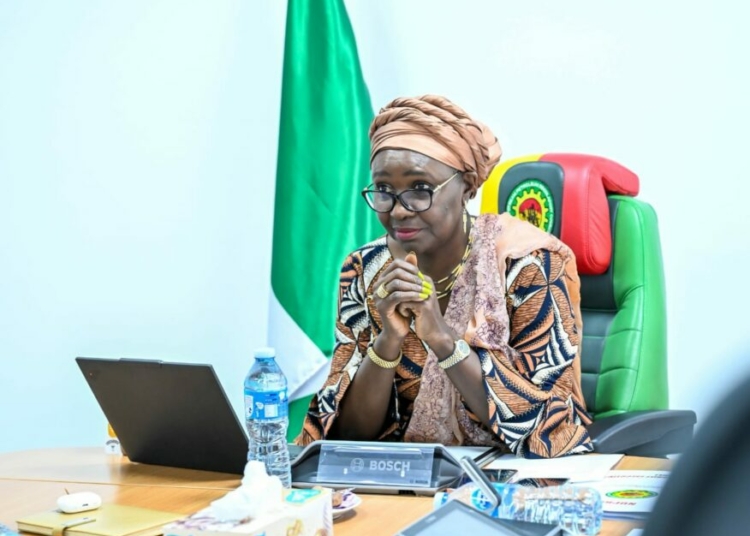
On her part, the Commission Chief Executive, Oritsemeyiwa Eyesan, said the President Bola Tinubu-led Federal Government had been working assiduously to increase production as evidenced by the latest executive order which is targeted at deep offshore investments. She noted that production had risen from a low of 1.1mmbopd a few years ago to an estimated 1.755mmbopd in 2026.
Seeking the support of PENGASSAN to achieve this target, Eyesan, said industrial stability remained critical to hitting higher production targets.
“As you settle into your new role, be assured that the commission will give you 150 per cent cooperation. In addition to the support we will give you, we want to ask that we work very closely to actualise government objectives.
“We want to grow production from our current level to 3 million barrels in 2030. For gas, we are still doing under 8bcf and we want to grow that to 12bcf by 2030. So, let’s make that happen,” she stated.






Dangote Dangles 30% of $17 Billion Refinery Before East Africans

Shell Endorses Regional Action Plan for Safe Helicopter Services

Ikire Killings: Adeleke Establishes Commission for Coroner Inquiry by Executive Order

Tinubu Mourns Eagle Online Publisher, Dotun Oladipo

Akpabio Mourns Dotun Oladipo

2027: ‘Do I Look 80’ — Atiku Fires Back at Critics Over His Age

Trump’s Family Unveils New Cryptocurrency Platform

Senate Denies Receiving Petitions Against Tinubu’s Ambassadorial Nominees

Dangote Cement Lights Up Benue Host Communities With CSR Initiatives

Reps Recommend 3-year Jail Term For Aviation minister

Tems Sets New Record On Billboard Hot 100 Chart
