
NEWS
Airline Prices Soar As Exchange Rate Hits N702/$


Airfares on Nigerian flights to a variety of locations in Europe, North America, the Middle East, and other foreign cities have surged as the exchange rate for ticket prices has reached N702/$.
Less than a week had passed since the Central Bank of Nigeria floated the naira and ordered commercial banks to sell foreign currency at rates set by the market.
The CBN last week released new forex guidelines aimed at unifying the country’s exchange rate as part of its efforts to stop different exchange rates that have caused some investors to leave Nigeria.
The CBN recommended collapsing all FX windows into the Investors & Exporters Window, among other things.
About 24 hours after the decision, the naira traded at 664.04/dollar at the I&E window. Two days later, the local currency closed at 702.19/dollar at the close of business on Thursday.
Following the development, exchange rate adopted by the International Air Transport Association for ticket pricing in Nigeria rose to N702/dollar.
In previous months, the exchange rate adopted by international airlines for ticket pricing had risen consecutively from about N445/dollar to about N660/dollar about two weeks ago.
However, the latest move by the CBN has made IATA to adopt the exchange rate on the I&E Window.
Prior to the latest development, IATA used to adopt NAFEX rate published on the FMDQ Exchange.
The development came as summer travel season began a week ago with ticket prices rising by 25 per cent.
Travel operators told our correspondents that ticket prices had gone up significantly with several operators raising concerns the hike in the exchange rate could mar the summer travel plans of many Nigerians.
The President of the National Association of Travel Agents of Nigeria, Susan Akporiaye, while reacting to the current development, expressed disappointment lamenting that passengers would suffer the most from the increment.
“Fares will definitely increase and passengers have to pay more. As a result, Passengers won’t travel as much as they should and this will affect travel agents,” she said.
Also, the Chief Executive Officer, Corporate Travels, Mr. Akande Diran, while reacting, said, “Around mid-June, ticket prices always go up. We call it peak period. This is so because many people often go on vacation during this period. Apart from this, the rising exchange rate will lead to higher ticket prices.”
The development happened when foreign airlines in Nigeria were having trouble returning millions of dollars in ticket sales proceeds.
However, experts think the CBN’s most recent action will streamline the procedure.
The trapped cash have increased to $812m as of April 2023, according to Kamil Alawadhi, regional vice president for Africa and the Middle East at IATA. He addressed the IATA Annual General Meeting two weeks ago in Istanbul.









The South-South Reawakening Group has opposed plans to align the proposed coastal road with the East-West Road, insisting that both projects should be constructed side by side.
The group’s convener, Joseph Ambakederimo, stated this during an interview on Arise TV on Sunday, arguing that the coastal road should be delivered as a separate infrastructure project rather than diverted to the existing East-West Road.
Ambakederimo said the coastal road had remained on the drawing board for many years and questioned why the project was now being considered for alignment with the East-West Road.
SEE ALSO: BREAKING: Joseph Boakai Takes Oath As Liberia’s President
“I posted on my LinkedIn handle when somebody posted the minister’s briefing. I said no. Mr. Minister, we want to see the coastal road side by side the East-West Road,” he said.
“We want to see that happen, not to do any alignment. Alignment of what? To where? We need that coastal road, and that road has been on the drawing board for so many years. So many, many years.”
He urged engineers to revisit their plans and address potential environmental challenges associated with constructing the road through the South-South region.
“I believe the feasibility of that road has been done. We know the processes of building roads, infrastructure all over the world. Pure and concrete feasibility would have been done. So let the engineers go back to the drawing board,” Ambakederimo said.
His comments come amid concerns over the proposed route of the coastal road and calls for the Federal Government to reconsider its approach to the project.
Ambakederimo maintained that the coastal road should be constructed alongside the East-West Road rather than aligned with it, stressing the importance of delivering the long-awaited infrastructure project to the South-South region.

The Nigeria Police Force has rescued an abducted farmer, Nafi’u Abubakar Sarki, as security operatives continue efforts to locate 10 other farmers abducted by armed bandits in Maru Local Government Area of Zamfara State.
The rescue operation followed the abduction of 11 farmers at Kamfanin Madam Village, according to the police operational update issued on Sunday, October 18, 2026.
The police said tactical teams, working alongside local vigilantes, traced the escape route used by the suspected bandits in an effort to locate the victims.
SEE ALSO: Two Suspected Bandits in Police Net in Katsina
“Police Tactical Teams and local vigilantes successfully traced the escape route of armed bandits who abducted 11 farmers at Kamfanin Madam Village, Maru LGA,” the statement said.
It added that “one of the abducted victims, Nafi’u Abubakar Sarki, was safely rescued unharmed, while operations continue for the rescue of the remaining victims.”
The police identified the State Criminal Investigation Department (SCID) in Gusau as the unit investigating the incident.
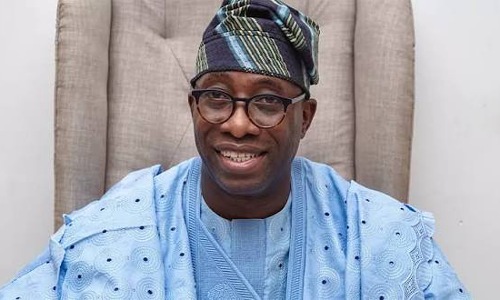
Otunba Segun Showunmi, a member of the Tinubu/Shettima Presidential Campaign Council (PCC) for 2027, has urged the South-East to assess President Bola Tinubu’s administration based on verifiable projects and measurable results rather than political propaganda.
Showunmi made the call in a statement posted on X on Saturday, urging Nigerians to evaluate the government’s performance based on infrastructure delivery, funds committed to projects and their impact on communities.
He said federal infrastructure initiatives targeting the South-East under Tinubu’s administration deserved serious scrutiny and factual assessment, adding that unfulfilled promises should continue to be pursued until the expected results were delivered.
SEE ALSO: 2027 Election: ‘Look Beyond the Noise’ – Showunmi Urges Nigerians to Give Tinubu More Time
“Our message is clear: We will not trade facts for propaganda, nor accountability for political loyalty!” he said.
The political figure challenged critics of the administration to provide evidence to support their claims, while urging those defending the government to present the projects and demonstrate their impact.
He also called on government officials to publish relevant figures, disclose project timelines and provide measurable results, insisting that no public official should be exempt from scrutiny.
According to Showunmi, the South-East deserves infrastructure that supports economic growth, including roads that connect markets, investments that create jobs and policies that expand economic opportunities.
He maintained that political representation must translate into tangible benefits for citizens, stressing that public office should deliver value to the people.
As part of his call to action, Showunmi urged Nigerians to scrutinise government records, challenge misinformation with evidence and demand the completion of outstanding projects.
He further called for public commitments to be matched by measurable delivery, arguing that leadership should be assessed by facts and results rather than political rhetoric.
Ending his statement with the slogan, “Asiwaju is a goal,” Showunmi called for accountability and greater inclusion of the South-East in Nigeria’s development.
Showunmi is associated with The Alternative and is a member of the Tinubu/Shettima Presidential Campaign Council for the 2027 elections.






NDLEA Arrests 85-Year-Old Woman With 179kg of Cannabis in Edo

Ambakederimo Questions NNPC Over Crude Oil Sales, Upfront Payments
South-South Group Opposes Coastal Road Alignment With East-West Road

Zamfara: Farmer rescued as search for 10 others continues

Showunmi Urges South-East to Judge Tinubu by Projects, Not Propaganda

2027: ‘North Has No Reason to Break Agreement’ — Gov Yusuf Backs Tinubu

Trump’s Family Unveils New Cryptocurrency Platform

Senate Denies Receiving Petitions Against Tinubu’s Ambassadorial Nominees

Dangote Cement Lights Up Benue Host Communities With CSR Initiatives

Reps Recommend 3-year Jail Term For Aviation minister

Tems Sets New Record On Billboard Hot 100 Chart
