Energy
Ambakederimo Questions NNPC Over Crude Oil Sales, Upfront Payments

Joseph Ambakederimo, convener of the South-South Reawakening Group, has questioned the accountability of Nigeria’s crude oil forward sales, demanding clarification on the volume of crude lifted, outstanding balances and the use of upfront payments.
Speaking during an interview on Arise TV on Sunday, Ambakederimo expressed concern over the monitoring of crude oil transactions, questioning who was responsible for tracking deliveries and providing feedback on the arrangements.
“We don’t even know who is monitoring and giving us the feedback of the barrels of crude that have been lifted on forward sales basis,” he said.
SEE MORE: South-South Group Opposes Coastal Road Alignment With East-West Road
He challenged the Nigerian National Petroleum Company Limited (NNPC) to provide details of the transactions, including the quantity of crude already lifted, the outstanding balance and whether the agreed deliveries had been completed.
“Today, can we get this from NNPC? How much have they lifted? What is the balance remaining? Have they been completed?” he asked.
Ambakederimo also questioned how the money collected upfront under the arrangements had been spent, demanding an explanation of its use.
“That money that was collected upfront, what was the use of the money? Can you justify it?” he asked.
He argued that Nigeria should make better use of its natural resources to accelerate infrastructure development and improve living conditions.
Citing land reclamation projects in the United Arab Emirates, Ambakederimo said Nigeria could explore similar opportunities to create additional land for residential and other developments.
He recalled seeing a signpost while travelling from Dubai to Abu Dhabi describing a project to reclaim land from the sea, using the example to highlight the development possibilities he believes Nigeria could explore.
The South-South Reawakening Group convener also argued that Nigeria could reclaim land in suitable areas, provided environmental concerns were properly managed.
He called for the country to translate its natural resource wealth into infrastructure and improved living conditions, stressing the need for greater accountability in crude oil transactions.





It appears that despite growing domestic refining capacity and increased local production of petroleum products, Nigeria’s Premium Motor Spirit (PMS), also known as petrol and Liquefied Petroleum Gas (LPG) reserves have dropped below the minimum 30-day national energy security benchmark.
The Nigerian Midstream and Downstream Petroleum Regulatory Authority (NMDPRA) dropped the hint, adding that it raised concerns about the country’s capacity to withstand prolonged international supply disruptions.
The Authority Chief Executive of NMDPRA, Rabiu Umar, disclosed this in Lagos at the TBI Africa Summit 2026, with the theme, “Securing Nigeria’s Energy Future: Balancing Investment, Sustainability, Industrialisation and Economic Growth”.
According to him, Nigeria’s current petrol stock sufficiency stands at 23.9 days, while LPG reserves can sustain domestic consumption for only 15.9 days.
Consequently, the regulator announced that it has commenced a pilot national strategic petroleum stock programme, using selected Nigerian National Petroleum Company Limited (NNPC Ltd) depots, as part of efforts to build reserves capable of sustaining the country for between 30 and 45 days during periods of global supply shocks.
Umar, represented by the Deputy Director, DSSRI, Lagos Regional Office, Victor Ojiakor, said the strategic stock programme was designed to provide a buffer against international market disruptions, including geopolitical conflicts and other unforeseen developments capable of threatening domestic petroleum supplies.
READ ALSO: Yul Edochie Shares Emotional Post After Father’s Death
He explained that the pilot scheme had commenced with selected NNPC inland depots across three cities, including Suleja, before being extended to other parts of the country.
According to him, the objective is to ensure that petroleum products are strategically stored across the country so that no region is left vulnerable whenever international supply disruptions occur.
“Our stock sufficiency is about 23.9 days for PMS, while LPG stock sufficiency is approximately 15.9 days. However, our target is 30 days of sufficiency.
What this means is that, in the event of a global shock, like the Iran-US conflict or any other international crisis, we must have sufficient stocks to cater for unexpected situations.
We have to build our national strategic stock to provide a buffer against the effects of global shocks.”
The development highlights a critical gap in Nigeria’s energy security framework, as increased domestic refining capacity has not yet translated into adequate strategic reserves to protect the country against external supply disruptions.
Although domestic refineries supplied approximately 65 percent of Nigeria’s petrol consumption in September, the country still requires supplementary imports to meet national demand.
Umar disclosed that the Dangote Petroleum Refinery and Petrochemicals (DPRP) processed approximately 689,000 barrels of crude oil daily during the period, operating at about 106 percent of its installed capacity.
He noted that Nigeria had moved beyond simply refining petroleum products for domestic consumption, as the country was now exporting refined products to other countries.
However, he stressed that the progress recorded in domestic refining must be matched with adequate storage infrastructure and strategic reserves to guarantee uninterrupted supplies during periods of international market volatility.
The NMDPRA chief executive also identified substantial investment opportunities in the midstream and downstream petroleum sectors, particularly in gas processing, storage infrastructure, pipelines and logistics.
He said Nigeria required approximately $30 billion in fresh investments in the sector by 2030, stressing that inadequate investment and infrastructure, rather than resource availability, remained the major constraints to unlocking the country’s energy potential.
According to him, Nigeria has approximately 215.19 trillion cubic feet of natural gas reserves, the largest in Africa, yet existing gas processing plants operate at only about half of their capacity.
“The resources are not our constraint. That is not the challenge. God has blessed us with abundant resources. What is our constraint? It is investment and infrastructure. These two things are the gaps,” he said.
He identified gas processing, storage facilities, particularly in northern Nigeria, pipelines and logistics infrastructure as critical areas requiring urgent investment.
Providing updates on major gas infrastructure projects, Umar said the OB3 gas pipeline was approximately 96 percent complete, while the ELPS Midline Compressor project had reached 96.33 percent completion. The Ajaokuta-Kaduna-Kano (AKK) gas pipeline was about 88 percent complete, according to the Authority’s August 2026 infrastructure update.
On efforts to attract investors, he said the Authority had introduced reforms aimed at improving regulatory certainty, reducing approval delays and creating a more predictable operating environment.
He cited the launch of Revision Two of the Nigerian Gas Transportation Network Code and Project NEXUS, an initiative designed to transform the Authority’s licensing and compliance processes.
He explained that the reforms were intended to make regulatory processes faster, fairer and more transparent, noting that some approvals that previously took months could now be completed within 24 or 48 hours.
On the sustainability front, Umar said the Authority was promoting cleaner energy alternatives through expanded domestic gas utilisation, compressed natural gas (CNG) infrastructure and the introduction of ethanol blending in petrol.
He disclosed that the regulator was working with the Presidential Initiative on Compressed Natural Gas (Pi-CNG) and the Midstream and Downstream Gas Infrastructure Fund (MDGIF) to expand CNG infrastructure and bring cleaner fuel closer to consumers.
He said approximately 20 universities across the country had been targeted under the CNG daughter station programme, with some facilities already commissioned in four universities in the South-West.
On ethanol blending, he said the Authority was piloting the introduction of bioethanol derived from agricultural products into petrol, as part of efforts to reduce emissions, conserve foreign exchange and create additional markets for Nigerian farmers.
He, however, emphasised that the initiative would be implemented without displacing food crops or encouraging deforestation.
Umar also highlighted the growing domestic LPG market, disclosing that about 200,000 tonnes of LPG had been produced locally this year for domestic consumption, nearly three times the volume recorded previously.
He said the expansion of the LPG market presented opportunities for local manufacturing of cylinders and related equipment, while reducing dependence on imported products.
He added that the Authority was committed to ensuring that energy resources translated into industrial growth, employment generation and affordable energy for households and businesses.
“Every tonne of gas means jobs. This also means factories on our land for Nigerians, running without shortages,” he said.
He further reaffirmed the Authority’s commitment to domestic crude supply obligations and domestic LPG supply to ensure that local households and industries receive adequate supplies.
Umar said the regulator would also strengthen transparency through regular publication of accurate industry data, stressing that reliable information was essential for investor confidence and effective market planning.
He called on investors, operators, financial institutions, host communities, security agencies and development partners to collaborate with the Authority in building a resilient and sustainable midstream and downstream petroleum industry.
He maintained that while Nigeria had demonstrated its capacity to refine petroleum products locally and supply neighbouring countries, the next priority was to strengthen energy security, expand infrastructure and ensure that domestic resources translated into sustainable economic growth.
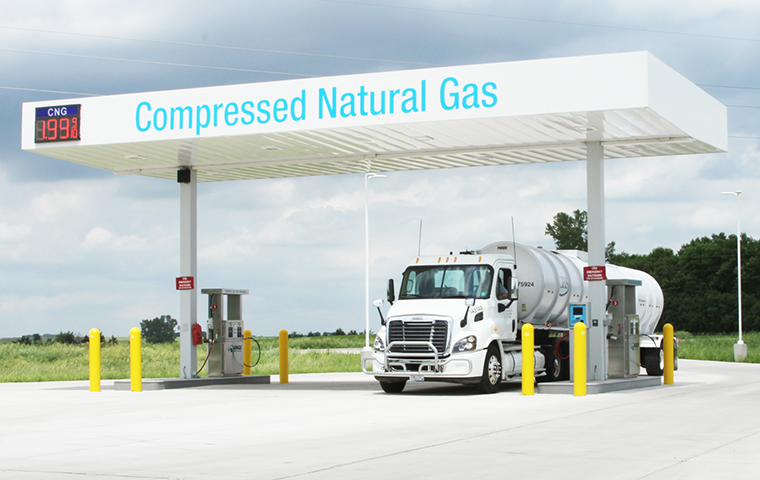
Motorists have been besieging the newly commissioned Compressed Natural Gas (CNG), in the University of Lagos (UNILAG), resulting in a long queue.
The rush has seen the station serving in excess of 500 vehicles daily.
Recall that the station was officially commissioned on Friday November 20, by the Midstream and Downstream Gas Infrastructure Fund (MDGIF).
The MDGIF is a statutory equity investment fund in Nigeria established under the Petroleum Industry Act (PIA) 2021 to finance midstream and downstream gas infrastructure.
Speaking for Shumadec Energy, which runs the facility, the station manager, Onisile Muyiwa, revealed that the company is collaborating with Nigeria’s Presidential Initiative on CNG & EV to establish the facilities across the country.
Muyiwa, said the reason for its location is based on its conception to address rising cost of transportation in universities.
“We are going all around the country, and presently we are in 20 states in Nigeria, where we operate gas stations, most of them in universities.
“We commissioned Lagos State, Ekiti, Ibadan and Akure on the same day. That is for the south.
We currently have 20 stations but with the commissioning coming up next week, we have a total of 24 states covered. So the location is mainly for the students and the people around the universities.
He said the government also brought in CNG buses to reduce the cost of transportation, which was inaugurated by President Bola Tinubu.
READ ALSO: Nigeria Loses N4.65tn Revenue in H1 as Oil Output Trails 1.84mbpd Budget Benchmark
He said, “The intention is to help the students with transport and we are opening up the facilities all over the universities in the 36 states.
Commenting on the development, the National Association of Nigerian Students (NANS), Comrade Akinteye Babatunde Afeez, said the initiative is laudable, noting that transportation is a critical component of students’ welfare.
Afeez stressed that, beyond paying tuition fees and purchasing academic materials, transportation remains one of the major daily expenses confronting students across our tertiary institutions.
According to him, many students spend a significant portion of their upkeep on transportation, sometimes at the expense of other basic necessities, adding that it is part of the reasons why NANS considers the initiative particularly important.
He praised the initiative pointing out that the introduction of CNG-powered transportation solutions within universities has the potential to reduce transportation costs, ease the financial burden on students and promote a cleaner and more sustainable campus environment.
“We are particularly excited that this initiative is not limited to the University of Lagos (UNILAG), where today’s event is taking place. Three other institutions — the Federal University of Technology, Akure (FUTA), Federal University Oye-Ekiti (FUOYE), and the University of Ibadan (UI) — are also benefiting through today’s remote commissioning.” Afeez said.
He said the project is a commendable demonstration of inclusive development and a clear indication that interventions aimed at improving students’ welfare can reach institutions across different parts of the country.
However, he noted that as an organisation whose primary responsibility is to protect and advance the interests of Nigerian students, the success of this programme must ultimately be measured by its direct impact on students.
“We expect the benefits of this intervention to translate into genuinely affordable transportation fares, reliable transportation services and improved mobility within our campuses.
“We also encourage the relevant authorities and university management to ensure that these facilities are properly maintained and that the conversion centres are operated sustainably.” he remarked.
He reiterated NANS’ readiness to partner with the Federal Government and relevant agencies on initiatives that directly improve the quality of life of Nigerian students.
“Our position has always been that student advocacy must go beyond criticism. While we will continue to demand accountability and defend students’ interests, we are equally prepared to identify opportunities, build partnerships and support policies that deliver measurable benefits to our constituency.” he said.
In pursuit of the Decade of Gas Capability Building Programme, 34 young professionals from Nigeria’s oil and gas industry have visited the Nigeria LNG Limited (NLNG) facility on Bonny Island, Rivers State, to gain first-hand exposure to gas processing, liquefaction, storage and export operations.
The visit, which covered NLNG’s operational Trains 1 to 6 and the ongoing Train 7 expansion project, was designed to bridge the gap between theoretical training and practical industry experience.
Led by the Coordinating Director of the Decade of Gas Secretariat, Ed Ubong, the delegation was received by NLNG’s Managing Director and Chief Executive Officer, Adeleye Falade, and members of the company’s management team.
During the visit, Ubong said the initiative was designed to equip young professionals with the practical knowledge and competence required to drive Nigeria’s ambition of building a gas-powered economy by 2030.
He said classroom training alone was insufficient to prepare the next generation of industry leaders, stressing the importance of exposing participants to world-class gas operations.
“What we are building is not just knowledge, but confidence and competence. You cannot drive a gas-powered economy from theory alone. Our young professionals must see, touch and understand how gas is processed, liquefied, stored and exported to the world,” he said.
Ubong described NLNG as a leading example of Nigeria’s gas development potential, adding that the visit would enable participants to appreciate operational excellence and take valuable lessons back to their respective organisations.
READ ALSO: DPRP Eyes December Listing Date
He said the programme was targeting more than 150 professionals by 2030, including engineers, geoscientists, commercial analysts and policymakers, who would drive the development of gas-based industries, power generation, LPG penetration, CNG adoption and gas-to-chemicals projects.
According to him, capacity building is one of the seven strategic pillars of the Decade of Gas Programme, which seeks to develop the human capital required to translate Nigeria’s vast gas resources into economic growth and industrial development.
In his welcome address, Falade said NLNG was pleased to host the young professionals, noting that developing the human capital required to sustain the gas industry was critical to achieving Nigeria’s energy ambitions.
“At NLNG, we believe that gas is not just a commodity; it is a platform for national transformation. And transformation is driven by people. That is why we are delighted to host this group of bright, young professionals,” he said.
He said NLNG’s operations, from the successful running of Trains 1 to 6 to the ongoing Train 7 expansion, demonstrated the capacity of Nigerians to deliver complex industrial projects through innovation, partnership and commitment to excellence.
Falade urged the participants to see themselves as the next generation of professionals who would consolidate Nigeria’s position in the global gas industry.
“What you have seen today on Bonny Island is what Nigerians can build and sustain when we are committed to excellence and safety. As you go back, I want you to carry this spirit — that Nigeria can lead in gas, not just in Africa, but globally,” he said.
He also charged them to uphold the highest standards of safety, sustainability and local content in their professional careers.
According to him, the decisions they make over the next decade would be critical to determining how effectively Nigeria harnesses its more than 200 trillion cubic feet of gas reserves for power generation, industrial development, job creation and national prosperity.
The programme featured technical sessions on LNG production processes, plant integrity, health, safety and environment, shipping and export logistics, as well as interactive engagements with NLNG engineers and managers.
Some participants described the experience as eye-opening, noting that it was their first opportunity to visit an LNG liquefaction plant and observe the operations involved in producing and exporting liquefied natural gas.
Speaking on behalf of the participants, one of them said the tour had significantly broadened her understanding of the gas value chain.
“Touring Trains 1 to 6, gaining insights into the Train 7 expansion project and appreciating the complexity behind every cargo that leaves Bonny have broadened my perspective. This is more than just a programme; it is a career-defining experience,” she said.
The Decade of Gas Programme seeks to position natural gas as a major driver of Nigeria’s energy transition, economic diversification and industrial growth, in line with President Bola Tinubu’s commitment to leveraging the country’s gas resources for national prosperity.
The Secretariat said the Bonny Island visit was one of several practical learning engagements planned for the cohort, with subsequent exposure to regulators, upstream producers and gas infrastructure companies.

2027 Elections: ADC Accuses INEC of Hiding 453 Polling Units

Adeleke Kicks Off Second Term with Free Cataract Surgery Programme in Osun

Gov Alia Declares Monday Work-Free Day Ahead of Tinubu’s Visit
Heritage Energy Assures on Corporate Governance

Energy Security: Nigeria’s PMS, LPG Reserves Drop Below 30-day Standard

Yul Edochie Shares Emotional Post After Father’s Death

Trump’s Family Unveils New Cryptocurrency Platform
Senate Denies Receiving Petitions Against Tinubu’s Ambassadorial Nominees

Dangote Cement Lights Up Benue Host Communities With CSR Initiatives

Reps Recommend 3-year Jail Term For Aviation minister

Tems Sets New Record On Billboard Hot 100 Chart