
Info Tech
Apple, Samsung Confront New Rivals in China


HONG KONG — Apple Inc. and Samsung Electronics Co. are the dominant smartphone brands in the U.S. and in many other parts of the world. But in China, the world’s biggest smartphone market, there isn’t a clear winner yet.
Virtually unheard of outside China, several homegrown brands are gaining ground and seeking to challenge the technology giants’ duopoly. Working in their favor: advanced hardware at lower prices, strong relationship with Chinese carriers, as well as creative ways to build a fan base through social media and online forums.
Hundreds of millions of Chinese mobile users still haven’t replaced their basic feature phones, making the country a critical battleground for global smartphone brands at a time when growth is slowing in the U.S. and other mature markets. Research firm Canalys estimates that smartphone shipments in China totaled 354 million units last year—compared with 139 million units in the U.S. Canalys expects Chinese shipments to increase to 422 million units this year.
Zhou Cheng, a 25-year-old shop manager in the southern province of Hunan, recently purchased his first smartphone to replace his old Nokia NOK1V.HE +0.59% feature phone. He spent nearly $500 for the Oppo Find 5 from Oppo Mobile Telecommunications Corp., based in Dongguan. The device runs on Google Inc. GOOG +1.64% ‘s Android operating system, and comes with a 13-megapixel camera and a 5-inch high-resolution screen that has more pixels per inch than Apple’s new iPhone 5S.
“It looks good and works well,” Mr. Zhou says, noting Oppo is cooler than other Chinese smartphone brands such as Lenovo Group Ltd. 0992.HK +5.86% and Huawei Technologies Co. “Oppo is for young people and its phones are more stylish.” The Find 5, which is about 30% cheaper than Apple’s entry-level iPhone 5C in China, also fit his budget.
Mr. Zhou is one of many Chinese consumers that companies like Oppo, Coolpad and Xiaomi Inc. are targeting. Their growing presence is creating a more challenging environment for foreign brands such as Apple and Samsung.
China’s mobile market is so big that some local handset vendors, despite focusing mainly on the domestic market, already sell more smartphones overall than global competitors. In the third quarter of last year, Coolpad, the smartphone brand of China’s Yulong Computer Telecommunication Scientific (Shenzhen) Co., was the sixth-biggest smartphone vendor by units sold world-wide, ahead of Nokia Corp. and Sony Corp. 6758.TO -2.69% , according to Canalys.
In China itself, Coolpad ranked third with a market share of 11%, behind Samsung’s 21% and Lenovo’s 13%. Apple came in fifth with 6%.
On Monday, Apple reported that the Greater China region—mainland China, Hong Kong and Taiwan—recorded the biggest increase in revenue among all its geographical regions. Its revenue there rose 29% from a year earlier to $8.84 billion, drawing stark contrast to North America and Latin America, where revenue fell 1% from a year earlier to $20.1 billion.
Apple will likely get a boost in China this year after China Mobile Ltd. 0941.HK -0.80% , the country’s largest carrier with more than 760 million subscribers, started selling iPhones for the first time on Jan. 17. Earlier this month, China Mobile Chairman Xi Guohua said the carrier had received preorders for more than a million iPhones since it started accepting them in late December.
Apple on Monday reported a 29% increase in its revenue in China, Hong Kong and Taiwan combined for the quarter ended Dec. 28. The company didn’t disclose its iPhone sales in China, but Chief Executive Tim Cook made some upbeat comments about the China Mobile deal. “We’ve been selling with China Mobile now for about a week. And last week was the best week for activations we’ve ever had in China,” Mr. Cook said.
Still, analysts said that the higher upfront costs of China Mobile’s iPhone contracts—compared with those at other Chinese carriers—could deter many price-conscious consumers.
Coolpad, which started out in 1993 as a maker of pagers and telecom equipment, is now one of the more established players in China’s mobile industry. Its strength lies in its close business ties with all major Chinese telecom carriers, which help distribute its phones outside major urban centers such as Sichuan and Hunan.
One of Coolpad’s most popular phones, the Coolpad 9080W, comes with a 5.7-inch screen, an 8-megapixel camera and a quad-core processor, even though it sells for about $260. Coolpad says it is trying to attract millions of first-time smartphone users in China. Its parent company reported that its first-half profit in 2013 rose 40% to 212.8 million Hong Kong dollars (US$27.4 million) from HK$152.5 million in 2012.
“When first-time smartphone users have a good experience with our phones, they may buy more expensive Coolpad models later when their purchasing power increases,” said Coolpad Vice President Zhang Guang-qiang in an interview.
Some analysts are skeptical about Coolpad’s strategy, noting that it will be a big challenge to raise its brand and convince consumers to pay more for their handsets.
Enlarge Image
Apple remains one of the most desirable brands in China, as local consumers’ recent frenzy over the gold-colored iPhone 5S indicated. Samsung, a household name in China because of its TV sets, sells smartphones that cost less than $200 to compete against local handset vendors.
Apple and Samsung declined to comment about competition in China.
Nevertheless, executives from Chinese smartphone makers say their companies are well positioned to understand the local market and cater to the needs of specific types of Chinese consumers.
Oppo, the No. 8 smartphone vendor by shipments in China, has an online forum where customers can earn “O coins”—Oppo’s own digital currency—by participating in discussions with other Oppo phone users and with the company. Customers can use O coins to purchase Oppo handsets and accessories.
Oppo, which has previously used actor Leonardo DiCaprio in its ads and promoted its phones through tie-ins with local TV shows, has been particularly successful in attracting young female customers. The private company doesn’t disclose earnings, though it said it makes a profit from smartphones.
“We always want to surprise consumers. We don’t want to be a follower,” said Oppo Founder Tony Chen in a post last September on his Sina Weibo microblog, the Chinese equivalent of Twitter. TWTR +4.51%
Beijing-based Xiaomi is another Chinese smartphone vendor known for its marketing savvy. The company, founded in 2010, has since created a cultlike fan base among techie types who are often early adopters of new gadgets. Xiaomi, which doesn’t disclose whether it is profitable, sells its phones mainly through its own website, and offers an array of accessories including multicolored batteries and dolls. It builds brand loyalty in part by constantly tweaking its version of the Android operating system with suggestions from users and by offering weekly updates.
“If you give us a suggestion, and we quickly change it, you will have a long-lasting sense of achievement,” said Xiaomi founder Lei Jun in an interview. In the third quarter, Xiaomi was the No. 6 smartphone vendor in China, slightly behind Apple, according to Canalys.
Social media has played a role in Xiaomi’s popularity. Mr. Lei, who has been often compared with Apple’s late founder Steve Jobs for his presentation style at product releases, has close to 8 million followers on Sina Weibo.
Looking to expand its business overseas, Xiaomi last year hired Hugo Barra, who was an executive at Google’s Android business. Mr. Barra said earlier this month that Xiaomi would expand into Singapore.
The success of Xiaomi and Oppo made other Chinese companies see the importance of marketing and social media.
Coolpad’s Mr. Zhang said that the company’s executives have become more active on social-media platforms like Sina Weibo and on the Chinese smartphone messaging service WeChat.
“Being a software engineer, I didn’t talk to users and media several years ago,” said Mr. Zhang. “But the market has changed a lot. Now I always interact with users on my Weibo,” said Mr. Zhang, who has more than 275,000 followers on the microblog.
Coolpad has won fans including Yang Guang, an 18-year-old student in Guangzhou, who bought the Coolpad 9070 smartphone several months ago.
“Only a minority of students from wealthy families can afford to buy expensive foreign-brand smartphones,” said Mr. Yang.
– WALLSTREET JOURNAL

In efforts at spicing up the 2023 ITREALMS E-Waste Dialogue, the management of ITREALMS Media has partnered with E-waste Producer Responsibility Organization of Nigeria (EPRON) membership organisations for a day-long collection scheme of small electronic waste on Friday, December 15, 2023.
The EPRON members aligning their partnership with 2023 ITREALMS E-Waste Dialogue are EL-AS Tech Enterprises Limited and WEEE Eco-Friendly.
ITREALMS’ day-long collection scheme is part of the commemoration of 2023 international E-Waste Day (IEWD) within the ITREALMS E-Waste Dialogue with the theme “You Can Recycle Anything with a plug, battery or cable” at Welcome Centre Hotels, International Airport Road, Lagos.
Revealing this collaboration, the Group Executive Editor, ITREALMS Media, the organisers of the 2023 ITREALMS E-Waste Dialogue, Sir. Remmy Nweke, urged mobile device enthusiasts to come along with their devices that have reached their end-of-life to the venue for proper disposition by professionals who would also be on grounds to address some topical issues.
The collection of small electronic wastes especially mobile phones and like-devices, would be carried out by EPRON member organisation, EL-AS Tech Enterprises Limited as facilitated by ITREALMS Media group as part of this year’s ITREALMS E-Waste Dialogue on Friday, December 15, he added.
He disclosed that the exercise would commence at Welcome Centre Hotel by 9am till close of work hours the same day.
Nweke pointed out that the collection of small e-waste items would include mobile phones, pointers mouse, earpieces, rechargeable torches, phone chargers, to name a few.
Further, he said, that this initiative has become time-serving because some people may have missed any other opportunity before now for the year-long campaign, hence this awareness on e-Waste has to be continuous, “ITREALMS came up with this scheme.”
Nweke beckoned on Nigerians, especially mobile phone users, to leverage the opportunity in disposing of their mobile devices they no longer use, of course in exchange for a voucher or gift item.
In her reaction to this year’s day-long small waste collection, EPRON Executive Secretary, Mrs. Ibukun Faluyi, described the initiative as commendable, expressing confidence it would intensify the collection of end-of-life devices for proper disposition.
Mrs. Faluyi, also urged Nigerians to take advantage of this day-long collection of small wastes courtesy of ITREALMS Media.
Recalling for instance that in October 2022, EPRON had partnered SLOT alongside some UN agencies for collection of small e-waste items in Lagos, including the United Nations Information Centres (UNIC), United Nations Industrial Development Organization (UNIDO), International Labour Organisation (ILO), Lagos Waste Management Authority (LAWMA) and Lagos State Environmental Protection Agency (LASEPA).
This is even as the Executive Vice Chairman of the Nigerian Communications Commission (NCC) Dr. Aminu Maida and Director-General, National Environmental Standards and Regulations Enforcement Agency (NESREA), Prof. Aliyu Jauro, would both lead speakers at the 2023 ITREALMS E-Waste Dialogue slated for this Friday, December 15, in Lagos.
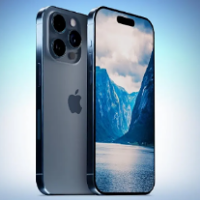
Today, September 12, the tech corporation Apple will introduce the iPhone 15, their newest iPhone model.
According to a Forbes story, this model, which will be introduced at the company’s “Wanderlust” event in Cupertino, California, will be available in four variations: the iPhone 15, iPhone 15 Plus, iPhone 15 Pro, and iPhone 15 Pro Max.
Here are five things you should know about the new iPhone 15 model.
1. The new model is made of titaniu, not stainless steel as some other Apple smartphone models, Senior research analyst at DIGITIMES, Luke Lin reports.
2. The Pro Max model will feature double the optical zoom on the iPhone 14 as it comes with a newly-introduced ‘periscope lens upgrade, performing 5-6x optical zoom.’
3. The Pro models will carry an A17 bionic chip expected to make it perform faster.
4. The iPhone 15 model will feature a USB-C charging port, the same port featured on some Android phone models.
5. Due to its titanium shell, the new model is anticipated to be more expensive to purchase. The following is the speculated price list, as reported by Forbes:
The iPhone 15 starts at $799, the iPhone 15 Plus at $899, the iPhone 15 Pro at $1,099 ($100 increase), and the iPhone 15 Pro Max at $1,299 ($200 increase).
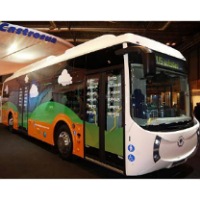
In an effort to reduce the exorbitant cost of Premium Motor Spirit, better known as petrol, the Infrastructure Bank Plc announced its collaboration with FEMADEC Group on Monday to offer 500 buses powered by autogas (Compressed Natural Gas).
Partners in the agreement claimed that the project was created to provide citizens with dependable, affordable, and environmentally friendly travel options, taking into account the negative effects of the nationwide increase in PMS costs.
Under Decree No. 51 of the Federal Republic of Nigeria’s 1992 Constitution, the Infrastructure Bank, originally known as the Urban Development Bank of Nigeria Plc, was founded in 1992 to promote the quick development of infrastructure throughout the nation.
In a statement issued in Abuja on its partnership with FEMADEC, the bank said, “The preliminary offer extended by TIB lays a solid foundation for the expansion of FEMADEC Group’s CNG bus fleet.
“With plans to introduce 500 CNG buses within the next five years, commencing with an initial batch of 50 buses in the forthcoming year, this proposal stands poised to instigate significant change.
“The acceptance of this proposition by FEMADEC Group, notably championed by Fola Akinnola, the Group Chief Executive Officer, is a testament to their zeal and dedication to this alliance.”
The bank described the partnership as a “pivotal endeavour that is primed to redefine Nigeria’s public transportation landscape, offering dependable, cost-effective, and ecologically conscious travel alternatives for citizens, while harmonising with the nation’s broader sustainability ambitions.”
“This partnership represents a remarkable stride towards a more ecologically aware future for Nigeria’s transportation sector, highlighting the shared commitment of both TIB and FEMADEC Group to sustainable advancement and progress.”
It said FEMADEC Group’s strides in operating Compressed Natural Gas buses, including the existing fleet of 20 CNG buses under LAMATA, underscored their unwavering dedication to ecologically sound solutions, a commitment predating the fuel subsidy removal.
“Their leadership within the CNG value chain is undeniable, and the new alliance with TIB underscores their foresight.
“This partnership seamlessly aligns with TIB’s sustainability objectives, echoing their resolute endorsement of the government’s net-zero and climate change agenda.
“The bank’s aspiration to champion Nigeria’s infrastructure progress is evident in its endorsement of pivotal initiatives like this, yielding expansive positive impacts on both the environment and society,” the bank stated.
The bank added that it would continue to make a significant contribution to the country’s growth as a leading financial institution committed to advancing effective and long-lasting infrastructure projects.





FG Withdraws Charges Against ‘Fake Agency’ DG, Adeniyi Adeyemi

Shell Identifies Keys to Nigeria’s Energy Future

Nigeria Records Biggest Rise in Multidimensional Poverty Among Five Countries – UN

Katsina Students Get ₦689.79m Bursary as Gov Radda Doubles Allowances
DOJ Confirms Federal Criminal Investigation After Agents Raid Ilhan Omar’s Home

Peter Obi Slams Tinubu Over ₦7.7tn Debt Interest Against ₦6.2tn Revenue

Trump’s Family Unveils New Cryptocurrency Platform

Senate Denies Receiving Petitions Against Tinubu’s Ambassadorial Nominees

Dangote Cement Lights Up Benue Host Communities With CSR Initiatives

Reps Recommend 3-year Jail Term For Aviation minister

Tems Sets New Record On Billboard Hot 100 Chart

817679 528410I got what you intend, saved to favorites , very decent internet site . 977918
723339 320571Hi there! I could have sworn Ive been to this site before but right after reading via some of the post I realized its new to me. Anyhow, Im certainly glad I identified it and Ill be book-marking and checking back often! 809615
285469 622198I enjoy your composing design, do carry on creating! I is going to be back! 339630
981705 358674Sweet web website , super layout, real clean and utilize pleasant. 356560
337849 622828You produced some decent points there. I looked online for your dilemma and located most people will go together with with the site. 273041