
Business
Asian witness fall in shares and currencies


… as Fed tapering worries
TOKYO – Asian shares fell to a four-week low on Monday as a surprise surge in U.S. jobs growth heightened worries the Federal Reserve will start reducing stimulus as soon as next month — boosting the dollar against the euro, yen and emerging currencies.
MSCI’s broadest index of Asia-Pacific shares outside Japan .MIAPJ0000PUS shed 0.5 percent, hitting its lowest since October 11 and extending Friday’s 1 percent drop.
Jakarta shares .JKSE fell 0.8 percent, Thai stocks .SETI lost 1.5 percent and the Manila bourse .PSI dropped 1.7 percent.
“Stronger than expected U.S. labor market report will increase fears of portfolio capital outflow from emerging markets, and will weigh on current account deficit currencies in particular,” Credit Agricole CIB said in a client note.
 Emerging Asian currencies came under pressure, with the Indonesian rupiah down 1 percent to 11,551 per dollar, hitting a one-month low, and Thai baht off 0.9 percent to 31.66 to a seven-week trough.
The Indian rupee was down 1.3 percent at 63.281 per dollar while the Philippine peso eased 0.5 percent to 43.38 against the greenback, a one-month low.
Major European indexes .FTSE .GDAXI .FCHI were expected to open flat to modestly higher.
U.S. employers took on 204,000 new employees last month, almost twice the number forecast by analysts and defying expectations that the partial U.S. government shutdown would hamper job growth.
The strong data raised the prospect the Federal Reserve may soon decide to start winding down its $85 billion-a-month bond-buying program.
Fed Chairman Ben Bernanke and two other top policymakers suggested continued support for the U.S. central bank’s massive stimulus campaign, however.
A hedge fund manager said it was unlikely that the Fed will start reducing stimulus by year-end.
“If people get concerned about rates in the U.S. moving higher and QE ending sooner, obviously that will have an impact. But I don’t think it’s going to happen anytime soon,” he said.
“I just think they wouldn’t do anything before the end of the year because of the impact on sentiment and consumption. I think it’s too early to talk about it.”
The Chinese CSI300 Index .CSI300 rose 0.4 percent in a choppy session after touching a 2-1/2 month low, with investors awaiting the end of a four-day closed-door policy meeting of the Chinese Communist Party on Tuesday that will set the economic agenda for the next decade.
China’s annual inflation climbed to an eight-month high in October, fuelling market worries about policy tightening as factory output and investment data pointed to signs of stabilization in the world’s second-largest economy.
DOLLAR UP, NIKKEI ADVANCES
The dollar was steady at 99.005 yen, not far from a seven-week high of 99.41 yen reached last Thursday, and up 0.1 percent at $1.33585 to the euro, having gained 0.4 percent on Friday.
Against a basket of major currencies, the dollar .DXY stood at 81.258, within striking distance to a two-month high of 81.482 touched on Friday.
As the yen weakened, Japan’s Nikkei benchmark .N225 climbed 1.3 percent in relatively light trade after losing 0.8 percent last week.
U.S. S&P E-mini futures were little changed in Asian trade after the Standard & Poor’s 500 index .SPX advanced 1.3 percent on Friday.
U.S. Treasury futures added 2 ticks after the 10-year U.S. Treasury yield rose as much as 15 basis points to a four-week high of 2.763 percent on Friday.
Gold slipped 0.3 percent to about $1,284.5 an ounce, adding to Friday’s 1.5 percent decline and languishing near a three-week low on worries that the Fed will soon remove its support for the economy.
Brent crude prices rose 0.3 percent to around $105.4 a barrel, building on Friday’s 1.6 percent rise, which broke a three-day run of losses and rebounded from a four-month trough.
– REUTERS

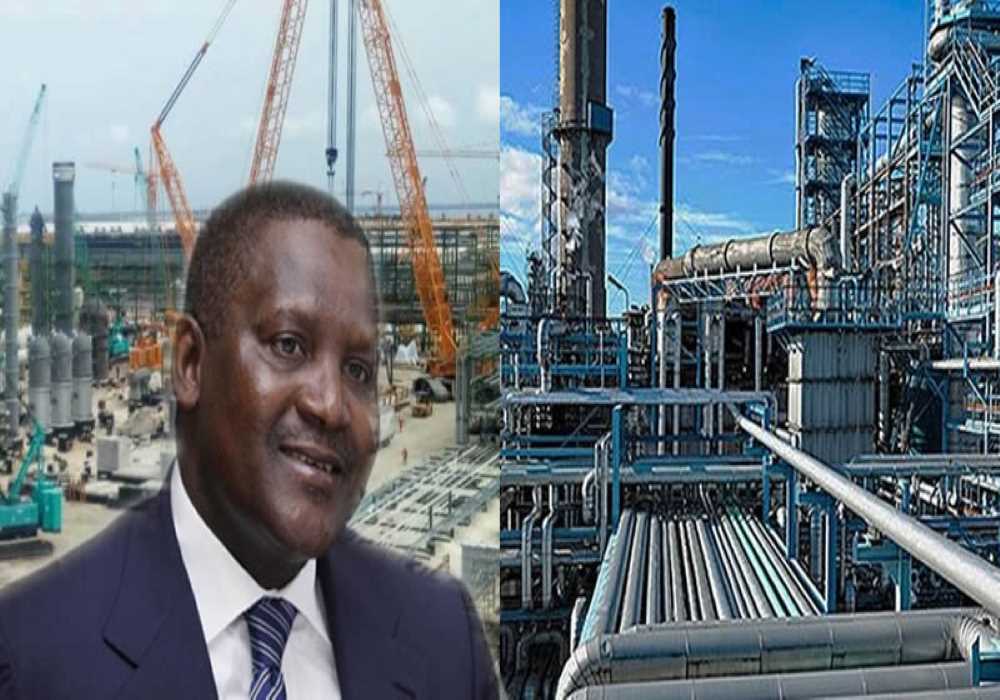
The Dangote Petroleum Refinery and Petrochemicals (DPRP) is set to become the first industrial facility to deploy Honeywell Technologies’ newly launched artificial intelligence platform, in a major technological advancement projected to deliver more than $60 million in annual gross operational benefits at full refining capacity.
The deployment of the platform, known as Forge Plant Cognition, will position the Lekki-based refinery at the forefront of AI-driven industrial operations, combining Honeywell Technologies’ process engineering expertise with NVIDIA’s artificial intelligence capabilities and Dell Technologies’ computing infrastructure to improve refining efficiency, maximise output and strengthen operational reliability. Announcing the development, Honeywell Technologies said the new platform would make its global debut at Dangote Refinery, one of the world’s largest refineries, as part of efforts to unlock greater value from existing industrial assets and transform how complex refining and petrochemical facilities are operated.
According to preliminary assessments, the technology could generate operational benefits exceeding 29 cents per barrel at the refinery. At full-capacity throughput, Honeywell estimates that the improvements could translate into more than $60 million in annual gross benefits. The company, however, clarified that the projection was specific to the Dangote facility, based on preliminary data and subject to actual operating conditions. The development represents another significant step in Dangote Refinery’s technological evolution, as the company moves beyond the construction and commissioning of a world-class industrial complex towards the deployment of advanced digital systems designed to maximise productivity, strengthen competitiveness and support its ambitious expansion programme.
READ ALSO: NALPGAM Preaches Innovation, Safety to LPG Operators
Managing Director and Chief Executive Officer of DPRP, David Bird, said the decision to adopt the technology reflected the refinery’s commitment to operational excellence, innovation and the development of Nigerian engineering talent.
“We chose Honeywell Technologies’ Forge Plant Cognition because the platform can deliver unrivaled industrial expertise combined with differentiated AI capabilities to help us optimize performance, unlock greater value from our operations and evolve how we operate our assets,” Bird said. “This investment reinforces our commitment to operational excellence, advancing technology and developing Nigerian talent to operate at world-class standards.”
Unlike conventional industrial monitoring systems that primarily analyse operating data and generate recommendations, Forge Plant Cognition is designed to integrate real-time plant information with engineering knowledge, advanced calculations, and physics-based models to identify operational constraints and support faster, more informed decisions. The technology will enable refinery engineers and operators to detect potential equipment and process problems before they escalate, identify bottlenecks affecting production and recommend corrective actions to improve throughput, product yields, and overall plant performance.
Honeywell explained that the platform would focus on three critical areas: identifying opportunities to improve refining margins, protecting production by reducing unplanned downtime, and making specialised engineering expertise more readily available to plant personnel. By combining these capabilities, the system is expected to help operators extract greater value from existing equipment while strengthening the reliability and efficiency of interconnected refining processes. Forge Plant Cognition would help transfer specialised process knowledge into AI-powered tools accessible to local engineers and operators, enabling them to solve complex problems more efficiently and develop advanced industrial capabilities. The initiative supports Dangote Refinery’s objective of building a workforce comprising more than 70 per cent Nigerians, while progressively reducing dependence on external technical expertise.
President of Honeywell Technologies UOP, Rajesh Gattupalli, described the collaboration with Dangote as a demonstration of the potential of artificial intelligence to transform large-scale industrial operations.
“Industrial plants are among the most complex operating environments in the world, with enormous potential to realize greater performance and value using digital technologies and connected solutions,” Gattupalli said. “By collaborating with Dangote to launch Forge Plant Cognition, we are demonstrating how AI can help transform industrial operations, driving new levels of productivity, reliability and profitability at significant scale.”
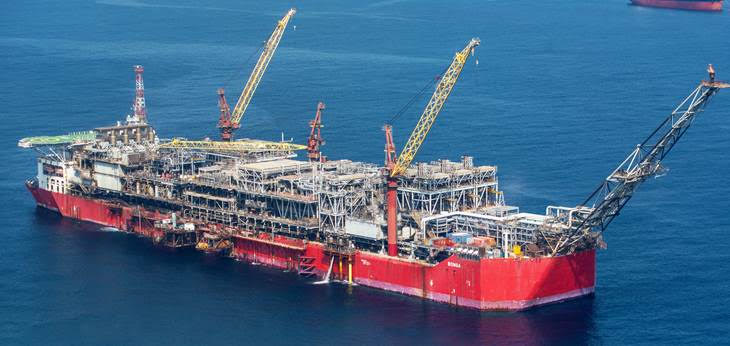
Standard Chartered says it acted as the sole financial adviser to Shell International Limited on the sale of Shell Nigeria Gas Limited to Vaaris Energy Limited, in a transaction expected to be completed in the first half of 2027.
The bank disclosed this in a statement announcing its advisory role in the transaction, which involves one of Nigeria’s leading gas distribution platforms.
Shell entered into an agreement to sell the business on 13 October, 2026, with the transaction expected to provide Vaaris Energy with an established gas infrastructure network serving industrial and commercial customers.
Shell Nigeria Gas provides gas supply solutions to businesses through its extensive distribution infrastructure, positioning the company to benefit from growing domestic gas demand.
READ ALSO: NALPGAM Preaches Innovation, Safety to LPG Operators
Standard Chartered explained that it provided strategic and financial advice throughout the transaction, managing the entire sale process, including transaction preparation and positioning, buyer engagement, deal structuring, negotiations, due diligence coordination and transaction documentation.
Commenting on the transaction, the Chief Executive Officer and Head of Coverage for Africa at Standard Chartered, Dalu Ajene, stated that Nigeria’s gas sector had an important role to play in supporting the country’s economic ambitions and meeting rising domestic energy demand.
“Nigeria’s gas sector has an important role to play in supporting the country’s economic ambitions and meeting growing domestic energy demand. Across Africa, investment in critical energy infrastructure is essential to unlocking industrial growth and long-term development, and this transaction demonstrates the role strategic investment can play in advancing that opportunity. At Standard Chartered, connecting our clients in Nigeria and across Africa to global capital and investors remains a priority. We are pleased to have supported Shell by bringing together the strength of our international network, deep local knowledge and sector expertise.”
The Head of Mergers and Acquisitions for Africa at Standard Chartered, Yemisi Deji-Bejide, said the transaction demonstrated the bank’s capacity to execute complex deals by combining international expertise with local market knowledge.
“We are proud to have advised Shell on the sale of one of Nigeria’s leading gas distribution platforms. As sole financial adviser, we brought together end-to-end M&A execution, deep sector expertise and strong buyer connectivity. This transaction demonstrates the strength of our Africa M&A franchise and our ability to combine global capabilities with local market insight to execute complex, strategically important transactions for our clients.”
The bank said the transaction supported Shell’s ongoing portfolio optimisation strategy while providing a platform for the continued development of Shell Nigeria Gas under Vaaris Energy.
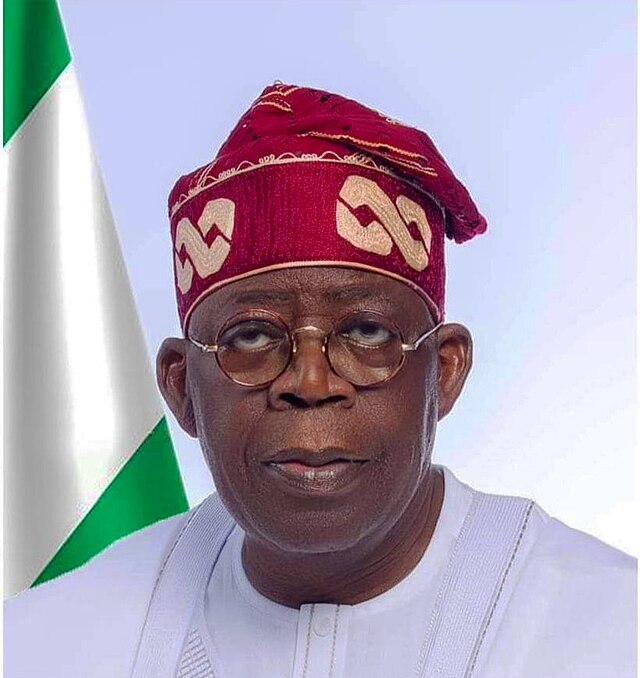
Given the growing capacity of private refiners and their impact on local supplies, Nigeria’s president, Bola Ahmed Tinubu has assured of his government’s commitment to rehabilitating and repositioning Nigeria’s dormant national refineries.
Represented by the Permanent Secretary of the Ministry of Petroleum Resources, Patience Oyekunle, at the 20th OTL Africa Downstream Energy Week in Lagos, on Monday, Tinubu revealed his government’s priorities for the petroleum industry.
He made it clear that the facilities will not be allowed to become stranded investments.
Recall that three government refineries, including the Port Harcourt, Warri and Kaduna refineries, being managed by the Nigerian National Petroleum Company Limited (NNPC Ltd), have been moribund despite billions of naira spent on turnaround maintenance over the years.
READ ALSO: NUPRC Sets Revocation Date for Undeveloped Oil Licences
Speaking at OTL conference, Tinubu said the government was pursuing a more rigorous and commercially sustainable approach to the rehabilitation of the national refineries, with technical assessments, stronger partnerships and improved operational discipline expected to guide the process.
“At the same time, the government remains committed to ensuring that existing national refining assets are not allowed to become stranded investments.
“We are pursuing a more rigorous, commercially sustainable approach to the rehabilitation and repositioning of our refineries, supported by technical assessment, stronger partnerships, and improved operational discipline,“ she stated.
Tinubu emphasised that the objective is to ensure Nigeria refines more of its crude and a fuel supplier to other nations.
“Our objective is clear. Nigeria must first refine more of its crudes, create more value domestically, and become a reliable supplier of energy to Africa,” he said.
The President’s position comes as Nigeria seeks to increase domestic refining capacity and reduce its historical dependence on imported petroleum products, despite having substantial crude oil resources.
He said the country was transitioning from an industry historically characterised by import dependence and infrastructure constraints to one increasingly driven by domestic refining, private investment, market efficiency, value addition and regional competitiveness.
According to him, the reforms introduced under the Petroleum Industry Act (PIA) are intended to create a transparent, commercially viable and investment-friendly industry capable of delivering greater value to Nigerians.
“The reforms under the PIA are designed to create a petroleum industry that is transparent, commercially viable, investment-friendly, and capable of delivering value to Nigerians. Today, we are beginning to see the results,” he said.
Tinubu described the emergence of large-scale private refining capacity as an important turning point for Nigeria’s petroleum industry, citing the Dangote Petroleum Refinery as a major development in the country’s ambition to become a net exporter of refined petroleum products.
He said the refinery had reached its nameplate capacity of 650,000 barrels per day, strengthening Nigeria’s prospects of supplying refined products to other African countries.
“The emergence of large-scale private refining capacity represents an important turning point. The Dangote Refinery has reached its 650,000-per-day main-plate capacity, strengthening Nigeria’s prospect of becoming a net exporter of refined petroleum products and creating opportunities for regional supply,” he said.
The president said the government’s ambition extended beyond increasing crude oil production, stressing that Nigeria needed to develop an energy economy in which its petroleum resources would support industrialisation, manufacturing and other productive activities.
For decades, Nigeria exported crude oil while importing a substantial portion of the petroleum products required to power its economy. Tinubu said his administration wanted to change that pattern by retaining more value within the country through refining, petrochemicals, gas processing and other energy-intensive industries.
He said the government was also seeking to ensure that the country’s oil and gas resources translated into jobs, investment, technology and broader economic prosperity.
“Our commitment is therefore not to simply produce hydrocarbons. It is to create an ecosystem in which hydrocarbons catalyse industrialisation, jobs, investment, technology, and prosperity,” he said.
Tinubu also called on operators across the petroleum value chain to contribute more to domestic industrial development, particularly through investment in local content, technology, infrastructure and human capital.
He said industry stakeholders were expected to take greater responsibility for environmental protection and community development, warning that extracting resources without creating additional value was no longer consistent with the government’s expectations.
“To our industry stakeholders, I say, the era of extracting value without building value is changing. We expect greater investment in local content, technology, infrastructure, human capital, environmental responsibilities, and boost community development,” he said.
The president further urged investors to take advantage of opportunities in Nigeria’s petroleum industry, saying the country remained open to businesses with the technical competence and financial capacity to develop its oil and gas resources.
In his opening speech, the Chairman of the OTL Advisory Board, Adetunji Oyebanji, said Africa’s downstream petroleum industry had made significant progress since the organisation began in 2007, with developments in refining, logistics and market liberalisation expanding the continent’s capacity to meet its energy needs.
Oyebanji said the emergence of large-scale private refining in Nigeria, particularly the Dangote refinery, had changed the prospects for domestic petroleum supply and regional trade.






₦70,000 Monthly Allowance: FG, NLC Leave Minimum Wage Dispute Unresolved
Dangote Refinery Pioneers Honeywell’s AI Technology

Standard Chartered Inks Deal for Shell Gas Sale
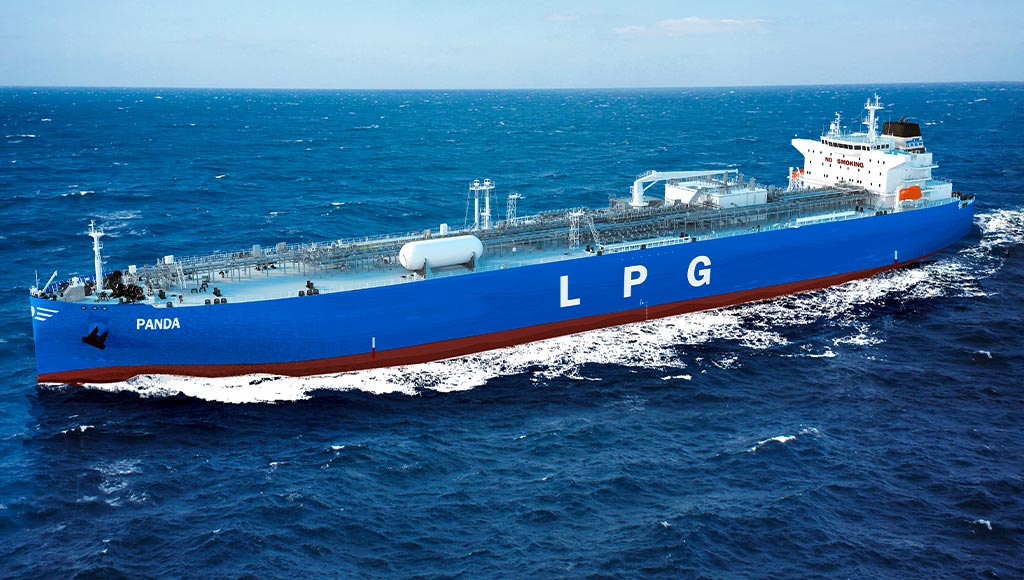
NALPGAM Preaches Innovation, Safety to LPG Operators

Tinubu Promises to Boost Local Production with NNPC Refineries

INEC Opens Online Access to Voters’ Register After Public Outcry

Trump’s Family Unveils New Cryptocurrency Platform

Senate Denies Receiving Petitions Against Tinubu’s Ambassadorial Nominees

Dangote Cement Lights Up Benue Host Communities With CSR Initiatives

Reps Recommend 3-year Jail Term For Aviation minister

Tems Sets New Record On Billboard Hot 100 Chart
