
Business
Twitter’s IPO gives NYSE momentum in battle against Nasdaq


NEW YORK – Twitter Inc’s successful debut on the New York Stock Exchange could help the Big Board win a title it has never held before: the No 1 US listing venue for technology companies.
Nasdaq OMX Group had easily scored the most tech initial public offerings every year from 1999 until last year, when NYSE Euronext pulled even, according to Thomson Reuters data.
Including Twitter this week, 19 tech companies have chosen to go public on the NYSE in 2013, while Nasdaq has won only 14 listings so far this year. Tech IPO proceeds also favor the NYSE over Nasdaq, at $4.6 billion to $1.9 billion, according to Thomson Reuters data.
The reversal is attributed partly to Nasdaq’s high-profile bungling of Facebook Inc’s debut last year, and partly to changes the NYSE made to its listing standards in 2008 to make it easier for smaller, growing companies to qualify. “I wouldn’t even say they won Twitter, I’d say we lost it,” said Bruce Aust, who has headed Nasdaq’s listings business for the past decade. He said that since 2008, when the NYSE changed its listings rules and lowered requirements for market capitalisation and income limits, every deal has become competitive.
“They did that because they realised that once a company lists on Nasdaq, they really stay with us,” said Aust. Twitter began trading at NYSE. Reuters Facebook’s $16 billion IPO was highly anticipated but a glitch in Nasdaq’s fully electronic system set off a series of events that some market makers said prevented them from knowing their positions in the stock – and led to them to lose $500 million collectively.
Nasdaq is voluntarily compensating firms a total of $41.6 million, and was fined another $10 million by the US Securities and Exchange Commission. In contrast, Twitter’s listing on the Big Board went off without a hitch on Thursday, with the stock gaining an eye-opening 73 percent. The NYSE, one of the last exchanges with a trading floor staffed by human beings, had the world’s media observe the debut, with NYSE and Twitter executives, as well as X-Men and Star Trek actor Patrick Stewart, on hand to help promote the offering.
“Clearly, the Facebook fiasco has hurt Nasdaq and the fact that the NYSE pulled off the Twitter IPO with no technological glitches certainly is good for them,” said Jay Ritter, a professor and IPO expert at the University of Florida. Ritter said the probability was “incredibly good” that had the Twitter IPO gone to Nasdaq, it would have gone smoothly as well, and that in reality, there is not much difference to companies when it comes to listing on one exchange or the other.
But the listing business is largely about prestige. WINNING AND LOSING This year has seen the strongest market for US IPOs since 2007, as equity markets soared, helped by continued economic growth and the Federal Reserve’s efforts to keep interest rates low.
The NYSE and Nasdaq have taken steps this year to form closer relationships with technology firms before they go public. The moves come with the passing of the Jumpstart Our Business Startups (JOBS) Act last year in March, which loosened a number of securities regulations in hopes of boosting capital raising, and thereby increasing job growth.
The NYSE said in September it was getting into the $1 trillion-a-year private placement business through a minority stake in Ace Group Inc, which runs a private issuance platform for equity, debt and other securities. Nasdaq plans to create a market for trading shares of unlisted companies in a joint venture with trading platform SharesPost Inc, which now lists more than 200 private companies, including Pinterest, Foursquare, eHarmony and Tumblr.
“We’ll be involved much earlier with these private companies and eventually we hope they’ll go public on Nasdaq,” said Aust. With tech giants like Apple Inc, Microsoft Corp, Google Inc, and Amazon.com Inc in its roster, Nasdaq traditionally has seemed the natural place for technology listings. In 1999, before the dot-com bubble burst, Nasdaq had 246 technology IPOs, or 95 percent of the listings, while the NYSE had just seven, or 2.7 percent, according to Thomson Reuters data.
Fast forward to 2012, and the NYSE had caught up to Nasdaq in tech IPOs, with each recording 17, though proceeds of the NYSE listings, at 2.8 billion were eclipsed by the Nasdaq listings, at $17.5 billion, which benefited from the Facebook IPO. Nasdaq uses a different system for categorizing tech companies, including, for instance, telecommunications services firms in its count.
Thomson Reuters only includes companies classified as high technology using the Standard Industrial Classification system, which groups telecoms separately. Using Nasdaq’s methodology, it has hosted 24 technology IPOs this year, against the NYSE’s 22. The NYSE uses yet a different classification system, and says it has had 26 technology listings so far in 2013.
Doug Chu, head of the NYSE’s Silicon Valley office, pointed to the Big Board’s 2008 listings change as the turn-around point for technology company IPOs. “The culture at the NYSE has changed over the last few years. We’re more proactive and focused on technology and growth companies,” Chu said. Reuters


The Dangote Petroleum Refinery and Petrochemicals (DPRP) is set to become the first industrial facility to deploy Honeywell Technologies’ newly launched artificial intelligence platform, in a major technological advancement projected to deliver more than $60 million in annual gross operational benefits at full refining capacity.
The deployment of the platform, known as Forge Plant Cognition, will position the Lekki-based refinery at the forefront of AI-driven industrial operations, combining Honeywell Technologies’ process engineering expertise with NVIDIA’s artificial intelligence capabilities and Dell Technologies’ computing infrastructure to improve refining efficiency, maximise output and strengthen operational reliability. Announcing the development, Honeywell Technologies said the new platform would make its global debut at Dangote Refinery, one of the world’s largest refineries, as part of efforts to unlock greater value from existing industrial assets and transform how complex refining and petrochemical facilities are operated.
According to preliminary assessments, the technology could generate operational benefits exceeding 29 cents per barrel at the refinery. At full-capacity throughput, Honeywell estimates that the improvements could translate into more than $60 million in annual gross benefits. The company, however, clarified that the projection was specific to the Dangote facility, based on preliminary data and subject to actual operating conditions. The development represents another significant step in Dangote Refinery’s technological evolution, as the company moves beyond the construction and commissioning of a world-class industrial complex towards the deployment of advanced digital systems designed to maximise productivity, strengthen competitiveness and support its ambitious expansion programme.
READ ALSO: NALPGAM Preaches Innovation, Safety to LPG Operators
Managing Director and Chief Executive Officer of DPRP, David Bird, said the decision to adopt the technology reflected the refinery’s commitment to operational excellence, innovation and the development of Nigerian engineering talent.
“We chose Honeywell Technologies’ Forge Plant Cognition because the platform can deliver unrivaled industrial expertise combined with differentiated AI capabilities to help us optimize performance, unlock greater value from our operations and evolve how we operate our assets,” Bird said. “This investment reinforces our commitment to operational excellence, advancing technology and developing Nigerian talent to operate at world-class standards.”
Unlike conventional industrial monitoring systems that primarily analyse operating data and generate recommendations, Forge Plant Cognition is designed to integrate real-time plant information with engineering knowledge, advanced calculations, and physics-based models to identify operational constraints and support faster, more informed decisions. The technology will enable refinery engineers and operators to detect potential equipment and process problems before they escalate, identify bottlenecks affecting production and recommend corrective actions to improve throughput, product yields, and overall plant performance.
Honeywell explained that the platform would focus on three critical areas: identifying opportunities to improve refining margins, protecting production by reducing unplanned downtime, and making specialised engineering expertise more readily available to plant personnel. By combining these capabilities, the system is expected to help operators extract greater value from existing equipment while strengthening the reliability and efficiency of interconnected refining processes. Forge Plant Cognition would help transfer specialised process knowledge into AI-powered tools accessible to local engineers and operators, enabling them to solve complex problems more efficiently and develop advanced industrial capabilities. The initiative supports Dangote Refinery’s objective of building a workforce comprising more than 70 per cent Nigerians, while progressively reducing dependence on external technical expertise.
President of Honeywell Technologies UOP, Rajesh Gattupalli, described the collaboration with Dangote as a demonstration of the potential of artificial intelligence to transform large-scale industrial operations.
“Industrial plants are among the most complex operating environments in the world, with enormous potential to realize greater performance and value using digital technologies and connected solutions,” Gattupalli said. “By collaborating with Dangote to launch Forge Plant Cognition, we are demonstrating how AI can help transform industrial operations, driving new levels of productivity, reliability and profitability at significant scale.”
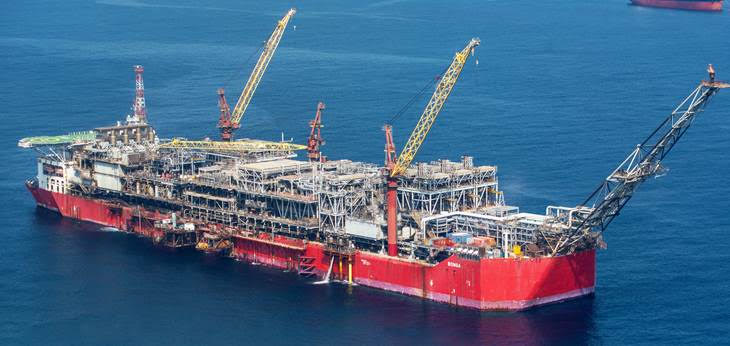
Standard Chartered says it acted as the sole financial adviser to Shell International Limited on the sale of Shell Nigeria Gas Limited to Vaaris Energy Limited, in a transaction expected to be completed in the first half of 2027.
The bank disclosed this in a statement announcing its advisory role in the transaction, which involves one of Nigeria’s leading gas distribution platforms.
Shell entered into an agreement to sell the business on 13 October, 2026, with the transaction expected to provide Vaaris Energy with an established gas infrastructure network serving industrial and commercial customers.
Shell Nigeria Gas provides gas supply solutions to businesses through its extensive distribution infrastructure, positioning the company to benefit from growing domestic gas demand.
READ ALSO: NALPGAM Preaches Innovation, Safety to LPG Operators
Standard Chartered explained that it provided strategic and financial advice throughout the transaction, managing the entire sale process, including transaction preparation and positioning, buyer engagement, deal structuring, negotiations, due diligence coordination and transaction documentation.
Commenting on the transaction, the Chief Executive Officer and Head of Coverage for Africa at Standard Chartered, Dalu Ajene, stated that Nigeria’s gas sector had an important role to play in supporting the country’s economic ambitions and meeting rising domestic energy demand.
“Nigeria’s gas sector has an important role to play in supporting the country’s economic ambitions and meeting growing domestic energy demand. Across Africa, investment in critical energy infrastructure is essential to unlocking industrial growth and long-term development, and this transaction demonstrates the role strategic investment can play in advancing that opportunity. At Standard Chartered, connecting our clients in Nigeria and across Africa to global capital and investors remains a priority. We are pleased to have supported Shell by bringing together the strength of our international network, deep local knowledge and sector expertise.”
The Head of Mergers and Acquisitions for Africa at Standard Chartered, Yemisi Deji-Bejide, said the transaction demonstrated the bank’s capacity to execute complex deals by combining international expertise with local market knowledge.
“We are proud to have advised Shell on the sale of one of Nigeria’s leading gas distribution platforms. As sole financial adviser, we brought together end-to-end M&A execution, deep sector expertise and strong buyer connectivity. This transaction demonstrates the strength of our Africa M&A franchise and our ability to combine global capabilities with local market insight to execute complex, strategically important transactions for our clients.”
The bank said the transaction supported Shell’s ongoing portfolio optimisation strategy while providing a platform for the continued development of Shell Nigeria Gas under Vaaris Energy.
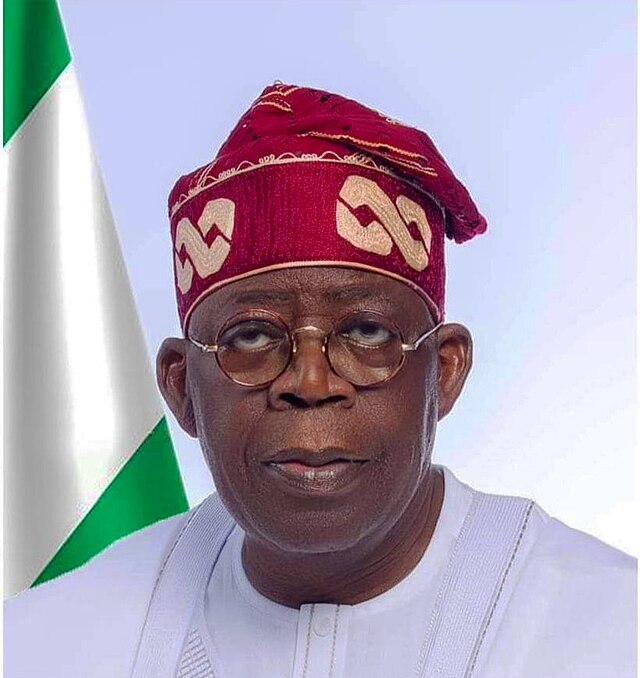
Given the growing capacity of private refiners and their impact on local supplies, Nigeria’s president, Bola Ahmed Tinubu has assured of his government’s commitment to rehabilitating and repositioning Nigeria’s dormant national refineries.
Represented by the Permanent Secretary of the Ministry of Petroleum Resources, Patience Oyekunle, at the 20th OTL Africa Downstream Energy Week in Lagos, on Monday, Tinubu revealed his government’s priorities for the petroleum industry.
He made it clear that the facilities will not be allowed to become stranded investments.
Recall that three government refineries, including the Port Harcourt, Warri and Kaduna refineries, being managed by the Nigerian National Petroleum Company Limited (NNPC Ltd), have been moribund despite billions of naira spent on turnaround maintenance over the years.
READ ALSO: NUPRC Sets Revocation Date for Undeveloped Oil Licences
Speaking at OTL conference, Tinubu said the government was pursuing a more rigorous and commercially sustainable approach to the rehabilitation of the national refineries, with technical assessments, stronger partnerships and improved operational discipline expected to guide the process.
“At the same time, the government remains committed to ensuring that existing national refining assets are not allowed to become stranded investments.
“We are pursuing a more rigorous, commercially sustainable approach to the rehabilitation and repositioning of our refineries, supported by technical assessment, stronger partnerships, and improved operational discipline,“ she stated.
Tinubu emphasised that the objective is to ensure Nigeria refines more of its crude and a fuel supplier to other nations.
“Our objective is clear. Nigeria must first refine more of its crudes, create more value domestically, and become a reliable supplier of energy to Africa,” he said.
The President’s position comes as Nigeria seeks to increase domestic refining capacity and reduce its historical dependence on imported petroleum products, despite having substantial crude oil resources.
He said the country was transitioning from an industry historically characterised by import dependence and infrastructure constraints to one increasingly driven by domestic refining, private investment, market efficiency, value addition and regional competitiveness.
According to him, the reforms introduced under the Petroleum Industry Act (PIA) are intended to create a transparent, commercially viable and investment-friendly industry capable of delivering greater value to Nigerians.
“The reforms under the PIA are designed to create a petroleum industry that is transparent, commercially viable, investment-friendly, and capable of delivering value to Nigerians. Today, we are beginning to see the results,” he said.
Tinubu described the emergence of large-scale private refining capacity as an important turning point for Nigeria’s petroleum industry, citing the Dangote Petroleum Refinery as a major development in the country’s ambition to become a net exporter of refined petroleum products.
He said the refinery had reached its nameplate capacity of 650,000 barrels per day, strengthening Nigeria’s prospects of supplying refined products to other African countries.
“The emergence of large-scale private refining capacity represents an important turning point. The Dangote Refinery has reached its 650,000-per-day main-plate capacity, strengthening Nigeria’s prospect of becoming a net exporter of refined petroleum products and creating opportunities for regional supply,” he said.
The president said the government’s ambition extended beyond increasing crude oil production, stressing that Nigeria needed to develop an energy economy in which its petroleum resources would support industrialisation, manufacturing and other productive activities.
For decades, Nigeria exported crude oil while importing a substantial portion of the petroleum products required to power its economy. Tinubu said his administration wanted to change that pattern by retaining more value within the country through refining, petrochemicals, gas processing and other energy-intensive industries.
He said the government was also seeking to ensure that the country’s oil and gas resources translated into jobs, investment, technology and broader economic prosperity.
“Our commitment is therefore not to simply produce hydrocarbons. It is to create an ecosystem in which hydrocarbons catalyse industrialisation, jobs, investment, technology, and prosperity,” he said.
Tinubu also called on operators across the petroleum value chain to contribute more to domestic industrial development, particularly through investment in local content, technology, infrastructure and human capital.
He said industry stakeholders were expected to take greater responsibility for environmental protection and community development, warning that extracting resources without creating additional value was no longer consistent with the government’s expectations.
“To our industry stakeholders, I say, the era of extracting value without building value is changing. We expect greater investment in local content, technology, infrastructure, human capital, environmental responsibilities, and boost community development,” he said.
The president further urged investors to take advantage of opportunities in Nigeria’s petroleum industry, saying the country remained open to businesses with the technical competence and financial capacity to develop its oil and gas resources.
In his opening speech, the Chairman of the OTL Advisory Board, Adetunji Oyebanji, said Africa’s downstream petroleum industry had made significant progress since the organisation began in 2007, with developments in refining, logistics and market liberalisation expanding the continent’s capacity to meet its energy needs.
Oyebanji said the emergence of large-scale private refining in Nigeria, particularly the Dangote refinery, had changed the prospects for domestic petroleum supply and regional trade.






₦70,000 Monthly Allowance: FG, NLC Leave Minimum Wage Dispute Unresolved
Dangote Refinery Pioneers Honeywell’s AI Technology

Standard Chartered Inks Deal for Shell Gas Sale
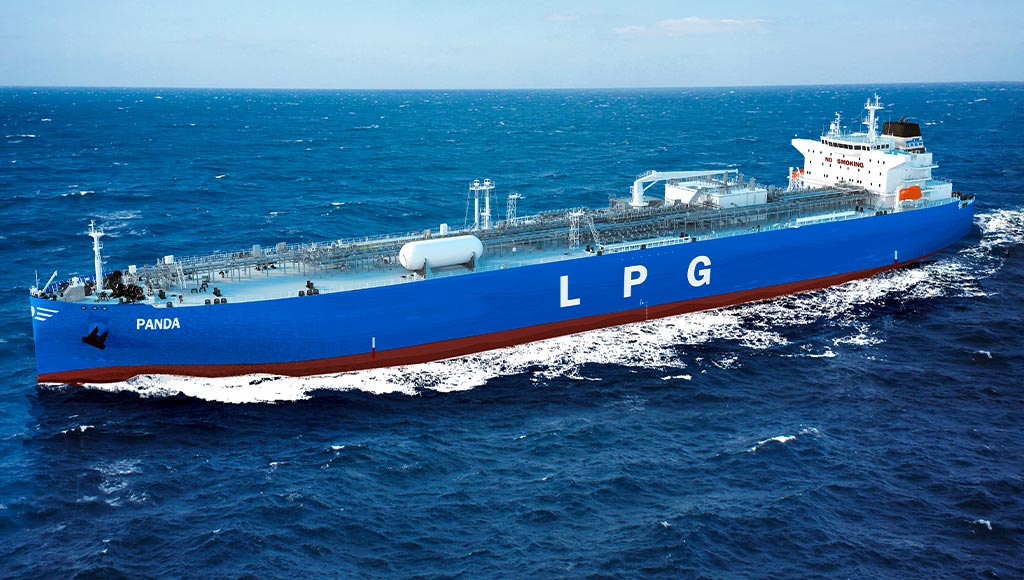
NALPGAM Preaches Innovation, Safety to LPG Operators

Tinubu Promises to Boost Local Production with NNPC Refineries

INEC Opens Online Access to Voters’ Register After Public Outcry

Trump’s Family Unveils New Cryptocurrency Platform

Senate Denies Receiving Petitions Against Tinubu’s Ambassadorial Nominees

Dangote Cement Lights Up Benue Host Communities With CSR Initiatives

Reps Recommend 3-year Jail Term For Aviation minister

Tems Sets New Record On Billboard Hot 100 Chart
