
NEWS
ASUU Adamant, Refuses To Call Off Strike

The Academic Staff Union of Universities (ASUU) on Monday extended its six-month-old strike.
A member of the union, who pleaded anonymity, confirmed the development to Channels Television following a National Executive Council (NEC) meeting of the striking varsity teachers.
More details later…
Read Also >> ASUU Accuses FG Of Plot To Deprive Nigerian Youths Education



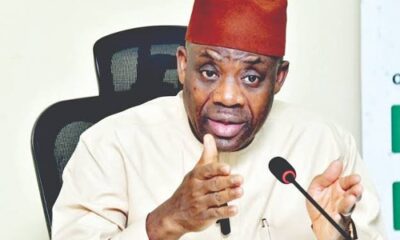




Kaduna State Governor Uba Sani has handed over land titles to displaced residents of nine communities in Birnin Yero, Igabi Local Government Area, to enable them to rebuild their homes and regain shelter.
The Kaduna State Ministry of Information and Culture disclosed the development on Sunday, October 18, 2026, describing the exercise as an intervention aimed at helping displaced residents rebuild their homes.
According to the ministry, each beneficiary is being allocated a plot of land to support resettlement and provide shelter for affected residents.
SEE ALSO: Kaduna Moves to Clear 5-Year Promotion Backlog for 24,000 Teachers
“ He is officially handing over land titles, giving each person a plot of land to rebuild their homes and regain shelter,” the ministry’s announcement stated.
The ministry also noted that Governor Sani had continued to support displaced communities across Kaduna State since assuming office.
The latest exercise focuses on nine communities in Igabi Local Government Area, with the allocation of land intended to help affected residents rebuild their homes and regain stability.
The development comes amid previous reports concerning land disputes and displacement affecting communities in Kaduna State.
In September 2026, reports indicated that the Kaduna Geographic Information Service (KADGIS) had resolved more than 5,000 land disputes and restored over 150 property titles.
The agency also reported that alternative plots had been provided to some communities affected by previous demolitions.
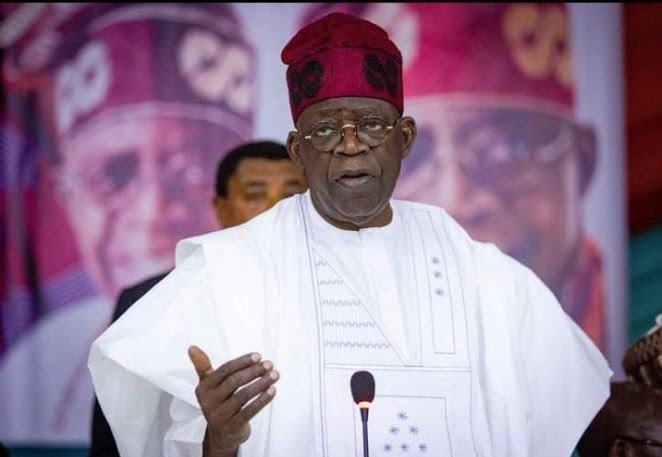
The Presidency has rejected Oyo State Governor Seyi Makinde’s claim that the Federal Government is withholding ₦250 billion in Nigeria LNG Limited (NLNG) dividends for each state, describing the allegation as false and inconsistent with the company’s historical dividend payments.
The rebuttal was contained in a statement issued on Sunday by Bayo Onanuga, Special Adviser to President Bola Tinubu on Information and Strategy.
Makinde had alleged that the Federal Government would not release the funds until after the 2027 general elections, despite states having identified development projects for which the money was expected.
ALSO READ: “Makinde Never Owed Salary Despite FAAC Changes” — APM Chieftain Adelore
The governor made the claim on Friday at the 2027 Budget Stakeholders’ Consultative Engagement held at Olola Ogunlana Hall, International Conference Centre, University of Ibadan.
“Each state was supposed to get ₦250 billion. We had already identified projects that would expand Oyo State’s economy. But they have now said the money will not be paid until after the election. Is the election more important than the people of Nigeria?” Makinde said.
However, the Presidency disputed the governor’s figures, arguing that the amount he cited would require an exceptionally large dividend payment from NLNG.
“Makinde’s latest claim that the Federal Government is withholding the NLNG dividend windfall is false and should be disregarded,” Onanuga stated.
According to the presidential aide, paying ₦250 billion to each of Nigeria’s 36 states would amount to ₦9 trillion, excluding the Federal Government, the Federal Capital Territory and the 774 local government councils.
He explained that under the Federation Account Allocation Committee (FAAC) revenue-sharing formula, states receive 26.72 per cent of distributable Federation Account revenue.
Onanuga said NLNG would have to pay more than ₦33.68 trillion, equivalent to approximately $25 billion, into the Federation Account in a single declaration for the states’ share alone to reach ₦9 trillion.
“NLNG has never paid $25 billion in dividends to the Federation Account in a single payout,” he said.
The Presidency also stated that NLNG had paid approximately $21.5 billion in dividends to the Federation over the past 25 years, with less than $3 billion realised since Tinubu assumed office.
Onanuga argued that these figures contradicted the allegation that a single dividend payment exceeding the company’s total historical distribution to the Federation was being withheld.
“Therefore, any claim that a single payout exceeds the company’s entire lifetime distribution to the Federation—and is being withheld—defies basic logic and economic reality,” he stated.
The presidential aide further criticised Makinde’s public statements, accusing the governor of making misleading claims since embarking on his presidential ambition ahead of the 2027 elections.
“We expect Governor Makinde to be more measured in his public conduct and utterances,” Onanuga said.
He also recalled Makinde’s previous description of the substantial financial allocations from the Federation Account to states, including Oyo, as “voodoo.”
While acknowledging that Makinde was free under Nigerian law to pursue his presidential ambition, Onanuga urged him to avoid what the Presidency described as false claims and disinformation.
“Under Nigerian law, Governor Makinde is free to pursue his presidential ambition. He should desist from making falsehoods and disinformation the hallmarks of his campaign,” he stated.
The Presidency urged Nigerians to disregard the governor’s allegation, arguing that it could mislead citizens and create unnecessary hostility towards the Federal Government.
“We urge the public to disregard these unfounded claims, which serve only to mislead citizens and stoke needless disaffection against the Federal authorities,” Onanuga added.
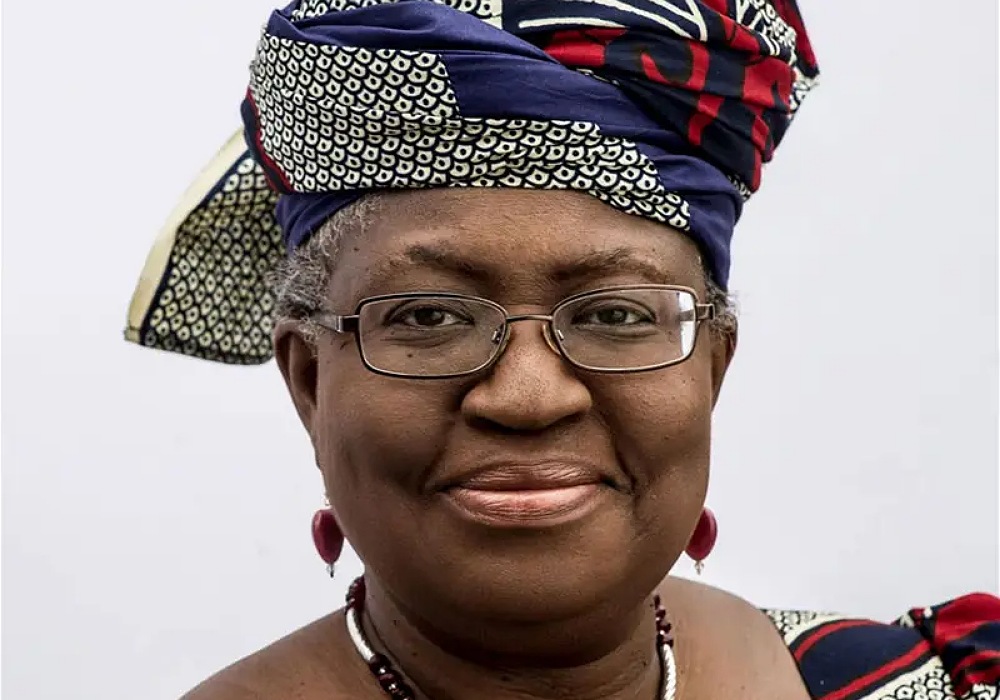
The 2027 presidential candidate of the African Action Congress (AAC), Omoyele Sowore, has challenged the Director-General of the World Trade Organisation (WTO), Ngozi Okonjo-Iweala, to identify the individuals and companies allegedly involved in the $2.4 billion oil subsidy fraud she said she uncovered while serving as Nigeria’s Minister of Finance.
Sowore made the demand in a statement posted on X on Sunday, questioning the evidence supporting the alleged fraud and its reported connection to the kidnapping of Okonjo-Iweala’s mother in 2012.
SEE ALSO: 2027: No New Taxes Under My Gov’t If Elected – Sowore Clarifies
His response followed reports of an interview in which Okonjo-Iweala recounted how her efforts to uncover an alleged $2.4 billion fuel subsidy fraud led to threats against her and the abduction of her mother, Kamene Okonjo.
The initial report, published by Nigerian media outlets on Saturday and Sunday, October 17 and 18, followed Okonjo-Iweala’s account of the incident and her experience fighting corruption while serving in government.
In his response, Sowore questioned the identities of those allegedly responsible for the fraud and the availability of documentary evidence supporting the claims.
“During her two terms at the center of Nigeria’s economic management, who exactly did she discover was responsible for this multibillion-dollar subsidy fraud?” he asked.
He also demanded details of the companies and individuals allegedly implicated, as well as the findings of investigations into the matter.
“Which companies and individuals were implicated? Where are the audit findings, investigation reports and records of prosecution?” Sowore queried.
The AAC presidential candidate also criticised Okonjo-Iweala’s book, Fighting Corruption Is Dangerous, in which she recounted the kidnapping and linked it to her anti-corruption efforts.
Sowore argued that the book did not provide evidence identifying those responsible for the alleged fraud or explaining what happened to the money.
He further questioned the evidence connecting the alleged subsidy fraud investigation to the kidnapping of Okonjo-Iweala’s mother.
According to Sowore, police records, prosecution records and judicial findings concerning the kidnapping pointed to the alleged involvement of palace guards, relatives and domestic workers.
He maintained that the circumstances surrounding the incident should be examined using verifiable evidence, rather than accepting or dismissing competing accounts without proper scrutiny.
Sowore also questioned why, according to his understanding, Okonjo-Iweala had not publicly challenged the police’s account of the kidnapping or demanded a fresh, independent investigation.
He criticised Bloomberg Television journalist Francine Lacqua over her handling of Okonjo-Iweala’s account, arguing that further verification was necessary.
Returning to the central issue, Sowore asked: “Who stole the alleged $2.4 billion?”
He also demanded to know where the audit findings were, which companies and individuals were implicated, what became of the investigations and what evidence established a direct connection between the alleged fraud and the kidnapping.






Gov Uba Sani Hands Over Land Titles to Displaced Residents of Nine Kaduna Communities

NDC Withdraws Recognition of Diaspora Chapters Over Court Rulingq

2027: Presidential Aide Nkwocha Warns South-East Over One-Term Presidency Deal
‘Impartiality in Doubt’ – ADC Urges Senate to Reject INEC Nominee Over Sokoto Governor Link

Sanwo-Olu Pledges Full Support as Lagos Prepares to Host 2026 CAF Awards

JUST IN: Presidency Rejects Makinde’s Claim of ₦250bn NLNG Dividends for Each State

Trump’s Family Unveils New Cryptocurrency Platform

Senate Denies Receiving Petitions Against Tinubu’s Ambassadorial Nominees

Dangote Cement Lights Up Benue Host Communities With CSR Initiatives

Reps Recommend 3-year Jail Term For Aviation minister

Tems Sets New Record On Billboard Hot 100 Chart
