
Energy
At GOCOP Confab: Liyel Imoke says alleged expenditure of a phantom $16b delayed Nigeria’s power sector reforms

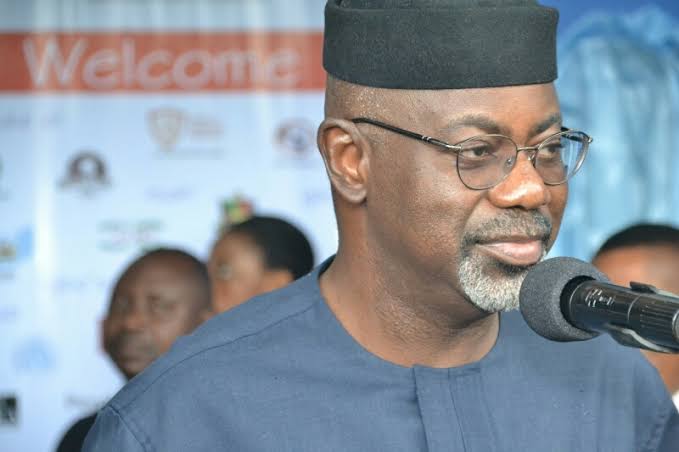
Imoke, who was also Chairman of the Power Sector Technical Board under the Obasanjo administration, stated this as a matter of fact in his keynote at the 8th Annual Conference of the Guild of Corporate Online Publishers (GOCOP), themed: “Nigeria: Tackling insecurity, power deficit, and transitioning to digital economy.”
Admitting that the National Electric Power Authority (NEPA), as it then was, was a monopoly, he said that electricity distribution was also a monopoly even as the execution of so many programmes faced various challenges.
He referred to the undue delay in implementation of the power sector reforms, which resulted from the probe of the claim of a phantom expenditure of $16 billion on the sector under the administration.
According to him: “The power sector probe took about two years. The delay led to huge cost overruns; doubling costs of various contracts awarded during my tenure. Several of these projects were delayed in completion. As we speak, we still have several IPP projects that are ongoing.”
He said that at the end of the probe, they found out that there was no missing $16b, but lamented that the alleged expenditure of the phantom $16b had been used as a political tool to criticize “those of us in government.”
Imoke fingered inadequate information as the trigger for the allegation, pointing out that, for instance, on his watch as Minister of Power, the actual spending was between $2b and $3b, much of which went to the original electric manufacturer.
The former power minister said that insecurity, power deficit, and the slowness in Nigeria’s transition to a full digital economy were challenges impeding national growth and development.
According to him: “These are challenges that impede our growth as a nation. They make us less globally competitive. If you look at electricity insecurity and digital economy and if we tackle these, we will be on our way to economic growth.”
He said to unlock Nigeria’s potential, the administration must tackle insecurity, noting that there had been insurgency and the emergence of Boko Haram, which split into ISWAP.
“We have experienced banditry, kidnapping, armed killings, mass kidnapping, and illegal mining. These days, we can’t go to a gathering of this magnitude without seeing someone who had been kidnapped before. This is one of our new realities,” he stated.
He implicated ethnic tension as a contributory cause of communal violence, adding that grievances in the Niger Delta caused a lot of insecurity in the region in the 2000s.
Imoke spoke about organized private crimes in the Gulf of Guinea, which created insecurity in the area and the separatist marginalization in the southeast region, leading to agitation
He stated that, for instance, between 2009 and 2020, insurgency by Boko Haram alone resulted in over 40,000 deaths.
Imoke listed poverty, high unemployment rate, which was in 1999 put at six per cent, in 2022 put at 22 per cent but which as of today is approaching 40 per cent, weak governance and corruption as well as climate change, as some of the factors that contributed or fuelled insecurity in the country.
He also listed proliferation of small arms and violent crimes across the country as a sore thumb, lamenting that there were more arms with some non-state actors put in their hands by desperate politicians and which at the end of elections, were not retrieved from them and on which they now depended to survive.
Saying that hope was not lost, Imoke declared that successive administrations had succeeded in degrading Boko Haram and recovering territories in the Northeast hitherto seized by the group.
According to him, “The military was able to degrade the group and reclaim the areas in the Northeast around Maiduguri.”
He listed other successes as the decrease in Boko Haram insurgency and deaths by 23 per cent according to the global terrorism index, adding that “there is also reduction of militancy in the Niger Delta as there is no more MEND in the region.”
He continued: “Oil production has significantly rebounded until recently because during the era of MEND, oil production dropped below 1.5 m barrels per day.
“There is anti-piracy measure launched through NIMASA and international collaborators to reduce the piracy in the Gulf of Guinea. Piracy decreased by 58 per cent between 2020 and 2021 in the Gulf of Guinea.
“In the Southeast, the arrest of Nnamdi Kanu is an achievement in the region…Nigerian government has increased its surveillance measures; its counter insurgency operation has been used in combating terrorism. We now have drone technology and others to attack security issues across the board. The persistent Boko Haram issue has been watered down, but there is a humanitarian issue. About 2.7m people have been affected. The UN said that 350,000 people have died as a result of insurgency.”
He, however, noted that Herder-farmers’ conflict was still ongoing, pointing out that over 2,600 people were reportedly killed in 2021 alone.
The former Cross River State governor said that continued separatist agitation had led to the death of police officers as well as IPoB members, adding that there had been extra judicial killings and arbitrary arrests, among others.
He said a multifaceted approach was required to effectively tackle security issues in Nigeria, recommending among others community policing, which should be legally regulated, deployment of vigilance groups in securing the communities, and giving consideration to decentralisation of security rather than centralisation that has not worked.
He also established a nexus between security and economy, arguing that “until we can address the state of our economy, we will not able to address security issues effectively.”
He stated that education, skill acquisition, entrepreneurship training, and access to SMES funding were key, adding that a strong and comprehensive rural development programme was necessary to address banditry and farmer-herder conflicts.
“I am a strong believer in peace and mediation. If the government can establish dialogue platforms between farmers and herders, it would reduce competition over land,” he said.
He also said that the procurement process must be transparent and resources should be deployed in the welfare and training of security personnel, adding that the nation’s judicial system must be able to tackle impunity.
While dwelling on power deficit, Imoke said that there was a lack of continuation of policies and programmes, pointing out that “your predecessor is your most valuable material. We always assume that our predecessor did not know anything, and there is a tendency to want to start afresh. It is important for me to always go back to my predecessor to ask for guidance.”
Admitting that electricity problem in Nigeria is the most humongous problem ever, Imoke said that with over 200 million Nigerians, the country’s installed capacity was like 13,000 megawatts. He said: “It sounds like good news, but we only manage to distribute an average of 4,000 megawatts whereas there are potential distributable 20,000 megawatts.”
He reeled out some sobering comparative statistics about per capita electricity consumption by Nigeria and some countries on the African continent based on recent data.
According to the data referred to by Imoke, “Nigeria per capita electricity consumption is between 150 and 200 kilowatts hours per year (kilowatts hour is the amount of electricity delivered to each household in the country in a year); Ghana is between 800 and 1000 kilowatts hour per year; South Africa is between 4000 and 5000 kilowatts hours per year while Ivory coast is between 500 and 600 kilowatts hour per year.”
Imoke lamented the Nigerian situation, adding that “these tell you the strengths of industrial bases of these countries.”
He, however, noted that despite numerous reforms in Nigeria, the power sector had continued to struggle.
Imoke asked if there was a solution in the face of growing demand? He resolved the question somewhat in the negative, pointing out that with the exponential growth in Nigerian’s population, there was a concomitant rising demand on the electricity supply.
On the transitioning to digital economy, Imoke said the growth in e-commerce platforms like Jumia and others was allowing for competition and efficiency.
According to him: “We are in the fourth industrial revolution, and it is a digital revolution. We missed out on the first, second, and third industrial revolutions. It is for us now as a nation, with a deliberateness of government policy, not to lose out on the fourth industrial revolution.
“All the three sectors-security, power and digital economy – are critical to our growth. The three are intertwined challenges that Nigerian must address to unlock her potential.
“With the collective effort of all, Nigerian can truly emerge as a global leader. Let us seize this moment to build a secure, electrified, and digitalized Nigerian that offers prosperity, growth, and development to all.”






Oil output from the United Arab Emirates (UAE) rose to record levels in September, underscoring its resilience even amidst the Middle East crises and liberation from OPEC+ limits.
The International Energy Agency (IEA) issued the data in its monthly report, adding that Abu Dhabi raised total oil production, including condensates, by 400,000 bpd to 5.3 MMbpd.
According to the IEA, the UAE bolstered crude output to more than 4.4 MMbpd, nearing its maximum capacity, which surpasses the previous highs for total oil in August, and crude oil in June.
READ ALSO: Africa’s Energy Security Conversations Pull Industry Executives Together
The UAE has been one of the most successful among regional producers in restoring flows through the Strait of Hormuz, by drawing on a fleet of tankers to discreetly shuttle cargoes through the chokepoint and then transfer them onto other vessels. In addition, the country’s decision to leave the Organization of the Petroleum Exporting Countries (OPEC) as of May has freed it from the group’s output caps, a source of frustration for years.
Its gains contributed to a wider recovery in flows from Gulf producers, which reached more than 75% of pre-war levels in September, led by Saudi Arabia, according to the Paris-based IEA.
Still, it’s unclear how far the regional rebound has withstood a new wave of Iranian attacks on tankers transiting Hormuz, and escalating hostilities carried out by the Houthi rebel faction in Yemen.
The UAE depleted its observable above-ground inventories at a record pace of more than 270,000 bpd in September, drawing them to an all-time low, according to the IEA.
Africa’s gas potential and strengthening the continent’s energy security would take centre stage at the Africa Interviews Sustainability Forum (AISF 2026) scheduled for Wednesday, October 21, in Lagos.
Biztellers reports that top officials of Oando Plc and Renaissance Africa Energy Company Limited, Ayotola Jagun and Tony Attah, respectively, will be leading other industry leaders in the discussion.
Jagun, Oando’s Executive Director, Chief Corporate Services and Sustainability Officer, and Attah, Managing Director and Chief Executive Officer of Renaissance Africa Energy Company Limited, will participate in a panel discussion alongside Lamé Verre of Lean In Equity & Sustainability (LiNES) and Dapo Filani, Managing Director and Chief Executive Officer of Waltersmith.
The panel will examine Africa’s energy security and the role of natural gas in the continent’s energy transition.
READ ALSO: 30 Nigerians Bag Postgraduate Scholarship from NNPC Ltd, Eni
The forum, launched in 2024, is holding its third edition under the theme, “Energy Security and Africa’s Energy Transition: Defining the Role of Gas.”
This year’s gathering will explore how African countries can strengthen energy security, attract investment in gas development and balance growing energy demand with sustainability objectives.
Verre, a London-based energy and sustainability executive, is Co-founder and Chair of the Advisory Board of LiNES. She will bring her international experience in sustainability, decarbonisation and low-carbon development to the discussion. Her work spans low-carbon initiatives across sectors, including marine, the built environment, forestry, land and agriculture.
Jagun brings extensive experience in corporate governance, regulatory compliance, enterprise risk management and sustainability. Her contribution will provide a corporate sustainability and governance perspective on the relationship between energy development, environmental responsibility and Africa’s transition priorities.
Attah, a former Managing Director and Chief Executive Officer of Nigeria LNG Limited, has extensive experience in the oil and gas industry, particularly in natural gas development and major energy operations.
Filani leads Waltersmith, an indigenous Nigerian energy company with interests across the oil and gas value chain. His participation will highlight the role of indigenous energy companies in strengthening domestic energy capacity and supporting economic development.
The panel will consider what is required to unlock greater investment in Africa’s gas sector, how natural gas can support industrial growth while advancing sustainability, and what practical measures could help translate the continent’s energy ambitions into tangible outcomes.
Beyond the panel discussion, AISF 2026 will provide opportunities for engagement among senior energy executives, policymakers, investors and business leaders.
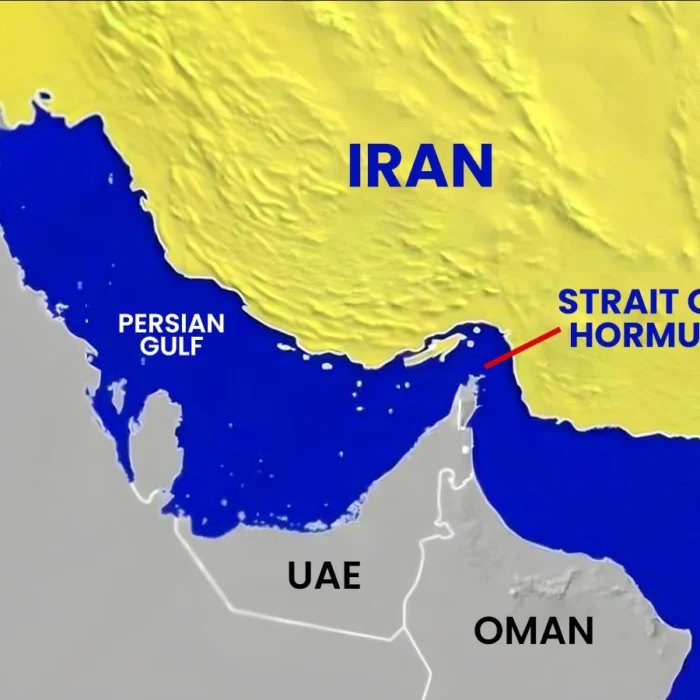
Oil prices on Monday went south, after crude exports from the Middle East rose above pre-war levels, while the Group of Seven nations pledged to release 100 million barrels of crude and diesel from emergency reserves.
Brent crude futures fell by $1.20, or 1.17 percent, to $101.05 a barrel, while West Texas Intermediate crude declined by $1.16, or 1.27 percent, to $89.95 per barrel, according to Reuters.
Middle Eastern crude exports exceeded pre-war levels on four of the seven days in the final week of September, shipping data showed, despite attacks on vessels passing through the strategic Strait of Hormuz.
The increase in exports, combined with the G7’s planned release of emergency stocks, helped put downward pressure on crude prices.
The G7 countries agreed on Friday to release 100 million barrels of diesel and crude from emergency reserves and pledged to refrain from energy export restrictions following pressure from United States President Donald Trump.
READ ALSO: Ndindi Nyoro Gives Ruto 14 Days to Disclose Dangote Refinery Deal
However, the scale of the additional supply remained uncertain.
IEA Executive Director, Fatih Birol, said last week that member countries had already released about two-thirds of the 400-million-barrel volume.
Meanwhile, supply concerns remained elevated as fighting continued across parts of the Middle East.
Saudi Aramco Chief Executive Officer, Amin Nasser, also warned that crude oil and refined fuel supplies were expected to remain stretched.
He said rebuilding global stockpiles after emergency withdrawals could take two years.
The United States Strategic Petroleum Reserve fell to 283 million barrels last week, its lowest level since October 1982, according to data from the US Department of Energy.
The supply outlook was further complicated by the continuing conflict involving Saudi Arabia and Iran-backed Houthi forces in Yemen.
Yemeni government forces attacked Houthi positions in the Dhubab district overlooking the Bab el-Mandeb Strait on Monday, according to two military sources.
The development came a day after the internationally recognised government launched a campaign to retake Houthi-held territory.
Meanwhile, OPEC+ postponed a review that would determine its 2027 oil output quotas after the war involving Iran disrupted projects aimed at expanding production capacity across the Middle East.






Showunmi Urges South-East to Judge Tinubu by Projects, Not Propaganda

2027: ‘North Has No Reason to Break Agreement’ — Gov Yusuf Backs Tinubu

Aircraft Averts Crash, After Losing Door Mid-Air in Abuja

Bandits Kill 70-Year-Old Man in Katsina, 27 Victims Rescued

‘Nigeria Is Doomed Under Tinubu’ — Kenneth Okonkwo Backs Atiku for 2027

Lagos: LASTMA Announces Traffic Restrictions Along Route to Toll Gate

Trump’s Family Unveils New Cryptocurrency Platform

Senate Denies Receiving Petitions Against Tinubu’s Ambassadorial Nominees

Dangote Cement Lights Up Benue Host Communities With CSR Initiatives

Reps Recommend 3-year Jail Term For Aviation minister

Tems Sets New Record On Billboard Hot 100 Chart
