
Energy
PETAN Bestows Award For Excellence On Shell, Okunbor

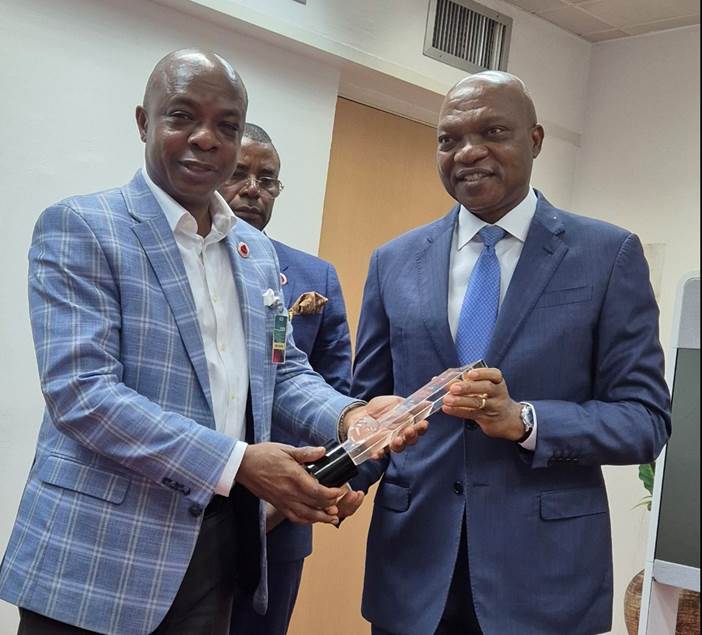
The Managing Director, The Shell Petroleum Development Company of Nigeria Limited (SPDC) and Country Chair, Shell Companies in Nigeria (SCiN), Osagie Okunbor, has received an “Award of Excellence to an Astute and Visionary Technocrat” from the newly instituted executive leadership of the Petroleum Technology Association of Nigeria (PETAN).
Okunbor received the award in a short ceremony in Lagos, recently, where the PETAN executive, led by its chairman, Engineer Wole Ogunsanya, said “The award is to acknowledge Country Chair’s leadership of Shell and the long running relationship between PETAN, PETAN member companies and Shell.”
Ogunsanya said, “Shell has been a leader in driving the growth of local capacity participation in the Nigerian oil and gas industry. Several of PETAN members had their first breakthroughs with Shell while even more are currently providing services to Shell Companies in Nigeria.
ALSO READ: Report: Shell Will Lay Off Hundreds In Workforce, Houston To Be Impacted
“PETAN member companies pledge to consistently deliver quality products and services to Shell in particular.”
He also expressed appreciation for the Shell partnership with PETAN and the Nigeria Content Development and Monitoring Board (NCDMB) in the Shell-PETAN Internship program that is giving young Nigerian graduates the opportunity to have a two-year on-the-job training in their respective disciplines, to enhance their employability.
“This program has been a resounding success with several of the interns retained by the participating members”, Ogunsanya said.
Country Chair, Shell Companies in Nigeria, Okunbor, thanked the PETAN delegation for the recognition.
He said, “The growth of participation of indigenous companies in the oil and gas industry is a good thing. Shell companies in Nigeria retain the commitment to continue to create opportunities for Nigerian companies to participate in our business.
“For example, in 2023, SPDC, Shell Nigeria Exploration and Production Company (SNEPCo) and Shell Nigeria Gas Limited (SNG) awarded $1.98 billion in contracts to Nigeria-registered companies, marking a 3% increase in value from the previous year. SCiN also directly employed more than 2,500 people (of whom 96% were Nigerian nationals) with over 9,000 contractors supporting operations.”
Okunbor reiterated that Shell has invested in game-changing businesses in Nigeria for over 60 years and will continue to power progress, positively impact lives, and unlock opportunities.
The Petroleum Technology Association of Nigeria (PETAN) is an association of Nigerian indigenous technical oilfield service companies in the upstream and downstream sectors of the oil and gas industry. PETAN was formed in 1994 to bring together Nigerian oil & gas entrepreneurs to create a forum for the exchange of ideas with the major operators, industry stakeholders and policy makers. PETAN is celebrating its 30th anniversary in December 2024.





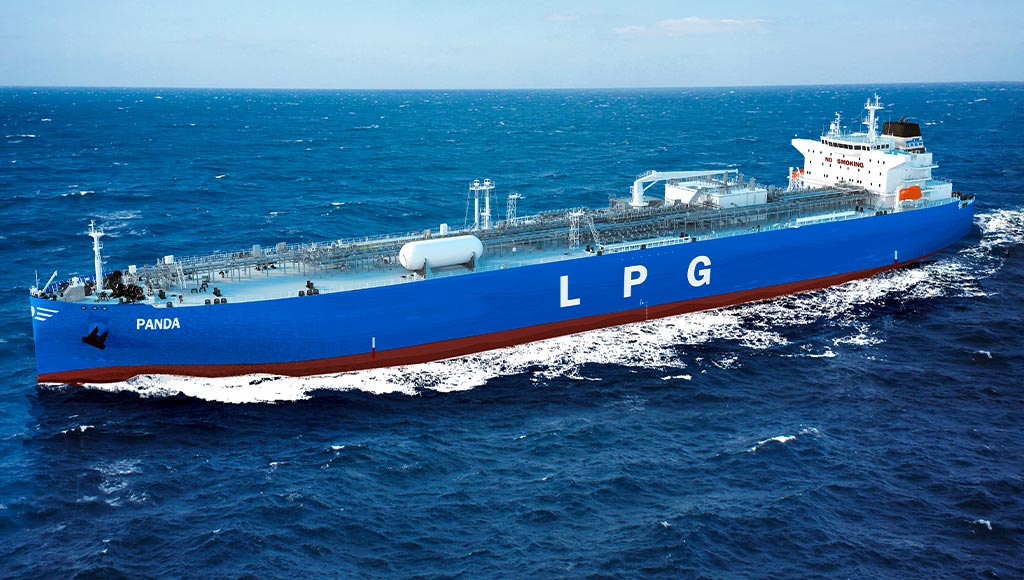
The Nigerian Association of Liquefied Petroleum Gas Marketers (NALPGAM) has urged operators in Nigeria’s liquefied petroleum gas (LPG) industry to strengthen safety standards, improve regulatory compliance and adopt digital technologies to reduce operational losses and drive business growth.
The association said improved operational practices would help protect investments, enhance efficiency, build consumer confidence and support the sustainable expansion of C.
The call followed its 2026 webinar, themed “Downstream LPG Operational Excellence and Compliance,” which brought together industry operators, regulators and other stakeholders to discuss safety risks, market volatility, operational inefficiencies and regulatory requirements in the downstream LPG sector.
Speaking at the event, NALPGAM National President, Edu Inyang, said the industry’s long-term growth would depend on more than increased consumption and supply volumes, stressing the need to embed safety and operational efficiency in everyday business practices.
“The future of Nigeria’s LPG industry cannot be achieved by increasing volumes alone. We must grow safely, responsibly, efficiently and sustainably. Safety is not an occasional campaign; it must become a continuous industry culture,” he said.
READ ALSO: Tinubu Promises to Boost Local Production with NNPC Refineries
A major outcome of the webinar was a proposal for a NALPGAM Standard of Operational Excellence, anchored on four principles: safe and well-maintained facilities, competent and adequately trained operators, regulatory-compliant processes, and consumer protection.
Participants urged operators to integrate safety into routine operations, strengthen preventive maintenance and comply with licensing and incident-reporting requirements.
They also called for an end to unsafe practices, including unauthorised propane blending and illegal decanting, warning that such activities could expose businesses and consumers to avoidable risks.
Inyang said compliance should be viewed as a means of strengthening business performance rather than merely fulfilling regulatory obligations.
“Compliance is not merely a regulatory burden; it is a business advantage. Well-managed LPG operations reduce accidents, improve efficiency, protect investments and strengthen public confidence in our industry,” he said.
The webinar also highlighted the role of digital technologies in improving operational efficiency and accountability across the LPG value chain.
Participants identified smart filling systems, automated tank gauges, load cells, flow meters and vehicle-tracking systems as practical tools for monitoring product movements, reducing losses and improving inventory management.
Wider adoption of these technologies, they said, could help operators strengthen operational controls, minimise discrepancies and improve the reliability of LPG distribution.
The discussions come as Nigeria seeks to expand LPG consumption to approximately five million tonnes annually by 2030, a target that will require increased investment, stronger distribution networks and wider consumer access.
Stakeholders called for greater industry participation in the Decade of Gas LPG penetration programme, alongside stronger collaboration to expand access, improve cylinder traceability and promote certified local manufacturing.
The NALPGAM also urged regulators and programme coordinators to involve its members more actively in implementing LPG penetration and cylinder recirculation initiatives.
According to the association, its members’ nationwide presence and proximity to consumers could help improve the reach and effectiveness of programmes designed to increase LPG adoption.
Reiterating the association’s position, Inyang said the industry must establish clear operational standards that protect consumers while supporting efficient and sustainable business practices.
“Our aspiration is clear: every LPG facility must be safe and properly maintained, every operator competent and adequately trained, every process compliant, and every customer protected. This is the standard of operational excellence we must collectively pursue,” he said.
The NALPGAM reaffirmed its commitment to working with government agencies, regulators and industry stakeholders to develop a safer, more efficient and competitive LPG market.
The association maintained that embedding safety, strengthening compliance and deploying appropriate technologies would be critical to improving operational performance and supporting the long-term growth of Nigeria’s LPG industry.
Fears of renewed US military strikes on Iran and escalating threats to energy infrastructure across the Middle East heightened concerns about global crude supplies have pushed-up crude oil prices in the global market.
These factors pushed crude oil prices over $117 a barrel in the global market, even as oil theft and pipeline losses in Nigeria fell by 82.9 percent in five years, from 102,900 barrels per day (bpd) in 2021 to 17,600 bpd in the first seven months of 2026, amid fresh concerns about further increases in lost volumes after years of decline.
Nigeria’s oil benchmark, Brent crude, climbed by about 3.5 percent to cross $117 a barrel during trading before easing to just above $116, still up approximately 2.7 percent.
READ ALSO: Navy Uncovers 132,000 Litres of Stolen Crude Oil in Bonny
The latest rally followed reports that Washington was considering fresh military strikes against Iran after the November 3 midterm elections, raising concerns that the conflict, now in its eighth month, could escalate further rather than move towards a diplomatic resolution.
Iran had threatened to attack oil facilities, undersea cables, data centres and artificial intelligence infrastructure across the Gulf if the United States and Israel launched a new offensive against the country.
Recall that Brent crude traded at about $72 a barrel in February, before the war began, but surged to about $126 a barrel by the end of April as the conflict intensified and concerns mounted over supply security.
Tensions rose again during the week following claims by Iran’s Islamic Revolutionary Guards Corps (IRGC) that it struck four commercial vessels in the Strait of Hormuz on Wednesday.
The US ordered some diplomats and family members of American government employees to leave Saudi Arabia, which had faced continued attacks by Houthi rebels operating from Yemen.
From January to September 2026, the domestic refineries in Nigeria received 156.52 million barrels of crude oil.
Of the volume, 125.85million barrels (80.4 percent) were sourced from in-country while 30.66 million barrels (19.6 percent) were imported.
This was contained in the Nigerian Midstream and Downstream Petroleum Regulatory Authority (NMDPRA) Factsheet September 2026 released on Thursday.
The Factsheet specifically revealed that in September 2026, 38.7 million litres of the Premium Motor Spirit PMS (petrol) were received per day, crashing from the 50.5million litres per day received in August by 23 percent.
READ ALSO: Thor Empowers Host Communities with 10 Cassava, Palm Oil Processing Plants
Stock sufficiency in September was 23.9 days, declining below the 30-day threshold.
The NMDPRA stressed that while 28.7million litres were supplied per day from domestic sources, declining by 21 percent from the previous month, 10.2 million litres were imported, reducing imported petrol by 30 percent in the period under review.
According to the Factsheet, “Domestic refining contributed about 65 percent of the national petrol requirement (consumption) in September 2026, and about 74 percent of receipts, supplemented by 26 percent of imports”.
The Dangote Refinery and Petrochemicals Company (DPRP) is the only domestic refinery which currently produces petrol in Nigeria.
The report added that the DPRP produced 47.22 million litres per day of PMS in September, supplying 28.50 million litres per day to the domestic market and exporting (35.2 percent) 15.47 million litres per day.
On capacity utilization, the refinery recorded 105.98 percent of its 650,000 barrels per day capacity in the period under review.
The Factsheet disclosed that 8.7million litres of diesel were consumed in the month under review.
The NMDPRA revealed that modular refineries supplied 4.3 percent of domestic diesel consumption in September.
Aradel and OPAC, said the Factsheet, operated below optimal capacity due to feedstock challenges and maintenance shutdowns.
September diesel receipts, according to the NMDPRA, were the lowest of the 13 months, driven by low imports and low domestic evacuation amid high prices.
The Factsheet said, “Nigeria’s energy-sector transformation is progressing. Domestic refining contributed about 65 percent of the national petrol requirement (consumption) in September 2026, and about 74 percent of receipts, supplemented by 26 percent of imports.
“Priority gas projects have reached significant mileage, with the AKK pipeline at 84 percent completion as of September 2026,” the Factsheet pointed out.






Dangote Refinery Pioneers Honeywell’s AI Technology

Standard Chartered Inks Deal for Shell Gas Sale
NALPGAM Preaches Innovation, Safety to LPG Operators

Tinubu Promises to Boost Local Production with NNPC Refineries

INEC Opens Online Access to Voters’ Register After Public Outcry

ADC Replies Alake, Says APC’s ‘Falsehood’ Cannot Hide Tinubu’s Failures

Trump’s Family Unveils New Cryptocurrency Platform

Senate Denies Receiving Petitions Against Tinubu’s Ambassadorial Nominees

Dangote Cement Lights Up Benue Host Communities With CSR Initiatives

Reps Recommend 3-year Jail Term For Aviation minister

Tems Sets New Record On Billboard Hot 100 Chart

Just a smiling visitor here to share the love (:, btw outstanding pattern. “Individuals may form communities, but it is institutions alone that can create a nation.” by Benjamin Disraeli.
whoah this blog is fantastic i love reading your articles. Keep up the great work! You know, a lot of people are searching around for this information, you can help them greatly.
Excellent post. I was checking continuously this blog and I’m impressed! Very helpful information specially the last part 🙂 I care for such info much. I was looking for this particular information for a long time. Thank you and good luck.
I’ve been exploring for a bit for any high-quality articles or blog posts on this sort of area . Exploring in Yahoo I at last stumbled upon this site. Reading this information So i’m happy to convey that I have a very good uncanny feeling I discovered just what I needed. I most certainly will make certain to don’t forget this site and give it a glance on a constant basis.
Have you ever thought about writing an e-book or guest authoring on other blogs? I have a blog based upon on the same ideas you discuss and would love to have you share some stories/information. I know my visitors would enjoy your work. If you’re even remotely interested, feel free to send me an e-mail.
I loved as much as you will receive carried out right here. The sketch is attractive, your authored material stylish. nonetheless, you command get got an impatience over that you wish be delivering the following. unwell unquestionably come more formerly again since exactly the same nearly very often inside case you shield this hike.
Thanks for helping out, great info .
My spouse and I absolutely love your blog and find the majority of your post’s to be what precisely I’m looking for. can you offer guest writers to write content in your case? I wouldn’t mind composing a post or elaborating on many of the subjects you write with regards to here. Again, awesome web log!
I got what you intend, thanks for putting up.Woh I am happy to find this website through google. “The test and use of a man’s education is that he finds pleasure in the exercise of his mind.” by Carl Barzun.
I was reading through some of your articles on this internet site and I believe this internet site is real instructive! Retain posting.
This actually answered my problem, thank you!