
Politics
Atiku Petition: Myself, Other Party Agents Signed Nasarawa Results Under Duress, Witness Tells Court

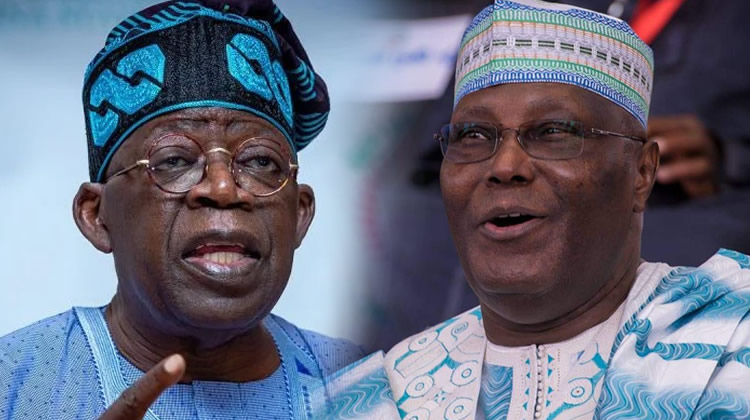
During the proceedings at the Presidential Election Petition Court (PEPC) in Abuja, Mr. Ibrahim Hamza, a witness, came forward on Monday to testify that he had been compelled under pressure to sign the presidential election results in Nasarawa state.
Mr. Hamza, the 10th Petitioners’ Witness (PW-10), testified before Justice Haruna Tsammani-led five-member panel at the PEPC, providing details about his role as a state collation agent for the Peoples Democratic Party (PDP) during the presidential election held on February 25.
In his testimony, Hamza revealed that officials from the Independent National Electoral Commission (INEC) had informed him that he would not receive a copy of the election result unless he signed it, putting him under duress to comply.
He said “Myself and other agents of the party signed the result under duress. They threatened that we would not be issued a copy unless we signed the results.”
During his testimony, the witness informed the court that there were a total of 3,256 polling units in Nasarawa state, emphasizing that the People’s Democratic Party (PDP) had agents present in all the units and wards across the state.
When presented with a copy of the presidential result from Nasarawa state, which had already been submitted as evidence, the witness alleged that it had been tampered with. He maintained that the version he had signed was a clean and unaltered copy.
According to the witness, based on the result presented in court, the Labour Party emerged as the winner of the presidential election in Nasarawa state, securing a total of 191,361 votes, which accounted for 35.40% of the total votes cast.
Hamza further informed the court that there was a system failure in the uploading process of the election results by INEC after the election took place.
Earlier in the court proceedings, Alhaji Mohammed Madaki, the Chairman of the People’s Democratic Party (PDP) in the Federal Capital Territory (FCT), disclosed that based on the “purported results” published by INEC, the PDP’s candidate, Alhaji Atiku Abubakar, did not secure the constitutionally required 25% of the votes from the FCT, Abuja.
Led by Mr. Eyitayo Jegede, SAN, counsel for Atiku Abubakar and the PDP, the witness identified Exhibit PC-37, which was the election result from the Federal Capital Territory (FCT), already presented as evidence in court.
During cross-examination by Mr. Abdullahi Aliu, counsel for INEC, the Chairman of the PDP in the FCT reiterated that according to the law, it was mandatory for a presidential candidate to secure at least 25% of the votes in the FCT to be declared the winner of the election.
Asked if he was aware that going by his position on 25% votes in the FCT, his candidate, Atiku, was not qualified to be declared winner of the presidential election, the witness, said: “Yes, by the purported result published by INEC, he is not entitled to be returned as President.”
He told the court that the normal practice was that copies of the presidential election are snapped at polling units and uploaded to INEC’s I-Rev portal.
Alhaji Madaki told the court that PDP had agents across all the polling units, adding that agents of the party also signed result of the presidential election from the FCT.
While being cross-examined by President Bola Tinubu’s lawyer, Chief Akin Olujinmi, SAN, the witness, told the court that there were a total of 2, 822 polling units in the FCT.
Also responding to questions from counsel for the All Progressives Congress, APC, Prince Lateef Fagbemi, SAN, the witness said he has lived in the FCT for over 35 years.
He told the court that he personally wrote his witness statement on oath at a business center and took the same to his lawyer for examination.
When he was presented with a document to read before the court, the witness, said he could not see the letters without his reading glasses which he said broke Sunday night.
Asked to tell the court the meaning of “conscientiously” that was contained in his statement, the witness, replied: “Honestly, I cannot remember.”
When he was asked if he was aware that there are a total of 176, 606 polling units across Nigeria, the witness, said he was not aware.
Shortly after Alhaji Madaki was discharged by the court, the ninth witness, PW-9, Mr. Abraham David, who mounted the box, told the court that he served as an agent of the PDP in the FCT, during the election.
The PW-9, told the court that Atiku, being the presidential candidate of his party, scored only 15% of votes in the FCT.
Asked under cross-examination, if he was aware that Atiku did not secure up to 25% votes in the FCT and therefore, going by argument of his party, not qualified to be returned as winner of the presidential poll, Mr. David, said: “I agree that having not score 25%, he is not entitled to be returned as President. Even Tinubu too did not also score 25%.
“If it was not wrong to return Tinubu who did not score 25%, Alhaji Atiku Abubakar can also be returned. The person that was returned by INEC did not score 25% in the FCT,” the witness insisted.
The witness informed the court that he personally visited approximately 15 polling units in the FCT during the presidential election. He stated that while he witnessed the collation process, the results were not transmitted to INEC I-Rev as mandated by the law.
The witness further alleged that the collation of the presidential result in the FCT took around three days, during which he claimed that INEC officials compromised the integrity of the electoral process.
When asked to provide the names of the INEC officials involved in the alleged electoral malpractice, the witness stated that he did not know their names.
Recall that one aspect of the joint petition filed by Atiku Abubakar and the PDP to contest the results of the presidential election was their claim that President Tinubu of the APC failed to obtain at least one-quarter of the votes cast in the FCT, Abuja.
The petitioners argued that out of the total votes cast in the FCT, which amounted to 478,652, President Tinubu received only 90,902 votes, accounting for 18.99% of the total votes.
“The Petitioners shall contend that to be declared duly elected, a candidate, in addition to obtaining not less than a quarter (25%) of the votes cast in at least two-thirds of all the States, must also receive at least one quarter (25%) of the votes cast in the FCT, Abuja, this being an additional requirement introduced by the Constitution of the Federal Republic of Nigeria 1999 (as amended), the said Constitution having clearly distinguished the FCT, Abuja as a separate entity by specific and express mention,” they added.
During the Monday proceedings, the panel led by Justice Tsammani heard the testimony of Dr. Abiye Sekibo, a former Minister of Transportation and a prominent member of the People’s Democratic Party (PDP) in Rivers state, Dr. Sekibo who appeared as the 7th Petitioners’ Witness (PW7).
During his examination-in-chief, Dr. Sekibo presented a letter of appointment issued by the PDP, appointing him as the Coordinator for the Presidential Election. The letter was admitted as evidence and marked as Exhibits PU.
Dr. Sekibo also identified Exhibit PC-32, which had already been submitted to the court, as the result of the presidential election from Rivers State as announced by INEC..
Under cross-examination, the witness insisted that Atiku won the presidential election in Rivers state, even though he accused President Tinubu and the APC of instigating violence that scared electorates away from many polling units.
Dr Sekibo, who told the court that he voted in his Local Government Area, Okirika, further alleged that the results of the election were not uploaded across about 6000 polling units in the state.
He said: “I was in my Local Government Area on the election day and I voted. I was verified, using the BVAS device.
“The accreditation took less than five minutes and I was thereafter given the ballot and I voted. I stayed for a while at my polling unit, for about 10 minutes before I left.
“Thereafter I left to see what was going on and came back to my unit when they started counting. I was there when they finished and unfortunately, the result could not be uploaded.
“The result sheet was filed in my presence and signed by party agents. I also witnesses results being collated in more than polling units at different times. There are more than 6000 polling units in Rivers state.
“In almost all the polling units, having concluded the election they could not upload. This happened across the entire state.”
Asked if he was aware that the 20 polling units he visited, out of the over 6000 polling units in the state, amounted to about 0.5%, the witness, said: “I will leave the calculation for mathematics”.
Asked to mention the names of the agents that harassed voters and stopped uploading of the results, he said; “I don’t need to know their names. But by their actions, one could know who sent them”.
On the alleged violence on the election day, Dr. Sekibo, said: “I received calls from our members that were asking to be rescued. We immediately responded and started heading to Obio/Akpor after I got the call, but we were blocked.”
When questioned about his presence at any of the Local Government Areas (LGAs) where members of his party were reportedly attacked, the witness clarified that he was not physically present at those locations.
During the cross-examination conducted by Prince Fagbemi, SAN, counsel for the APC, the witness acknowledged that the agents of his party whom he had claimed were attacked during the election were still alive.
Asked why he did not mention names of perpetrators of the violence in his statement on oath before the court, the witness, said: “I didn’t have to. What they were doing in the field showed who they were. By the action they carried out, we knew whose interest they were protecting.”
Asked if he was aware that in the 2023 elections, votes were not based on political party lines, as the PDP, won the presidential election in Katsina, Dr Sekibo, replied: “The PDP won the governorship election in Rivers State and we are saying that we also won the presidential election. I am not from Katsina”.
The witness stated to the court that he was not the individual who signed the results of the presidential election in Rivers state.
However, the court then adjourned the proceedings, with further hearings scheduled to take place on Tuesday.





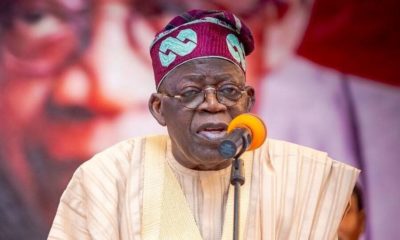


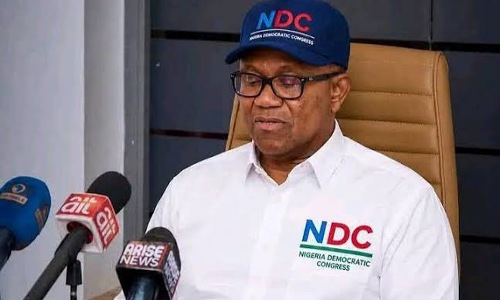
Peter Obi, the 2027 presidential candidate of the Nigeria Democratic Congress (NDC), has criticised President Bola Tinubu’s administration over its debt management, citing figures showing that the Federal Government spent ₦7.7 trillion on debt interest payments against revenue of ₦6.2 trillion in the first half of 2026.
Obi made the criticism in a statement posted on his X account on Monday, October 12, while reacting to a World Bank report titled Beyond the Federal Purse: How Higher Revenues Reshaped State Priorities.
According to Obi, the Federal Government spent ₦7.7 trillion on debt interest payments between January and June 2026, representing approximately 124.2 per cent of its total revenue of ₦6.2 trillion during the same period.
RELATED NEWS: ‘140 Million Nigerians Are Poor Despite Tinubu’s Economic Reforms’ – peter Obi
He said debt interest payments exceeded the government’s revenue by approximately ₦1.5 trillion, questioning how the country could continue to face a debt crisis despite increased revenue.
“How do you explain the unsustainable debt crisis even with exponential increase in revenue that we have had since 2023?” Obi asked.
The former Anambra State governor also expressed concern over a reported reduction of about ₦700 billion in capital expenditure during the first half of the year.
He argued that the government’s spending priorities showed a significant imbalance between debt servicing and investment in capital projects.
“In comparison, the APC led Federal Government spends about 11 times more on interest payment than on capital projects,” he stated.
Obi attributed the situation to what he described as reckless borrowing, corruption and incompetence within the Tinubu administration.
He argued that increased government revenue should not be celebrated without examining how public funds are spent and whether government spending priorities support economic development.
Obi further maintained that the presentation of improved economic indicators should not distract from the country’s debt burden and the impact of government policies on Nigerians.
He said the administration should recognise that economic progress cannot be measured by increased revenue alone, particularly when the government continues to face substantial debt interest obligations.
The NDC presidential candidate also questioned the government’s presentation of economic performance, arguing that economic statistics should reflect the actual impact of reforms rather than serve as a basis for celebrating improvements that have not translated into better living conditions for citizens.
.
The Independent National Electoral Commission (INEC) has debunked a fake announcement circulating online concerning alleged issues affecting the list of governorship candidates in six states ahead of the 2027 elections.
The commission disclosed this in a post on its official X account on Monday, October 12, 2026, warning Nigerians against sharing the fraudulent publication.
INEC said the purported announcement, which claimed that there were issues affecting the governorship candidates’ lists in Zamfara, Gombe, Delta, Plateau, Yobe and Kano states, did not originate from the commission.
SEE MORE: DHQ Warns Of Potential Violence In Planned Nationwide Protest
“The Commission wishes to categorically inform the general public that the publication is FAKE and did not originate from INEC,” the electoral body stated.
The circulating document is titled “Special Announcement” and also carries the headings “Public Information Notice” and “Important Update.”
It claims that there may be an issue affecting the lists of governorship candidates in the six states and states that a further announcement was expected on Monday.
The document reads: “Reports suggest there may be an issue affecting list of governorship candidates in the following six states,” before listing Zamfara, Gombe, Delta, Plateau, Yobe and Kano.
It further states: “A further update is expected regarding the issue and any steps that may be taken to resolve it.”
The purported announcement also advises the public to remain calm while awaiting an official statement from INEC.
“The public is advised to remain calm and await an official statement from INEC,” the document states.
The publication bears the name of Rose Oriaran-Anthony, identified as Secretary of INEC. However, the commission has disowned the document, describing it as fraudulent.
In its clarification, the electoral commission urged members of the public to disregard the publication and avoid circulating it further.
INEC also addressed claims that it had issued a special announcement concerning governorship candidates in the six states.
The commission stated: “The public is advised to rely solely on official notices, press releases, and other information issued through the Commission’s verified communication channels.”
It added that any information suggesting it had issued a special announcement concerning governorship candidates in the affected states was false.
“The Commission further wishes to clarify that any information suggesting that INEC has issued a special announcement concerning governorship candidates in the aforementioned states is false,” the statement said.
The commission urged Nigerians to verify electoral information through its official communication channels before sharing such information online.
INEC said the public should remain vigilant to avoid being misled by false or fraudulent publications concerning the electoral process.
The commission also provided contact details through which members of the public can seek clarification on electoral matters.
According to the notice, Nigerians can contact the INEC Call Centre on 0700-2255-4632 or use the short code 4632.
Other telephone contacts provided are 090844444333 and 09050858629, while enquiries can also be sent to [email protected].
The commission listed its official website as inecnigeria.org and its news portal as inecnews.com.
INEC reiterated its commitment to keeping the public accurately informed and urged Nigerians to obtain election-related information only through its official communication channels.
The clarification comes amid public attention surrounding the publication of final lists of governorship candidates for the 2027 elections, including reports concerning the omission of some candidates from the lists released by the commission.
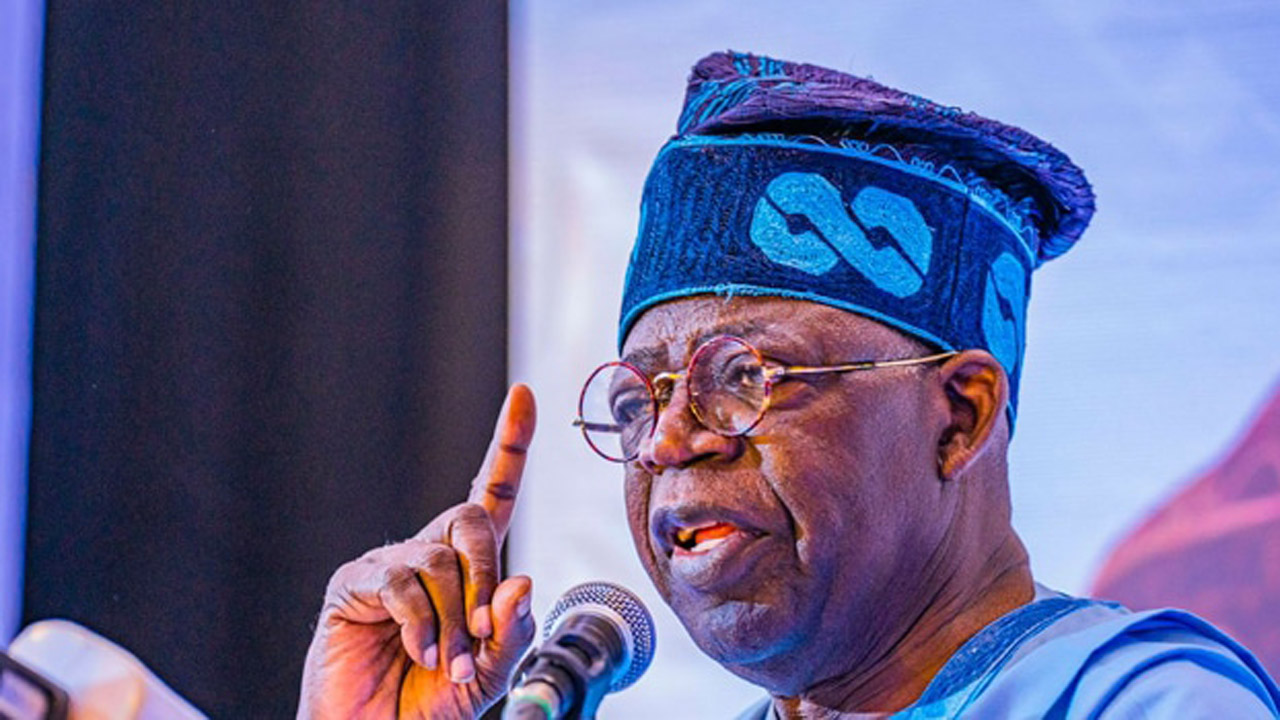
Otunba Segun Showunmi, a chieftain of the Peoples Democratic Party (PDP) and former spokesperson for Atiku Abubakar, has urged Nigerians to look beyond current political controversies and give President Bola Tinubu’s administration more time, arguing that the country’s ongoing reforms should be assessed on their long-term outcomes.
Showunmi made the appeal in a statement published on his X account on Sunday, October 11, 2026, as political discussions ahead of the 2027 general election continue to gather attention.
He argued that the call for continuity was not based on Tinubu’s name or personality but on what he described as a broader national project aimed at rebuilding the country.
SEE ALSO: CNG Initiative: Why Tinubu’s Gov’t Moved Beyond Plan for 3,000 Buses – Coker
“We have not asked you to support continuity because his name is Asiwaju @officialABAT. He could just as well have been named Peter Atiku Tinubu, and it would make no difference to our argument,” he said.
According to Showunmi, the central issue is whether Nigeria should be allowed to continue its current reform process rather than making political decisions based on personalities or sentiments.
“Our plea is simple: give Nigeria the opportunity to continue this journey of national rebirth. The process is underway. Its effects are beginning to emerge, and the ambition is for its benefits to reach every Nigerian, everywhere,” he stated.
He acknowledged that Nigerians were still experiencing economic difficulties but cautioned against interpreting the hardship as proof that the reform process had failed.
“There is still work to be done, and the hardship many people face must never be dismissed. But we must not confuse the pain of transition with the failure of the journey,” Showunmi said.
The PDP chieftain also challenged Nigerians to scrutinise the records and policy proposals of politicians seeking to replace Tinubu, urging voters to consider what they offered beyond campaign promises.
“What exactly are they proposing? How does it differ from what is being done? What did they do when they had the opportunity? And, most importantly, can their promises withstand the scrutiny of their own records?” he asked.
He maintained that decisions about the country’s leadership should be based on policies, records and measurable outcomes rather than political loyalty or resentment.
“Nigeria cannot afford to make consequential decisions on the strength of slogans, sentiments, personalities or political resentment. We must judge ideas by their substance, leadership by its record, and policies by their outcomes,” he said.
‘This Is Bigger Than Tinubu’
Showunmi stressed that his argument was not that the country had achieved perfection under the current administration but that its reform efforts deserved an honest assessment.
“The argument is not that everything is perfect today. The argument is that the work of rebuilding Nigeria must be judged honestly, and the journey must be given the opportunity to deliver its full promise,” he stated.
He urged Nigerians to place the national interest above political differences when assessing the country’s direction ahead of the next election.
“That is why we ask you to look again, think deeply, and consider the national interest above every other sentiment,” he added.
Concluding his appeal, Showunmi reiterated that the issue extended beyond Tinubu as an individual, describing it as a question of Nigeria’s future and the responsibilities owed to generations to come.
“This is bigger than Asiwaju. It is about Nigeria, the country we must rebuild for ourselves and the generations coming after us,” he said.






Shell Identifies Keys to Nigeria’s Energy Future

Nigeria Records Biggest Rise in Multidimensional Poverty Among Five Countries – UN

Katsina Students Get ₦689.79m Bursary as Gov Radda Doubles Allowances
DOJ Confirms Federal Criminal Investigation After Agents Raid Ilhan Omar’s Home

Peter Obi Slams Tinubu Over ₦7.7tn Debt Interest Against ₦6.2tn Revenue

‘140 Million Nigerians Are Poor Despite Tinubu’s Economic Reforms’ – Peter Obi

Trump’s Family Unveils New Cryptocurrency Platform

Senate Denies Receiving Petitions Against Tinubu’s Ambassadorial Nominees

Dangote Cement Lights Up Benue Host Communities With CSR Initiatives

Reps Recommend 3-year Jail Term For Aviation minister

Tems Sets New Record On Billboard Hot 100 Chart
