
NEWS
Bandits Abduct 80 Children In Zamfara State

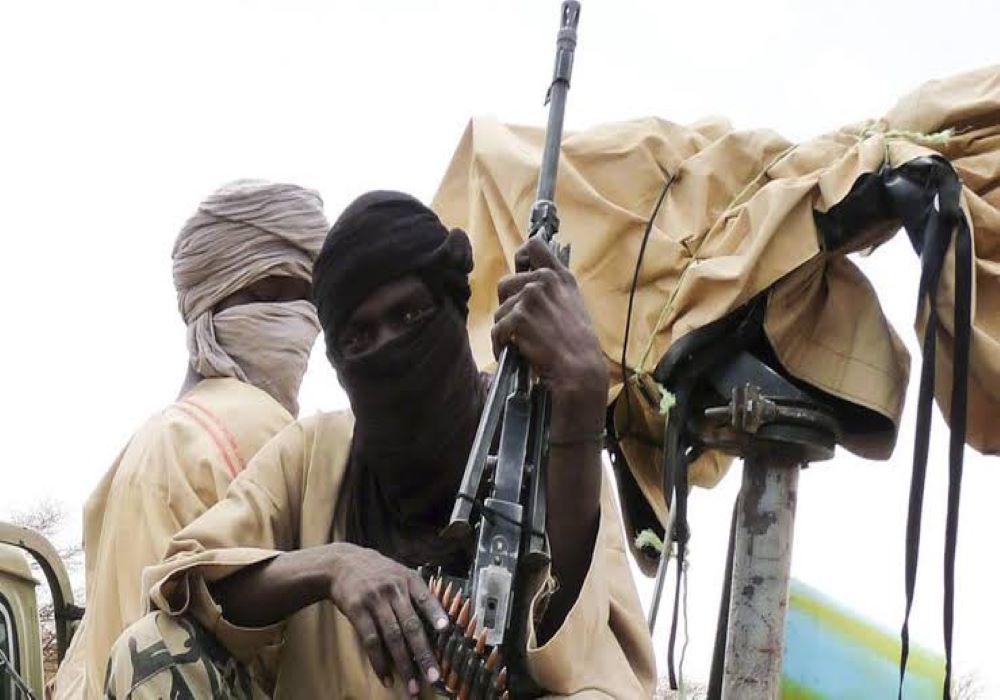
A group of bandits has kidnapped over 80 children between the ages of 12 and 17 in the Tsafe Local Government Area of Zamfara State.
The abduction took place on Friday morning, as reported by BBC Hausa.
Parents of some of the abducted children who spoke to BBC Hausa disclosed that their children were collecting firewood in the bush around 7:4a.m. when the attackers surrounded them and took them away into the forest.
A village elder whose name was not mentioned said in the Hausa language, “We were sitting between 8 o’clock in the morning when we heard that some of our youths who went to fetch firewood in the bush and those who have gone to clear their farmlands have been abducted by bandits.
When asked the actual number of those taken, the elder said “it’s between 80 to 100”.
“Well, we can’t say the actual number of the victims now but we expect it to be between 80 and 100 of our people. Most of them are youths between teenage years and those who are in their twenties. There is one old man who is in his fifties. And there are others too. But the majority are young men and women,” he said.
A source who spoke on behalf of the residents, revealed that one person sustained serious injuries and is currently receiving medical treatment.
The source also mentioned that some individuals were able to escape the abduction and have since been reunited with their families.
For security reasons, another resident who chose to remain anonymous disclosed that his son was among the abducted children.
“I can’t say how many of them have been abducted but my son was taken. He went with my motorcycle and they’ve taken him with the motorcycle. I don’t know the actual number but they’re many including children and young people,” he said.
“My daughter was also abducted today,” a woman told the BBC Hausa. “My daughter is 15 years old and she was among those who went to fetch firewood for us…you know how the situation is..they went to fetch firewood but they’ve now been abducted.”
She said the people of the community immediately notified security agents stationed in the community but the terrorists had already left.
Efforts to reach the police spokesperson in Zamfara state, Mohammed Shehu, regarding the abduction, proved futile as he did not respond to phone calls or text messages.


Katsina State Governor, Dikko Umaru Radda, has flagged off the disbursement of ₦689.79 million in bursary payments to 19,318 continuing students across 97 institutions for the 2025/2026 academic session.
The disbursement follows a 100 per cent increase in academic bursary rates, marking the first adjustment since 2007.
The latest payment forms part of the state government’s broader investment in education and student welfare, with cumulative bursary disbursements and related student awards under the administration reaching ₦3.29 billion.
SEE ALSO: Dikko Radda Of APC Wins Katsina Governorship Election
More than 174,000 beneficiary payments have been recorded across successive payment cycles.
Increased Allowances for Veterinary and Law Students
Under the revised scholarship support framework, allowances for Veterinary Medicine students have increased by 150 per cent for students in the 300 and 400 levels and by 200 per cent for those in the 500 and 600 levels.
Support for Nigerian Law School students and academic excellence awards has also continued.
The state government has also approved a scholarship programme for 1,700 students, with 50 beneficiaries drawn from each of the state’s 34 local government areas.
The programme is designed to support tuition fees, registration and other educational expenses.
₦6bn Scholarship Trust Fund
The government has made provision for ₦6 billion in seed funding for a scholarship trust fund intended to strengthen educational financing.
The fund is expected to support specialised scholarship opportunities in fields including engineering, medicine, Artificial Intelligence and mechatronics.
The state’s foreign scholarship initiatives have also supported 118 students studying Medicine, Artificial Intelligence and Bioengineering in Egypt, Ethiopia and China, with approved educational and living expenses covered by the government.
More Scholarship Opportunities
Other educational support initiatives include 34 maritime scholarship beneficiaries and seven students receiving 50 per cent financial support at the Nigerian College of Aviation Technology, Zaria.
The state has also nominated 34 candidates for MBBS studies in Russia, identified 70 prospective master’s degree candidates and selected 10 candidates for Qur’anic Sciences scholarships in Ghana.
These initiatives form part of the state’s broader efforts to expand access to education across different fields and levels of study.
Scholarship Board Strengthens Accountability
The Katsina State Scholarship Board has also strengthened its application, verification and payment systems.
As part of its accountability measures, the board interviewed more than 14,925 fresh applicants and returned approximately ₦86 million in unclaimed funds to the state government.
The state also acknowledged the contributions of the Nigerian Education Loan Fund (NELFUND), the Tertiary Education Trust Fund (TETFund) and the National Information Technology Development Agency (NITDA) in expanding access to educational financing and digital learning resources.
Radda Inaugurates Tinubu/Dikko Education Beneficiary Network
As part of the activities, Radda inaugurated the Tinubu/Dikko Education Beneficiary Network (TDEBNET), a voluntary organisation comprising parents and beneficiaries of educational programmes.
Members of the organisation expressed support for the re-election bids of Radda and President Bola Ahmed Tinubu in 2027.
Federal agents raided the Washington, D.C., home of Democratic Congresswoman Ilhan Omar early Monday morning as part of an ongoing federal criminal investigation, the United States Department of Justice (DOJ) has confirmed.
Homeland Security Investigations agents arrived at the Minnesota congresswoman’s residence at about 6:00 a.m. Eastern Time, according to a report by Fox News.
SEE MORE: Trump Sparks Outrage With Shock Proposal to Rename New Mexico
The report said both the Department of Homeland Security (DHS) and the DOJ are involved in the investigation.
A DOJ spokesperson confirmed the operation, stating: “Today in the Washington, D.C. area, Homeland Security Investigations executed a judicially authorized search warrant secured by the Department of Justice.”
The spokesperson added: “This enforcement action is part of an ongoing federal criminal investigation.”
Details later……….
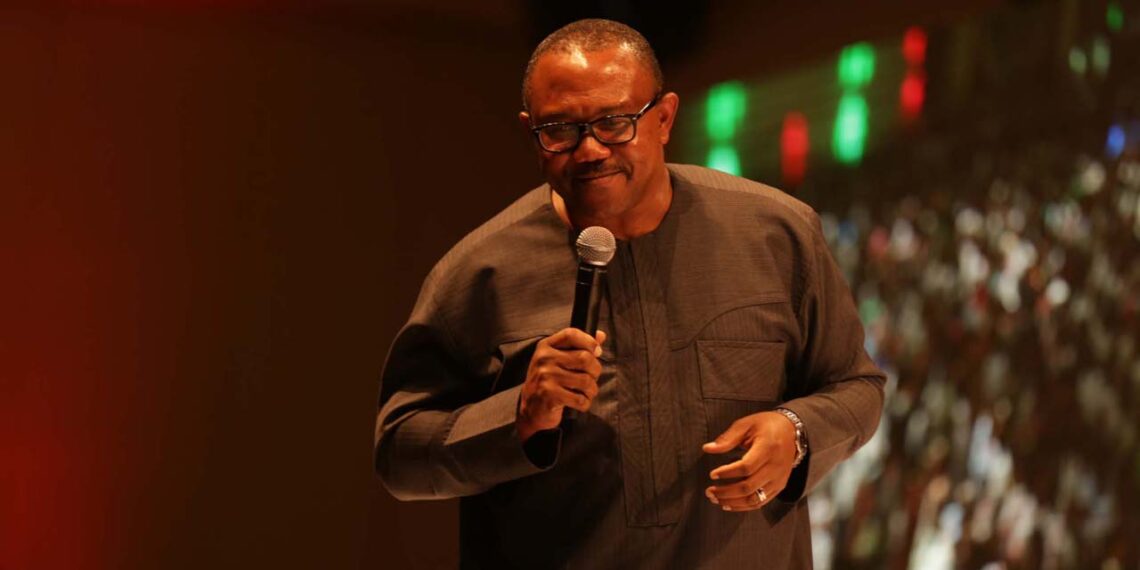
Former Labour Party presidential candidate Peter Obi has criticised President Bola Tinubu’s economic reforms, arguing that improvements in economic growth and government revenue have not translated into better living conditions for Nigerians.
Obi made the remarks in a statement posted on his X account on Monday, October 12, while reacting to the World Bank’s latest report on Nigeria’s economic performance and government spending priorities.
He argued that improvements in some macroeconomic indicators should not be interpreted as evidence that the standard of living of Nigerians is improving.
According to him, the real measures of economic development are poverty reduction, job creation and efforts to address inequality.
“Nigerians and even the World Bank know that the criteria for economic development is whether poverty is declining, whether jobs are created for our youths, and whether we are reducing acute inequality,” Obi stated.
He maintained that economic stability under the Tinubu administration had not resulted in higher living standards, improved employment opportunities or reduced poverty and inequality across the country.
Obi argued that an economy cannot be considered stable merely because government revenue increases, foreign reserves strengthen or gross domestic product grows.
“Stability exists when citizens can afford food, obtain healthcare, provide education for their children, and live with dignity,” he said.
The former Anambra State governor questioned the benefits of increased government revenue to Nigerians struggling to meet their basic needs.
“What comfort does higher revenue offer a mother who cannot provide her children with a nutritious meal? What does higher government revenue mean to a family forced to choose between purchasing food and paying for medicine?” he asked.
He also questioned the impact of the administration’s economic reforms on ordinary Nigerians, arguing that citizens continued to bear the costs and hardship associated with government policies.
Obi further cited a recent United Nations Development Programme report, which he said listed Nigeria among countries where gains made in reducing poverty had been reversed.
He also claimed that about 140 million Nigerians were classified as multidimensionally poor.
The former presidential candidate accused the Tinubu administration of presenting incomplete economic statistics to project progress without adequately addressing the welfare of citizens.
“President Bola Tinubu and his incompetent team must recognize that intentionally presenting and projecting incomplete economic statistics cannot replace the critical measure of how reform impacts on the welfare of the people,” he said.
Obi added that Nigerians should not be expected to celebrate economic statistics while struggling to survive the effects of government policies.
“A government cannot expect citizens to applaud statistics while they struggle to survive the effects of its policies,” he stated.






Nigeria Records Biggest Rise in Multidimensional Poverty Among Five Countries – UN

Katsina Students Get ₦689.79m Bursary as Gov Radda Doubles Allowances
DOJ Confirms Federal Criminal Investigation After Agents Raid Ilhan Omar’s Home

Peter Obi Slams Tinubu Over ₦7.7tn Debt Interest Against ₦6.2tn Revenue

‘140 Million Nigerians Are Poor Despite Tinubu’s Economic Reforms’ – Peter Obi

Court Clears Way for Inquest Into Death of Chimamanda Adichie’s Son

Trump’s Family Unveils New Cryptocurrency Platform

Senate Denies Receiving Petitions Against Tinubu’s Ambassadorial Nominees

Dangote Cement Lights Up Benue Host Communities With CSR Initiatives

Reps Recommend 3-year Jail Term For Aviation minister

Tems Sets New Record On Billboard Hot 100 Chart
