
Energy
Benin Gets New CNG Station Courtesy of Tetracore Energy

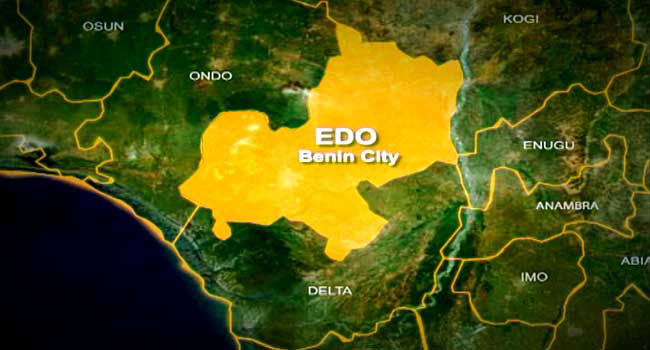
As part of efforts to boost gas-powered mobility and downstream gas distribution in Nigeria, Tetracore Energy Group has unveiled a new auto compressed natural gas station in Uwusan, Benin, Edo State.
This was detailed in a statement in which the company claimed that the facility has an installed capacity of 120,000 standard cubic metres per day, and can fuel up to 200 vehicles daily, improving fuel availability for mass transit systems, trucks, buses, and other commercial CNG-powered vehicles.
Strategically located to serve Benin City and surrounding industrial and logistics corridors, the facility reportedly forms part of the company’s expanding gas distribution network designed to meet rising demand across high-growth economic clusters.
The company stated that the development reinforces its strategy to build a scalable, corridor-based gas infrastructure platform anchored on high-demand urban and industrial clusters. It added that integrating daughter stations with the upcoming mother station capacity would enhance asset utilisation, strengthen supply reliability, and support predictable revenue generation.
ALSO READ: Lagos Hosts Oil Refiners’ Confab
According to the firm, the Benin axis represents a critical growth corridor with increasing demand from logistics operators, industrial users, and commercial fleets, positioning the asset for strong utilisation and long-term cash flow visibility.
The Uwusan station is expected to deliver lower and more predictable fuel costs, enhanced energy security through consistent gas supply, improved operational efficiency through accessible refuelling infrastructure, and alignment with decarbonisation goals.
The company disclosed that a dedicated CNG mother station for the Benin axis is under development and expected to come onstream in the coming months to strengthen compression capacity and improve network efficiency.
On the development, President and Chief Executive Officer of Tetracore Energy Group, Olakunle Williams, said, “This is a deliberate step in our strategy to scale gas-powered mobility across Nigeria. We are not simply deploying stations—we are building a resilient energy network that enables industries, transport operators, and businesses to transition to cleaner, more efficient fuel at scale.
“With the upcoming mother station, we are reinforcing supply assurance and positioning Benin as a critical node within our expanding gas distribution footprint.”
The company added that it remains committed to advancing Nigeria’s gas commercialisation agenda by delivering infrastructure that connects supply to demand and supports long-term energy sustainability.








Joseph Ambakederimo, convener of the South-South Reawakening Group, has questioned the accountability of Nigeria’s crude oil forward sales, demanding clarification on the volume of crude lifted, outstanding balances and the use of upfront payments.
Speaking during an interview on Arise TV on Sunday, Ambakederimo expressed concern over the monitoring of crude oil transactions, questioning who was responsible for tracking deliveries and providing feedback on the arrangements.
“We don’t even know who is monitoring and giving us the feedback of the barrels of crude that have been lifted on forward sales basis,” he said.
SEE MORE: South-South Group Opposes Coastal Road Alignment With East-West Road
He challenged the Nigerian National Petroleum Company Limited (NNPC) to provide details of the transactions, including the quantity of crude already lifted, the outstanding balance and whether the agreed deliveries had been completed.
“Today, can we get this from NNPC? How much have they lifted? What is the balance remaining? Have they been completed?” he asked.
Ambakederimo also questioned how the money collected upfront under the arrangements had been spent, demanding an explanation of its use.
“That money that was collected upfront, what was the use of the money? Can you justify it?” he asked.
He argued that Nigeria should make better use of its natural resources to accelerate infrastructure development and improve living conditions.
Citing land reclamation projects in the United Arab Emirates, Ambakederimo said Nigeria could explore similar opportunities to create additional land for residential and other developments.
He recalled seeing a signpost while travelling from Dubai to Abu Dhabi describing a project to reclaim land from the sea, using the example to highlight the development possibilities he believes Nigeria could explore.
The South-South Reawakening Group convener also argued that Nigeria could reclaim land in suitable areas, provided environmental concerns were properly managed.
He called for the country to translate its natural resource wealth into infrastructure and improved living conditions, stressing the need for greater accountability in crude oil transactions.
Oil output from the United Arab Emirates (UAE) rose to record levels in September, underscoring its resilience even amidst the Middle East crises and liberation from OPEC+ limits.
The International Energy Agency (IEA) issued the data in its monthly report, adding that Abu Dhabi raised total oil production, including condensates, by 400,000 bpd to 5.3 MMbpd.
According to the IEA, the UAE bolstered crude output to more than 4.4 MMbpd, nearing its maximum capacity, which surpasses the previous highs for total oil in August, and crude oil in June.
READ ALSO: Africa’s Energy Security Conversations Pull Industry Executives Together
The UAE has been one of the most successful among regional producers in restoring flows through the Strait of Hormuz, by drawing on a fleet of tankers to discreetly shuttle cargoes through the chokepoint and then transfer them onto other vessels. In addition, the country’s decision to leave the Organization of the Petroleum Exporting Countries (OPEC) as of May has freed it from the group’s output caps, a source of frustration for years.
Its gains contributed to a wider recovery in flows from Gulf producers, which reached more than 75% of pre-war levels in September, led by Saudi Arabia, according to the Paris-based IEA.
Still, it’s unclear how far the regional rebound has withstood a new wave of Iranian attacks on tankers transiting Hormuz, and escalating hostilities carried out by the Houthi rebel faction in Yemen.
The UAE depleted its observable above-ground inventories at a record pace of more than 270,000 bpd in September, drawing them to an all-time low, according to the IEA.
Africa’s gas potential and strengthening the continent’s energy security would take centre stage at the Africa Interviews Sustainability Forum (AISF 2026) scheduled for Wednesday, October 21, in Lagos.
Biztellers reports that top officials of Oando Plc and Renaissance Africa Energy Company Limited, Ayotola Jagun and Tony Attah, respectively, will be leading other industry leaders in the discussion.
Jagun, Oando’s Executive Director, Chief Corporate Services and Sustainability Officer, and Attah, Managing Director and Chief Executive Officer of Renaissance Africa Energy Company Limited, will participate in a panel discussion alongside Lamé Verre of Lean In Equity & Sustainability (LiNES) and Dapo Filani, Managing Director and Chief Executive Officer of Waltersmith.
The panel will examine Africa’s energy security and the role of natural gas in the continent’s energy transition.
READ ALSO: 30 Nigerians Bag Postgraduate Scholarship from NNPC Ltd, Eni
The forum, launched in 2024, is holding its third edition under the theme, “Energy Security and Africa’s Energy Transition: Defining the Role of Gas.”
This year’s gathering will explore how African countries can strengthen energy security, attract investment in gas development and balance growing energy demand with sustainability objectives.
Verre, a London-based energy and sustainability executive, is Co-founder and Chair of the Advisory Board of LiNES. She will bring her international experience in sustainability, decarbonisation and low-carbon development to the discussion. Her work spans low-carbon initiatives across sectors, including marine, the built environment, forestry, land and agriculture.
Jagun brings extensive experience in corporate governance, regulatory compliance, enterprise risk management and sustainability. Her contribution will provide a corporate sustainability and governance perspective on the relationship between energy development, environmental responsibility and Africa’s transition priorities.
Attah, a former Managing Director and Chief Executive Officer of Nigeria LNG Limited, has extensive experience in the oil and gas industry, particularly in natural gas development and major energy operations.
Filani leads Waltersmith, an indigenous Nigerian energy company with interests across the oil and gas value chain. His participation will highlight the role of indigenous energy companies in strengthening domestic energy capacity and supporting economic development.
The panel will consider what is required to unlock greater investment in Africa’s gas sector, how natural gas can support industrial growth while advancing sustainability, and what practical measures could help translate the continent’s energy ambitions into tangible outcomes.
Beyond the panel discussion, AISF 2026 will provide opportunities for engagement among senior energy executives, policymakers, investors and business leaders.






JUST IN: Ex-Delta Governor Emmanuel Uduaghan Is Dead

Delta Begins ₦5bn Empowerment Scheme for 100,000 Beneficiaries
Alausa Hails Dangote Foundation’s Plan to Give Four Million Students IPO Shares
APC Campaign Council Sets Inaugural Meeting for Tuesday Ahead of Kaduna Flag-Off

Renaissance Capital Sees Significant Upside in Dangote Refinery, Lifts Valuation by 33.4%

Dangote Refinery IPO Elicits Participation in 90 Countries Globally

Trump’s Family Unveils New Cryptocurrency Platform

Senate Denies Receiving Petitions Against Tinubu’s Ambassadorial Nominees

Dangote Cement Lights Up Benue Host Communities With CSR Initiatives

Reps Recommend 3-year Jail Term For Aviation minister

Tems Sets New Record On Billboard Hot 100 Chart
