
Opinion/Feature
Obaseki: A Loose Cannon Fanning Global Embers of Hate

By Fred Itua
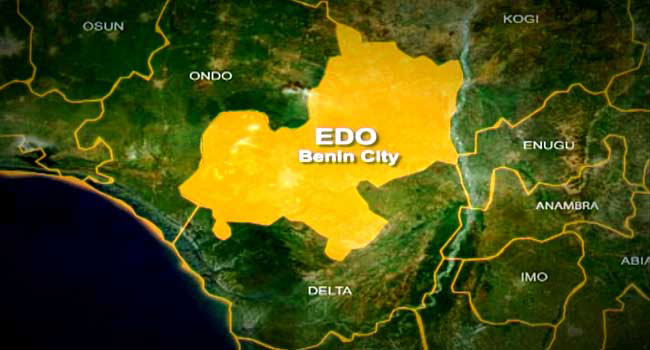
Godwin Obaseki’s latest outburst is not a surprise. It is simply the continuation of a pattern that Edo people came to recognize too late. His years in office were marked by intolerance, vindictiveness and a violent streak that constantly simmered beneath the surface. Those who worked closely with him still carry the scars of his temperament. His former deputy, Philip Shaibu, is the most glaring example.
Whatever their disagreement may have been, no rational leader plots the humiliation and removal of a deputy he once described as a brother. Yet Obaseki manipulated every institutional lever available to him to settle a personal score, using the House of Assembly as a pawn to crush a man whose only crime was falling out of favour with the lord of Osadebe Avenue.
In October 2022, Obaseki’s hateful tendencies were expended on those he promised to serve. He supervised the demolition of roughly one hundred homes across Oke-Oroma, Irhirhi-Obazagbon and Ogheghe communities. Residents insisted they held valid documents, including Certificates of Occupancy, yet he pushed ahead in defiance of a subsisting court order that had restrained any action pending the determination of their suit. The result was devastating. Thousands were displaced and property worth billions of naira were reduced to rubble. Such a vindictive man!
Edo people saw the full extent of this violence during the 2024 governorship election when Obaseki stood before cameras and threatened that Edo would burn if his preferred candidate lost. Those words were not the empty rant of a frustrated politician. They came from a man with a history of weaponizing state power, a man whose administration armed loyalists and created networks of political enforcers who blended easily into the criminal elements that then turned their guns on innocent citizens.
ALSO READ: Edo Cracks Down on Drug Cartels, Arrests Breastfeeding Mother, Six Others
It is no coincidence that the early days of the current administration were choked with spikes in kidnapping and armed robbery. These were not random crimes. They were the desperate convulsions of an ecosystem built, funded and empowered by Obaseki himself.
Governor Monday Okpebholo has had to stabilize a state that was deliberately left volatile. Through calm leadership and quiet strength, he has managed to rein in the chaos and restore public confidence. But Obaseki, instead of retreating into reflection, has doubled down.
His recent video in Birmingham reveals a man who cannot bear the reality that Edo people have moved on. He accused Okpebholo of being “stupid”, boasted that he is mobilizing the international community against him and President Bola Ahmed Tinubu, and threatened that the governor “will see”.
These are not harmless statements from an angry former office holder. They are calculated threats from someone who has never hidden his desire to destabilize Edo State whenever power slips from his grip.
He claims that a governor from Irrua cannot dictate to people in Benin. That remark alone exposes the dangerous tribal undertone of his politics. For eight years, he exploited ethnic sentiment to divide communities and isolate opponents. Now, he is attempting to ignite the same divisive flame against a governor who has only focused on governance, inclusiveness and development.
Obaseki’s language in that video is not only reckless, it is incendiary. It hints at an attempt to stir resentment, inflame divisions and rally hostility toward a government that is working hard to rebuild the damage he left behind.
His recent globe-trotting under the guise of “meet and greet” is now clearer for what it is: an effort to secure foreign sympathy, funding and legitimacy for a domestic political battle he has already lost. When a former governor openly brags about mobilizing the diaspora and the global community against the current leadership of his own state, it raises valid questions about intent.
What exactly does he need international pressure for? Why is he desperately trying to create a narrative of crisis where none exists? And who are the people he hopes to recruit from abroad? Edo people have not forgotten that this same man once threatened to burn down Nigeria during an election.
They have not forgotten that his private “security structure” terrorized communities under the cloak of political loyalty. They understand the implications of a former governor seeking global support while trading in fear and hostility.
The uncomfortable truth is that Obaseki’s comments suggest a willingness to collaborate with external actors to undermine the peace of Edo State. A man who once equipped foot soldiers and political enforcers is now boasting about global mobilization.
The link is not far-fetched. His post-tenure travel pattern, sudden desperation and inflammatory rhetoric open the possibility that he is seeking funds or tacit support to revive the political machinery that once served him; a machinery that slipped into criminality after he left office. Edo cannot afford to overlook this. A man who once used threats to bend institutions is now using threats to intimidate a sitting governor.
And yet, despite Obaseki’s attempt to twist reality, Monday Okpebholo has not threatened him. He has not weaponized ethnicity. He has not responded with abuse. All he has done is to remind the public that the records of Obaseki’s misrule are there for anyone to examine.
The refusal to swear in duly-elected lawmakers. The manipulation of the Assembly to serve private interests. The unprecedented decision to withhold the swearing-in of judges recommended by the National Judicial Council. The demolition of the central hospital without providing a viable alternative for ordinary people. These actions were not just bad governance; they were the height of arrogance and indifference to the people he claimed to represent.
It is ironic that Obaseki now accuses others of threatening him when his own record is littered with acts that undermined the wellbeing of Edo people. His fear is not Governor Okpebholo. His fear is accountability. His fear is that the fog of propaganda can no longer cover the damage he inflicted on institutions, communities and public trust. And so he runs abroad to find new allies, hoping that distance will distort the truth.
His attacks on Governor Okpebholo’s loyalty to President Bola Tinubu are even more revealing. By insisting that Okpebholo should not deliver votes to the President, Obaseki exposes the bitterness that comes from losing political relevance. But governance is not about ego. Performance is what earns support. And Okpebholo’s quiet but consistent reforms across infrastructure, security, social welfare and public administration already place him miles ahead of the eight years of stagnation that Obaseki left behind. Edo people are not blind. They know who is working. They know who listens. They know who respects them. No amount of foreign posturing will change that.
Obaseki’s latest rant is a dangerous escalation from a man struggling to remain politically relevant. It is an open threat to peace and a signal that he is willing to drag Edo into conflict just to nurse his bruised pride. Edo people and the federal government must treat this with the seriousness it deserves. A former governor openly encouraging dissent abroad while tribalizing politics at home is a security concern. His record, his words and his behavior suggest that he is not acting alone.
The time has come for security agencies to take Obaseki’s latest comments and conduct seriously. His public threats, global mobilization and divisive rhetoric raise red flags that cannot be ignored. A thorough probe is needed to determine the intent behind his statements and the networks he is attempting to activate.
His known supporters, online loyalists and political enforcers must be properly profiled and monitored to ensure they do not undermine the peace Edo State is currently enjoying. Edo cannot afford to slip back into instability, and every institution responsible for protecting public safety must act decisively before words escalate into something more dangerous.
Fred Itua, the Chief Press Secretary to Governor Monday Okpebholo wrote from Benin City, Edo State





By Michael Owhoko, Ph.D
As Nigerians go to the polls in January next year to elect a new president, the election presents a fresh opportunity to determine the country’s future: whether to maintain the status quo, move backwards or move forward. In making a choice, electorate should be guided by five crucial factors which, unarguably, are at the root of distrust and disunity—the twin obstacles undermining national progress and prosperity.
Until these five issues are addressed, it will be delusional to expect Nigeria to remain united, let alone prosper. Nigeria is currently trapped in a complex web of pretence, as its leaders continue to operate under the guise of pseudo-patriotism, profound ethical deficits, and hypocritical commitments to national unity. No country can prosper under an atmosphere of pathological distrust and disunity.
Challenges such as poor leadership, corruption, insincerity, ethnic conflicts, stunted economic growth, insecurity, negative global perception, and declining global indices, are all manifestations of these five concerns.
The five factors are political structure, Sharia law, constitutionalism, traitor-powered terrorism, and sectional nepotism. How do they trigger disillusionment, causing Nigeria’s seemingly fruitless struggle for nationhood with risk of drifting towards the precipice?
READ ALSO: Can Tinubu’s Five-Year Defence Plan Finally End Nigeria’s Insecurity?
First, Political Structure: Nigeria operates a highly centralised political system that is unitary in form, structure, content, organization, intent and practice. The 1999 Constitution allocates 67 items to the Exclusive Legislative List and 13 to the Concurrent Legislative List, indicative of a strong centre (federal government) and weak states (federating units). Nigeria needs genuine federalism, not merely a federation in name.
This arrangement is unsuitable for a diverse country comprising more than 250 ethnic groups with distinct cultures, histories, beliefs, aspirations and traditional institutions. The various federating units require substantial autonomy to determine their development priorities and manage their resources without excessive dependence on the federal government.
Nigeria should therefore be restructured into a genuine federal system in which states or regions control the mineral and natural resources within their territories and remit an agreed percentage of revenue to the central government. Alternatively, the country could adopt a confederal arrangement comprising strong, relatively sovereign regions and a weak central authority.
Such restructuring would reduce the unhealthy dependence of states on monthly allocations from the Federation Account and encourage resource development, productivity and economic competitiveness. It would also address the perceived inequities in revenue allocation, under which states contributing little or nothing to the common pool receive substantial allocations.
More importantly, decentralisation would weaken the excessive concentration of presidential powers and limit the arbitrary deployment of public resources for ethnic interests and political patronage. It would also reduce the desperation among ethnic groups and regions to capture power at the centre primarily for sectional advantages rather than national development. Nigeria therefore needs a president prepared to confront the dysfunctional political structure and champion genuine federalism.
Second, Sharia Law: Nigeria is a multi-religious country, not an Islamic state. Section 10 of the 1999 Constitution prohibits the federal and state governments from adopting any religion as a state religion. Yet, twelve northern states—Zamfara, Kano, Sokoto, Gombe, Niger, Kaduna, Yobe, Kebbi, Katsina, Bauchi, Borno and Jigawa—introduced expanded Sharia criminal laws, generating controversy over the constitutional limits of religious law in a religiously diverse country. This development has heightened religious tensions and deepened distrust, particularly among non-Muslims who perceive it as inconsistent with the country’s constitutional commitment to religious neutrality.
Closely related is Nigeria’s membership of the Organisation of Islamic Cooperation (OIC). In January 1986, the military government of General Ibrahim Babangida upgraded Nigeria’s status from observer to full membership without national consultation. The decision generated disagreement within the military government, particularly from the then Chief of General Staff, Commodore Ebitu Ukiwe, who maintained that the matter was never discussed by the Armed Forces Ruling Council.
Ukiwe’s objection reflected concerns shared by many non-Muslims across the country, further exposing the depth of religious distrust and disunity. Whether or not the decision was motivated by an intention to Islamise the country, its implications for national cohesion cannot be ignored. Nigeria needs a president with the courage and integrity to address these contentious issues while protecting religious freedom, constitutional neutrality and national unity.
Third, Constitutionalism: Nigeria has a Constitution but lacks a strong culture of constitutionalism. Governments at all levels, public institutions and influential individuals frequently disregard constitutional provisions, procedures and the rule of law, creating the impression that they are above the law. This situation undermines citizens’ confidence in the justice system, particularly when wealthy and politically connected individuals allegedly exploit their influence to frustrate justice. And in many instances, you hear powerful individuals screaming at others: “Do you know who I am? I can kill you, and nothing will happen.”
There are numerous cases of arbitrary arrests, unlawful detention, torture and suppression of freedom of expression by security agencies, raising concerns on the rule of law. For example, Section 287 of the 1999 Constitution, which mandates the enforcement of court decisions by all authorities and persons throughout the country, is often violated. A notable example is the continued detention of Okuama community leaders in Delta State by the Nigerian military, despite a Federal High Court order. This illustrates disobedience to the rule of law and abuse of citizens’ rights.
A credible presidential candidate must therefore demonstrate an unwavering commitment to constitutionalism, judicial independence, accountability and equal application of the law, regardless of an individual’s wealth, status or political influence.
Fourth, Traitor-Powered Terrorism: Nigeria has the capacity to defeat terrorist organisations such as Boko Haram, the Islamic State West Africa Province (ISWAP), Ansaru, armed Fulani militias, Mahmuda and Lakurawa. However, this advantage is undermined by internal collaborators, traitors and saboteurs in government institutions, including the armed forces, intelligence services and other strategic security agencies.
The existence of possible insider collaboration has been acknowledged by security officials and, notably, by former President Goodluck Jonathan, who raised the alarm during his tenure that Boko Haram had infiltrated government institutions, including the armed forces, police and other security agencies.
Painfully, the alleged sabotage, where driven by extremist jihadist ideology, poses serious threat to a multi-religious country like Nigeria. Until those involved in aiding and abetting terrorism are identified, investigated, prosecuted and, where found guilty, appropriately punished, Nigeria may continue to struggle to overcome this security menace. Electorate should therefore vote for a presidential candidate with the courage, political will and capacity to identify and decisively deal with this challenge.
Fifth, Sectional Nepotism: Ethnic prejudice, cronyism and sectional considerations frequently influence decisions by Nigerian leaders in the discharge of their official responsibilities. The Presidency is particularly culpable in this regard, especially in appointments to strategic national positions, where ethnic or sectional interests sometimes take precedence over competence and merit.
The same tendency is evident in infrastructure development, where projects and their locations are determined by sectional considerations rather than economic viability, national priorities or the public interest. Such practices undermine fairness, weaken institutions and deepen suspicion among Nigeria’s diverse ethnic and regional groups.
National interest should take precedence over ethnic loyalty, merit over mediocrity, while appointments, infrastructure development and the distribution of public resources should be guided by fairness, competence and national priorities to promote national unity.
Indeed, Nigeria needs a president of integrity, free from ethnic and religious prejudice, with the courage, vision and capacity to address the five critical challenges. Given the enormous powers vested in the President by the 1999 Constitution, which of the 18 presidential candidates has the political will to initiate reforms that can restore public trust and strengthen national unity?
For too long, Nigeria has been held captive by these challenges, mired in a morass, trapped in a cycle of negativity, and groaning under escalating distrust and disunity fueled by the five issues. These challenges have dangerously evolved into powerful influences that shape the behaviour of leaders in the formulation and implementation of policies.
Sadly, all initiatives to address the twin problems of distrust and disunity, including the establishment of Unity Schools, the National Youth Service Corps (NYSC), the National Orientation Agency (NOA), the Institute for Peace and Conflict Resolution (IPCR), the Federal Character Commission (FCC), and the Federal Ministry of Information and National Orientation, have proved largely cosmetic, and failed to foster genuine national unity, inspire patriotism, and bridge the widening trust deficit among Nigeria’s ethno-geopolitical entities.
Unless these concerns are addressed decisively, Nigeria risks remaining trapped in a cycle of instability, insecurity and underdevelopment.
Dr. Mike Owhoko, Lagos-based public policy analyst, author, and journalist, can be reached at www.mikeowhoko.com, and followed on X {formerly Twitter} @michaelowhoko.
By Audu Liberty Oseni, PhD
Conversations around Nigeria’s electoral reform focus mainly on electoral laws, institutions, technology, and the credibility of elections. While these are central and fundamental, a deeper dimension that must be at the centre of the conversation has emerged in my research.
My study, “Democracy Communication and Citizens’ Perceptions of Political Trust and Democratic Legitimacy in Nigeria,” examined how democracy communication shapes citizens’ perceptions of political trust and democratic legitimacy.
Relying on qualitative data collected through Focus Group Discussions and Key Informant Interviews across 12 Local Government Areas in Abuja and Lagos, the study showed that democracy communication plays a central role in how citizens understand and engage with democracy. Citizens engage with the core principles of democracy, including free, fair and credible elections, rule of law, separation of powers, participatory decision-making, accountability, as well as fair and equitable representation, through communication.
READ ALSO: How Twins Got Jobs at NNPC Ltd in 2026
The study further revealed that citizens who show a stronger preference for participatory democracy communication are those who have experienced dialogue-based engagement.
This is because participation, inclusion, collective decision-making and accountability are not external to communities. They are rooted in people’s socio-cultural systems of indigenous knowledge used for social interaction and collective decision-making.
Citizens showed an understanding of what strengthens and erodes trust in democratic institutions in all 12 Local Government Areas studied. Their dealing with democracy was conditional. They would be more willing to engage and support democracy and democratic institutions when accountability, participation and responsiveness are present, whereas they disengage when distrust rises and dominates.
These findings reveal central and fundamental issues. Citizens actively evaluate, negotiate and respond to how democracy is communicated and practiced; they are not mere passive recipients of democracy. Despite this, a significant mismatch between institutional communication and citizens’ preferences exists. The reliance of government and political institutions on top-down communication is a dominant practice.
A preference for communication that allows citizens to ask questions, deliberate, negotiate, contribute, and influence decisions was strongly expressed. Democratic communication is seen as more credible and legitimate, especially when facilitated through trusted local community structures.
This has profound implications for electoral reforms. Nigeria cannot achieve electoral reforms while communicating with citizens as though they are merely an audience. Electoral reforms are not only about changing laws or introducing technology. The citizens must understand the reforms, participate in the conversations, question them, have opportunities to influence implementation, and must be able to hold institutions accountable.
This is why this study argues that electoral reforms are largely ‘a communication process’. Electoral credibility and service delivery are not the only factors that determine citizens’ support for democracy. Communication processes that create opportunities for dialogue, negotiation, and meaningful participation in governance shape citizens’ support for democracy.
The understanding of democracy should not be based on its assessment as a system of institutions and procedures; it is also an ongoing communicative relationship between the state and her citizens.
Nigeria must reposition democracy communication from a peripheral activity to a central pillar of her democratic practice and electoral reform. Political actors, electoral institutions and policymakers must champion the institutionalization of participatory democracy. These communication processes enable citizens to engage, deliberate, negotiate and co-create solutions to governance challenges.
If we Nigerians want electoral reforms that citizens trust, understand and own, we must embrace communication. A means by which we stop communicating to citizens and start communicating with them. We cannot achieve electoral reforms without effective “Democracy Communication”.
Oseni, Director, Centre for Development Communication (CDC), sent this via email – [email protected]

By Andrew Ekejiuba
The Nigeria Premier Football League (NPFL) possesses all the ingredients required to become one of Africa’s most valuable domestic football competitions.
With a population exceeding 230 million people, an enormous football-loving fan base, fierce regional rivalries, an abundance of talented players, and a rapidly expanding digital audience, Nigeria has a foundation that many leagues across the continent can only aspire to.
Yet, despite these enormous advantages, the commercial value of the country’s elite league remains far below its true potential.
Unlocking this value requires a fundamental shift in how NPFL clubs are managed. Clubs must stop operating merely as football teams and begin functioning as professional sports businesses. Unfortunately, many NPFL clubs continue to run as extensions of government ministries rather than commercially driven organizations. This governance model has significantly hindered both the growth of the clubs and the development of the league itself.
ALSO READ: Asharami Energy Hits 6 Million LTI-Free Man-Hours, Advancing Goal Zero Safety Culture
Every NPFL club should have a Board with competent professionals overseeing strategic decisions and policies. Equally important is the appointment of qualified Chief Executive Officers, Commercial Directors, Marketing Managers, Digital Media Teams, Fan Engagement Officers, and Business Development Executives.
All these are necessary because sustainable football success is built on strong institutions, not merely on performances on the pitch.
It has been revealed that most government-owned NPFL clubs rely almost entirely on state government funding despite the potential to generate incremental revenues annually. This dependency creates numerous challenges, including unstable financing, political interference, weak accountability, and little motivation to generate independent revenue. Such a structure inevitably limits innovation and commercial growth.
To become financially sustainable, clubs must progressively diversify their revenue streams through sponsorships, merchandising, hospitality services, membership programmes, ticket sales, academy transfers, digital subscriptions, media content, and other commercial initiatives. All these can be achieved through verifiable metrics and analytics that are attractive to various local and international partners. Government ownership, where it exists, should target direct intervention in key strategic areas and create a conducive environment that will facilitate the accelerated growth and development of the Clubs.
Another significant opportunity lies in building stronger club brands.
Although many NPFL clubs boast rich histories and passionate supporters, their brand identities remain underdeveloped. Every club should possess a clearly recognizable identity defined by its colours, logo, slogan, traditions, legends, and deep community roots.
Successful football clubs across the world sell identity before they sell football. Supporters do not merely buy tickets—they buy belongings. Consequently, every NPFL club should invest in a consistent visual identity, professionally managed websites, vibrant social media platforms, documentaries, podcasts, player profiles, and well-preserved historical archives. Football fans connect with stories just as much as they celebrate trophies.
Equally important is improving the matchday experience. Many NPFL venues still struggle with poor seating arrangements, inadequate parking facilities, poor sanitation, limited food and beverage options, weak security, and insufficient entertainment before and after matches. A football match should be an event that supporters eagerly anticipate, not simply ninety minutes of action. Creating enjoyable and memorable matchday experiences will strengthen emotional attachment between clubs and their supporters while increasing attendance and spending.
Digital media also presents one of the greatest opportunities for unlocking the league’s commercial value. Today’s football audience increasingly consumes content on mobile phones and digital platforms long before watching matches on television. Consequently, clubs must invest heavily in digital content creation.
Media departments should consistently produce engaging content, including training sessions, behind-the-scenes footage, player interviews, tactical analysis, academy updates, fan competitions, historical features, documentaries, and interactive social media campaigns. Around the world, digital engagement has become a significant source of commercial revenue through advertising, sponsorships, subscriptions, and fan monetization. The NPFL cannot afford to be left behind.
Another area requiring strategic attention is player development and transfers. Evidence from several emerging football leagues shows that player trading can become a major source of sustainable income when properly managed. Nigeria continues to produce exceptional football talent, yet too many players leave for relatively insignificant transfer fees.
NPFL clubs should strengthen their youth academies, offer longer-term contracts to promising players, improve scouting networks, negotiate favourable sell-on clauses, secure development compensation rights, and create attractive welfare packages to retain outstanding talent for longer periods. European clubs such as Red Bull Salzburg and Genk have built highly successful business models around player development and strategic transfers, an approach worthy of emulation.
In addition, club licensing regulations should enforce the requirement for every NPFL club to own and operate a functional youth academy that consistently feeds the first team. Such academies reduce recruitment costs, reinforce club identity, generate future transfer income, and strengthen community engagement. Beyond football, these academies should prioritize education, nutrition, sports science, psychology, and life-skills training to ensure the holistic development of young athletes.
Finally, clubs must begin to view their stadiums as commercial assets capable of generating revenue year-round, not merely on matchdays. Properly managed stadiums can host concerts, conferences, exhibitions, restaurants, museums, gyms, club shops, guided tours, and corporate events while also generating income through naming rights and other commercial partnerships.
In part two of this series, attention will shift to other critical drivers of football economics, including improved officiating standards, broadcasting rights, sponsorship development, data analytics, fan engagement strategies, and governance reforms.
Ultimately, the NPFL’s greatest untapped asset is not merely the quality of football played on the pitch. A vast domestic market, an intensely passionate football culture, a large diaspora community, and an endless pipeline of talented players provide a foundation that very few African leagues can match. If these assets are strategically harnessed, the NPFL can emerge as one of the continent’s most commercially successful and globally respected football leagues.
Ekejiuba of GTI, writes from Lagos Island






Five Key Considerations When Choosing Nigeria’s President in 2027

Verdant Capital Wins Two Africa Global Funds Awards

Sunbeth Energies Expands, Unveils New Self-service Station in Ibadan

FG Eyes 167 CNG Stations as Investments Hit $2.6bn

NMDPRA Gets Senate Nod for Six Executive Directors

Asharami Synergy Kenya Eyes Connecting 10 Million Homes to Affordable LPG by 2028

Trump’s Family Unveils New Cryptocurrency Platform
Senate Denies Receiving Petitions Against Tinubu’s Ambassadorial Nominees

Dangote Cement Lights Up Benue Host Communities With CSR Initiatives

Reps Recommend 3-year Jail Term For Aviation minister

Tems Sets New Record On Billboard Hot 100 Chart

That’s a great point about evolving gaming! It’s cool to see platforms like voslot777 app casino honoring those traditional roots while innovating-especially with accessibility via apps. Really interesting blend of old & new!