
NEWS
Borno Suffers $6.8bn Loss Due To B’Haram Insurgency – Shettima

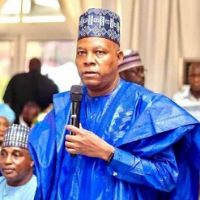
Vice President Kashim Shettima revealed on Saturday that the assessment conducted in the aftermath of the insurgency in the North-East indicated that Boko Haram attacks had inflicted a financial toll of $9 billion on the region.
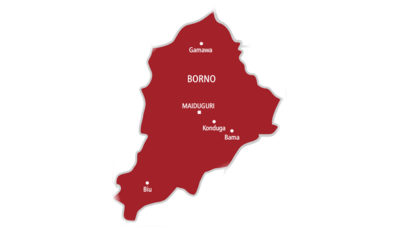
Borno State, at the heart of the insurgency, bore the heaviest burden, suffering losses amounting to $6.8 billion.
Shettima made these remarks while addressing the audience in Maiduguri, the capital of Borno State, during the launch of palliative distribution for the states in the region by the North East Development Commission.
He also expressed concern about the displacement of numerous emirs who were left without an emirate to govern. The initiative by the NEDC aimed to mitigate the impact of fuel subsidy removal on the region’s residents.
Shettima, who simultaneously inaugurated the eighth North-East Governors’ Forum meeting at the Borno State Government House in Maiduguri, highlighted that the North East Development Commission (NEDC) was actively carrying out its mission of rehabilitating and resettling victims of the insurgency.
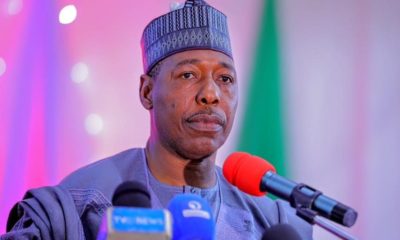
He added, “A lot of our emirs here were emirs without emirate. Ten years ago, the palace that Governor Babagana Zulum calls home was under the control of Boko Haram. 10 years ago, the hometown of the governor of Yobe State was under the grip of Boko Haram. 10 years ago, a chunk of the North-East was under Boko Haram.
“Maiduguri was effectively encircled apart from Maiduguri/Kano Road that was sporadically attacked by Boko Haram.
“Based on the post insurgency, recovery peace building assessment report of the North-East which was validated by the World Bank, European Union and the Presidency, Boko Haram inflicted damages in the North-East to the tune of $9bn, Borno alone has damages worth $6.8bn.”
While lamenting the challenges of the region Shettima added, “If the North-East was to be treated as a nation, we are poorer than Chad and Niger. But I want to commend our governors, the PDP Governors’ of Bauchi and Adamawa states are the closest to the governor of Borno.”
Addressing the speculations surrounding the NEDC leadership transition that saw both the reappointment of Managing Director Mohammed Goni and Chairman Paul Tarfa, Shettima clarified that their continued roles were well-deserved. He emphasized, “They left behind N237 billion, an unprecedented achievement in contemporary Nigerian governance.”
Goni, in turn, affirmed the commission’s dedication to alleviating hunger across the 110 Local Government Areas in the region. He stated, “Today, we are set to donate food and non-food items valued at approximately N15 billion through the Vice-President to all state governors, 18 senatorial districts, 48 federal constituencies, as well as the six state Houses of Assembly.”








The Nigerian Content Development and Monitoring Board (NCDMB) has launched a 5-day Hands-on Oracle Primavera P6 Training in Rivers State, targeting 50 participants.
The training, being executed by Mathnebi Nig. Ltd, commenced today, March 16th and will run until Friday, March 20th.
The intensive hands-on program aims to equip participants with practical skills in project management using Oracle Primavera P6, enhancing their capabilities in the energy and construction sectors.
The NCDMB’s sponsorship of the training underscores its commitment to boosting local capacity and driving Nigeria’s economic growth through skills development.
ALSO READ: Senate Approves Abe as Chairman, NUPRC Board
The training is expected to benefit participants and contribute to the development of Nigeria’s project management landscape.

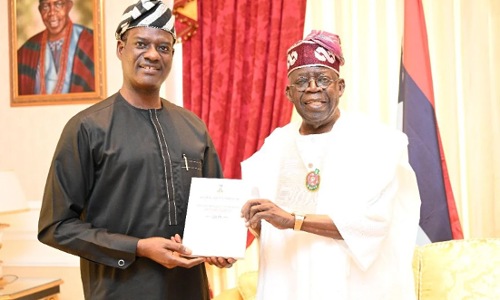
President Bola Ahmed Tinubu has sworn in Mr. Taiwo Oyedele as Nigeria’s new Minister of State for Finance at the Aso Rock Presidential Villa.
The swearing-in ceremony took place shortly after the Senate confirmed Oyedele’s nomination last Wednesday.
Oyedele, 50, from Ikaram, Akoko in Ondo State, brings over two decades of experience in fiscal policy and tax administration.
ALSO READ: SERAP Asks Tinubu To Probe N5.9bn Spent On NNPC Rebranding
He previously chaired the Presidential Committee on Fiscal Policy and Tax Reforms, which overhauled Nigeria’s tax system, introducing zero income tax for Nigerians earning N800,000 or less and exemptions for small businesses with turnovers below N50 million.
During his Senate screening, Oyedele described his appointment as “a call to serve at a critical time when Nigeria faces significant fiscal challenges and remarkable opportunities.”
He replaces Dr. Doris Uzoka-Anite, who has been redeployed to the Ministry of Budget and National Planning.
Oyedele also spent 22 years at PricewaterhouseCoopers, held executive programs at top global institutions including the London School of Economics and Harvard Kennedy School, and currently serves as a professor at Babcock University.
The minister’s appointment signals a continued focus on implementing the Tax Reform Acts, which took effect on January 1, 2026, and aim to simplify Nigeria’s tax system while boosting economic growth.
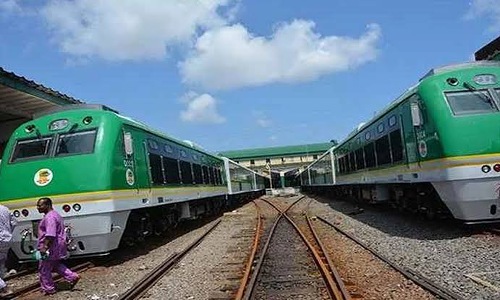
Passengers were thrown into panic on Monday after a train operating along the Abuja–Kaduna rail corridor derailed, leaving several passengers injured and disrupting services on the busy route.
The train, which was travelling from Kaduna to Abuja, reportedly failed to reach its destination as scheduled after the incident occurred along the rail line linking both cities.
According to passengers on board, the incident happened suddenly, sending shock through the coaches as the train came to an abrupt halt.
SEE MORE: Value Creation: NCDMB to train Six Young Engineers in Electrification Interdependency
Some passengers said they heard a loud bang before the train jolted violently, throwing several occupants off their seats.
Eyewitnesses said the sudden impact caused confusion inside the train compartments, with some passengers sustaining cuts and bruises after hitting seats and metal fittings.
Initial reports suggested that the Abuja-bound train might have collided with another train along the corridor, forcing rail operations to pause temporarily while authorities assessed the situation.
A source within the Nigerian Railway Corporation confirmed the incident but declined to give full details, noting that he was not authorised to speak publicly on the matter.
One of the passengers, Sada Malumfashi, shared his experience on social media shortly after leaving the train.
He described the moment as frightening, stating that the loud sound and sudden stop caused many passengers to be flung from their seats.
He said the train remained stationary for about 30 minutes before the journey resumed slowly toward Kubwa, located on the outskirts of Abuja.
When contacted, the spokesperson for the Nigerian Railway Corporation, Callistus Unyimadu, confirmed the development and said an official statement would be issued.
Authorities are yet to disclose the exact cause of the derailment or the full extent of injuries as investigations continue.





NCDMB, Renaissance Africa Train Pipeline Engineers

NLNG Inducts 103 Trainees Into Empowerment Scheme
NCDMB Sponsored Oracle Primavera P6 Training Underway In Rivers State

Senate Approves Abe as Chairman, NUPRC Board

Tinubu Swears in Taiwo Oyedele as Finance Minister

Burna Boy Breaks Record as Africa’s Top-Grossing Concert Artist

Trump’s Family Unveils New Cryptocurrency Platform

Reps Recommend 3-year Jail Term For Aviation minister

Dangote Cement Lights Up Benue Host Communities With CSR Initiatives

Senate Denies Receiving Petitions Against Tinubu’s Ambassadorial Nominees

Tems Sets New Record On Billboard Hot 100 Chart
