
Politics
SERAP Urges Tinubu To Direct CCB To Publish President’s, VP’s, Others Assets

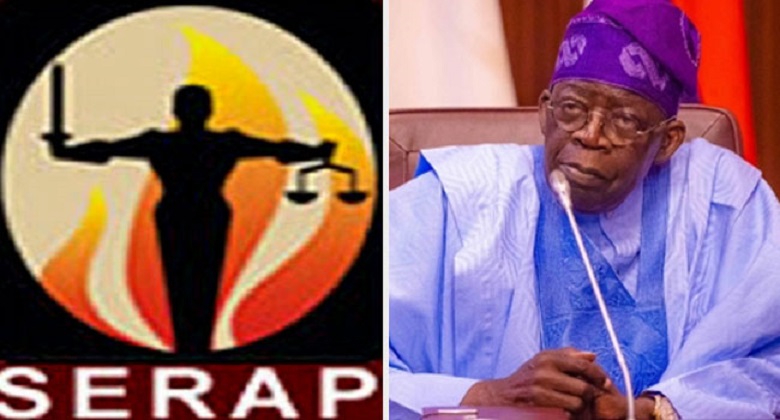
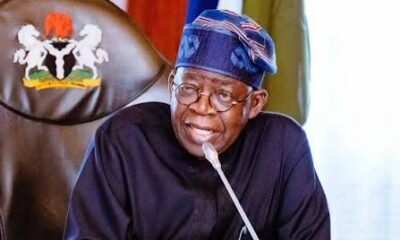
The Socio-Economic Rights and Accountability Project (SERAP) has urged President Bola Tinubu “to request the Code of Conduct Bureau (CCB) to publish your assets and encourage your Vice-President Kashim Shettima, ministers, and the leadership of the National Assembly, state governors, as well as the chairmen of Nigeria’s 774 local governments to also request the CCB to publish their assets.”
The president had during his first Presidential Media Chat last Monday reportedly said, “I will consider asking the CCB to release my assets.”
In the letter dated 28 December 2024 and signed by SERAP deputy director Kolawole Oluwadare, the organisation said: “We welcome your reported decision to consider asking the CCB to publish your assets as a significant development, and a signal of your intent, willingness, and commitment to show leadership on this important matter of public interest.”
ALSO READ: Tinubu Mourns Ex-U.S. President Jimmy Carter, Celebrates His Legacy
The SERAP said, “But your ‘consideration’ would ‘carry more weight’ if you were to promptly translate the intent into action by asking the CCB to publish your assets and encouraging your Vice-President, ministers, leadership of the National Assembly and state governors, as well as the chairmen of local governments to do the same.”
According to the SERAP, “Secrecy in the assets declared by high-ranking public officials to the CCB continues to facilitate corruption at all levels of government, especially in the country’s 36 states, the Federal Capital Territory, and federal ministries, departments and agencies [MDAs], as well as local governments.”
The SERAP also said, “Secrecy in asset declaration forms also provides the biggest opportunities for the abuse of public money for private gain. Acting as recommended would reduce the opportunities for corruption at all levels of government.”
The letter, read in part: “However, transparency and accountability in the states and local governments won’t happen without you pushing for the immediate and effective implementation of the Supreme Court decision of 11 July 2024, stopping state governors from taking over local government funds.”
“Asking the CCB to publish your assets and encouraging your Vice-President, ministers, the leadership of the National Assembly and state governors, as well as the chairmen of local governments to also ask the CCB to publish their assets would promote and ensure the public trust, transparency and accountability.”
“Transparency and openness would also increase public confidence in the integrity of high-ranking public officials and government generally, and ensure that political authorities are honest when they provide services to the people.”
“Despite the Supreme Court decision, several state governors reportedly continue to take over local government funds.”
“Your intent, willingness and expressed commitment to promote transparency in asset declarations should include prioritising the immediate and effective implementation of the Supreme Court judgment and holding state governors to account for contempt of court, as they continue to blatantly disobey the judgment.”
“The immediate and effective implementation of the Supreme Court judgment is the best antidote for reducing cases of state-level corruption and would contribute to addressing the allegations of diversion of local government funds needed for vital public services.”
“Corruption continues to directly affect the lives and well-being of millions of Nigerians in several states, and to erode public trust in public institutions.”
“Corruption is one the greatest challenges to improving the country’s democracy and rebuilding a transparent, accountable and participatory system of governance. One way that corrupt politicians in the country have perpetuated corrupt practices is through hiding assets.”
“There are widespread reports of corruption in several states of the federation, and federal ministries, agencies and departments [MDAs].”
“The best measure of a country’s progress toward transparency and accountability is a total obedience to the rule of law. The law ought to command the highest levels of respect by for example, the state governors immediately obeying the Supreme Court judgment and stop collecting and taking over local government funds.”
“Nigeria’s democracy ought to have as its foundation transparency, accountability and respect for the rule of law at all levels of government.”
“Treating the Supreme Court judgment with contempt is antithetical to any contemporary notion of the rule of law and democracy, and counter-productive to any efforts to hold state governors to account for their alleged misuse of public funds.”
“The Nigerian Constitution 1999 [as amended] acknowledges the importance of citizens’ access to the details of assets filed with the CCB by public officers, as contained in Paragraph 3 (c) of Part 1 of its Third Schedule.”
“According to the Code of Conduct for Public Officers, contained in Part I of the Fifth Schedule to the Nigerian Constitution, all public officers are to declare their assets.”
“Paragraph 11(1)(a)(b) of the Fifth Schedule provides that every public officer shall immediately after taking office and thereafter (a) at the end of every four years; and (b) at the end of his/her term of office, submit to the CCB a written declaration of all his properties, assets, and liabilities and those of his unmarried children under the age of eighteen years.”
“Section 15(1) of the Code of Conduct Bureau (CCB) and Tribunal Act also requires all public officers to declare their assets.”
“Article 7(1) of the African Union Convention on Preventing and Combating Corruption and articles 7(4) and 8(5) of the UN Convention against Corruption to which Nigeria is a state party contain similar provisions and requirements for public officials to declare their assets before, during, and after serving in public office.”
“The Nigerian Constitution and the anticorruption and human rights treaties show the significant role that asset declaration by public officials plays in promoting transparency, accountability and preventing and combating corruption in the public service.”
“Section 109 of the Evidence Act defines a public document to include documents forming the acts or records of the acts of public officers. Asset declaration forms kept with the Code of Conduct Bureau therefore qualify as public documents under section 109.”
“We hope that these recommendations will help guide your steps in taking the necessary action to ask the CCB to publish your assets and to encourage your vice-president, ministers, the leadership of the National Assembly, state governors and chairmen of Nigeria’s 774 local governments to do the same.”







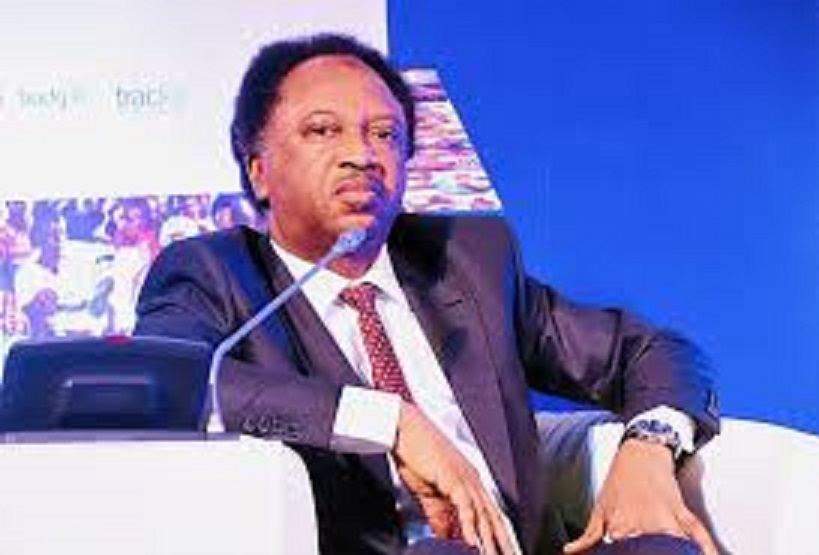
Former Kaduna Central Senator, Shehu Sani, has said the 2027 presidential contest should be dominated by Southern candidates, arguing that the South should be allowed to complete an eight-year tenure before power returns to the North in 2031.
Sani made the declaration on Thursday in a post on X, as debate over zoning and the rotation of presidential power continues ahead of the 2027 general election.
SEE MORE: 2027: Wike’s 419ners, Lazy Remarks Against APC Gov in Bad Taste — Aliyu
He listed President Bola Tinubu, former Anambra State Governor Peter Obi, African Action Congress presidential candidate Omoyele Sowore, Oyo State Governor Seyi Makinde, Social Democratic Party candidate Adewole Adebayo and former Cross River State Governor Donald Duke among the Southern politicians who should contest the 2027 presidential election.
“The 2027 political contest should be between Tinubu, Peter Obi, Sowore, Makinde, Adebayo, Duke and other Southern Candidates,” Sani said.
“The South should complete its eight years. Its not constitutional but it’s equitable.
“We should not bury our heads in the sand and deny the realities and complexities of our history.”
Sani further argued that the North should have what he described as an “unchallengeable right” to the presidency in 2031 if the South completes its eight years.
“The North should have an unchallengeable right in 2031,” he stated.
He also warned politicians opposed to respecting power rotation in 2027 that the principle could similarly be disregarded when the presidency is expected to return to the North.
“Those who say there shouldn’t be respect for the principle of Rotation of power in 2027, should know that it WILL NOT be respected in 2031,” Sani added.

A chieftain of the All Progressives Congress, APC, Farouk Aliyu, has described the language used by the Minister of the Federal Capital Territory, FCT, Nyesom Wike, against some APC governors as being in “bad taste.”
Aliyu was reacting to Wike’s description of some governors as “419ners” and “lazy” amid the political realignment ahead of the 2027 general elections.
Speaking in an interview on Arise TV on Thursday, the APC chieftain said members of the ruling party rejected Wike’s remarks.
SEE ALSO: 2027: PDP Drops Fresh Revelation on Wike’s Support for Tinubu
“The language Nyesom Wike used to describe governors as ‘419ners’ or ‘lazy’ is in bad taste. All members of the APC reject that comment,” Aliyu said.
Wike, a former governor of Rivers State, has remained active in the political developments ahead of the 2027 elections despite being a member of the Peoples Democratic Party, PDP.
He was one of the five PDP governors who formed the G5 during the 2023 election period and openly supported President Bola Tinubu, the APC candidate, during the presidential election.
Following Tinubu’s emergence as president, Wike was appointed Minister of the FCT, a position he has held under the APC-led Federal Government while remaining a PDP member.
His political position ahead of 2027 has continued to attract attention, particularly over his support for Tinubu and his reported efforts to build a broader political coalition.
Wike has previously criticised APC governors who opposed his political moves, questioning their commitment to delivering electoral support for Tinubu.
However, Aliyu said the APC was willing to accommodate politicians from other parties who wanted to support the ruling party.
“However, as a party, the APC welcomes anyone, including Wike and others from different parties, who is willing to support the APC,” he said.
According to him, the party’s concern was to maintain a coordinated campaign structure ahead of the elections.
“But we want a unified campaign structure at the national level and across the states,” Aliyu added.
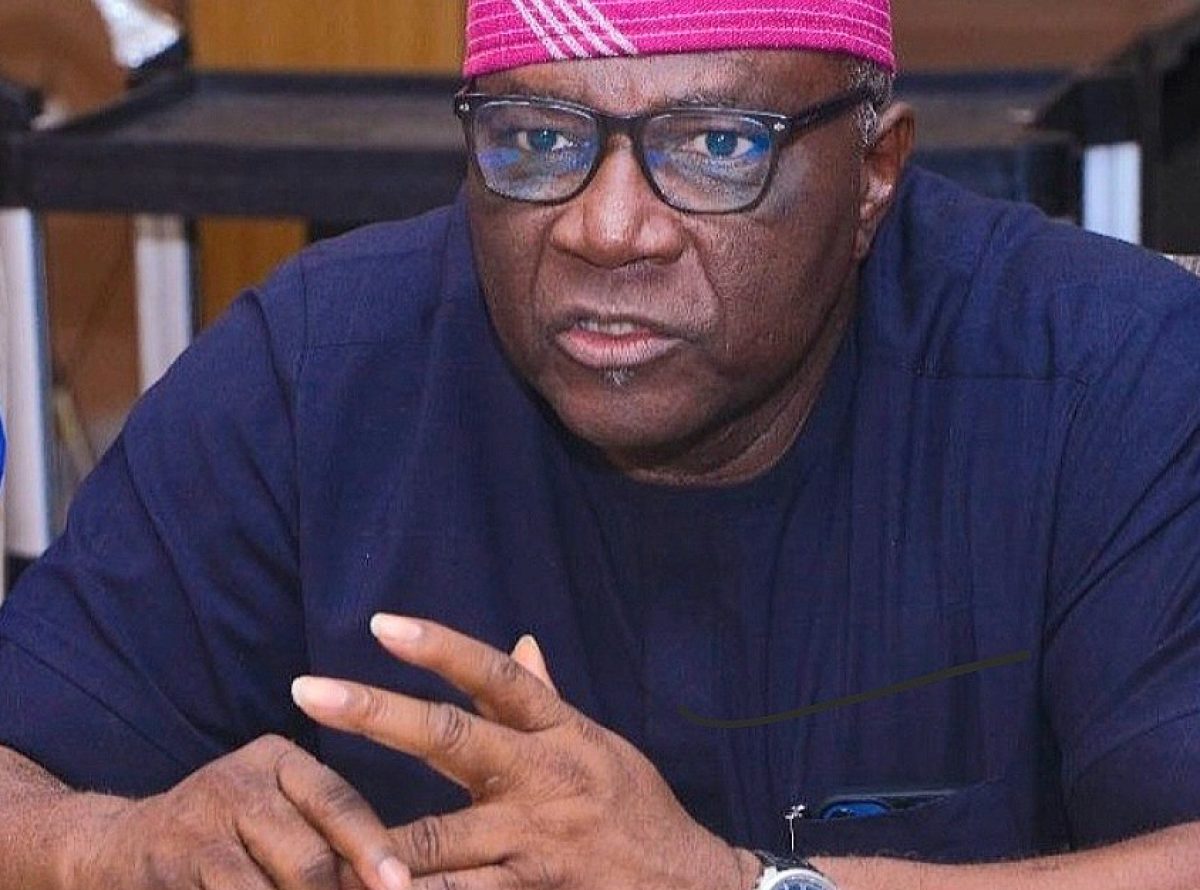
Presidential aide Bayo Onanuga has questioned Peter Obi’s promise to transform Nigeria, citing what he described as the former Anambra State governor’s record during his eight years in office.
Onanuga made the remarks on Thursday while reacting to the ongoing controversy over Obi’s administration and the financial liabilities allegedly left behind in Anambra State.
“The evidence is clear. If a small, homogenous state like Anambra could not be transformed despite $4.05 billion in spending and massive borrowing, how can the same manager promise to fix a complex federation of 36 states and the FCT?
SEE MORE: ‘This Is Serious’ — Keyamo Reacts as Anambra Govt Releases Fresh Debt Claims Against Peter Obi
“Mr. Obi’s eight years was an unmitigated failure, now masked by revisionism. He should desist from deceiving Nigerians with sanctimonious sermons. The desperation is even clearer in his reported four-year single-term pact with his running mate, in direct contradiction of the two-term, eight-year provision of the 1999 Constitution.”
The comments followed a fresh escalation of the dispute between Obi and the Anambra State Government over the financial position he left behind when he handed over power on March 17, 2014.
The Anambra State Government, through Commissioner for Information and Value Reorientation Law Mefor, recently released details of what it said were eight external loans linked to projects under Obi’s administration.
According to the state government, the loans had an outstanding balance of $92.35 million, valued at about N127.4 billion at the official exchange rate as of June 30, 2026.
The government said the original external borrowings amounted to about $123.77 million.
The state also said Obi’s administration spent about $4.05 billion over its eight years in office, a figure it said was equivalent to about N5.4 trillion at the current exchange rate.
It argued that the loans covered areas including malaria control, erosion management, healthcare, education, community development and agriculture.
The controversy intensified after Obi rejected the allegations and maintained that his administration cleared more than N35 billion in historical gratuities and arrears.
Obi also said he left office without outstanding salaries, pensions, gratuities or debts owed to contractors for duly executed and certified projects.
He further disputed the state’s account of an alleged N2.13 billion ecological fund, saying the money had been left untouched in a First Bank account for the Oko/Umuchiana erosion crisis.
Obi challenged anyone with evidence contradicting his account to produce it, saying he would stop campaigning for the 2027 presidential election if his claims were disproved.
The Anambra Government, however, disputed his explanation, saying the account Obi identified was an Internally Generated Revenue Consolidated Revenue Account and that its records did not show the N2.13 billion he referenced.
The Presidency subsequently entered the dispute, with Onanuga challenging Obi to honour his pledge to withdraw from the 2027 presidential race if the claims against his administration were established.
Obi’s media aide, Idris Zekeri Jnr, meanwhile, said a team of former officials who worked with Obi was preparing a detailed response to the Anambra Government’s claims.






Nigeria Joins Global INTERPOL Operation as AI Identifies 126 Foreign Terrorist Fighters

Macron Hosts Tinubu to Private Dinner at Élysée Palace in Paris

Equal Pay Day 2026: UN Women Renews Call for Equal Pay as Women Earn 20% Less

How Can 37 Suspected Illegal Miners Die in Gov’t Custody? Nigerians Demand Answers

Mambilla: ICC Orders Sunrise Power to Pay Nigeria $11.8m After 9-Year Battle

How Nigeria’s Foreign Reserves Rose to $54.61bn in 2026

Trump’s Family Unveils New Cryptocurrency Platform

Senate Denies Receiving Petitions Against Tinubu’s Ambassadorial Nominees

Dangote Cement Lights Up Benue Host Communities With CSR Initiatives

Reps Recommend 3-year Jail Term For Aviation minister

Tems Sets New Record On Billboard Hot 100 Chart
