
NEWS
Boss Mustapha Reveals Activities For Tinubu’s May 29 Swearing-In Ceremony

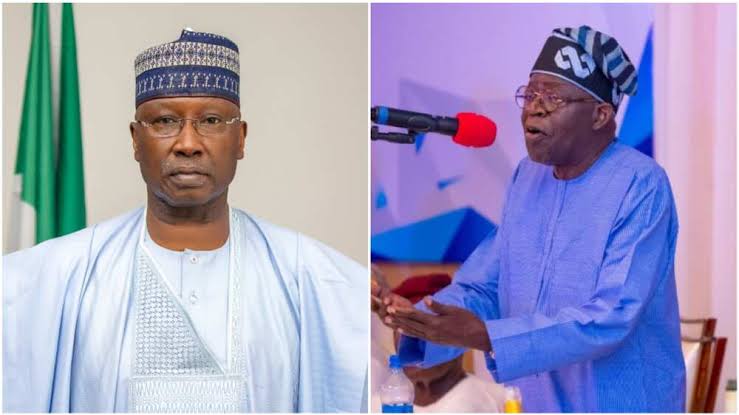
Boss Mustapha, Chairman of the Presidential Transition Council, has unveiled the comprehensive lineup of activities for the swearing-in ceremony of Bola Tinubu as Nigeria’s President on May 29.
The inauguration proceedings are scheduled to commence on Thursday, starting with the official conferment of the Grand Commander of the Order of the Federal Republic to Bola Tinubu, and the Grand Commander of the Order of the Niger to the Vice-President-elect, Kashim Shettima.
A director from the Ministry of Foreign Affairs has confirmed that numerous African leaders have expressed their intention to attend the inauguration ceremony, which is set to be held at Eagle Square in Abuja.
According to an anonymous director from the Ministry of Foreign Affairs, invitations have been extended to all 54 African countries for the inauguration.
The director further stated that they anticipate the presence of at least 65 world leaders from Africa, Europe, and America at the event. However, the director requested anonymity as they are not authorized to speak on the matter.
He said “We have 54 countries in Africa and most of them have been invited to the inauguration; so, we don’t expect less than 65 world leaders from Africa, Europe and America at the event,’’
The upcoming high-profile event is expected to be attended by representatives from Nigeria’s traditional allies, including the United States, the United Kingdom, Canada, France, Saudi Arabia, United Arab Emirates, Pakistan, China, Germany, Finland, Jamaica, Japan, Israel, Turkey, and several other countries.
Boss Mustapha, the Secretary to the Government of the Federation, announced during a press briefing in Abuja that numerous world leaders will participate in the event as activities for the transition of power to the incoming administration have commenced.
As the inauguration of former Lagos State governor Bola Tinubu approaches, preparations for the event are intensifying.
Meanwhile, the legal battle challenging Tinubu’s election victory, initiated by the Peoples Democratic Party’s candidate Atiku Abubakar and the Labour Party’s candidate Peter Obi, is ongoing at the Presidential Election Petitions Court.
On Thursday, the court adjourned further proceedings in Atiku’s petition until Friday (today) to continue pre-hearing sessions and address pending applications submitted by the respondents.
The panel led by Justice Haruna Tsammani has stated that the court will determine the number of witnesses allowed for each party, allocate time for their presentations, and set time limits for cross-examination.
The panel encouraged the parties involved to collaborate and reach an agreement on the additional procedures to be followed.
In a similar vein, the court adjourned Peter Obi’s petition until today due to the parties’ inability to reconcile the relevant documents related to their claims.
Mustapha went on to outline the activities for the event, stating that transition documents would be officially handed over to Tinubu and Shettima on the same day.
In addition, Mustapha announced that the former president of Kenya, Uhuru Kenyatta, has been designated to deliver the inauguration lecture.
The lecture, titled “Deepening Democracy for Integration and Development,” is scheduled to take place on May 27.
The series of activities surrounding the inauguration also includes a Regimental Dinner honoring the Commander-in-Chief at the Armed Forces Officers Mess on May 23, a Valedictory Federal Executive Council Meeting at the Council Chambers in the Presidential Villa on May 24, a Public Lecture and Juma’at prayer at the National Mosque on May 26, a Children’s Day Parade and Party on May 27, and an Inter-denominational Church Service at the National Christian Centre on May 28.
Furthermore, an Inauguration Dinner/Gala Night is scheduled to be held at the State House Conference Centre on May 28. The main event, the inauguration and swearing-in of the President-elect and Vice President-elect, will occur on May 29.
The occasion will be accompanied by an inauguration parade taking place at the Eagle Square.
Following the inauguration ceremony, a post-inauguration luncheon exclusively for the President, fellow Presidents, Heads of Government, and distinguished guests will be held at the State House Banquet Hall.
The Secretary to the Government of the Federation (SGF) disclosed that numerous world leaders have expressed their interest in attending the event.
He said “So far, invitations have been sent to Presidents and Heads of Government as well as Heads of international organisations. We are also glad to report that many of these invitees have confirmed attendance in person.
But when asked about the identities of the leaders, the SGF said, “Diplomatic privilege does not allow us to announce the number of people coming. If you know what is happening globally, we cannot tell you who is coming. We leave that to their embassies to make it public.”
Mustapha insisted that the handover would hold despite the court cases seeking the cancellation of the ceremony.
The transition committee chairman noted, “The inauguration would not be stopped pending the determination of the cases in court. This is not the first time we have had elections. In my political life, I have seen different transitions.
‘’From Shagari’s period to Buhari, the inauguration went on despite court cases. In 2003, Buhari spent months at the tribunal up till the Supreme Court. He repeated the process three times. The only election that was not litigated was in 2015 when Jonathan conceded defeat. With or without litigation, the handover will be held on May 29. The Constitution and Electoral Act are clear on this.”
‘’I am delighted to inform you that May 29, 2023, will mark the seventh consecutive democratic transition of power in Nigeria and on that day, we shall all be ushering in the 16th President of the Federal Republic of Nigeria.
According to him, the transition council interfaced and learnt from the transition processes practised in the United States of America and Kenya, expressing hope that Nigeria would have legislation on presidential transition soon.
Mustapha said, “In furtherance of discharging its functions, the PTC also interfaced with leading democratic nations including the United States of America and the Republic of Kenya, as part of its learning efforts to pick up useful lessons in line with international best practices.
“It is important to also state that these countries have specific legislations on Presidential Transition, some of which date back to 1963. It is our expectation that specific legislation on presidential transition in Nigeria would be passed soon.”
Boss Mustapha reassured that comprehensive measures have been implemented to ensure the security and safety of all individuals during the inauguration period.
The Chairman of the Security, Facilities, and Intelligence Committee, and National Security Adviser, Babagana Monguno, further stated that a combination of covert and overt operations has been arranged to secure the event venues and hotels designated for guest accommodations.
Monguno emphasized that they do not anticipate any attacks during the events, but issued a warning to individuals without valid reasons to stay away from the event venues.
He said, “Our primary function is to provide both overt and covert security cover for all the venues where the stated activities would be held, including the hotels where guests would be staying. The span of our work is before, during, and after the inauguration.
‘’My advice is that if you have no business at the venue, you need not be there. The most important message I would like to pass across to you is that we do not envisage anything negative. Everybody should be calm, especially those coming from other countries.” he added.




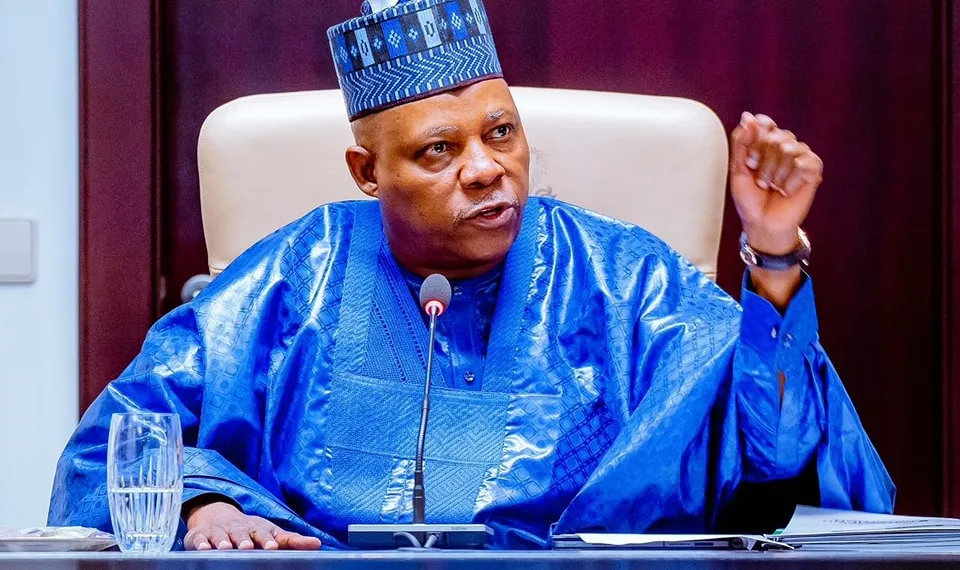
Vice President Kashim Shettima has urged Nigerians to celebrate President Bola Tinubu, saying his leadership saved the country from a potential implosion.
Shettima said Nigeria’s economy had been teetering on the edge of collapse before Tinubu’s intervention, adding that the country could have faced a different situation.
“The economy was teetering on the edge of collapse, we were on a cliff edge,” the Vice President said.
ALSO READ: Subsidy Removal, FX Reforms Driving Fresh Oil Sector Investment – Shettima
“So he literally saved the nation from an implosion. That could have been the scenario. So, instead of demonizing him, Nigerians ought to celebrate this poor man.”
Shettima also called for a return to the drawing board, expressing confidence in the leadership’s commitment and the prospects for the 2027 elections.
“I believe on the bottom of my heart that with this presentation I have seen, and with the commitment of our leadership, by the grace of God, we are going to win,” he said.
Speaking about the 2027 elections, the Vice President reminded his audience that social media platforms should not be mistaken for actual polling stations.
“There are no polling stations on Facebook or Instagram,” he said.
Shettima also expressed gratitude for the efforts made towards promoting the cause of the 2027 elections.

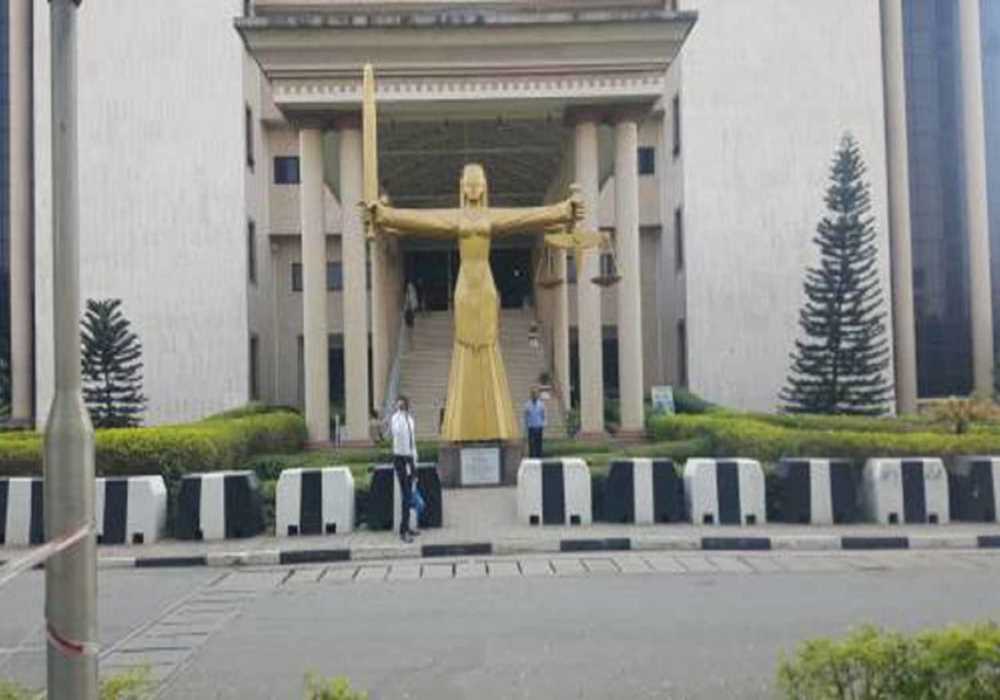
Following observed mis-steps, the Federal Government of Nigeria has withdrawn the eight-count criminal charge brought against the alleged fake Director General (DG) of the Presidential Foreign Intervention Promotion Council (PFIPC), Adeniyi Adeyemi.
Biztellers reports that the matter, in accordance with the counsel of the Attorney General of the Federation (AGF) and Minister of Justice, Prince Lateef Olasunkanmi Fagbemi, (SAN), the matter will be filed at the High Court of the Federal Capital Territory (FCT), instead of the Federal High Court (FHC).
Consequently, upon an unopposed application for termination by the prosecution counsel and Director of the Public Prosecution of the Federation (DPPF), Rotimi Oyedepo (SAN), on Monday, Justice Mohammed Umar of a Federal High Court, Abuja on Monday, struck out the matter.
READ ALSO: Shell Identifies Keys to Nigeria’s Energy Future
In a motion for the termination of the charges, Oyedepo informed the court that the Attorney General of the Federation (AGF) and Minister of Justice has carried out a review of the case file of Adeyemi and the charge filed by the Inspector General of Police (IGP) and found some loopholes.
The DPPF added that the documents allegedly forged by Adeyemi during his operations of the fake agency are those that can be prosecuted by the High Court of the Federal Capital Territory (FCT).
He also informed the court that a new charge has been filed at the High Court of the FCT and that Adeyemi would be expeditiously arraigned afresh.
He therefore urged the judge to strike out the charge as required by law.
Following no objections from Ibrahim Angulu (SAN), who stood in for Adeyemi, Justice Umar subsequently terminated the charge.
Adeniyi, 38, was being tried alongside two others whose whereabouts are unknown, on charges bordering on conspiracy and forgery.
The two others said to be at large were identified as Femi (surname unknown) and Anu (surname unknown).
The charge marked: FHC/ABJ/CR/25/2025, was entered against the defendant by the DPPF.

To secure a bright energy for her teeming population, Nigeria must sustain the momentum of reform, accelerate investment, and deepen partnerships.
This view was expressed by Managing Director, Shell Nigeria Exploration and Production Company of Nigeria Limited (SNEPCo) Ronald Adams in Lagos at the weekend.
Delivering a keynote address at the Africa Energy Conference (AEC) of the Lagos Business School (LBS), Adams called for regulatory certainty through efficient execution of reforms, sustained investment appeal to enable projects to move more swiftly from opportunity to production and partnership by operators, regulators, NNPC Limited and communities to unlock the full value of Nigeria’s resources.
Adams cited Nigeria’s huge oil and gas resources as an advantage but pointed out: “Resources alone do not guarantee prosperity. Prosperity comes when resources are matched with investment, technology, sound policy and disciplined execution. Success will be determined not by the size of our resources, but by our ability to convert them into investment and economic growth.”
Adams pledged the support of Shell towards a bright energy future of Nigerians. He said: “For more than six decades, Shell has been part of Nigeria’s energy journey. Together with our partners, we have helped develop major energy infrastructure, supported Nigerian businesses, invested in talent, and contributed to economic development. Bonga remains a powerful example of what technology, partnership and Nigerian capability can achieve in deepwater operations. Today, that story continues through Bonga North.”
READ ALSO: ADF Targets 5 Million Students, 2 Million Vulnerable Women
Issuing a clarion call for action by all stakeholders, he added: “The world is not standing still. Capital is moving, technology is advancing and competition is intensifying. The countries that attract investment tomorrow are those that improve competitiveness today. Nigeria has begun that journey. Our task is to sustain the momentum and translate reform into projects, projects into growth, and growth into shared prosperity.”
The conference, the 4th in the series had at its theme; “Securing Nigeria’s Energy Future: Policy Reform, Capital Mobilisation, and Pathways to a Sustainable Power and Energy Market” and was attended by top government officials, industry captains, energy professionals, and students.
Lagos State Deputy Governor Obafemi Hamzat represented Lagos State Governor Babajide Sanwo-Olu as the guest of honour. SNEPCo was a principal sponsor of the Africa Energy Conference (AEC) and mounted a well-received exhibition on its deepwater operations and social investments across Nigeria.






State Govs, Wike Endorse One-Party State, Join APC Campaign Council

2027: ‘Tinubu Has Done Well’ – Wike Tells Opposition to Speak the Truth

‘Celebrate This Poor Man’ – Shettima Defends Tinubu Over Economic Crisis
FG Withdraws Charges Against ‘Fake Agency’ DG, Adeniyi Adeyemi

Shell Identifies Keys to Nigeria’s Energy Future

Nigeria Records Biggest Rise in Multidimensional Poverty Among Five Countries – UN

Trump’s Family Unveils New Cryptocurrency Platform

Senate Denies Receiving Petitions Against Tinubu’s Ambassadorial Nominees

Dangote Cement Lights Up Benue Host Communities With CSR Initiatives

Reps Recommend 3-year Jail Term For Aviation minister

Tems Sets New Record On Billboard Hot 100 Chart
