
NEWS
Fuel Discount: Presidency Explains Why Atiku’s Production Subsidy Proposal May Fail

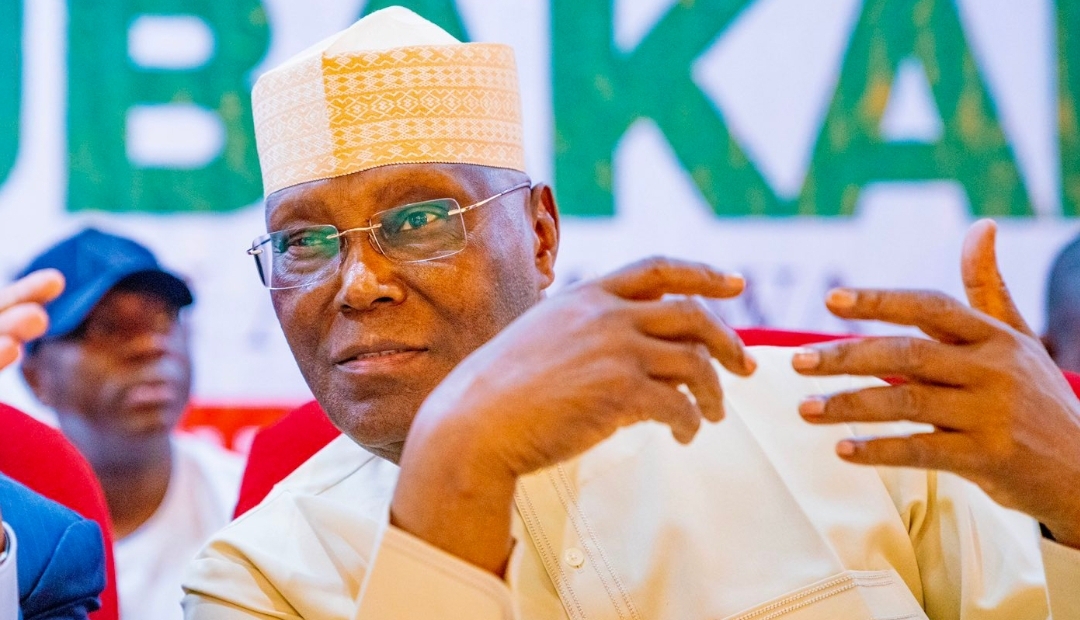
The Presidency has explained why former Vice President Atiku Abubakar’s proposed production subsidy for locally refined petrol could be difficult to implement, arguing that Nigeria lacks sufficient freely available crude oil to sustain the policy.
President Bola Tinubu’s Special Adviser on Media and Public Communications, Sunday Dare, made the position known in a statement issued on Sunday, October 11, 2026, titled “Atiku’s Demagoguery in the Face of Tinubu’s Logical Policies.”
Dare was responding to Atiku’s criticism of the Federal Government’s 30-day petrol discount offered through the Nigerian National Petroleum Company Limited (NNPC) Retail and its proposed fuel price modulation framework.
SEE ALSO: PETROAN Expects Fuel Discount to Combat Inflation
Atiku had described the temporary discount as a publicity stunt, questioning its sustainability and accusing Tinubu of adopting his economic proposal without incorporating the production subsidy he advocated.
However, the presidential aide argued that Atiku’s proposal failed to adequately account for Nigeria’s crude oil production arrangements, existing contractual obligations and the financial implications of subsidising petroleum products.
According to Dare, Nigeria produces approximately 1.8 million barrels of crude oil daily, but the Federal Government does not have unrestricted access to the entire volume.
He said joint ventures and production-sharing contracts, alongside production costs, royalties and profit-sharing arrangements, significantly reduce the quantity of crude available to the state.
“After accounting for these statutory and contractual obligations, Nigeria has fewer than 700,000 barrels per day of unencumbered ‘free crude’ to give away,” Dare stated.
He argued that using crude oil to fund a broad production subsidy without sufficient freely available supplies could undermine government revenues and expose the country to financial risks.
Dare maintained that domestic refineries, including the Dangote Petroleum Refinery, require substantial volumes of crude oil, making it difficult for the government to meet their needs solely from crude available for unrestricted allocation.
He argued that domestic refiners would still need to obtain additional crude through other arrangements, including purchases from international markets.
The presidential aide warned that a production subsidy without adequate crude supplies and clearly defined financial safeguards could recreate some of the problems associated with Nigeria’s former petrol subsidy regime.
He said such a policy could encourage opaque transactions, fraudulent claims and financial losses if its implementation was not properly structured.
Atiku has advocated shifting government support away from subsidising imported petrol towards supporting qualifying domestic refiners through preferential crude oil pricing, with the aim of reducing costs for consumers.
The proposal has become a subject of political and economic debate as Nigerians continue to grapple with high petrol prices and the wider cost-of-living crisis.
Presidency Defends 30-Day Petrol Discount
Dare also rejected the suggestion that NNPC Retail’s decision to forgo its profit margin temporarily amounted to a restoration of the former petrol subsidy.
He said the discount was initially introduced as part of activities marking Nigeria’s 66th Independence anniversary before being extended for another 30 days.
According to him, the arrangement allows NNPC Retail to absorb short-term market pressures without reinstating the previous system of government-funded fuel subsidies.
The presidential aide also defended the proposed N1,350-per-litre ceiling on ex-gantry costs, describing it as a mechanism to moderate sudden increases in fuel prices.
Under the framework outlined in the statement, refiners and importers would absorb temporary cost increases above the ceiling and recover those costs when market conditions improve.
Dare argued that the measure could help reduce the impact of abrupt fuel price changes on transport fares and household expenses.
The presidential aide further defended the administration’s broader economic reforms, including petrol subsidy removal and foreign exchange market reforms introduced in 2023.
He cited the expansion of compressed natural gas infrastructure, direct cash transfers to vulnerable households, support for small businesses and increased federal allocations to states and local governments as part of the government’s response to economic pressures.
Dare maintained that the administration was pursuing a combination of market-based pricing and targeted interventions to manage the effects of international oil market volatility.
He argued that the country needed structural economic measures rather than temporary interventions that could place additional pressure on public finances.







The Nigerian Upstream Petroleum Regulatory Commission (NUPRC) has opened the registration portal for its 2026 oil and gas licensing round.
Information on the portal, which opened during the weekend, disclosed that the bid commenced on November 20, 2026 and will close on January 15, 2027, for 17 onshore blocks, 14 shallow water and nine deep offshore assets.
Biztellers reports that the bid is offering 40 blocks across onshore, shallow water and deep offshore terrains to prospective investors.
The commission urged interested investors to visit the portal to access the full list of available blocks, bidding guidelines and frequently asked questions, explaining that the platform was designed to provide a seamless experience for prospective bidders.
READ ALSO: Indian Firms to Supply DPRP with $38.94m Pumping Systems
The licensing process, a statement by the commission said, will run through five stages, including registration and prequalification, access to data, submission of technical and commercial bids, technical evaluation and commercial conference.
According to the upstream regulator, the next major activity would be a pre-bid conference scheduled to hold in Lagos on December 16, 2026, stressing that further information and updates would be communicated through the portal and its official social media platforms.
The 2026 licensing round was announced by the Commission Chief Executive, Oritsemeyiwa Eyesan, on October 6, following approval by President Bola Tinubu, who also serves as Minister of Petroleum Resources.
Meanwhile, the commission has pledged to ensure timely delivery of Nigeria’s upstream climate commitments, declaring that its gas flaring and methane reduction targets were regulatory obligations rather than mere aspirations.
It disclosed that metering compliance across flare sites had reached 92 per cent, describing the progress as part of efforts to strengthen emissions monitoring and ensure that climate commitments are backed by verifiable data.
Speaking on behalf of Eyesan at a side event organised by the African Green Economy and Sustainability Institute (AGESI) at the Gabon Pavilion during COP31 in Türkiye, Assistant Director, Remediation and Sustainability, Ibrahim Alhaji, said the commission was moving from estimates to evidence in monitoring emissions.
Under Nigeria’s Nationally Determined Contributions (NDCs) 3.0, the country said it was committed to ending routine gas flaring by 2030 and reducing fugitive methane emissions by 60 per cent.
According to the NURPC, the development has a potential to reduce more than 27 million tonnes of fugitive methane emissions and 2 million tonnes of carbon dioxide equivalent from flaring by 2035.
Eyesan identified transparency, investment readiness and capacity building as the three critical pillars for achieving the targets, stressing that credible emissions data would make climate-related projects more attractive to investors and improve access to climate and blended finance.
The session, convened by AGESI, the Society for Planet and Prosperity and Natural Eco Capital, ended with a follow-up plan focused on partnerships, data disclosure, capacity building and progress reporting beyond COP31.

The Osun State Executive Council (SEC) has approved a 2027 draft budget as submitted by the various Ministries, Departments and Agencies of government
This follows a presentation by by the Commissioner for Economic Planning, Budget and Development, Prof. Moruf Ademola Adeleke, according to a government house statement on Osogbo on Friday.
It added that it was part of the resolutions reached after the SEC meeting presided over by Osun State Governor, Senator Ademola Adeleke at the Executive Council Chambers, Governor’s Office, Bola Ige House, Osogbo.
The Commissioner said after due consideration of the memo presented by the Commissioner for Economic Planning, Budget and Development, Prof. Moruf Ademola Adeleke for the draft 2027 Recurrent and Capital Budget estimates of the State Government, the Executive Council approved the budget draft estimates with immediate effect.
The Council, has consequently directed the transmission of the approved draft budget to the Osun State House of Assembly (OSHA) for subsequent legislative action.
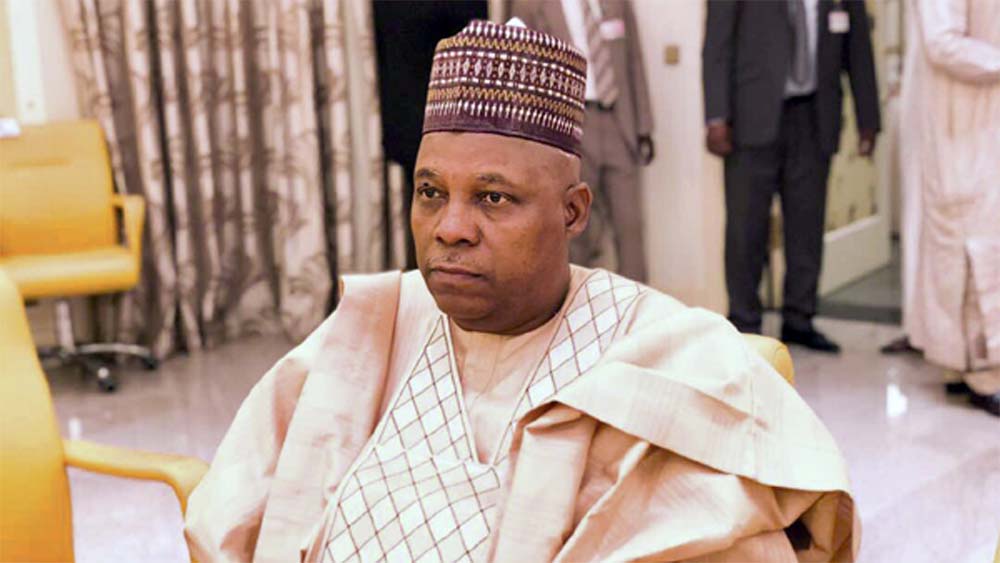
Vice President Kashim Shettima on Friday attended the grand opening of Ashley Furniture Nigeria’s showroom in Lagos.
The development was disclosed by the Vice President’s Senior Special Assistant on Media and Communications, Stanley Nkwocha, in a statement released on Friday.
The opening marks a significant development in Nigeria’s furniture and retail industry, following a strategic partnership between Ashley Furniture Industries, a major American home furnishings manufacturer, and Vento Furniture, a Nigerian furniture company.
SEE ALSO: Shettima, Wife Depart Abuja for Jos as Tinubu–Shettima Campaign Takes Rally to Plateau
The partnership, announced in 2025, is aimed at expanding Nigerians’ access to quality home furnishings while creating opportunities for investment, commercial partnerships and the development of the country’s furniture industry.
At the time of announcing the partnership, Ashley Furniture Industries’ President and Chief Executive Officer, Todd Wanek, described the company’s entry into Nigeria as a major step in its international expansion.
“We are incredibly excited to partner with Vento Furniture. Opening in Nigeria, the largest economy in Africa, is a monumental step for our international growth,” Wanek said.
He added that the company looked forward to opening more stores in Nigeria and supporting Vento Furniture as its anchor partner.
Vento Furniture’s Chief Executive Officer, Cemal Yigit, also expressed optimism about the partnership, describing it as an important development for Nigeria’s home furnishings market.
“We are very excited about this alliance,” Yigit said, expressing confidence in Ashley Furniture’s growth in the Nigerian market.
The partnership aligns with President Bola Ahmed Tinubu’s economic reform agenda, which places private-sector investment, enterprise development and job creation at the centre of efforts to stimulate economic growth.






2026 Licensing Round: NUPRC Opens Portal for 40 Oil, Gas Blocks

Indian Firms to Supply DPRP with $38.94m Pumping Systems
Osun SEC Approves Draft 2027 Budget

Dangote Cement Honours Outstanding Drivers for Safety Excellence, Records 60% Reduction in Road Traffic Accidents

APPO Lauds Nigeria on Energy Bank Initiative
Shettima Attends Grand Opening of Ashley Furniture Showroom in Lagos

Trump’s Family Unveils New Cryptocurrency Platform

Senate Denies Receiving Petitions Against Tinubu’s Ambassadorial Nominees

Dangote Cement Lights Up Benue Host Communities With CSR Initiatives

Reps Recommend 3-year Jail Term For Aviation minister

Tems Sets New Record On Billboard Hot 100 Chart