
NEWS
BREAKING: Kaduna Gov Reveals Shocking Debt Burden From Elrufai’s Administration

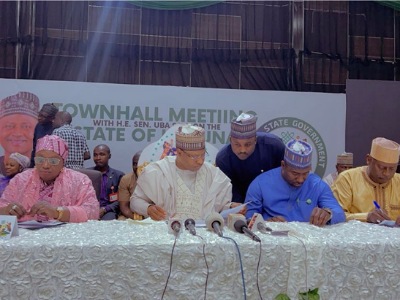
In a startling revelation, the Governor of Kaduna State, Uba Sani, today disclosed that the administration of his predecessor, Governor Elrufai, bequeathed a colossal debt burden of 587 million US Dollars and 85 billion Nigerian Naira to the state.
Additionally, the state has been saddled with 115 contractual liabilities.
Governor Sani, while addressing the press, expressed grave concern over the staggering financial predicament inherited from the prior regime.
However, he assured the public of his unwavering commitment to navigate Kaduna State towards prosperity and sustainable development despite the daunting challenges.
“We are confronted with the daunting task of addressing the immense debt burden and contractual obligations left behind by the previous administration. Nevertheless, we are steadfast in our resolve to steer Kaduna State towards progress,” Governor Sani asserted.
The Governor further stated that his administration has conducted a comprehensive assessment of the state’s financial landscape and is devising strategic measures to mitigate the impact of the inherited debt while prioritizing prudent fiscal management.
The revelation of the exorbitant debt figures has sparked widespread concern among residents and stakeholders, prompting calls for transparency and accountability in the management of public funds.
As the government braces itself to grapple with the monumental financial challenge, citizens are eagerly anticipating concrete actions and policies aimed at alleviating the economic strain and fostering sustainable development across Kaduna State.






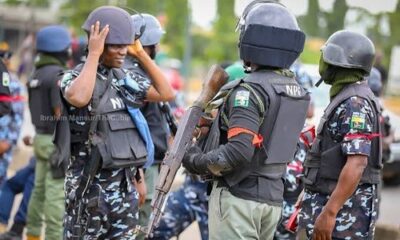



Military gear has reportedly been found at the scene of a helicopter crash in Igbokoda, headquarters of Ilaje Local Government Area of Ondo State.
The helicopter crashed in a swampy area of the coastal community on Monday, October 5, 2026, sparking panic among residents.
The Chairman of Ilaje Local Government Area, Maurice Oripelaye, said military personnel and equipment were seen at the crash site, raising the possibility that the aircraft could have been a military helicopter.
READ ALSO:Shell Endorses Regional Action Plan for Safe Helicopter Services
However, the identity of the helicopter and its operator had not been officially established as of the time of filing this report.
Oripelaye said the aircraft crashed near the Naval Base area and was burnt to rubble following the incident.
He also said the number of people who were aboard the helicopter could not immediately be ascertained, while the fate of those on board remained unclear.
Earlier, residents reported hearing a loud sound from the direction of the crash before discovering that an aircraft had gone down in the swampy area.
The difficult terrain has also made access to the crash site challenging, with security personnel and other responders deployed to the area.
The Ondo State Police Command has confirmed the aircraft crash and said investigations are ongoing to establish the circumstances surrounding the incident.
The police urged residents of Igbokoda and adjoining communities to remain calm and avoid spreading unverified information, promising to provide further details as credible information becomes available.
NEWS
JUST IN: Oluremi Tinubu Arrives BATICC for APC Women’s Pre-Inaugural Ceremony Arrives BATICC for APC Women’s Pre-Inaugural Ceremony

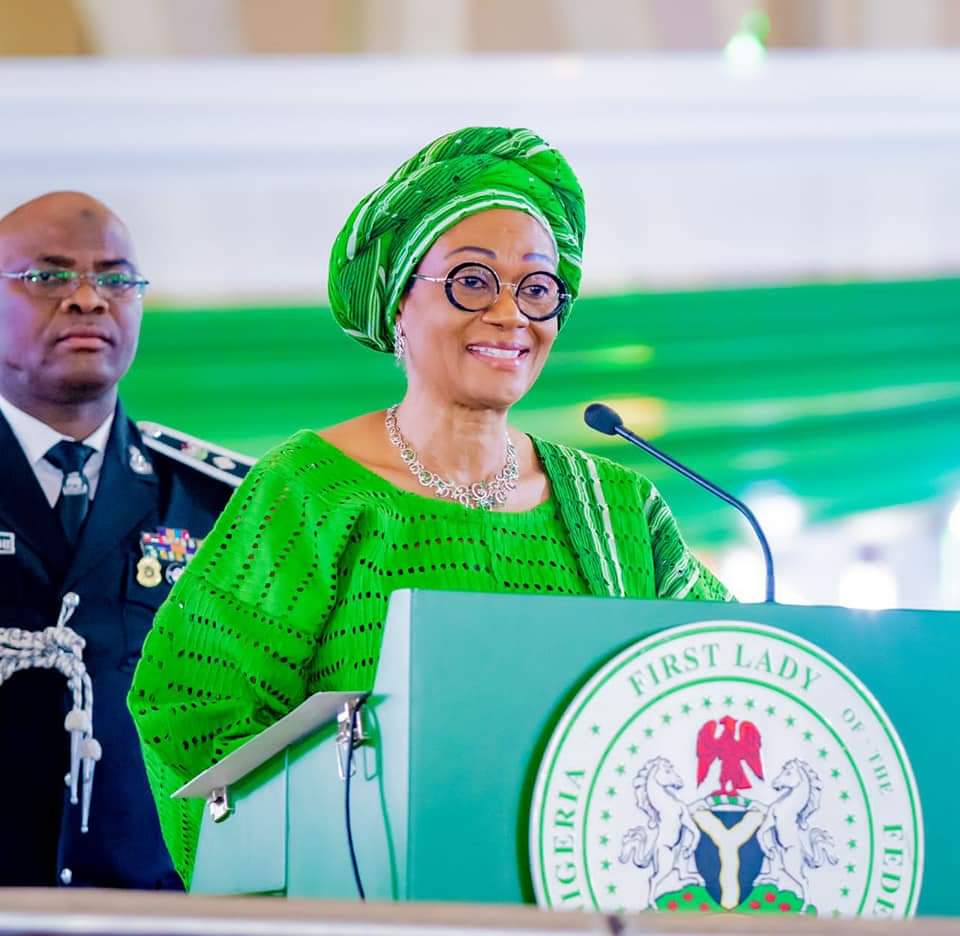
Nigeria’s First Lady, Senator Oluremi Tinubu, has arrived at the Bola Ahmed Tinubu International Conference Centre (BATICC) in Abuja for the All Progressives Congress (APC) Women Stakeholders’ Mobilisation and Empowerment Pre-Inaugural Campaign Roll-Out.
The First Lady arrived at the conference centre on Monday, October 5, for the women-focused political gathering organised by the Women Mobilisation Directorate of the APC Presidential Campaign Council ahead of the 2027 general elections.
The event is themed “Renewed Hope Agenda 2.0: From Reforms to Prosperity,” with the mobilisation message, “One Voice, One Movement, One Choice, One Mandate 2027.”
SEE ALSO: Tinubu Gov’t Does Not Engage, Everybody Is Its Enemy — Ajaero
The gathering is expected to bring together thousands of women from across the country, including women leaders, professionals, entrepreneurs, political stakeholders, community representatives and grassroots organisers.
20,000 women expected
The arrival follows a report published on Sunday, October 4, which said Oluremi Tinubu was expected to lead a major mobilisation of women stakeholders in Abuja.
According to the report, more than 20,000 women were expected to attend the Women Stakeholders’ Mobilisation and Empowerment Pre-Inaugural Campaign Roll-Out scheduled for 8am at BATICC.
The APC Women Mobilisation Directorate has also announced an ambitious target of mobilising 40 million women’s votes for President Bola Tinubu and Vice-President Kashim Shettima ahead of the 2027 presidential election.
Director of the Women Mobilisation Directorate of the APC Presidential Campaign Council, Dr Betta Edu, disclosed the target ahead of the gathering and said the structure was expanding its grassroots mobilisation across the country.
Speaking ahead of the event, a member of the APC Presidential Campaign Council Women Mobilisation Planning Committee, Princess Gloria Akobundu, highlighted programmes including the Nigerian Education Loan Fund (NELFUND), CREDICORP, infrastructure projects, cash-transfer programmes and youth empowerment initiatives.
Akobundu urged women in Imo State and across the South-East to strengthen their mobilisation structures and take the Renewed Hope Agenda message to communities across the region.
She said, “We are calling on our women across the South-East to strengthen their mobilisation and ensure that the message of the Renewed Hope Agenda reaches every community and locality.”

Former Vice President Atiku Abubakar has criticised the Federal Government over the continued exposure of Nigerians to kidnappers, questioning the impact of savings from fuel subsidy removal on national security.
Atiku disclosed this in a statement on Monday while reacting to the abduction of 20 travellers, including prospective National Youth Service Corps (NYSC) members, in Imo State.
He described the abduction as “heartbreaking,” noting that although some of the victims had been rescued, others remained in captivity.
SEE ALSO: Fuel Subsidy: Atiku Showing Symptoms of Desperation — Afegbua
Atiku urged the Federal Government, Imo State Government and security agencies to act with urgency to secure the release of all those still being held.
He also raised concern over more than 70 pupils and students abducted from Mussa and Lassa in Borno State who, according to him, have remained in captivity for months.
“These children must not be forgotten. Their families deserve clear updates, and the public deserves answers,” he said.
The former vice president questioned the government’s handling of insecurity, recalling President Bola Tinubu’s promise that savings from the removal of fuel subsidy would help fund security.
“Yet Nigerians remain exposed to kidnappers on our roads, in our communities and around our schools,” Atiku said.
He said young Nigerians were facing danger at different stages of their lives, from secondary school to university and now while travelling to NYSC camps.
“Young people face danger in secondary school, struggle with unaffordable fees at university, and are now targets on their journeys to NYSC camps. This is a generation being failed at every stage,” he said.
Atiku also criticised the award of what he described as huge pipeline security contracts to politically connected companies, while ordinary Nigerians continue to face criminals.
“The first duty of government is to protect lives,” he stated.
He called for the immediate and safe rescue of every abducted young person and the return of those still unaccounted for.
Atiku also reaffirmed his commitment to building a safer and more affordable Nigeria where young people can create, build and prosper.
“My promise to build a safer and more affordable Nigeria, where young people can create, build and prosper, remains unshakable,” he said.






‘Tinubu Has Put Nigeria’s Economy on Growth Path’, Says Minister Udeh

Police Ponder Dangote Refinery Equities

Group Tackles Atiku on NNPC Ltd’s ₦11.2tn Federation Receivables

Ndindi Nyoro Gives Ruto 14 Days to Disclose Dangote Refinery Deal

Atiku Blows Lid on NNPC Ltd’s ₦11.2trn Receivables, Pipeline Contracts
Military Gear Found at Ondo Crash Site as Helicopter Burns to Rubble

Trump’s Family Unveils New Cryptocurrency Platform

Senate Denies Receiving Petitions Against Tinubu’s Ambassadorial Nominees

Dangote Cement Lights Up Benue Host Communities With CSR Initiatives

Reps Recommend 3-year Jail Term For Aviation minister

Tems Sets New Record On Billboard Hot 100 Chart
