
NEWS
BREAKING: Leader Wagner Group, Prigozhin Dies In Plane Crash

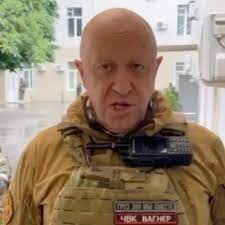
Leader, Wagner Group, Yevgeny Prigozhin, has lost his life in a plane crash on its way to St. Petersburg from Moscow just days after fueling speculations of active involvement in African nations’ political leadership.
This was contained in a statement from the Russia State media which has it that Prigozhin was one of the passengers in which crashed on Wednesday, north of Moscow.
The Russian Ministry of Emergency Services, revealed in a statement that a private Embraer Legacy aircraft with 10 people on board, three crew and seven passengers, crashed on Wednesday, while flying from Moscow to St. Petersburg.
It stated that the aircraft had “10 people on board, including three crew members,” as at the time it crashed in the Tver region to the northeast of the Russian capital.
Though the Ministry did not specifically mention Prigozhin, 61, the Tass state news agency had quoted the Federal Air Transport Agency (FATA) as saying that he had been among the seven passengers on the ill-fated plane.
“According to the Federal Air Transport Agency, an investigation has been launched into the Embraer crash,” state-run RIA Novosti reported.
“Among the passengers is the name and surname of Evgeny Prigozhin,” it added.
The death of Prigozhin is being viewed in different perspectives across world, with the United States of America (USA) pointing accusing fingers at Moscow.
Recall that Secretary of State Antony Blinken had told NBC News’ Andrea Mitchell at the Aspen Security Forum, that were he Prigozhin, he would have been “very concerned” following his attempted mutiny.
“NATO has an ‘open door’ policy,” he said at a fireside chat. “Russia has an open windows policy, and he needs to be very focused on that.”
Once known as Putin’s “chef” for catering state events, Prigozhin, long publicly denied leading the Wagner group, a private military company that has also operated in Syria, Mali, the Central African Republic and other countries.
Prigozhin’s fate had been cast in mystery since his Wagner fighters captured the southern Russian city of Rostov-on-Don on June 23, before they began to march on Moscow, stopping around 120 miles from the capital after an alleged deal brokered by Belarusian President Alexander Lukashenko.
The deal was meant to see Prigozhin go into exile in Belarus and his fighters either sign contracts with the Russian Defense Ministry or join him there.
The Kremlin’s treatment of Prigozhin since the rebellion has nonetheless confounded many observers.
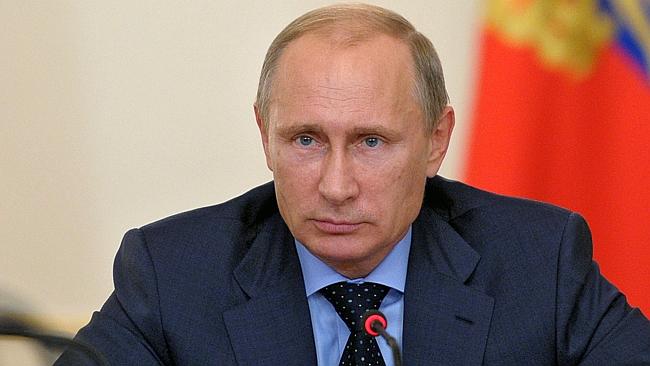
Although Russian President Vladimir Putin had described Wagner’s rebellion treason and a criminal investigation was initially launched, it did not appear that Prigozhin, the Russian leader’s once close ally, was facing charges or any real punishment for the stunning challenge.
But after his fighters led the charge against Kyiv’s troops in Ukraine, often at massive human cost, he started to embrace the public eye, donning military fatigues and appearing in videos.
Some appeared to show him recruiting prisoners or in the thick of the action at the front line, in contrast to the city-dwelling elites he derided in some of his Telegram posts.
What would be of interest Africans, particularly the political leadership is that in a 41-second clip published Monday by several Telegram channels affiliated with Wagner, Prigozhin appeared to give his first video address since the mutiny that shook the Kremlin.
He was dressed in military fatigues and wore a bulletproof vest featuring the Wagner logo, Prigozhin was filmed standing in a desert-like area.
In a veiled speak to the Economic Community of West African States (ECOWAS) leaders and the threat of military invasion of Niger Republic, he vowed to make Africa “more free” and “Russia even greater on every continent.”
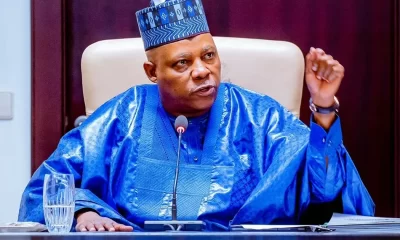




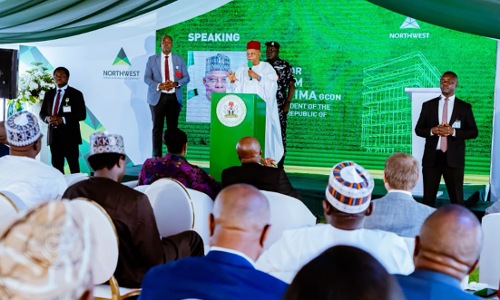
Vice President Kashim Shettima has attributed renewed investment and stronger performance in Nigeria’s oil and gas sector to the economic reforms of President Bola Ahmed Tinubu’s administration, particularly the removal of petroleum subsidy and reforms in the foreign exchange market.
Shettima spoke on Friday in Lagos while commissioning the ultra-modern corporate headquarters of Northwest Petroleum & Gas Company Limited in Victoria Island.
The Vice President said the reforms had confronted distortions that previously discouraged productive investment, while improved market stability was helping businesses make longer-term investment decisions.
SEE ALSO: Shettima Arrives Lagos for Northwest Petroleum & Gas Headquarters Commissioning
According to him, greater exchange-rate predictability strengthens procurement, improves investment decisions and supports production.
“The stabilisation of the market is restoring the confidence businesses need to commit capital beyond the next quarter. A business must be able to plan before it can expand.
“Greater exchange rate predictability strengthens procurement, improves investment decisions and supports production,” Shettima said.
He assured investors that the Federal Government would continue to create conditions that reward enterprise, encourage technological advancement and sustain economic growth.
“We recognise the sacrifices reform has demanded, and our obligation is to translate economic progress into better lives,” he added.
Speaking on the newly commissioned Northwest Petroleum facility, Shettima described the headquarters as a significant expansion for the indigenous company and said it demonstrated the capacity of Nigerian businesses to compete, innovate and deliver at international standards.
He said the facility sends a message to investors, customers and Nigerians that Northwest Petroleum is preparing for decades of service in a changing global energy economy.
“We take particular pride in seeing an indigenous enterprise expand with such conviction. Nigerian ownership must mean Nigerian capacity to compete, invent and deliver,” the Vice President said.
Shettima also stressed the importance of private enterprises in creating employment and economic opportunities, noting that government alone cannot manufacture prosperity.
He commended Northwest Petroleum for building a strong Nigerian presence across the oil and gas value chain since 1998, saying its continued expansion could create opportunities for young Nigerians, professionals, suppliers, transport operators, maintenance providers and other businesses.
The Vice President urged the company to use its new corporate hub to improve efficiency, coordination and productivity across its expanding operations.
He also expressed confidence that the facility would nurture creativity, reward innovation, generate profitability and contribute to Nigeria’s economic development.
Earlier, Lagos State Governor Babajide Sanwo-Olu commended private-sector investors for contributing to the growth of the state.
Sanwo-Olu described the private sector as the “oil of growth” and reaffirmed the Lagos State Government’s commitment to creating an enabling environment for businesses to thrive.
He also thanked investors in the oil and gas, financial services and construction sectors for their contributions to the development of Lagos.
The Chief Executive Officer and Founder of Northwest Petroleum & Gas Company Limited, Winifred Akpani, said the new facility represented the company’s growth, confidence in Nigeria’s future and determination to build a modern Nigerian company capable of operating to high standards.
Akpani said the smart building was designed to promote collaboration, strengthen operational efficiency, encourage innovation and empower the company’s workforce.
She added that the future of the energy industry would increasingly depend on innovation, technology, responsible investment, strong partnerships and the development of Nigerian talent.
Also present at the commissioning were former Lagos State Governor Akinwunmi Ambode; Fatima Aliko-Dangote, Group Executive Director, Commercial Operations, Oil and Gas, WAEP, and Fertilizer, Dangote Industries Limited; former Delta State Governor James Ibori; and other business and industry leaders.
Vice President Kashim Shettima has arrived in Lagos to commission the new corporate headquarters of Northwest Petroleum & Gas Company Limited.
Shettima, who is the Special Guest of Honour at the event, is expected to deliver the keynote address and officially commission the facility alongside Lagos State Governor Babajide Sanwo-Olu and other government and private-sector leaders.
SEE ALSO: UN Secretary-General Race: Shettima Says Nigeria Will Back Equity, Justice and Fairness
The development was disclosed by Stanley Nkwocha, Senior Special Assistant to the President on Media and Communications in the Office of the Vice President on Friday.
Northwest Petroleum & Gas Company Limited is an indigenous oil and gas company involved in the importation, supply, distribution and storage of petroleum products, as well as crude oil export activities.
The investment is being positioned in line with President Bola Ahmed Tinubu’s Renewed Hope agenda of mobilising private capital, strengthening indigenous businesses and expanding the role of the private sector in Nigeria’s economic development.
The Tinubu administration has continued to emphasise private-sector-led growth and investment mobilisation as key components of its development strategy, with a focus on job creation, increased productive capacity and a more competitive economy.
The commissioning brings together senior government officials and private-sector stakeholders as the administration seeks to encourage greater domestic investment and enterprise development.
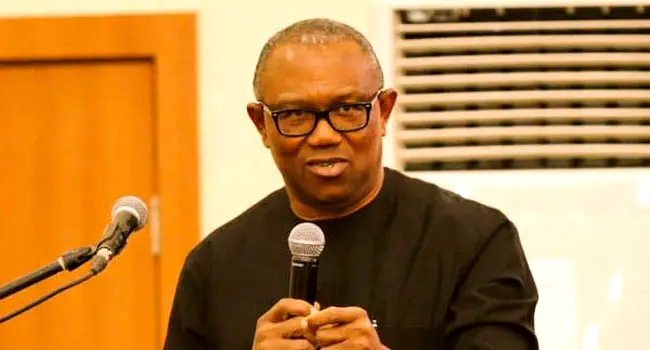
Former Anambra State Governor and 2027 presidential candidate of the Nigeria Democratic Congress (NDC), Peter Obi, has reacted to reports of arrests involving members of the Obidient Movement in Akwa Ibom State, saying Nigeria’s independence means little without freedom.
Obi, in a statement posted on X on Friday, said citizens should be able to express themselves within the bounds of the law without fear.
SEE ALSO: ‘Nigerians Are Living as Displaced Persons in Their Own Country’ — Peter Obi
“As we continue to reflect on Nigeria’s Independence, we must remember that independence means very little if citizens cannot freely express themselves, within the bounds of the law, without fear,” he said.
His comment came after the reported arrest of Elijah Noah, the Akwa Ibom coordinator of the Obi-Kwankwaso Movement, during an attempted Independence Day march in Uyo.
Reports also said police fired tear gas as supporters gathered for the planned march, while Obidient Movement coordinator in the state, Dr Ben Smith, was later reportedly arrested after going to facilitate the release of detained members.
The development followed a directive by the Akwa Ibom State Police Command for political parties, groups and associations to reschedule rallies, meetings and processions planned for Independence Day, citing security concerns.
Reacting to the reports, Obi said the arrest of Nigerians for identifying with the Obidient Movement should concern anyone who believes in democracy and freedom.
“One of the greatest tragedies of our society is that people who once described themselves as freedom fighters can become defenders of oppression when they eventually occupy positions of authority,” Obi said.
He added that those who had previously complained about injustice should not become comfortable with it when it is perpetrated against people they disagree with.
“That must not be the Nigeria we accept,” he said.
Obi said Nigeria’s independence should ultimately mean freedom from fear, injustice, intolerance and abuse of power.
“Our independence must ultimately mean freedom from fear, injustice, intolerance and abuse of power.
“Nigeria must belong to all of us,” he added.






Abeokuta 10km Race: Organisers Disclose Prizes, Assure of Hitch-free Event
Amaechi Gives Conditions to Back Tinubu, Quit ADC

Subsidy Removal, FX Reforms Driving Fresh Oil Sector Investment – Shettima
Shettima Arrives Lagos for Northwest Petroleum & Gas Headquarters Commissioning
Peter Obi Reacts To Akwa Ibom Arrests, Says Independence Must Mean Real Freedom

Dangote to Deliver $16bn East Africa Refinery in 40 Months

Trump’s Family Unveils New Cryptocurrency Platform

Senate Denies Receiving Petitions Against Tinubu’s Ambassadorial Nominees

Dangote Cement Lights Up Benue Host Communities With CSR Initiatives

Reps Recommend 3-year Jail Term For Aviation minister

Tems Sets New Record On Billboard Hot 100 Chart
