
Crime
British Prosecutors Insist Alison-Madueke Received Inducements from Oil Sector Operators


Former Nigerian Oil Minister, Diezani Alison-Madueke, took bribes including luxury goods and the use of high-end properties from industry figures interested in lucrative oil and gas contracts, British prosecutors said at her corruption trial yesterday.
Alison-Madueke was minister for petroleum resources between 2010 and 2015 under the then President Goodluck Jonathan and was also briefly president of the Organisation of the Petroleum Exporting Countries (OPEC), the first woman to hold either role.
The 65-year-old is now one of the most high-profile former energy officials to stand trial for alleged corruption, having been charged in 2023 with five counts of accepting bribes and a charge of conspiracy to commit bribery, which she denies, a Reuters report said.
Prosecutor Alexandra Healy told jurors at London’s Southwark Crown Court that Alison-Madueke “enjoyed a life of luxury in London”, where she often stayed, provided by those interested in contracts with Nigerian state-owned companies.
Healy said Alison-Madueke was given the use of high-end properties and vast quantities of luxury goods by people who “clearly believed she would use her influence to favour them”.
There was no evidence Alison-Madueke awarded contracts to someone who should not have had one, but it was improper for her to have accepted benefits from those doing business with government-owned entities, Healy said.
ALSO READ: NUPRC Throws 50 Oil Blocks up for Bidding
Alison-Madueke sat in the dock alongside oil industry executive Olatimbo Ayinde, 54, who was charged with one count of bribery relating to Alison-Madueke and a separate count of bribery of a foreign public official.
Alison-Madueke’s brother, 69-year-old Doye Agama, is charged with conspiracy to commit bribery relating to Agama’s church and is listening to the trial by video link for medical reasons.
Ayinde and Agama also deny the charges against them, the Reuters report added.
Alison-Madueke is accused of accepting various financial benefits from individuals in the Nigerian oil industry between 2011 and 2015. They include the use of a chauffeur-driven car and a private jet.
She is also alleged to have had her son’s school fees paid by Nigerian businessman Benedict Peters, who is named on the indictment but is not facing trial, according to the report.
Kolawole Aluko, another Nigerian businessman who is named in one charge but is not standing trial, spent more than 2 million pounds ($2.75 million) on items for Alison-Madueke at Harrods alone, Healy told the court.
Alison-Madueke frequently stayed with her family in a mansion outside London provided for her by Aluko, who had bought the property through a company for 3.25 million pounds and paid for bills, staff and refurbishments, Healy added.
Ayinde is charged with bribing Alison-Madueke between 2012 and 2014 and also bribing the then Managing Director of the state-owned Nigerian National Petroleum Corporation, Emmanuel Ibe Kachikwu, who is also not on trial, in 2015.
Healy said that, after Jonathan was replaced as president by Muhammadu Buhari in 2015, Ayinde paid a “substantial bribe” to Kachikwu to ensure her friend continued to work in the NNPC.
Nigeria is one of the world’s largest producers of oil and the largest in Africa, extracting around 1.53 million barrels per day in December according to a Reuters survey, which is around 1.4 per cent of global supply.
But mismanagement and corruption, among other factors, have hampered development and prevented its oil wealth from benefiting wider Nigerian society.
Healy told the jury that, while it might seem unusual for allegations of bribing Nigerian officials to be heard in London, it reflected the links to Britain the three defendants had.
She said corruption “undermines the proper functioning of the global market” and it was important to stop conduct in Britain which could further corruption elsewhere.





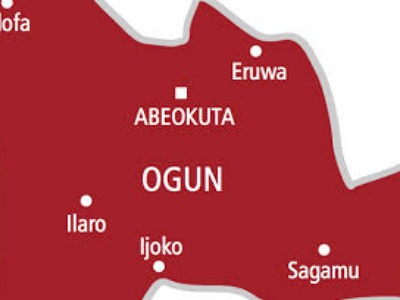
The Ogun State Police Command has taken a 56-year-old man, Madarikan Emehinola, into custody in connection with a suspected arson incident that claimed the life of his 40-year-old wife, Igbagbo Erobe, in the Igbo-Edu area of Ogun Waterside Local Government Area.
The incident was reported at the Abigi Divisional Police Headquarters on Sunday, October 18, 2026, following information that a house had been set ablaze, resulting in the woman’s death.
SEE ALSO: Tinubu vs Obi: Omokri Fires Back at Peter Okoye Over Call to Retire Older Politicians
The Ogun State Police Command disclosed the development in a press release issued on Sunday, stating that the husband was in custody in connection with the incident.
The deceased’s body has been deposited at a mortuary for post-mortem examination to establish further details surrounding her death.
The police also disclosed that the case was being processed for transfer to the State Criminal Investigation Department (SCID), Eleweran, Abeokuta, for further investigation.
The Commissioner of Police in Ogun State, CP Bode Ojajuni, psc, FCSS, MNIPR, assured the public that the matter would be investigated diligently and professionally in accordance with the law.
According to the statement, the commissioner assured the public that “the matter will be investigated diligently and professionally in accordance with the law.”
Ojajuni reiterated the command’s commitment to protecting lives and property, stressing that allegations of serious crimes would receive appropriate investigative attention.
The command also called on members of the public to report suspicious activities promptly and provide credible information that could assist crime prevention and ongoing investigations.
“The Command urges members of the public to report suspicious activities promptly and provide credible information that may assist crime prevention and ongoing investigations,” the statement read.
The circumstances surrounding the fire and the alleged involvement of the husband remain subject to investigation.
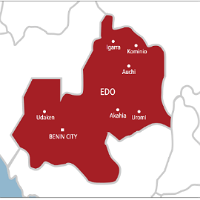
The National Drug Law Enforcement Agency (NDLEA) has arrested an 85-year-old woman, Grace Ehimeka, after recovering 179 kilogrammes of skunk from her during anti-drug operations in Owan East Local Government Area of Edo State.
Ehimeka was among six suspects arrested during raids conducted by NDLEA operatives in the area as part of a series of nationwide operations targeting illicit drugs.
The operations in Edo State also led to the recovery of another 220.8 kilogrammes of skunk, alongside smaller quantities of cannabis and other controlled substances.
ALSO READ: Edo Police Probe Officer Seen Firing Rifle During Clash With Traffic Officials
The arrest was one of several recorded during the agency’s nationwide operations, which resulted in major drug seizures across multiple states.
In Lagos, the NDLEA seized 8,725 kilogrammes of tramadol hydrochloride powder worth over ₦6.98 billion at Apapa Port. The shipment, which originated from India, had been declared as maize starch.
The agency also intercepted cannabis concealed in palm oil at the Mallam Aminu Kano International Airport. The consignment was allegedly intended for Saudi Arabia, while two suspects were arrested in connection with the case.
In Ondo State, operatives destroyed an estimated 7,500 kilogrammes of skunk cultivated on three hectares of farmland and arrested five suspects.
Other seizures were recorded in Bauchi, Kano, Kaduna and the Federal Capital Territory, including large quantities of tramadol, Exol-5 tablets and cannabis.
The operations formed part of the NDLEA’s ongoing efforts to disrupt the trafficking and distribution of illicit drugs across the country.

A 70-year-old man, Alhaji Saleh Kasim, has been killed during a bandit attack on Gamji Village in Sabuwa Local Government Area of Katsina State, while 27 abducted residents have been rescued by security forces.
The Katsina State Government disclosed this in a press release issued on Saturday by the Commissioner for Internal Security and Home Affairs, Dr Nasir Mu’azu.
According to the statement, about 40 armed bandits, led by a suspected gang leader identified as Kachalla Alhaji Bawa Kabir, invaded the community in the early hours of October 16, 2026.
SEE ALSO: Two Suspected Bandits in Police Net in Katsina
The attackers reportedly arrived on 20 motorcycles, abducted 27 residents, mostly women, children and elderly people, and rustled six cows.
The government said Kasim was shot dead during the attack.
Following credible intelligence, troops of the 17 Brigade, working with local hunters and the Community Watch Corps, moved to block the attackers’ escape routes towards the Madaci forest enclave.
At about 6 p.m. on the same day, the troops engaged the bandits at Tashar Bawa forest and successfully rescued all 27 abducted residents.
The rescued victims were subsequently taken to the Machika Military Forward Operating Base for medical attention.
The statement added that joint security teams had commenced clearance operations to flush out the remaining members of the gang and prevent possible reprisal attacks on the community.
The Katsina State Government, under Governor Dikko Umaru Radda, reaffirmed its commitment to protecting residents across the state.
Mu’azu commended the troops and community-based security groups for their swift response to the incident.






Renaissance, Sterling Bank Back Indigenous Oil and Gas Contractors Financially
Group Demands Fair Share of NNPC Jobs for Ogoni Oil Exploration

NNPC Ltd Exploration Spending Down 87%

200 Imo Teachers Benefit from NCDMB’s Effective Curriculum Training

FG to Launch National Lead Poisoning Prevention Plan Wednesday

EndSARS Memorial: ‘Nigerians Still Deserve Answers’ – Atiku

Trump’s Family Unveils New Cryptocurrency Platform

Senate Denies Receiving Petitions Against Tinubu’s Ambassadorial Nominees

Dangote Cement Lights Up Benue Host Communities With CSR Initiatives

Reps Recommend 3-year Jail Term For Aviation minister

Tems Sets New Record On Billboard Hot 100 Chart
