Business
Ruto Hails DPRP “Masterpiece” as Dangote Group Accelerates African Expansion

Kenyan President, William Samoei Ruto has described the Dangote Petroleum Refinery and Petrochemicals (DPRP) as “a masterpiece of science, engineering and art”.
He made the declaration following a tour of the world-class facility in Lagos, while reaffirming Kenya’s commitment to partnering with the Dangote Group on the proposed $17 billion East African Oil Refinery and Petrochemical Complex in Lamu.
President Ruto visited the refinery after attending the United Nations General Assembly (UNGA), noted that witnessing firsthand the scale, sophistication and operational excellence of the 700,000 barrels-per-day Dangote Refinery had strengthened his confidence in the East African refinery project.
READ ALSO: Dangote to Support Two Million Women with Refinery IPO Share Ownership
“Coming here and seeing it for myself, I can confirm that I have seen a masterpiece of science, engineering, and art. To my brother Aliko, congratulations. I always knew Nigerians to be very brave people and go-getters, but I did not anticipate that it was at this scale,” President Ruto said.
The Kenyan leader disclosed that preparations had been concluded for the ground-breaking ceremony of the East African refinery project in Lamu, which is expected to become a strategic regional asset for East Africa.
According to him, the refinery will drive industrialisation, create jobs, strengthen engineering and technical capacity, enhance energy security and promote regional economic integration.
“This is not a Kenyan refinery; it is going to be a regional refinery. We are positioning our continent as an emerging growth centre, and this project will help accelerate industrialisation, create jobs, enhance engineering capabilities and strengthen Africa’s economic competitiveness,” he stated bureaucratic bottlenecks to ensure efficient project execution.
“The Government of Kenya is 100 percent behind this project. We have secured the required land and are working to ensure that we spend our time building rather than navigating administrative delays,” he said.
The President further commended the leadership and commitment of Dangote Group President and Chief Executive, Aliko Dangote, highlighting his deep understanding of the refinery’s technical and operational processes.
“The detail with which Aliko Dangote understands this plant is remarkable. Unless you understand the details, you are unable to make the right decisions. That commitment to excellence is one of the reasons behind the success of this project,” he added.
Dangote Group’s Chief Strategy Officer, Aliyu Suleiman, disclosed, during the visit that the conglomerate generated approximately $17 billion in revenue during the first half of 2026 and is on course to achieve a record $36 billion in revenue for the full year, representing a 100 per cent increase over the $18 billion recorded in 2025.
“The revenues of the Group have grown significantly over the last five years. From $18 billion last year, we are on track to get to $36 billion this year. Our half-year revenue is already about $17 billion,” Suleiman said.
He attributed the strong performance to sustained investments across key sectors, including cement, sugar, fertiliser, petroleum refining, upstream oil and gas, and other strategic businesses.
Suleiman noted that Dangote Group’s growth ambitions are anchored on its Vision 2030 Strategy, aimed at expanding the company’s industrial footprint across Africa and creating globally competitive businesses on the continent.
“Between 2020 and 2025, the Group executed a capital expenditure programme of approximately $50 billion. Over the next five years, we intend to invest twice that amount as we accelerate our expansion across Africa,” he stated.
Suleiman emphasised that the proposed 700,000 barrels-per-day greenfield refinery and petrochemical complex in Lamu, estimated at approximately $17 billion, will be a cornerstone of the Group’s ambition to build a $100 billion African industrial enterprise.
“The East African refinery in Kenya is going to be a key component of our journey and our dream to get to $100 billion. It is going to be a major contributor,” he said.
He added that Dangote Group’s expansion plans span a broad range of sectors, including port infrastructure, gas infrastructure, LNG, upstream oil and gas, power generation, mining and other strategic industrial investments across Africa.
As part of preparations for the project, Dangote Group has signed a contract worth more than $450 million with Engineers India Limited (EIL) to provide project management consultancy and engineering, procurement and construction management services for the Lamu refinery and petrochemical complex.
The partnership builds on EIL’s experience and involvement in the successful development of the DPRP in Lagos. Once completed, the East African refinery is expected to process 700,000 barrels of crude oil per day, strengthening regional energy security and supporting industrial development across East Africa.
The Dangote Group is also progressing plans to expand the processing capacity of the DPRP in Nigeria from 700,000 barrels per day to approximately 1.4 million barrels per day through the addition of a new 750,000 barrels-per-day crude distillation unit.
The expansion is expected to further solidify Nigeria’s position as a leading exporter of refined petroleum products and enhance Africa’s energy self-sufficiency.
President Ruto’s visit and Dangote Group’s ambitious growth plans highlight the increasing impact of African-led investments in driving the continent’s industrial renaissance.
With record revenue growth, a robust investment pipeline, expansion of refining capacity in Nigeria and the planned development of the East African Oil Refinery in Kenya, Dangote Group is reinforcing its role as a key driver of Africa’s economic transformation, energy security, industrial development and regional integration.
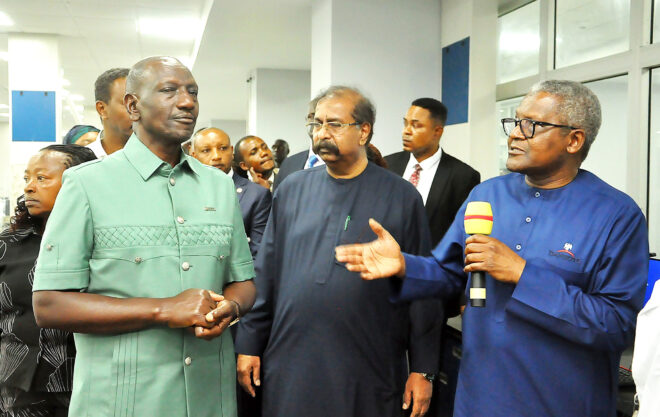
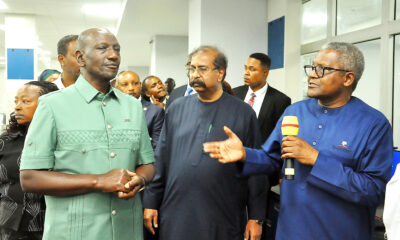
Photo Caption: From Left – Kenya President, Dr. William Samoel Ruto; Group Vice President, Oil & Gas and Fertiliser, Dangote Industries Limited, Devakumar Edwin; and President/CE, Dangote Industries Limited, Aliko Dangote during the Kenya President’s Visit to Dangote Petroleum Refinery, Petrochemicals and Fertiliser Plant Lekki, Lagos on Friday 25th September 2026.





Midstream and Downstream Gas Infrastructure Fund (MDGIF) has said that indigenous companies seeking to partner with it and access its equity must show secured gas supply and a confirmed buyer, because no gas project is bankable without both.
The Fund was established under the Petroleum Industry Act (PIA), and designed as the “master key” for unlocking gas processing, infrastructure and bankability.
Deputy Director at MDGIF in the Nigerian Midstream Downstream Petroleum Regulatory Authority (NMDPRA), Engr Elvis Duruji made this known at the OTL Africa Downstream Energy Week in Lagos. He spoke at a session on: “Scaling Energy Options: Unlocking Gas and Renewables through Processing and Infrastructure.”
READ ALSO: UN Engages NCDMB to Deepen Female Access to $40m Oil, Gas Fund
Expatiating further, Duruji said the two conditions decide whether the fund takes an equity stake in a project, since they determine its returns and viability, insisting that the security of the gas feedstock is very important. He further noted that project operators must locate their sites at a gas processing plant or close to a CNG mother station.
The Fund, he added, has used N671 billion to catalyse N1.6 trillion from private Nigerians.
“The Fund has partnered on 31 projects covering 205 infrastructure assets at different stages of execution. Of these, 127 are at different levels of project management, and 10 have been commissioned.
Duruji cited Topline Limited’s mini-LNG plant in Delta State as a success story. “For three years, a Nigerian company, Topline, was looking for a credit facility from InfraCredit, and no one was able to loan them money because they are Nigerian,” he said. “They came to the fund and we partnered with them.”
He said Topline is now the first indigenous mini-LNG operator in Nigeria, with commissioning due before December.
He also cited a programme to convert 20 university campuses to CNG through daughter stations.
“Three CNG stations are operational and 14 more are to be commissioned before December. Duruji added that the fund is working with fuel-station partners, including Ibile Oil and Gas Corporation, which is delivering 15 CNG stations across Lagos.
“These are our success stories,” he said.
He said, for CNG projects, proximity to the gas processing plant “is very important. You must have security of gas supply. We also ensure that you have a gas supply agreement with producers. What is the volume and price that the producer is willing to give to our would-be equity partner? This always affects their credit returns and internal rate of return. This is what will determine the project viability, and this is key,” he said.
Duruji also noted that offtake is equally critical adding that. “We need to know the offtakers and the regasification facility. The same thing for CNG, you need to get a compressor,” he said.
According to him, the MDGIF intervenes in gas projects where commercial lenders will not, because “most Nigerian companies are in trading and operating marginally at the downstream level because the sector is highly capital intensive,” adding that no Nigerian bank would give single-digit loans for exploration and production.
“Nigerian Banks lends at as much as 30 per cent interest, whereas, foreign firms coming into Nigeria to explore, by contrast, have access to cheap loans in single digits from their home country financial institutions,” he said.
The MDGIF, he further explained, intervenes “by pricing the risk, coming up with mitigation and catalytic equity, which we now use to bring that barrier to a level to allow Nigerians who are interested to come into the midstream to partner through the equity finance that we will provide without interest.”
“We bring in the catalytic equity, which is about 49 percent, because we want to allow you to be the operator. We will stay with the private investor and walk them through all that,” he added.
He said MDGIF brings “minority equity, due diligence and risk governance” and uses these as catalytic capital “to make the projects bankable, to make them balanced capital structure that will attract private confidence.”
He identified processing plants, transport, storage and last-mile distribution as the main gaps. Non-associated gas, he said, is “very expertise and capital intensive,” and pipeline networks are needed to move gas from the reserve to the last mile.
“The more gas infrastructure we roll out, the more we are helping the energy system where renewables cannot,” he said.
Duruji identified three mandates of the MDGIF: to increase domestic gas consumption, to aggregate flared gas and bring it into the domestic market, and to mobilise private investors who lack the funds to play in the midstream.
“The MDGIF has three mandates: increase domestic gas consumption, aggregate flared gas and bring it into the domestic market, that is key,” he said. “The other mandate is to mobilise private investors that do not have the funds to be able to play in the midstream, bring their funds.”
He added: “We also have the mandate to reduce gas flare in Nigeria exploration and production sites.”
Easing access to the dedicated $40 million Women in Oil and Gas Fund is the focus of ongoing strategic conversation between the United Nations Entity for Gender Equality and the Empowerment of Women (UN Women), and the Nigerian Content Development and Monitoring Board (NCDMB).
Biztellers reports that the two bodies are keen to collaborate to ensure that more women-owned businesses and professionals benefit from industry’s opportunities and consequently play a stronger role across the sector’s value chain.
READ ALSO: APC Defends Tinubu Over Electricity Promise, Says President Is Tackling Sector’s Challenges
Recall that in April 2021, the NCDMB established a $20 million fund dedicated to supporting women-owned and women-led businesses in the oil and gas sector, which the Nigerian Export-Import Bank (NEXIM) complemented by matching the fund with an additional $20 million.
However, despite this significant commitment and favorable loan terms, the uptake of the scheme has remained below expectations to date.
The discussions were advanced last week when the UN Women’s Country Representative to Nigeria and the Economic Community of West African States (ECOWAS), Ms. Beatrice Eyong, led a delegation to the NCDMB’s Abuja liaison office.
The team was received by the Board’s General Manager of Corporate Communications, Dr. Obinna Ezeobi, on behalf of the Executive Secretary, Engr. Felix Omatsola Ogbe.
The meeting explored proposed capacity-building initiatives for NCDMB personnel, aimed at mainstreaming gender perspectives into the Board’s project planning, budgeting, and execution frameworks.
Other key areas of discussion included vendor development schemes to better position women-led oil and gas businesses for industry opportunities, strategies to raise awareness of available financing options, and potential affirmative procurement measures designed to expand the participation of women-owned companies across the oil and gas value chain.
The UN official commended NCDMB for its ongoing gender inclusion efforts, noting that the Board is already implementing several measures consistent with its mandate.
She proposed conducting a study to identify the reasons women face challenges in accessing the financing facility, including potential barriers related to documentation, business registration, tax compliance, and limited awareness.
She further highlighted key initiatives currently being undertaken by the UN Office, such as programmes on women’s economic empowerment, leadership development, and the elimination of gender-based violence, among others.
Ezeobi welcomed the proposals and affirmed the Board’s readiness to partner with UN Women. He highlighted several innovative initiatives already implemented by the Board to create opportunities for women to participate, grow, and lead in Nigeria’s oil and gas industry.
These include the establishment of a dedicated funding scheme with NEXIM Bank that enables women-owned or women-led firms to access financing at a highly competitive 5 per cent interest rate, as well as the creation of a Diversity Sectoral Working Group within the Nigerian Content Consultative Forum (NCCF), designed to mainstream women’s issues into local content policy and decision-making processes.
The Board also supports associations of women who work across the Energy Industry value chain, where they network, build confidence and links to progress their careers or businesses.
Ezeobi noted that NCDMB has also invested significantly in capacity-building programs for women entrepreneurs and business leaders, covering critical areas such as business sustainability, corporate governance, and strategic management.
The Board has further supported women’s participation in technical occupations while encouraging young girls to pursue careers in science, technology, engineering, and mathematics (STEM).
He acknowledged that women remain underrepresented in the oil and gas industry, citing limited access to technical education, finance, and commercial opportunities, as well as entrenched perceptions of the sector as predominantly male.
Ezeobi reiterated NCDMB’s willingness to collaborate with UN Women to address these challenges and recommended strategies to accelerate the Board’s support for UN Women’s programmes, thereby advancing gender inclusion across the industry.
The African Export-Import Bank (Afreximbank) has released its Côte d’Ivoire Country Brief, providing an in-depth examination of the West African nation’s macroeconomic outlook, regional and international trade dynamics, financial sector development and debt sustainability profile.
The brief highlights Côte d’Ivoire as one of Africa’s fastest-growing economies. Home to 33.5 million people and with a nominal GDP forecast at USD116.9 billion in 2027, the country has sustained average real GDP growth of around 6.5% per year between 2021 and 2024, accelerating to an estimated 6.6% in 2025. Growth is forecast to moderate to 5.8% in 2026 before rebounding to 6.2% in 2027, supported by rising crude production, continued infrastructure investment and resilient domestic demand.
The brief also points to a notably improved near-term macroeconomic environment. Inflation fell sharply to just 0.1% in 2025, supported by easing commodity price pressures and government measures to stabilise fuel and food prices, with the CFA franc’s euro peg providing a durable exchange rate anchor. The fiscal deficit narrowed to 3% of GDP in 2025, meeting the West African Economic and Monetary Union (UEMOA) ceiling, backed by stronger revenue collection and ongoing reforms to tax administration and VAT digitalisation.
On trade, this edition charts a significant expansion. Total trade surged from USD26 billion in 2018 to USD57 billion in 2025, anchored by Côte d’Ivoire’s status as the world’s largest cocoa producer, commanding around 40% of global supply, alongside growing exports of cashew nuts, rubber, gold and hydrocarbons.
READ ALSO: Oando Production Hits 42,985 boepd as Revenue Grows 9% in 9M 2026
The February 2026 Calao South gas condensate discovery and rising output from the Baleine field signaled a broadening export base over the medium term. Strategically positioned on the Gulf of Guinea, with the ports of Abidjan and San Pedro acting as principal gateways into Francophone West Africa, Côte d’Ivoire is deeply embedded in regional trade networks, with African markets accounting for around 22% of its goods trade in 2025.
The brief further notes Côte d’Ivoire’s financial sector strength. The country holds the largest banking sector in UEMOA, accounting for more than a third of regional banking assets. Regulatory reforms, including the adoption of Basel II and Basel III standards, have strengthened supervision and resilience, while the launch of the Central Bank of West African States’ (BCEAO) interoperable instant payment platform in September 2025 is broadening access to digital financial services across the economy.
As this edition notes, Côte d’Ivoire “has moved from a period of rapid debt accumulation and elevated debt service pressure towards a more stable debt profile, supported by fiscal consolidation, active debt management and continued multilateral engagement.” This is a trajectory that positions the country to fully capitalise on the ambitious targets of its 2026-2030 National Development Plan.
Afreximbank’s Group Chief Economist & Managing Director Research commented: “Côte d’Ivoire is consolidating its position as a leading West African growth and trade hub. Its expanding energy sector, world-class agricultural base, regional port infrastructure and increasingly sophisticated financial system offer a strong foundation to attract investment, scale value addition and deepen trade links across Africa.”

Shettima Heads to Ebonyi for APC Presidential Campaign Rally
Flamingos Return To Abuja After Historic U-17 World Cup Triumph

FCT Police Chief Inspects Worship Centres, Commends Residents for Peaceful Conduct
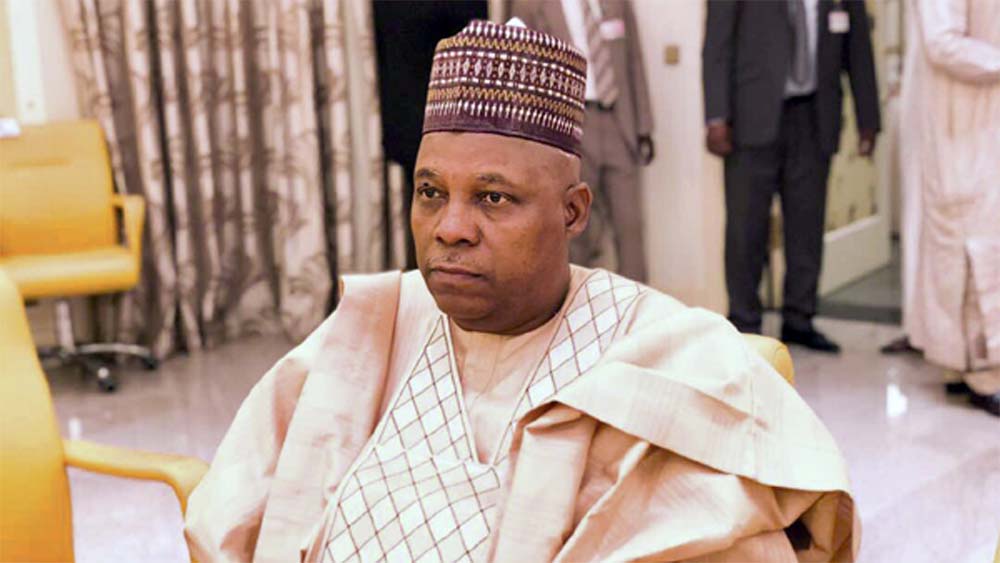
2027: Shettima Arrives in Uyo for APC Presidential Campaign Rally

NDC Warns Judiciary Against Turning Courts Into Tools for Political Opposition

Elohor Aiboni Honoured with DTN@100 Changemaker Award

Trump’s Family Unveils New Cryptocurrency Platform
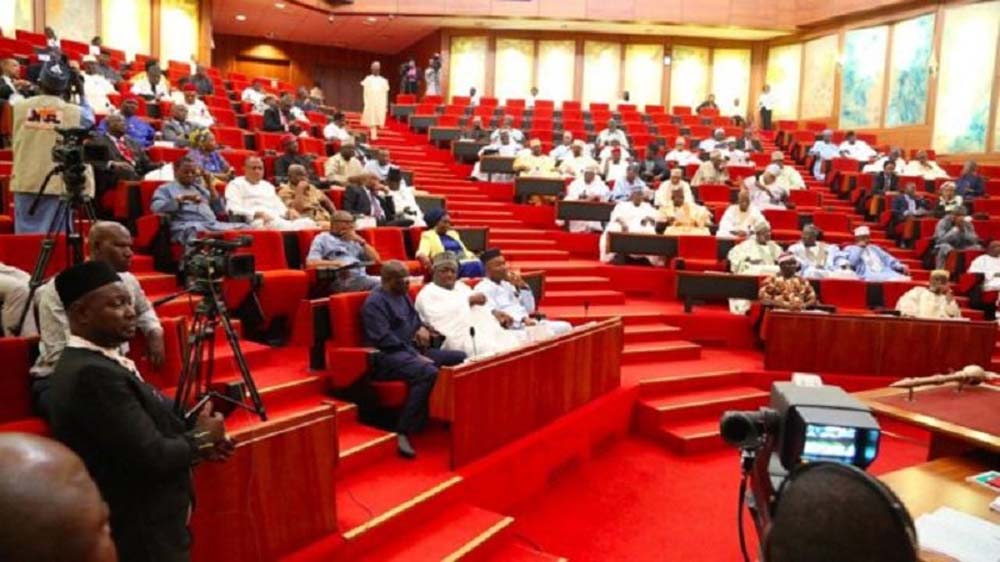
Senate Denies Receiving Petitions Against Tinubu’s Ambassadorial Nominees

Dangote Cement Lights Up Benue Host Communities With CSR Initiatives

Reps Recommend 3-year Jail Term For Aviation minister

Tems Sets New Record On Billboard Hot 100 Chart