
NEWS
Budget Scandal: Tracka Reveals Fraudulent Payments In Billions


In the 2022 budget expenditure, alarming revelations have emerged regarding fraudulent payments and questionable project allocations in Nigeria.
Tracka, BudgIT’s service delivery promotion platform, has brought to light several irregularities in the allocation and utilization of public funds.
According to Tracka, 12 transactions were discovered, mostly labeled as “payment of bulk stipends to the 2,802 ex-agitators of Ateke Tom camp in phase 1 as approved by the ia.” Additionally, 27 transactions were identified as “bulk payment to the 500 delegates of Boyloaf camp 2 phase 2 as approved by the ia,” with a total of N2 million paid to Ebikabowei Victor Ben.
It stated that these payments raise serious concerns as they appear to violate Section 713 of the Public Sector Financial Regulations, 2009, which strictly prohibits the payment of public money into private bank accounts.
Furthermore, Tracka’s analysis also exposed the misplacement of priorities in the budget allocations. It was discovered that a staggering amount of N81.7 billion was allocated to the construction of solar street lights, surpassing the combined allocations for schools and primary health centers, which amounted to N77.9 billion and N3.1 billion, respectively.
This disproportionate distribution of funds raises concerns, particularly given Nigeria’s pressing challenges, such as the high number of out-of-school children and alarming child and maternal mortality rates.
In addition, Tracka revealed that several agencies were assigned projects outside their mandate.
Notably, the Nigerian Army received N4.5 billion for the construction of the Dengi-Kwalmiya-Gagdi-Wawus Bauchi Road in Plateau State, the Nigerian Institute of Oceanography and Marine Research was allocated N1.2 billion across four projects to supply medical equipment to health centers in Ogun State, and the National Root Crops Research Institute, Umudike, was granted N580 million for road and streetlight construction in Abia State.
This misallocation undermines the monitoring, evaluation, and sustainability of the projects as the agencies lack the expertise and personnel required for quality service delivery.
Tracka’s Acting Head, Ayomide Ladipo, expressed her disappointment over these findings, emphasizing that such practices result in under-delivery of projects and a waste of taxpayers’ money and scarce resources.
She said “the implications of assigning projects to agencies out of their mandate is that it undermines monitoring, evaluation, and the sustainability of these projects.
“These agencies lack the expertise and personnel to ensure quality service delivery of these projects, leading to projects under-delivery and a colossal waste of taxpayers’ money and scarce resources.An example is the News Agency of Nigeria which was allocated N200 million to construct solar streetlights in Rivers State. What business does NAN have with streetlights?” Ayomide added.
Tracka discovered a 21% reduction in the percentage of empowerment projects this year compared to last year, where N58 billion of N100 billion was allocated to empowerment projects in 2022, while N37 billion of N100 billion was allocated to empowerment projects in 2023.
According to tracka, this is progress as it is the first time in three years that the percentage of empowerment projects in the ZIP will be less than 50%.


Nigeria’s daily petrol receipts increased by 21 per cent to 46.9 million litres in October 2026, while diesel receipts nearly doubled, rising by 93 per cent to 16.8 million litres per day, according to the Nigerian Midstream and Downstream Petroleum Regulatory Authority (NMDPRA).
The figures were contained in the authority’s October 2026 State of the Midstream and Downstream Sector Fact Sheet, released on Friday as part of its first anniversary edition.
The report, which covers petroleum operations between October 1 and 31, showed an improvement in fuel receipts compared with September, when Nigeria recorded 38.7 million litres of petrol and 8.7 million litres of diesel daily.
SEE ALSO: NMDPRA Gets Senate Nod for Six Executive Directors
Despite the increase in petrol supply, the country’s petrol stock cover stood at 21.8 days, remaining below the regulator’s 30-day threshold.
The October figure represents a decline from the 23.9 days recorded in September, indicating that the improvement in daily receipts has not yet translated into sufficient petrol stock levels.
The fact sheet also highlighted activity at the Dangote Petroleum Refinery, which recorded an average utilisation rate of 103.73 per cent of its installed capacity of 650,000 barrels per day.
The refinery’s utilisation rate was slightly lower than the 105.98 per cent recorded in September.
On diesel supply, the authority reported a significant improvement, with daily receipts rising to 16.8 million litres from 8.7 million litres in the preceding month.
The NMDPRA described the increase as having “Nearly doubled (+93%),” reflecting a substantial recovery in diesel receipts during the review period.
The October fact sheet forms part of the authority’s first anniversary edition, providing an overview of developments across Nigeria’s midstream and downstream petroleum sectors.
The October figures follow earlier reports on Nigeria’s fuel supply situation and domestic refining activities.
On October 23, Biztellers reported that the NMDPRA had disclosed that domestic refineries received 156.52 million barrels of crude oil between January and September 2026, with 80.4 per cent sourced locally and 19.6 per cent imported.
The report also highlighted September’s petrol receipts of 38.7 million litres daily and petrol stock sufficiency of 23.9 days, below the regulator’s 30-day benchmark.
Earlier reports on the September petroleum market situation also showed that Nigeria’s petrol receipts fell by 23 per cent, while diesel receipts dropped by 40 per cent to 8.7 million litres daily, their lowest level in 13 months.
Other reports highlighted a decline in petrol supply despite increased production at the Dangote refinery, with domestic deliveries and imports recording significant reductions.
Figures from September further showed that Dangote Refinery supplied an average of 28.5 million litres of petrol daily to the domestic market while exporting 15.47 million litres per day.
The refinery’s combined exports of petrol, diesel and aviation fuel also reached 54.63 million litres daily in September, exceeding its combined domestic receipts.
The October figures now point to an improvement in Nigeria’s daily petrol and diesel receipts, although petrol stock sufficiency remains below the regulatory benchmark.
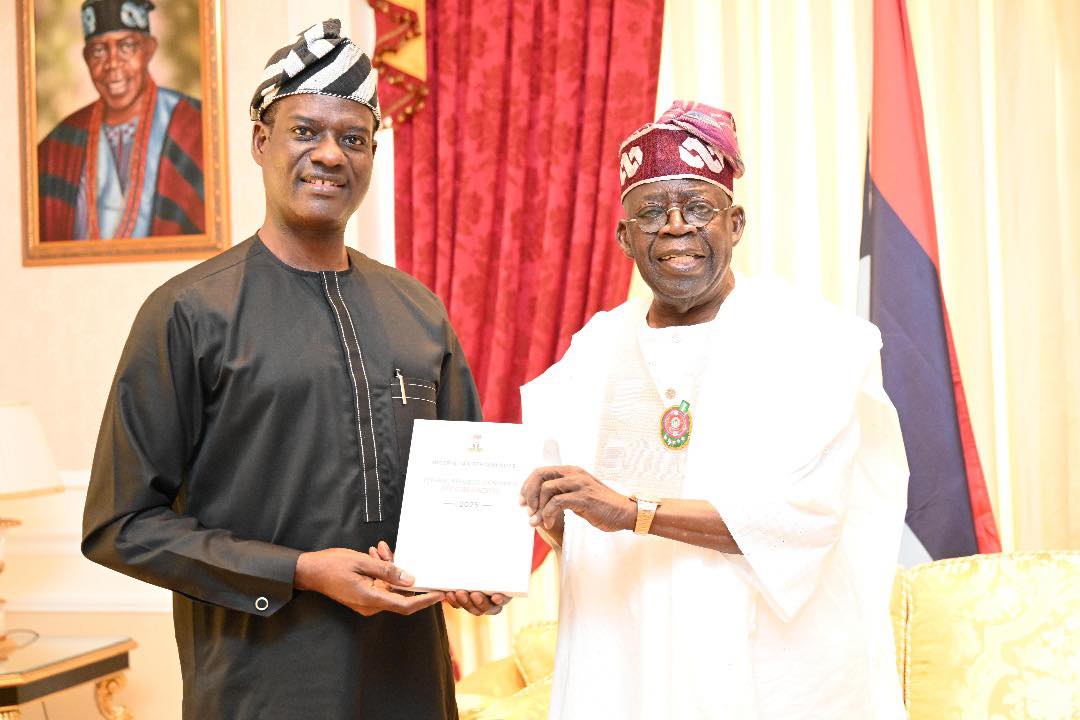
The Federal Government has moved to harmonise Nigeria’s budget process and align spending plans with more realistic revenue and financing assumptions, as part of efforts to strengthen fiscal discipline and transition to a single annual budget cycle from 2027.
The decision followed a meeting of the Economic Management Team (EMT), chaired by the Minister of Finance and Coordinating Minister of the Economy, Taiwo Oyedele, in Abuja on November 18, 2026.
According to a statement issued by the Federal Ministry of Finance, the team advanced discussions on budget harmonisation, including plans to implement as much of the 2026 capital expenditure as possible while carrying forward outstanding balances into 2027.
SEE ALSO: President Tinubu nominates Taxman Taiwo Oyedele as minister of state for finance
The ministry said the government was working towards “a single annual budget cycle going forward” as part of efforts to improve budget planning and execution.
The EMT also reviewed progress on the 2027 Finance Bill, which is expected to update Nigeria’s tax laws and introduce further improvements to the ongoing tax reform programme.
The reforms are aimed at promoting ease of doing business, reducing borrowing costs and channelling more financial-sector liquidity into the real economy.
On the broader economic outlook, the team noted that Nigeria recorded real Gross Domestic Product (GDP) growth of 4.43 per cent in the second quarter of 2026, while headline and core inflation continued to decelerate, with headline inflation standing at 14.06 per cent in October.
External reserves were also reported at approximately $55 billion, alongside relative exchange rate stability and appreciation.
The ministry said discussions on the economy and Nigeria’s credit ratings should “continue to be grounded in data and evidence.”
The EMT also examined measures to improve food security and stabilise the prices of essential commodities, including cassava, yams, maize and rice.
Under a 90-day action plan earlier approved by the National Economic Council and endorsed by the Federal Executive Council, the government is working to strengthen the delivery of farm inputs, reduce post-harvest losses and improve the targeting of agricultural support.
In the energy sector, the EMT reviewed the national gas plan and the power sector’s 90-day action plan, which targets consistent grid distribution of about 5,500 megawatts in the near term.
Discussions also covered transmission capacity, metering and measures to protect critical electricity infrastructure against vandalism and theft.
The team further reviewed the draft National Development Plan 2026–2036, which is built around seven pillars covering macroeconomic stability, energy, industrialisation, infrastructure, governance, security and human capital development.
Members were asked to undertake further reviews of the draft plan, with their feedback expected to be incorporated ahead of its eventual launch.
Other issues discussed included developments in the creative economy and tourism sectors, progress on a creative economy bill before the National Assembly, plans for a Presidential Council on Tourism and Nigeria’s new national digital addressing system.
Those present at the meeting included the Minister of Marine and Blue Economy, Adegboyega Oyetola; Minister of Power, Joseph Tegbe; Minister of Communications, Innovation and Digital Economy, Bosun Tijani; Minister of Regional Development, Abubakar Momoh; and Minister of Labour and Employment, Muhammadu Maigari Dingyadi.
Others included the Minister of Art, Culture, Tourism and the Creative Economy, Hannatu Musa Musawa; Minister of State for Petroleum Resources (Gas), Ekperikpe Ekpo; Minister of State for Budget, Doris Uzoka-Anite; and Deputy Governor of the Central Bank of Nigeria (Economic Policy), Philip Ikeazor.
Special Adviser to the President, Tope Fasua, permanent secretaries of the Ministries of Finance and Transportation, and Postmaster General, Omotola Odeyemi, were also in attendance.
The Federal Ministry of Finance said the discussions were part of ongoing efforts to strengthen economic coordination, improve fiscal management and advance Nigeria’s development priorities.
The Nigeria Democratic Congress (NDC), Lagos State Chapter, has celebrated its South-West Vice Chairman, Honourable Adedayo Akin-Taylor Ekong, on her birthday, describing her as a woman of courage, dedication and unwavering conviction whose contributions to the party’s growth and the pursuit of a better Nigeria remain deeply appreciated.
In a birthday message issued on Friday by the NDC Lagos State Media Team, the party commended Ekong’s commitment to party development, grassroots mobilisation, inclusive leadership and service to humanity.
The party noted that her dedication and contributions continue to inspire confidence and strengthen its collective resolve to build a Nigeria that works for all.
SEE MORE: Attacks Can’t Stop Our Momentum, Kwankwaso Declares as NDC Expands in Kano
The NDC also celebrated Ekong’s aspiration to represent the people of Eti Osa Federal Constituency in the House of Representatives, expressing confidence that her passion for service and dedication to the people would propel her towards greater accomplishments.
“Your commitment to party development, grassroots mobilisation, inclusive leadership and service to humanity continues to inspire confidence and strengthen our collective resolve to build a Nigeria that works for all,” the statement said.
The party further offered prayers for the celebrant, asking Almighty God to bless her with renewed strength, excellent health, divine wisdom, greater accomplishments and many more years of impactful service.
It also wished her a new chapter filled with greater opportunities, abundant grace and resounding victories in all her endeavours.
“May this new chapter bring you greater opportunities, abundant grace and resounding victories in all your endeavours,” the statement added.
The NDC Lagos State Chapter concluded by appreciating Ekong for her service, leadership and unwavering commitment to the party, while wishing her a happy birthday and continued success.






NEIS Offers 9,583 Agents to Monitor 2027 Election Results

Nigeria’s Petrol Supply Rises 21% as Diesel Receipts Nearly Double – NMDPRA

FG Moves to Harmonise Budgets, Targets Single Annual Budget Cycle from 2027

NDC Celebrates South-West Vice Chairman Adedayo Akin-Taylor Ekong on Her Birthday

Fidelity Bank Names New CEO, Chiedoziem Amuchie
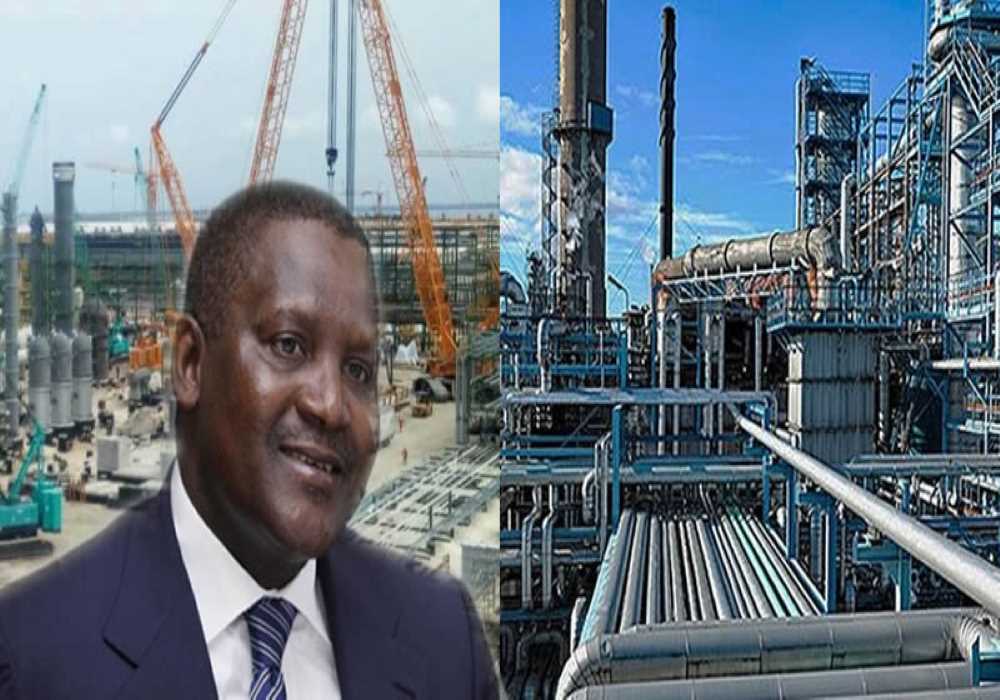
Dangote, SEC Ponder Secondary Sale to Meet Refinery IPO Demand

Trump’s Family Unveils New Cryptocurrency Platform

Senate Denies Receiving Petitions Against Tinubu’s Ambassadorial Nominees

Dangote Cement Lights Up Benue Host Communities With CSR Initiatives

Reps Recommend 3-year Jail Term For Aviation minister

Tems Sets New Record On Billboard Hot 100 Chart
