
Crime
Buhari’s Signature Forged To Withdraw $6.2m From CBN, – Ex-SGF, Mustapha

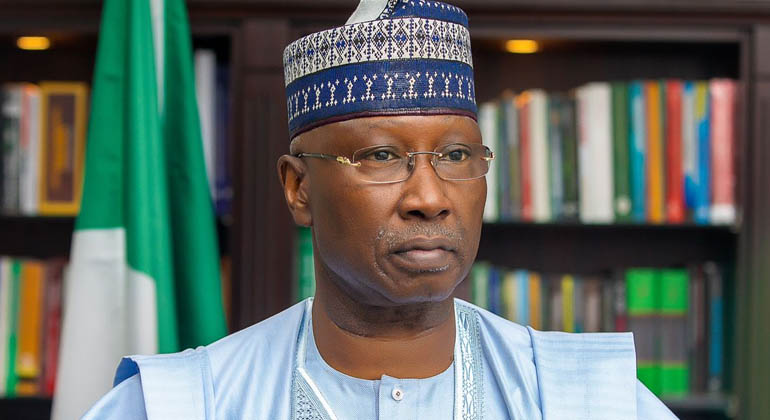
Former Secretary to the Government of the Federation (SGF), Boss Mustapha has disclosed that ex-President Muhammadu Buhari’s signature was forged by those who withdrew $6,230,000 from the Central Bank of Nigeria (CBN) on February 8, 2023.
Mustapha, who was testifying on Tuesday in the trial of former Governor of the CBN, Godwin Emefiele, said his signature was also forged.
He added that he knew nothing about the money said to have been withdrawn for the payment of foreign election observers.
The ex-SGF, who spoke as a prosecution witness, told a High Court of the Federal Capital Territory (FCT) in Maitama that it was not the business of the Federal Government or the office of the SGF to request for funds from the CBN for the payment of foreign election observers.
He said it was solely the responsibility of the Independent National Electoral Commission (INEC) to deal with issues relating to election observers and other election-related matters.
A Deputy Director in the CBN, Michael Onyeka Ogbu had told the court on Monday that the money was handed in cash to an official from the office of the SGF named Jibril Abubakar upon approvals by President Buhari and Emefiele following a request by the SGF.
The prosecution is accusing Emefiele of being behind the withdrawal.
Led in evidence by the lawyer to the prosecution, Rotimi Oyedepo (SAN), Mustapha, dressed in blue kaftan and a cap, identified Emefiele (who was seated in the dock) when asked if he knew who the defendant in the case was.
Mustapha, who said he is a lawyer and called to the Nigerian Bar in 1980, said Emefiele was the Governor of the CBN when he served as the SGF from 2017 to 2023.
When asked if he knew anything about the transaction relating to the payment of the $6,230,000, Mustapha said: “I wish to state that, up until when I left office, I knew nothing about this transaction.”
He was then shown a document, marked as Exhibit PD7 said to be a letter from President Buhari, approving the payment and asked if he recognised the document.
Mustapha said he was seeing the document for the first time in the court and that he never came across the document before.
He added: “On the face value of this document, having served (as the SGF) for five years and months, I can say that this document did not emanate from the office of the president.”
He gave reasons why he believed the document was not from Buhari to include that a correspondence that has the seal of the President, does not carry a reference number, adding that the seal serves the authority.
“Looking at the signature, it is a faint attempt at reproducing President Muhammadu Buhari’s signature,” he said.
He also faulted the document on the ground that it was purported to convey a decision of the Federal Executive Council (FEC), which is not normally conveyed via letters.
“I have looked at it. I have read it. Federal Executive Council’s decisions are not transmitted by letter. They are transmitted through extracts. After conclusions are adopted.
“I am the custodian of the record of the Federal Executive Council. So for that reason, the President will not be referring the conclusion of EXCO to me.
“In all the five years and seven months that I served, I have never heard of the term – Special Appropriation Provision – that was referred to here (in the letter),” Mustapha said.
The witness said he was only familiar with appropriation, as provided by the Appropriation Act passed by the National Assembly and Supplementary Appropriation.
He also faulted the concluding part of the letter, saying that it was unusual for the President to end his letter to the SGF by saying “Please accept the assurances of my highest regard.”
He said being the President’s subordinate, his letter to the SGF cannot end in that manner.
Mustapha also said the Nigerian government has no business funding foreign election observers, adding: “That I know as a fact because I have managed two election circles. INEC has the sole responsibility in that area.”
On the claim in the letter that the decision to approve money for foreign election observers was taken at the 187th FEC meeting held on January 18, 2023, the witness said it was not true.
He agreed that there was actually a FEC meeting on January 18, 2023 but that the meeting was presided over by the Vice President because the President was not around.
The witness also said the issue of payment to foreign election observers never featured on the meeting’s agenda which he prepared as the SGF.
“My role as the secretary is to prepare the agenda for the meeting and on that day there was a 16-point agenda. There was no item on the agenda that has to do with payment to foreign election observers,” he pointed out.
When shown another document, marked: Exhibit PD6, said to be his letter conveying the presidential approval to the Governor of the CBN, Mustapha also faulted it.
He said: “To the best of my knowledge, this letter did not emanate from the office of the SGF. If it did not emanate from the office, then I did not sign it. No, I did not sign it.”






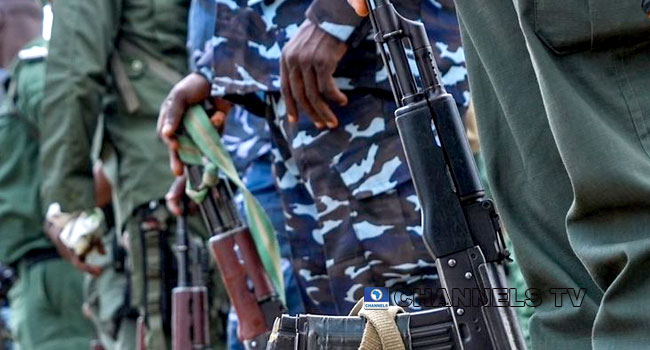
The Oyo State Police Command has arrested a suspected cultist, Kingsley Odo, who allegedly travelled to the state to avenge the death of his brother.
The suspect was intercepted by operatives of the Safer Highway patrol team during a routine stop-and-search operation on a commercial bus along Ife Road.
The Police Public Relations Officer (PPRO) of the Oyo State Police Command, DSP Ayanlade Olushola Olayinka, said the operatives recovered a locally made, cut-to-size pistol and a cartridge during a search of the vehicle.
SEE ALSO: Oyo Police Begin Probe Into Abduction of Pastor’s Daughter In Ibadan
Olayinka said further questioning revealed that the suspect had travelled to Oyo State to carry out a revenge killing over his brother’s death.
“Further questioning revealed that he had travelled all the way from Anambra to Oyo State to carry out a revenge killing,” he said.
He added that the suspect had been arrested and was undergoing investigation to establish his connections and determine the extent of his alleged activities.
“All thanks to God and the good effort of the men of the Safer Highway, he was intercepted, arrested, and is currently undergoing investigation to know his connections and how wide it is,” Olayinka said.
Suspect Recounts Brother’s Death
During an interview following his arrest, Odo said the incident stemmed from the death of his brother in 2021, when he was working in Benue State.
He explained that his brother was schooling in Nsukka, Enugu State, when he received information that someone had killed him.
“It was in 2021. I was working in Benue State, so I had information that my brother, who was in school in Nsukka, had just died in the school, that somebody killed him in the school,” he said.
Odo added that his mother died a few weeks after his brother’s death.
He said he subsequently received information that the person allegedly responsible for his brother’s death was living in a southwestern state.
“So, last month, I had information that the boy is living in a state, a Yoruba state. So, I said okay, I will find out that place where he is living,” the suspect said.
He explained that he was travelling from Nsukka towards Oyo State when police operatives intercepted and arrested him.
When questioned about whether he knew the exact location of the person he intended to confront, Odo initially said he did not know the particular state but confirmed that he was heading to Oyo State.
“The information is with me,” he said, suggesting that he had information that could help him locate the individual.
Suspect Says He Bought Pistol for ₦20,000
When questioned about the firearm recovered from him, Odo said he purchased the pistol from a friend for ₦20,000.
“I bought it from my friend,” he said.
Asked what his friend did with firearms, the suspect said the individual might be a hunter.
“I don’t know, maybe he’s a hunter. A hunter who kills with pistol? Yes, he has this one and long, so he was the one that sell this one for me, 20,000,” he said.
Suspect Confirms Membership of Vikings Confraternity
During the interview, Odo was also questioned about reports that his deceased brother belonged to a cult group.
He said he could not confirm whether his brother was a member.
“Maybe he belongs, maybe he did not belong, because I was not there with him,” he said.
However, when asked whether he belonged to a cult group himself, the suspect answered in the affirmative and identified the group as Vikings.
The police said investigations were ongoing to establish the suspect’s connections and determine whether other individuals were involved in the alleged planned revenge killing.
Police Rescue Three Kidnap Victims in Taraba After Sustained Pressure
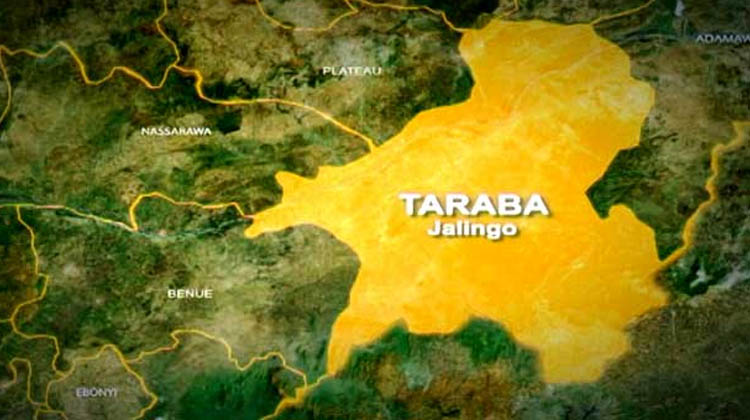
The Nigeria Police Force has disclosed the rescue of three kidnapped victims in Taraba State following sustained pressure mounted by its rescue teams.
The victims were identified as Otuwe Torhumba, 37; Kenneth Nyiutse, 35; and Michael Emmanuel, 27.
The Force made the disclosure on Saturday, October 3, 2026, in its 24-hour operational update covering security operations recorded across the country on October 2.
ALSO READ: 2027: Ogun Police Begins Early Election Security Preparations, Warns Against Political Violence
According to the Police, “Due to sustained pressure by Police rescue teams, three of five kidnapped victims — Otuwe Torhumba (37), Kenneth Nyiutse (35) and Michael Emmanuel (27) — were rescued unharmed and reunited with their families.”
The Police said the three victims were rescued unharmed and subsequently reunited with their families.
The Force did not provide further details on the circumstances surrounding the abduction or the whereabouts of the remaining two victims in the operational summary.
The case is currently being investigated by the State Criminal Investigation Department (SCID), Jalingo.
The rescue was among several operational successes recorded by the Nigeria Police Force during the reporting period.

The Nigeria Police Force has disclosed the rescue of an 86-year-old man and his son after they were allegedly detained by suspected members of the Axe Men confraternity in Cross River State.
The victims, identified as Dominic Columbus Udoh, 86, and his son, Emmanuel Columbus Udoh, 40, were rescued by Police operatives on Friday, October 2, 2026.
The Police made the disclosure on Saturday, October 3, in its 24-hour operational update detailing security successes recorded across the country.
SEE ALSO: Benue: Police Repel Bandit Ambush, Recover Locally Fabricated Gun
According to the Force, Police operatives were mobilised to the scene after receiving information that suspected Axe Men confraternity cultists had unlawfully detained the two men.
The Police said the suspected cultists fled from the scene when operatives arrived.
The Force stated that officers, with assistance from neighbours, “forced open the locked apartment,” where the two victims were found.
According to the Police, both victims had sustained facial and chest injuries.
They were subsequently rescued and conveyed to the Police Hospital for medical treatment.
The Police said the incident is currently being investigated by the State Criminal Investigation Department (SCID), Calabar.






State Govs, Wike Endorse One-Party State, Join APC Campaign Council

2027: ‘Tinubu Has Done Well’ – Wike Tells Opposition to Speak the Truth

‘Celebrate This Poor Man’ – Shettima Defends Tinubu Over Economic Crisis
FG Withdraws Charges Against ‘Fake Agency’ DG, Adeniyi Adeyemi

Shell Identifies Keys to Nigeria’s Energy Future

Nigeria Records Biggest Rise in Multidimensional Poverty Among Five Countries – UN

Trump’s Family Unveils New Cryptocurrency Platform

Senate Denies Receiving Petitions Against Tinubu’s Ambassadorial Nominees

Dangote Cement Lights Up Benue Host Communities With CSR Initiatives

Reps Recommend 3-year Jail Term For Aviation minister

Tems Sets New Record On Billboard Hot 100 Chart
