
NEWS
Presidency Explains Petrol Discount Offering

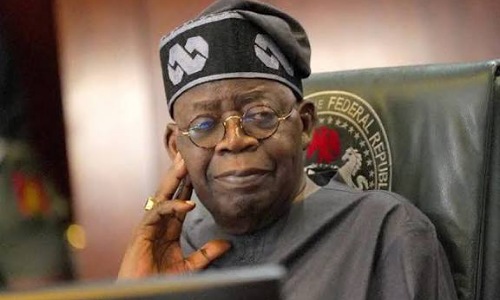
The Federal Government on Thursday announced that the Nigerian National Petroleum Company Limited will forgo its retail profit margin on petrol and sell to Nigerians at cost, as part of measures to cushion households from global crude oil price shocks.
This was as the Presidency said the arrangement, backed by President Bola Tinubu, does not signal the return of the petrol subsidy, which ended on May 29, 2023.
The petrol price slash was among a raft of measures announced by the Minister of Finance and Coordinating Minister of the Economy, Taiwo Oyedele, on Thursday.
In a statement signed Thursday by the Special Adviser to the President on Information and Strategy, Bayo Onanuga, the Presidency said NNPC Retail, which already sells petrol at the lowest price in the market, will roll out the new deal within 30 days.
READ ALSO: NUPRC Shares Priorities for Next Phase of Growth
The statement is titled ‘NNPC retail forgoes petrol profit margin to offer some support to Nigerian households amid global petrol crisis; FG announces additional measures.’
“This means if NNPC’s landing cost is N1300, it will sell fuel to Nigerians, especially commercial vehicles, at the same price,” the statement read.
Briefing journalists on Thursday, Oyedele said the Federal Government hoped other marketers would follow NNPCL’s example, as the sharp rise in crude and petrol prices was not expected to last long.
The Presidency said the Federal Government was also negotiating a ceiling of N1,350 per litre on the ex-gantry or landing cost of petrol to keep pump prices stable.
It said where costs rise above the ceiling, refiners and importers will bear the shortfall and recover it later, when crude prices or the exchange rate allow, without breaching the ceiling.
“This is neither a subsidy nor a price control: it is designed to smooth prices over time rather than suppressing them,” Oyedele was quoted as saying, adding, “The reasoning is simple. 1,400 naira a litre today and 1,400 tomorrow is better than 1,500 today and 1,300 tomorrow, because volatility itself adds to uncertainty and cost. And when fares rise sharply, they rarely fall as fast. The ceiling will be reviewed monthly, reset as costs require, and the figures published for transparency.”
The FG, he said, will also sell crude forward to domestic refineries. According to the statement, this is expected to shield pump prices from global volatility as production rises and previously committed crude is freed up.
The statement noted that under the 2025 tax reform laws, the Federal Government, working with the states and security agencies, was reining in the collection of road taxes and levies that inflate fares and logistics costs. It is also increasing funding for cash transfers to the most vulnerable households and for subsidised credit to small businesses and consumers.
The other measures listed include the CNG rollout, where the FG is scaling up compressed natural gas deployment with the states, and expects transporters to pass on the savings to passengers through lower fares. CNG is 60 to 70 per cent cheaper than petrol, the statement said.
It said excess profit tax will be considered for operators who take undue advantage of consumers anywhere along the energy value chain.
Proceeds will be used only to cushion fuel prices through transport support or vouchers for urban minimum-wage earners. The government will also work with the National Assembly on enhanced tax relief for low-income earners under the 2027 Finance Bill.
The FG, according to Onanuga, is cutting regulatory costs that feed into the cost of doing business and, indirectly, into the prices of goods and services. The FG, he added, is investing in a reserve from which it will release refined products into the market, under published rules, whenever a global disruption or hoarding threatens supply and price stability.
The Presidency said this was “not a subsidy” and did not fix prices, but secured supply and would deter artificial scarcity and market manipulation.
It argued that traffic management agencies will improve traffic flow in major urban centres to cut fuel consumption, while NIPOST’s newly launched address codes will make logistics more efficient and cheaper.
The Presidency explained that none of the measures restored a blanket subsidy, adding that doing so “would create longer-term harm for a short-term cure.”
It said, “Removing the fuel subsidy came at a price. But the alternative has been tried. Nigeria has already lived through that cycle: scarcity, smuggling, a collapsing currency and a fiscal crisis. We cannot afford to live through it again, least of all in response to a temporary disruption, and at the very moment the results of reform are gathering pace.
“Government is not out to reverse a necessary reform designed to set our country on the path towards sustained prosperity. It is to ensure its gains reach more Nigerians, faster and in more tangible ways. That is our work, and we are committed to doing it.”
The Presidency added that the FG was working on a comprehensive package of fiscal measures to bring inflation down to single digits sustainably in the near term.






The Petroleum Technology Development Fund (PTDF) said it has sponsored nearly 15,000 Nigerians for studies at home and abroad, with 1,571 scholars currently studying in 15 countries, as of July 2026.
This is as the Fund is now asking the United Kingdom (UK) to help address visa rejections, high tuition fees and the monitoring of its scholars, which it says are putting pressure on the programme.
The executive secretary of the Fund, Prof Shu’aibu Shehu Aliyu, made the request on Tuesday at a meeting with the British High Commissioner to Nigeria, Pete Vowles. The meeting was held at the General Shehu Musa Yar’adua University of Geological Sciences and Engineering Technology, Kaduna.
According to Aliyu, the Fund had sponsored the beneficiaries through its Overseas Scholarship Scheme and In-Country Scholarship Scheme, for undergraduate and postgraduate studies.
He said that as of July 2026, 1,571 scholars were studying in 15 countries and more than 120 partner institutions. He added that demand for PTDF scholarships was still rising.
READ MORE: Investors Embrace DPRP IPO Globally, 120 Countries, 54 African Nations
The executive secretary said the UK had for decades been the Fund’s main partner in building skills for Nigeria’s energy sector.
He said the PTDF worked with 24 British universities, including Robert Gordon, Strathclyde, Portsmouth, Aberdeen, Newcastle, Birmingham, Glasgow, Leicester, Liverpool and Manchester.
He said the partnership had helped train thousands of Nigerian engineers, geoscientists, researchers and energy professionals.
Aliyu also said the Fund worked with institutions in Germany, France and Malaysia, where it sought cheaper ways to train Nigerians. He said the Fund still wanted to keep its long-standing ties with the UK.
The ES told the High Commissioner that the Fund was facing problems with its UK partners. He listed these as tuition fees that were high compared with other European countries, and visa rejections.
“I would like to take this opportunity to highlight several challenges we are facing with our UK partners for the High Commissioner’s attention,” he said.
He said the Fund also wanted a plan to monitor its scholars in the UK, with support from the UK government and the host universities.
Aliyu did not give figures for the fee increases or the number of visa rejections.
In response, Vowles said the British High Commission understood the difficulties, especially those linked to visas and increases in tuition fees.
“We will take these concerns away as a team and communicate them to the relevant stakeholders within the UK system,” he said.
The High Commissioner said the PTDF and the High Commission had worked together to simplify the process. He said the PTDF’s recognition as a government-approved sponsor was expected to help.
“Having the PTDF recognised as a government-approved sponsor will hopefully make the process much smoother,” he said.
He did not promise any change in fees or visa rules.

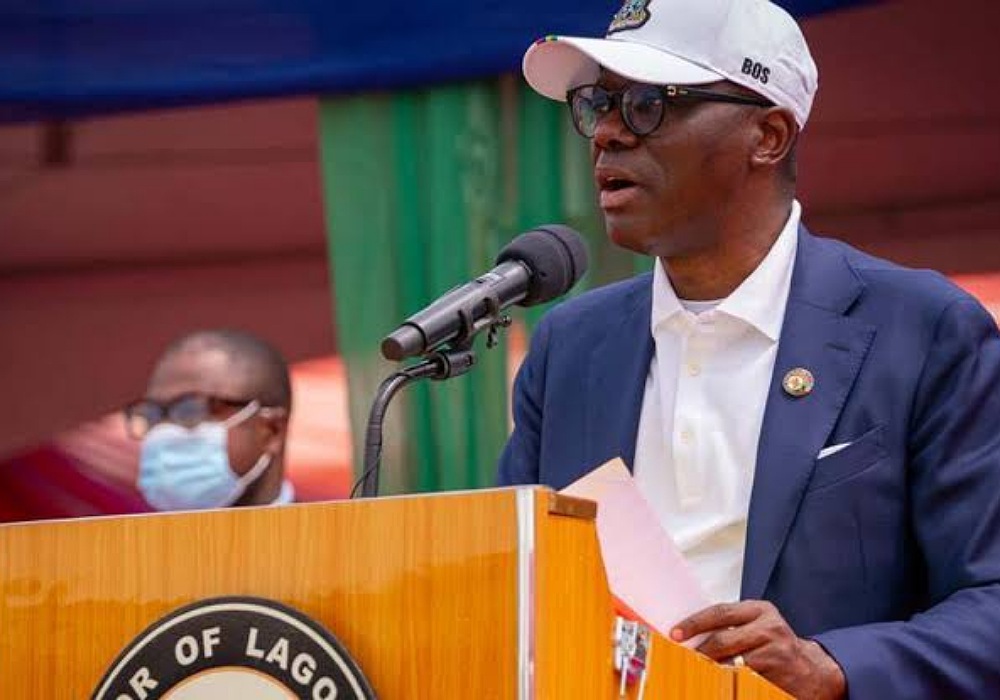
The Lagos State Government has warned healthcare providers against denying emergency medical treatment to patients because of financial constraints, insisting that patients must be stabilised before payment or health insurance details are discussed.
Governor Babajide Sanwo-Olu gave the warning on Wednesday while flagging off the enforcement of Executive Order EO/BOS/01 of 2024 and unveiling the Lagos Private Health Plans (LPHP).
The governor said the policy was designed to protect residents from the financial burden of unexpected medical expenses and ensure that access to healthcare does not depend solely on their ability to pay when illness or an emergency occurs.
SEE MORE: Sanwo Olu, Oba Of Elegushi Told Us They Don’t Know Sam Larry – Police
“We are also setting a firm boundary for all healthcare providers, no hospital in Lagos is permitted to turn away anyone needing emergency care due to financial constraints,” Sanwo-Olu said.
“Patients must be stabilized first before any payment or insurance details are discussed,” he added.
Under the arrangement, Lagos residents have until December 31, 2026, to obtain health insurance coverage, with formal enforcement scheduled to begin on January 1, 2027.
Explaining the need for the policy, the governor said rising healthcare costs had made reliance on direct payments during emergencies increasingly difficult for families.
“Healthcare costs are rising rapidly and relying on cash payments when an emergency strikes simply does not work,” he said.
“We are changing that system today so that quality care is accessible to all without putting your life savings at risk.”
The initiative introduces the Lagos Private Health Plans to extend insurance coverage to salaried workers and corporate organisations, complementing the existing Ilera Eko scheme, which caters to vulnerable residents and people working in the informal sector.
According to Sanwo-Olu, 21 Health Maintenance Organisations (HMOs) have already joined as partners to expand coverage across the private sector.
Lagos Increases Health Equity Fund to ₦3bn
As part of efforts to ensure that low-income residents are not excluded from healthcare coverage, the state government has increased its Health Equity Fund from ₦1 billion to ₦3 billion.
Sanwo-Olu said the expanded fund would enable the government to pay insurance premiums directly for more than 500,000 residents who cannot afford coverage on their own.
“To ensure no one is left behind, we tripled our Health Equity Fund from ₦1 billion to ₦3 billion,” he said.
“This allows us to pay premiums directly for over 500,000 residents who cannot afford insurance on their own.”
The governor also emphasised that employers must take responsibility for the healthcare coverage of their workers, describing it as a mandatory obligation comparable to pension contributions.
“To our business owners and employers, employee healthcare is not an optional extra, it is a mandatory responsibility just like pensions,” he said.
He added that strengthening healthcare financing would help retain medical professionals in the country.
“To our doctors and medical professionals, strengthening our healthcare financing builds the solid foundation we need to keep your talents right here at home,” Sanwo-Olu said.
The governor maintained that the reform would help families avoid financial hardship caused by unexpected medical bills while encouraging more residents to seek treatment when necessary.
“We are protecting families from the burden of unexpected medical bills, helping more people seek care when they need it and building a healthcare system that works for everyone,” he said.
He added: “No one should have to choose between getting medical care and protecting their household finances.”
With the December 31 deadline approaching, residents, workers and employers are expected to obtain the required health insurance coverage before formal enforcement begins on January 1, 2027.
Sanwo-Olu said the ultimate objective was to build a healthcare system in which quality medical services were accessible and affordable to residents across the state.
The Federal Government and the Nigeria Labour Congress (NLC) have agreed on a ₦70,000 monthly transport allowance for workers for six months, beginning in November 2026, but failed to resolve their disagreement over the effective date for implementing the national minimum wage.
The agreement was reached at a conciliation meeting between the Federal Government and organised labour at the Ministry of Labour and Employment in Abuja on October 27, 2026.
The transport intervention is part of measures proposed by the Federal Government to cushion the effects of rising petroleum pump prices and the resulting pressure on workers’ finances.
SEE ALSO: NLC Ultimatum: Wage Demands Can Be Resolved in Two Weeks – HR Expert
Under the resolutions reached at the meeting, the government will provide the monthly transport allowance for six months, beginning in November.
However, despite the agreement on transport support and other welfare measures, the minimum wage implementation date remains unresolved.
FG, NLC to Begin Minimum Wage Negotiations
As part of efforts to address the disagreement, the meeting agreed that the Minimum Wage Negotiation Committee should be constituted and commence meetings immediately.
The move is expected to provide a platform for further discussions between the government and organised labour on workers’ minimum wage demands.
The failure to agree on an implementation date leaves the issue open even as both parties pursue other measures aimed at easing the financial pressure on Nigerian workers.
FG Agrees to Pay Outstanding Allowances
The resolutions also provide for the payment of peculiar allowance arrears in three equal monthly instalments beginning in November 2026.
For health workers, the Federal Government agreed to redeem 19 months of outstanding allowances within three months, starting in December 2026.
The meeting also addressed the proposed hazard allowance for agricultural officers.
According to the resolutions, the Federal Ministry of Agriculture and Food Security had submitted the list of beneficiaries and the associated cost implications to the National Salaries, Incomes and Wages Commission for verification.
The commission is expected to complete the verification exercise within two weeks and issue an implementation template.
Decision on Health Workers’ Salary Adjustment Pending
The proposed adjustment to the Consolidated Health Salary Structure (CONHESS) was also discussed during the meeting.
The National Salaries, Incomes and Wages Commission is expected to complete an updated assessment of the cost implications within three weeks.
The assessment will be forwarded to the Presidential Committee on Salaries for consideration.
No final decision on the proposed adjustment was announced in the resolutions.
Tax Relief Referred to NEC
On tax relief for workers, the meeting agreed that the matter should be referred to the National Executive Council (NEC) for consideration.
The resolutions stated that, “Since tax is a statutory matter, the issue of tax relief for workers will be taken to National Executive Council (NEC).”
The meeting did not specify the proposed tax relief measures or when a final decision would be made.
FG, NLC to Review Implementation
The Federal Government and the NLC also urged state and local governments to participate in the intervention process.
The parties agreed to reconvene after one month to assess progress on the resolutions reached at the meeting.
The agreement was signed on behalf of the Federal Government by the Minister of Labour and Employment, Dr Muhammad Maigari Dingyadi; the Director-General of Budget, Timi Yakubu; and the Permanent Secretary of the Service Welfare Office in the Office of the Head of the Civil Service of the Federation, Dr Garba Abdul S.U.
NLC President, Comrade Joe Ajaero, signed on behalf of the Congress, while Olowoyo Gbenga signed for the Joint National Public Service Negotiation Council (JNPSNC).






PTDF Succour 15,000 Nigerians with Scholarships
Investors Embrace DPRP IPO Globally, 120 Countries, 54 African Nations
Lagos Warns Hospitals Against Denying Emergency Care Over Payment

₦70,000 Monthly Allowance: FG, NLC Leave Minimum Wage Dispute Unresolved
Dangote Refinery Pioneers Honeywell’s AI Technology

Standard Chartered Inks Deal for Shell Gas Sale

Trump’s Family Unveils New Cryptocurrency Platform

Senate Denies Receiving Petitions Against Tinubu’s Ambassadorial Nominees

Dangote Cement Lights Up Benue Host Communities With CSR Initiatives

Reps Recommend 3-year Jail Term For Aviation minister

Tems Sets New Record On Billboard Hot 100 Chart
