
Banking
CBN replaces Skye Bank chair, MD, says depositors’ funds safe


ABUJA-THE Central Bank of Nigeria on Monday wielded the big stick by replacing some key members of the Board of Directors and management team of Skye Bank Plc, saying its findings revealed that the bank had fallen short of the minimum thresholds in critical prudential and capital adequacy ratios.
As a result, the chairman, managing director, deputy managing director, all non-executive directors and the two longest-serving executive directors on the board and management team of Skye Bank were replaced by the central bank.
The CBN Governor, Mr. Godwin Emefiele, told a news conference in Lagos on Monday that the “proactive moves have become unavoidable in view of the persistent failure of Skye Bank to meet minimum thresholds in critical prudential and adequacy ratios, which has culminated in the bank’s permanent presence at the CBN lending window.”
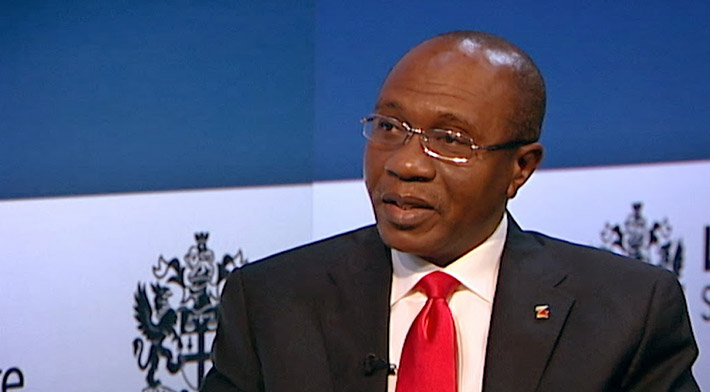
Godwin Emefiele, CBN Gov
He said in the overall interest of the bank, its chairman, Olatunde Ayeni; managing director, Timothy Oguntayo; deputy managing director, Mrs. Amaka Onwughalu; and executive directors, Mr. Dotun Adeniyi and Mrs. Ibiye Ekong, had voluntarily resigned their appointments ahead of the CBN action.
The affected non-executive directors are Mr. Victor Odozi, Mr. Babajide Agbabiaka, Dr. Jason Fadeyi, Mr. Kunle Aluko, Mr. Victor Adenigbagbe, Mr. Abdul Bello and Hajiya Amunna Lawan Ali.
In their place, the governor said the CBN had selected industry experts and people of high integrity whom it believed could turn the bank around.
In this regard, Emefiele announced Alhaji Muhammad Ahmad as the new chairman of Skye Bank, while Mr. Adetokunbo Abiru was also named as the new managing director.
According to a statement by Skye Bank, other members of the reconstituted board are Bayo Sanni, Idris Yakubu, Markie Idowu and Abimbola Izu, all of who had been serving as executive directors of the lender before now.
The CBN governor noted that the more recent executive directors in Skye Bank would be allowed to remain to ensure continuity and a smooth transition.
According to him, the new members of the board and management team of Skye Bank have the sole responsibility of ensuring the speedy restoration of the health of the lender.
The CBN helmsman noted that the changes were with immediate effect.
Giving further reasons for its regulatory action on Skye Bank, Emefiele argued that the CBN would be failing in its duties if the situation of the bank was allowed to degenerate before taking such an action.
While maintaining that Skye Bank was not in distress, he noted that neither depositors nor shareholders’ funds had been eroded.
Emefiele said the action was taken to avoid a situation where shareholders or depositors’ funds would be affected.
He urged the general public and customers of the bank to conduct their business with Skye Bank, just like any other bank, saying their deposits were safe and intact.
Giving further details on the health of Skye Bank, Emefiele said, “The most important issues in banks are non-performing loans, capital adequacy ratio and liquidity ratio. What we have since late 2014 to 2016 is that the prudential and adequacy ratio of Skye Bank has been weakening.
“We thought it was not right for us to allow this to continue to the point that it gets irreversible. That is why we took this action to nip it in the bud. It has nothing to do with being in distress. We do not want the liquidity and adequacy ratio of the bank to worsen to the point that depositors’ funds get into risk. The board itself has come to the realisation that they have done their best and it is about the time that they bowed out so that a new team can come in to run the bank in order to improve its position.
“Naturally, what you have seen is that by the time the capital is recomputed and revalued, there is a sort of weakening in value, but it has not eroded the capitalisation and value of the bank. We are hoping that as the new team comes up, the value will definitely improve.”
On whether the CBN would take the same action on other banks demonstrating similar problems, the CBN governor said, “The strategic health of the banking industry remains sound. And where there is a need to inform the general public about the strategic health of a bank, we will do it. I want to assure everybody that the strategic health of the industry is still good.
“No doubt, as a result of the global shock, there is weakening in certain ratios of the banks; but then, those ratios have not weakened to the point where we can say the industry is distressed. We are appealing to all depositors to be calm.
“There is no need to leave an impression that any bank is distressed. We at the CBN and the NDIC have held discussions, and I want to assure you that no deposit is at risk. Customers should continue to do their business the way they have been conducting in all the banks. No depositors will lose their money. SEC and other concerned regulators have been informed of this development.”
Emefiele added, “It is important to reiterate the fact that Skye Bank is not in distress and remains a healthy bank in the system. The CBN hereby assures depositors, shareholders and all relevant stakeholders that there is no reason for concern or panic as we seek their continued cooperation at this time.
“It is our expectation that the shareholders and remaining executive directors will work seamlessly with the new team to ensure that the fortunes of the bank are restored in the shortest time possible.”
Emefiele recalled that the CBN had held several meetings with the management and board of Skye Bank as part of its strategy of close engagement whenever a bank’s financial or governance situation posed potential threats to the overall stability of the financial system.
He said that despite the expectation of relevant regulators, market watchers, financial analysts and interested stakeholders that Skye Bank should be doing much better than it was, the opposite had been the case.
However, anxious customers besieged branches of the bank in different locations across the country to make withdrawals from their accounts, explaining that they were not sure if their money was safe with the lender.
Ahmad, the new chairman of Skye Bank, was the pioneer Director-General and Chief Executive Officer of the National Pension Commission.
He was also a pioneer employee of the Nigeria Deposit Insurance Corporation where he rose to become a director. He has also served on the board of various companies and committees, including banks and not-for-profit organisations.
Abiru, the new MD, is a seasoned accountant and banker, and was until recently an executive director in First Bank Plc. He is also a former Commissioner for Finance in Lagos State from 2011 to 2013.
Meanwhile, the share price of Skye Bank plunged by N0.10 (9.52 per cent) to close at N0.95 from N1.05 as investors dumped their holdings of the shares of the bank as news of the CBN action filtered in on Monday.
The bank was top on the list of 31 firms that recorded losses in their share prices.
These losses resulted in the Nigerian Stock Exchange’s market capitalisation shedding N104bn to close at N9.960tn from N10.064tn.
The new chairman of the bank, Ahmad, was quoted in a statement on Monday as expressing optimism about the lender, given its vast potential and strategic position in the economy.
A renowned economist and the Chief Executive Officer, Financial Derivatives Limited, Mr. Bismarck Rewane, said, “The CBN has intervened by changing the board of the bank, but the ownership remains the same; it is a quoted bank. Now, time will be given to recapitalise the bank and support it so that it is not under pressure.”
Asked what the implications would be for the banking industry, he said, “To be honest with you, not much. It means that banks that are insolvent will need to capitalise within a period. It is early days; let’s just say that the regulator is now beginning to shift emphasis from monetary policy to banks’ systemic stability.
“The new managers are very rounded and solid. I know M. K. Ahmad; he is an excellent man. He worked at the NDIC. He was the head of PenCom. The other man, Mr. Abiru, has been a commissioner and worked in First Bank. Again, I don’t think it will affect the banking system detrimentally.”
The Head of Research and Investment Advisory at SCM Capital Limited, Mr. Sewa Wusu, noted that the CBN had recently said three banks had yet to comply with the capital adequacy ratio and that a period of time was given to them to measure up.
He said, “It has been long we witnessed an action of such a nature. The last time we witnessed that was when the CBN actually took over three banks and coincidentally, one of them, Mainstreet Bank, was acquired by Skye Bank.
PUNCH-
Socio-Economic Rights and Accountability Project (SERAP) announced that it has filed a lawsuit against the Central Bank of Nigeria (CBN) “over the failure to account for and explain the whereabouts of the missing or diverted N3 trillion of public funds, including the over N629 billion paid to ‘unknown beneficiaries’ as part of the Anchor Borrowers’ Programme.”
The lawsuit followed the grave allegations contained in the latest annual report by the Auditor-General of the Federation, which was published on 9 September 2025.
In the suit number FHC/ABJ/CS/250/2026 filed last week at the Federal High Court in Abuja, SERAP stated that it is seeking “an order of mandamus to direct and compel the CBN to account for and explain the whereabouts of the missing or diverted N3 trillion of public funds, including detailed reports of how exactly the funds were spent.”
In the suit, SERAP is arguing that, “These grim allegations by the Auditor-General suggest grave violations of the public trust, the provisions of the Nigerian Constitution 1999 [as amended], the CBN Act, and anticorruption standards.”
SERAP is also arguing that, “These grave violations also reflect a failure of CBN accountability more generally and are directly linked to the institution’s persistent failure to comply with its Act and to uphold the principles of transparency and accountability.”
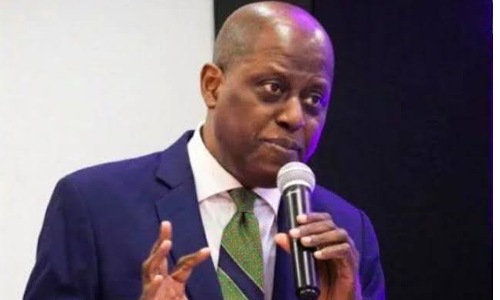
CBN Gov, Olayemi Cardoso
According to SERAP, “These violations have seriously undermined the ability of the CBN to effectively discharge its statutory functions and the public trust and confidence in the bank. The CBN ought to be committed to transparency and accountability in its operations.”
SERAP also stated in its suit that, “Nigerians have the right to know the whereabouts of the missing or diverted public funds. Granting the reliefs sought would advance the right of Nigerians to restitution, compensation and guarantee of non-repetition.”
SERAP said, “Section 15(5) of the Nigerian Constitution requires public institutions to abolish all corrupt practices and abuse of power. Section 13 of the Constitution imposes clear responsibility on the CBN to conform to, observe and apply the provisions of Chapter 2 of the constitution.”
The suit filed on behalf of SERAP by its lawyers Oluwakemi Agunbiade and Valentina Adegoke, read in part: “According to the Auditor-General, the CBN in 2022 failed to remit over N1 trillion [N1,445,593,400,000.00] of ‘the Federal Government’s portion of operating surplus’ into the Consolidated Revenue Fund (CRF) account.”
“The Auditor-General fears that the money may have been ‘diverted.’ He wants the money recovered and remitted to the treasury.”
“The CBN also failed to recover over N629 billion [N629,040,000,000.00] paid to ‘unknown beneficiaries’ as part of the Anchor Borrowers’ Programme, a programme ‘meant to support farmers to ensure sustainable food production in the country.’”
“But ‘the numbers of beneficiaries who collected the money are unknown.’ The CBN has also failed to ‘recover the money.’ The Auditor-General fears ‘the money may have been diverted’, which could have ‘contributed to the difficulty in sustaining food security in the Nation.’”
“He wants the money recovered and remitted to the treasury.”
“The CBN has also failed to recover over N784 billion [N784,410,108,864.47] ‘being 32 unpaid, overdue loans and interventions disbursed by the Bank between 2018 and May 2022.’”
“The Auditor-General said ‘there was no evidence that the Bank was doing enough to recover the loans/interventions, which ought to have been paid.’ He wants the money recovered and remitted to the treasury.”
“The CBN in 2022 also spent over N125 billion [N125,374,000,000.00] ‘on questionable intervention activities.’ The CBN claimed it spent the money ‘on intervention activities in connection with national security, the federal government, state securities, armed forces and to build the capacity of the financial sector’.”
“But the Auditor-General is concerned that the money may have been spent ‘without the approval of the National Assembly.’ There was also no document to ‘support the expenditure.’”
“The ‘expenditure also may not have been in the public interest and consistent with the objectives of the CBN in section 2 of the CBN Act.’ The Auditor-General fears the money may have been ‘diverted.’ He wants the money recovered and remitted to the treasury.”
“The CBN in 2022 also ‘unjustifiably’ spent over N1 billion [N1,792,769,160.00] to buy 43 operational vehicles for the Nigeria Immigration Service (NIS).”
“According to the Auditor-General, ‘the spending is unjustified because there is no connection with buying operational vehicles for the NIS and the objectives of the CBN as stated in section 2 of the CBN Act.’”
“The NIS also ‘failed to provide any evidence to show that the vehicles were actually supplied and delivered.’ There ‘were also no procurement and payment records or documents.’ The Auditor-General fears the money may have been ‘diverted’. He wants the money recovered and remitted to the treasury.”
“The CBN also awarded 43 contracts for over N189 billion [N189,50,066,756.73]. The Auditor-General said that ‘the contractors deliberately delayed completion of these contracts by seeking extension of the completion period.’”
“The contractors then ‘requested for variation of the contracts due to extension of completion period.’ Following the request, the CBN paid the contractors over N9 billion [N9,270,849,691.61] ‘irregular variation of contract price.’”
“There ‘were no relevant procurement documents such as contract files, procurement records, and payment vouchers’ for the payment. The Auditor-General fears ‘the money may have been diverted’ and the projects may have been abandoned.’ He wants the money recovered and remitted to the treasury.”
“The Katsina state branch of the CBN also failed to recover over N90 million [N90,163,610.00] being ‘outstanding loans and interventions disbursed to 33 small and medium enterprises during Covid 19 in 2020.’”
“The Auditor-General fears ‘the money may have been ‘diverted’ or ‘mismanaged’. He wants the money recovered and remitted to the treasury.”
“Paragraph 3112(ii) of the Financial Regulations 2009 provides: ‘Where a public officer fails to account for government revenue, such officer shall be surcharged for the full amount involved and such officer shall be handed over to either the EFCC or the ICPC.’”
“Section 51 of the Fiscal Responsibility Act provides that, ‘A person shall have legal capacity to enforce the provision of this Act by obtaining prerogative orders or other remedies at the Federal High Court, without having to show any special particular interest.’”
“The Nigerian Constitution, Freedom of Information Act, and the country’s anti-corruption and human rights obligations rest on the principle that citizens should have access to information regarding their public institutions’ activities.”
No date has been fixed for the hearing of the suit.
Banking
Millions of customers still stranded worldwide 24 hours after GT Bank online operations suffered attacks
By Yemie ADEOYE
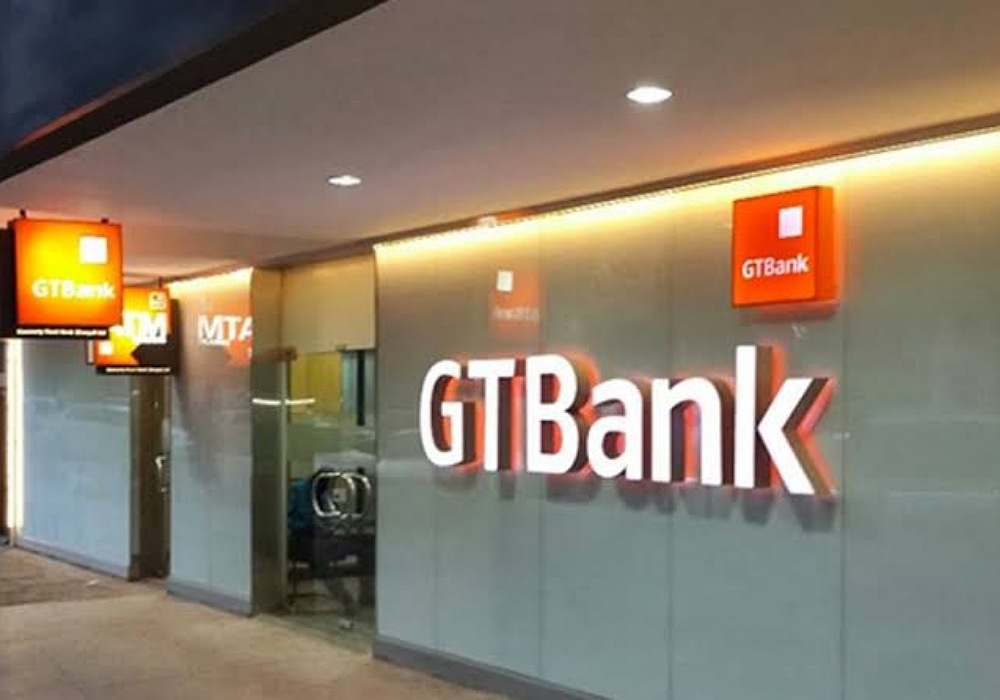
GT Bank, one of Nigeria’s leading banks, with operations across Africa and the United kingdom, and with an asset base of about US$3.11 trillion is under a cyber attack which has left millions of its customers across the world stranded in the last 24 hours.
The bank which was renowned for its seamless online operations at inception has suffered dwindling online efficiency in recent years and this current attack didn’t come as a surprise to many of its numerous customers. However, it is becoming worrisome that over 24 hours after its online operations went down, the bank has not been able to arrest the situation and restore its online services.
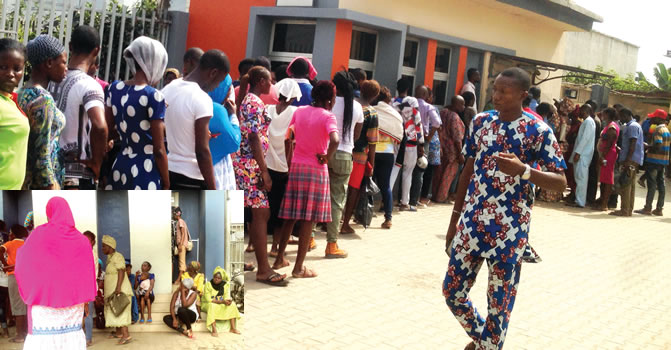
Stranded GT Bank customers outside the banks premises
Several customers of the bank took to their X (formerly known as twitter) handles to express their frustrations at the bank, as several of the customers in the diaspora are unable to access their accounts and carry on with their transactions. A customer , Jeff55 who lamented on his X handle about the development, stated that it is a thing of shock that a bank of this size couldn’t afford to have the necessary tools and experts to ensure a full protection of its online operations in this age and time.
Another customer Dimma stated that while Cybersecurity training may seem tedious, the recent #GTBank hack is a stark reminder that everyone is just a click away from a devastating attack.
Several media organisations had reported that hackers have stolen GT Bank website, and intercepted customers Data in massive phishing operation.
At the time of filing this report, Biztellers.com.ng checks on the banks website shows that it is still down and unaccessible, and neither GT Bank media and communications unit nor any of its agencies or surrogates have commented officially on the development.
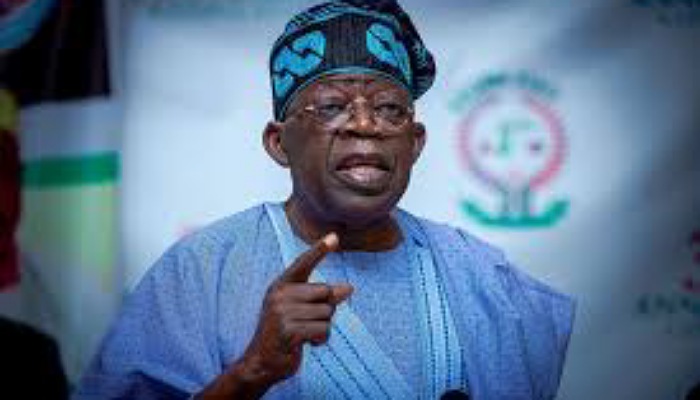
Says output surge buoyed by reforms he announced in May 2024 to address gaps in PIA
President Bola Ahmed Tinubu on Sunday declared a resurgence in the oil & gas industry, commending the increased crude production to 1.6 million barrels per day.
The president, who said this in a national broadcast, maintained that the resurgence was buoyed by the reforms he announced in May 2024 to address the gaps in the Petroleum Industry Act (PIA).
Nigeria’s crude oil output got a boost to 1.61 million barrels per day in July 2024 through the president’s directive and the industry leadership provided by the Nigerian National Petroleum Company Limited (NNPCL).
Acknowledging what he called a resurgence of the once-declining oil and gas industry in his Sunday-morning broadcast to the nation, President Tinubu said that oil investors are coming back to Nigeria.
He said; “Our once-declining oil and gas industry is experiencing a resurgence on the back of the reforms I announced in May 2024 to address the gaps in the Petroleum Industry Act. Last month, we increased our oil production to 1.61 million barrels per day, and our gas assets are receiving the attention they deserve. Investors are coming back, and we have already seen two Foreign Direct Investments signed of over half a billion dollars since then.
Read Also : BREAKING: Sell Crude To Dangote Refinery In Naira – Tinubu To NNPC Ltd
“Fellow Nigerians, we are a country blessed with both oil and gas resources, but we met a country that had been dependent solely on oil-based petrol, neglecting its gas resources to power the economy.
We were also using our hard-earned foreign exchange to pay for and subsidise its use. To address this, we immediately launched our Compressed Natural Gas Initiative (CNG) to power our transportation economy and bring costs down.
This will save over two trillion Naira a month, being used to import PMS and AGO and free up our resources for more investment in healthcare and education.
“To this end, we will be distributing a million kits of extremely low or no cost to commercial vehicles that transport people and goods and who currently consume 80% of the imported PMS and AGO.
“We have started the distribution of conversion kits and the setting up of conversion centres across the country in conjunction with the private sector. We believe that this CNG initiative will reduce transportation costs by approximately 60 per cent and help to curb inflation.”






WHO Releases Alarming Casualty Figures From US‑Israel‑Iran Conflict

PDP’s Festering Crisis Chases Tambuwal to ADC

$200/barrel Price Likely as Iran Threatens Oil Ships

2026 Poll: Osun Ndigbo Backs Adeleke’s Second-Term Bid

NGX Group, IFC, CSCS and WIMBIZ Convene Leaders to Advance Gender Equality at 2026 Ring the Bell Ceremony

Adeleke on Why he Deserves Second Term

Trump’s Family Unveils New Cryptocurrency Platform

Reps Recommend 3-year Jail Term For Aviation minister

Dangote Cement Lights Up Benue Host Communities With CSR Initiatives

Senate Denies Receiving Petitions Against Tinubu’s Ambassadorial Nominees

Things To Know About Threads, Zuckerberg’s Twitter-like App
