
Business
NCDMB Opens Africa’s First Gravimetric Flow Metering Facility with Project 100 Company

Modupe ASUDO
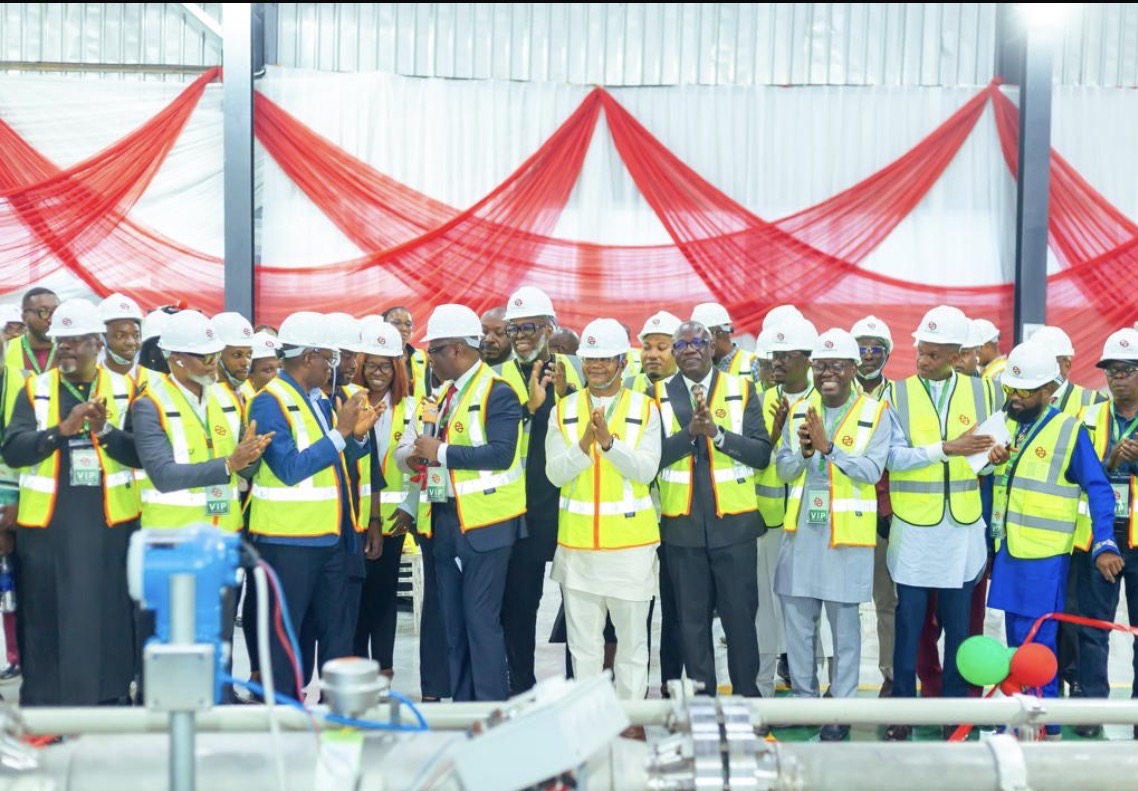
A world-class Gravimetric Flow Metering Calibration Laboratory, the first in Africa, was on Tuesday commissioned at the operational base of Engineering Automation Technology Limited (EATL) at Eket, Akwa Ibom State, with all oil and gas industry regulatory agencies and leading operators in attendance.
The facility, which is engineered to accommodate diverse flow regimes and fluid properties, guarantees accurate and reliable measurement of product transmission through industry pipelines. It incorporates what industry experts describe as “temperature and pressure conditioning, traceable reference standards, and automated data capture,” and would solve problems of flow meter factorisation and recertification.
In a keynote address at the commissioning ceremony, the Executive Secretary of the Nigerian Content Development and Monitoring Board (NCDMB), Engr. Felix Omatsola Ogbe, described the facility as a strategic breakthrough in Nigeria’s oil and gas industry, noting that “For decades, critical calibration and metering services were largely executed outside our shores, resulting in capital flight, increased project timelines, and limited knowledge transfer.”
He said the Gravimetric Multifaceted Flow Metering Laboratory is firmly aligned with the objectives of the Nigerian Oil and Gas Industry Content Development (NOGICD) Act, 2010, on local asset ownership, capacity building, and value retention. Itsstrategic importance, he noted, extends to revenue assurance and regulatory compliance, cost optimisation for industry operators, technology transfer and skills development, and industrialisation of the Niger Delta.
According to Engr. Ogbe, accurate calibration ensures transparency in hydrocarbon accounting and thus strengthens confidence across operators and regulators. Operators, too, would benefit from in-country calibration and metering servicesin terms of reduced logistics costs and turnaround time, while Nigerian engineers, technicians, and metering specialists now have a world-class training ground.
The Executive Secretary said Engineering Automation Technology Limited is among carefully selected corporate entities under NCDMB’s Project 100 Companies Initiative – a strategic programme designed to nurture high-potential indigenous companies into globally competitive champions. The strategy of the Board, he explained, has evolved beyond monitoring to enabling, which involves provision of access to finance, capacity development, infrastructure, co-investments and research and innovation support.
Represented by the Acting Director, Monitoring and Evaluation, Mr. Silas Ajimijaye, the NCDMB boss acknowledged the leadership role of the Nigerian Upstream Petroleum Regulatory Commission (NUPRC) in ensuring that regulatory frameworks continue to support technological advancement while maintaining global standards.
He charged EATL to maintain international quality standards, pursue accreditation and global certifications, invest continuously in research and human capital, and explore regional and continental markets. “Let this facility become a West African hub for flow calibration excellence,” he exhorted.
In her own address, the Commission Chief Executive (CCE) of the Nigerian Upstream Petroleum Regulatory Commission (NUPRC), Mrs. Oritsemeyiwa Eyesan, expressed profound joy at the completion and commissioning of the Calibration and Metering Laboratory, which she declared would be Nigeria’s “national standard.”
“Flow labs in the country’s oil industry will bring their Master Meters here for calibration,” she assured, noting that the NUPRC gave its “very best to support EATL” and would continue to do so.
Represented by the Commission’s Deputy Director, Development, Engr. Manuel Ibifuroko, the CCE said the NUPRC is a business enabler, adding, “We want to be very stringent, but we also have to enable business.” She pointed out that the Commission was determined “to co-create solutions and to ensure costs in the industry are reduced.”
In a welcome address, the Managing Director and Chief Executive Officer of Engineering Automation Technology Limited, Dr. Emmanuel Okon, thanked all the organisations – regulators, industry operators and others who facilitated the transition from “aspiration to operational capability.”
He said EATL was “a vision conceived in 2020 shortly after the inauguration of the second batch of NCDMB’s Project 100 by the then Executive Secretary, a support we are still enjoying from the current Executive Secretary of the NCDMB.”
He pointed out that “NUPRC, NCDMB and NUIMS [National Upstream Investment Management Services, an arm of the NNPCL] form the foundational pillars of this facility,” while inviting the regulatory agencies and all industry stakeholders to engage with the laboratory, “scrutinize its data, and adopt it as a shared benchmark.”
He also acknowledged the exceptional support and invaluable partnership of Renaissance Africa Energy Company Limited throughout the commissioning process, particularly “for providing the Meter Under Test, without which the milestone would not have been achieved.”
The Chief Upstream Investment Officer of the Nigerian National Petroleum Company Limited, represented by the Deputy Manager, Production Sharing Contracts (PSC), Engr. Paul Duke, commended Engineering Automation Technology Limited for its “vision, dedication and technical excellence demonstrated in conceptualizing and delivering a world-class system.”
He noted that with the facility now in place, Nigeria strengthens its capacity for accurate measurement, improved hydrocarbon accounting, and enhanced regulatory compliance, which he described as “critical pillars for transparency and value optimization across the upstream and midstream value chains.”
Engr. Duke expressed appreciation for the collaboration among stakeholders, notably, regulators, operators, service providers, and technical teams, whose collective efforts have brought the initiative to fruition. He said the facility “aligns fully with NNPC Ltd.’s mandate to drive accountability, efficiency, and sustainability in Nigeria’s hydrocarbon operations.”
In related comments, Project Director in the Group Chief Executive Officer’s Office, NNPCL, Mr. Adokiye Charles, said the gathering was not just to activate the facility. According to him, “We are gathered here today to commission accountability; we are gathered here today to commission integrity… and to commission trust.” He expressed great delight at the landmark development.
For his part, the immediate past Executive Commissioner, Development and Production, NUPRC, Engr. Amadasu Enorense, said the commissioning marked a defining milestone in Nigeria’s industrial journey. According to him, “To have the first Flow Metering Calibration Laboratory in Africa is indeed a major milestone.”
In a detailed explanation of the benefits the facility would bring to Nigeria, he pointed out that, “By establishing this in-country calibration laboratory, we are declaring that precision will no longer be outsourced; competence will no longer be imported, and value will no longer be exported unnecessarily.”
He revealed that hitherto, calibration services of such technical complexity required sending equipment – and capital – overseas, resulting in “foreign exchange outflows, project delays, and lost opportunities for our engineers and technicians to develop world-class expertise.” “Today,” he remarked, “We reverse that trend.”
He urged industry operators to support the facility, utilize it, and partner the company to strengthen it. To Nigeria’s young engineers, his message was, “This Laboratory represents opportunity; master the science, uphold integrity and innovate endlessly.” According to him, “The future of our industry will be defined not just by [oil and gas] reserves in the ground but also by knowledge.”
From a major partner in the project, Emerson Automation, were words of assurance of continued support and collaboration. According to the company’s Area Director, West Africa and Angola, Engr. Chukwuma Ossaiga, “If we create value we can impact the next generation.” He urged oil and gas industry players to patronise the facility.
From a representative of Renaissance Africa Energy Company Limited, Mr. Enobong Ekanem, was a firm assurance of full patronage of the facility. The NNPCL and other operators all affirmed their confidence in the facility and assured the Management of their preparedness to continue to do business with the company









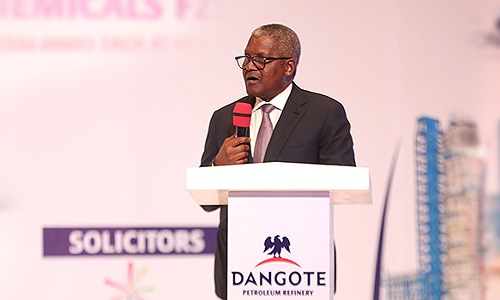
President of Dangote Group, Aliko Dangote, has reaffirmed his commitment to ensuring broad-based participation in the Dangote Refinery’s Initial Public Offering (IPO).
In a statement, the industrialist announced that investors applying with ₦50,000 and below will receive priority consideration as the company seeks to democratize ownership of one of Africa’s most significant industrial assets.
Dangote made the declaration during the final leg of the nationwide IPO roadshow held in Port Harcourt, Rivers State, where investors, financial market experts, business leaders and other stakeholders gathered to discuss the investment opportunity and its implications for Nigeria’s economic transformation.
READ ALSO: Sahara Champions Global Shipping Collaboration for $20m Mercy Ships Healthcare Impact
Speaking at the event, Dangote emphasised that the IPO should be viewed not merely as an investment opportunity, but as a chance for Nigerians to become shareholders in a landmark enterprise that is reshaping the country’s industrial landscape.
“We will prioritise people with ₦50,000 and below,” Dangote stated, underscoring the Group’s determination to make the offering accessible to small and medium-scale investors across the country.
He noted that while international and African investors had already committed substantial capital to the refinery, the IPO now offers Nigerians a rare opportunity to participate directly in the ownership of a world-class industrial project built on Nigerian soil.
According to him, investing in the refinery goes beyond financial returns, representing a vote of confidence in Nigeria’s future, institutional development, corporate governance standards and industrial capacity.
“African investors have invested in this refinery. Now it is time for Nigerians to invest in themselves and participate in a project that is creating value, jobs and opportunities for generations to come,” he said.
Dangote also encouraged prospective shareholders to adopt a long-term investment perspective, noting that participation in the IPO presents a pathway to wealth creation, portfolio diversification and increased public engagement with the capital market.
He added that wider participation in the stock market would deepen financial literacy, promote a savings and investment culture, and enable more Nigerians to better understand how businesses create value and contribute to economic growth.
The roadshow also featured insightful presentations from leading economists and market analysts on the refinery’s economic significance and the broader opportunities associated with the public offering.
Renowned economist Bismarck Rewane highlighted the enormous economic potential of the South-South region and stressed the need to convert the area’s resource endowment into sustainable prosperity, infrastructure development and improved living standards. He also noted that the IPO presents an opportunity to deepen Nigeria’s capital market by encouraging citizens to participate actively in wealth creation.
Similarly, economist Dr. Muda Yusuf outlined the refinery’s far-reaching impact on economic diversification, domestic value addition, energy security, capital formation and employment generation.
According to Yusuf, the refinery represents far more than a petroleum-processing facility, serving as a catalyst for growth across multiple sectors including petrochemicals, packaging, manufacturing, logistics and other downstream industries.
He further emphasized that policy consistency, regulatory stability and sustained stakeholder engagement remain critical to maintaining investor confidence and attracting long-term capital into Nigeria’s industrial sector.
Speaking on the investment outlook, stakeholders urged prospective investors to consider the company’s operational performance, valuation metrics and long-term fundamentals when evaluating the offer.
Yusuf also described the refinery as a major example of domestic value addition, noting that its extensive local content and industrial linkages would significantly amplify its contribution to the Nigerian economy.
Discussions at the event further highlighted the importance of sound monetary policy, affordable financing and a predictable business environment in supporting investment-led growth and industrial expansion.
The Port Harcourt engagement was particularly significant for the South-South region, with legal luminary and business leader Paul Usoro expressing satisfaction at the level of participation from investors across the region.
“My joy is to see the South-South well represented,” Usoro said, stressing the importance of ensuring that investors from the region take advantage of the opportunity presented by the IPO.
The Port Harcourt event marked the final stop of the nationwide IPO roadshow, concluding a series of engagements designed to deepen public awareness and expand participation in what is widely regarded as one of the most significant capital market offerings in Nigeria’s history.
For Dangote Group, the objective remains clear: to provide Nigerians from all backgrounds with an opportunity to participate in the ownership of a transformative industrial enterprise while contributing to economic growth, employment generation and national development.
Sahara Energy Geneva has highlighted the power of business collaboration to deliver lasting impact, with Mercy Ships Cargo Day celebrating more than $20 million raised over the past decade to support healthcare interventions in Africa.
More than 500 guests from over 150 shipping and trading companies gathered in Geneva recently for the 10th anniversary Gala of Mercy Ships Cargo Day, celebrating a decade of industry support for the international charity.
David Walker, Head of Chartering at Sahara Energy Geneva and Chairman of the Cargo Day Geneva Committee, joined industry leaders at the event, where he thanked the global shipping community, sponsors, media partners and Cargo Day committees in Geneva, London, Houston, Dubai and Singapore for supporting the initiative.
Cargo Day brings together charterers, shipowners, shipbrokers, and other shipping professionals who contribute through pledges, cargo commissions, and address commissions to support the work of Mercy Ships.
READ ALSO: 30 Nigerians Bag Postgraduate Scholarship from NNPC Ltd, Eni
Kola Motajo, Director, Sahara Geneva said Sahara’s involvement reflects the company’s belief in the ability of enterprise and partnerships to deliver impact beyond business.
“At Sahara, our focus is always on impact and lives transformed. Cargo Day demonstrates what is possible when businesses and individuals unite around a shared purpose. The $20 million milestone reflects the collective commitment of the global shipping community to improving healthcare in Africa. As Sahara looks Beyond XXX, we remain committed to building connections that create lasting value and possibilities for generations to come,” Motajo said.
Reflecting on Cargo Day’s growth, Walker said: “Ten years ago, we raised $300,000 and there were 70 people at the Gala. Today, we have more than 500 people coming from around the world to support such a great cause.”
Cargo Day 2025 raised more than $2.5 million, with 93 companies participating, including charterers, brokers, shipowners, and other partners.
Mercy Ships operates two hospital ships supporting patients in Africa with free life-changing surgeries, while also providing training and mentoring for local healthcare professionals. Cargo Day funding contributes to expenses associated with operating the hospital ships.
The 2026 Cargo Day campaign begins November 4 and will run through November and December, with companies participating through Mercy Cargoes, address commissions and pledges.

Up to 30 Nigerian graduates have bagged postgraduate scholarships to pursue further studies both locally and in the Diaspora.
According to the Nigerian National Petroleum Company Limited (NNPC Ltd) and Italian energy company, Eni have awarded postgraduate scholarships
The beneficiaries emerged from more than 3,000 applicants following assessments of their academic records and performances in a recently conducted computer-based test (CBT).
The awards are under the 2026/2027 Postgraduate Scholarship Scheme of Nigerian Agip Exploration Limited (NAE), an Eni subsidiary, on behalf of the NNPC-NAE Production Sharing Contract (PSC) partners.
In a statement, NAE’s Vice Chairman and Managing Director, Maurizio Pinna, said the initiative was designed to develop local talent and equip young Nigerians with skills relevant to the oil and gas industry. Pinna congratulated the beneficiaries, noting that the scholarships would enable them to pursue their academic ambitions and achieve their career goals.
According to NAE, the programme reflects its commitment to education, innovation and capacity building in Nigeria.
The company urged the beneficiaries to make good use of the opportunity by acquiring valuable knowledge and skills that would contribute to national development, particularly in the energy sector.
Ten of the awardees will undertake postgraduate studies in universities abroad, including Imperial College London, Robert Gordon University in Aberdeen, Newcastle University, the University of Aberdeen and the University of Hull in the United Kingdom.
READ ALSO: Navy Recovers 98,000 Litres of Suspected Stolen Crude in Rivers
The remaining 20 beneficiaries will study at Nigerian universities in fields including engineering, geosciences, petroleum and environmental technology, energy economics, renewable energy and energy transition.
Established in 2007, the NNPC-NAE PSC postgraduate scholarship scheme is part of the partners’ human capital development programme aimed at promoting specialised knowledge and addressing skills shortages in Nigeria’s deep offshore oil and gas operations.
NAE said 380 Nigerian graduates had benefited from the scheme since its inception, gaining knowledge and skills required by the oil and gas industry.
Beyond education, Eni, through NAE, has implemented sustainability initiatives in Nigeria covering healthcare, access to water, infrastructure and community empowerment.
Eni has operated in Nigeria since 1962 and currently has an equity production of about 55,000 barrels of oil equivalent per day. The company also holds a 10.4 per cent stake in Nigeria LNG.
NAE was incorporated in 1996 to manage Eni’s deep offshore exploration and production assets. It became the first oil and gas company in Nigeria to produce oil from the country’s deep offshore when its Abo floating production, storage and offloading (FPSO) vessel began operations in 2003.
The company has interests in nine offshore blocks in Nigeria, either as operator or co-venturer, including PML 102 and PML 103, where the Zabazaba-Etan fields are being developed.






Small Investors Take Centre Stage as Dangote IPO Nears Close
Sahara Champions Global Shipping Collaboration for $20m Mercy Ships Healthcare Impact

30 Nigerians Bag Postgraduate Scholarship from NNPC Ltd, Eni

2027: ‘Algorithms Will Not Decide Election Results’, INEC Chairman Declares

Navy Recovers 98,000 Litres of Suspected Stolen Crude in Rivers

DPRP’s Appeal Against Fuel Import Licence Ruling Earns Stakeholder Backing

Trump’s Family Unveils New Cryptocurrency Platform

Senate Denies Receiving Petitions Against Tinubu’s Ambassadorial Nominees

Dangote Cement Lights Up Benue Host Communities With CSR Initiatives

Reps Recommend 3-year Jail Term For Aviation minister

Tems Sets New Record On Billboard Hot 100 Chart
