
NEWS
CBN Sets Limits On Contactless Payments

The Central Bank of Nigeria (CBN) has implemented a new regulation that imposes a daily limit of N50,000 on contactless payments conducted through bank accounts or digital wallets.
In addition, the apex bank has also set a maximum transaction amount of N15,000 for contactless payments.
The Central Bank of Nigeria (CBN) made the official announcement through a circular titled “Transaction Limits on Contactless Payments” and signed by Mr. Musa Jimoh, the Director of Payment System Management Department at the CBN on Tuesday.
The statement reads “Following the issuance of the Guidelines on Contactless Payments in Nigeria and in cognisance of the risks associated with contactless payments, the Bank hereby defines transaction limits above which verification and authorisation are required.
“Transaction limits for contactless payments through accounts/wallets in Nigeria shall be as follows: Transaction limit maximum amount is N15,000 and daily cumulative limit maximum amount is N50,000.
“Higher-value contactless payments are transactions that exceed the above stated limits and shall require appropriate verification and authorisation.
“For these transactions, existing Know Your Customer (KYC) requirements and limits on the electronic payment channels shall apply.
“Limits above this stipulated daily cumulative limit shall be conducted using contact-based technology. Please be guided accordingly.”
According to the ‘Guidelines for Contactless Payments in Nigeria’ also issued yesterday, by the CBN, “Contactless technology is a technology that enables an alternative payment method whereby payment instruments are used without physical contact with devices. Contactless technology in payments provides easy, convenient, and efficient cashless options for users.
It added: “Examples of contactless payment instruments include pre-paid, debit and credit cards, stickers, fobs, wearable devices, tokens and mobile electronic devices. Contactless-enabled payment terminals interact with contactless payment devices to facilitate payments.”





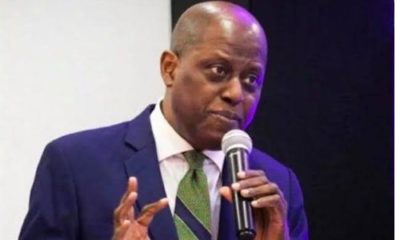


The Nigerian media industry has been thrown into mourning following the sudden death of Dotun Oladipo, the Managing Director and Chief Executive Officer of Premium Eagle Media Limited, publisher of Eagle Online.
Oladipo died on Tuesday, August 25, 2026, in Lagos, at the age of 56.
His death was announced on the Eagle Online website on Wednesday, with the publication stating that the veteran journalist was in his “usual state of health earlier in the day before suddenly taking ill at his office.”
ALSO READ: Ondo Shock: 23-Year-Old Son Allegedly Hacks 60-Year-Old Mother to Death
The publication described his death as a “shock” to his colleagues, friends and associates.
According to report, Oladipo reportedly drove himself to an unnamed hospital hours before his death.
His death was confirmed by the President of the Guild of Corporate Online Publishers, Danlami Nmodu, who announced the development on the guild’s WhatsApp platform.
“It has just been confirmed that Emeritus President, Mr Dotun Oladipo, died today.
“May his soul rest in peace. Amen,” Nmodu stated.
The General Secretary of the Innovative Media Partners Cooperative Multipurpose Society, Nkanu Egbe, also confirmed the death in a statement on Wednesday.
“It is with profound sorrow that I announce the sudden death of our President, Mr Dotun Oladipo, who passed away on Tuesday, August 25, 2026, in Lagos, at the age of 56,” Egbe said.
Egbe described Oladipo as a dedicated leader whose journalism career spanned nearly three decades.
“Mr Oladipo led our cooperative with dedication, alongside a distinguished journalism career spanning nearly three decades. His passing is a devastating loss not only to IMPCMS but to Nigerian journalism as a whole.”
He said details of the funeral arrangements, condolence visits and interim leadership would be communicated in due course, while urging members to keep Oladipo’s family in their prayers.
Reacting to the development, the presidential candidate of the African Action Congress, Omoyele Sowore, described Oladipo as a
“complete gentleman, accomplished digital journalist and remarkable human being.”
“Dotun Oladipo has passed away. My heartfelt condolences to his family, friends, colleagues, and the entire community of digital journalists in Nigeria.
“May Dotun Oladipo rest in power!” Sowore wrote.
Oladipo was a former politics editor at PUNCH Newspapers and also worked with the Nigerian Tribune, Nigerian Compass and The Sun before founding Eagle Online.
He was a former president of the Guild of Corporate Online Publishers and was regarded as a prominent figure in Nigeria’s digital journalism industry.
Oladipo obtained a Higher National Diploma in Mass Communication from Ogun State Polytechnic, Abeokuta, in 1992.
The German Embassy in Nigeria has warned Nigerians against relying on information provided by self-styled visa agents when seeking German visas.
The embassy issued the warning on Wednesday in a post on its official X account, urging prospective visa applicants to obtain accurate information directly from official sources.
“Beware of misinformation. Save yourself the hassle & just ask us directly,” the embassy stated.
SEE MORE: Tinubu Moves to Grant Visa-Free Entry for Rwanda
The mission also asked Nigerians to share claims they had heard from “visa agents” in the comments, saying it would respond to some of the claims in subsequent posts.
“Tell us some of the things you’ve heard from ‘visa agents’ in the comments, and we’ll answer in upcoming posts,” it added.
The embassy further clarified that it has no partnership with visa agents.
“We do not work with any ‘visa Agents’!” the German mission stated.
It added that all relevant information concerning visa applications and procedures is freely available through its official website.
The warning comes amid the circulation of potentially misleading information about German visa requirements and application procedures.
The embassy urged Nigerians to verify visa-related information through official channels to avoid unnecessary expenses, confusion and possible fraud.
Prospective applicants seeking to travel to Germany are therefore advised to rely on information from the German Embassy and other authorised German government platforms rather than unverified claims from third-party agents.

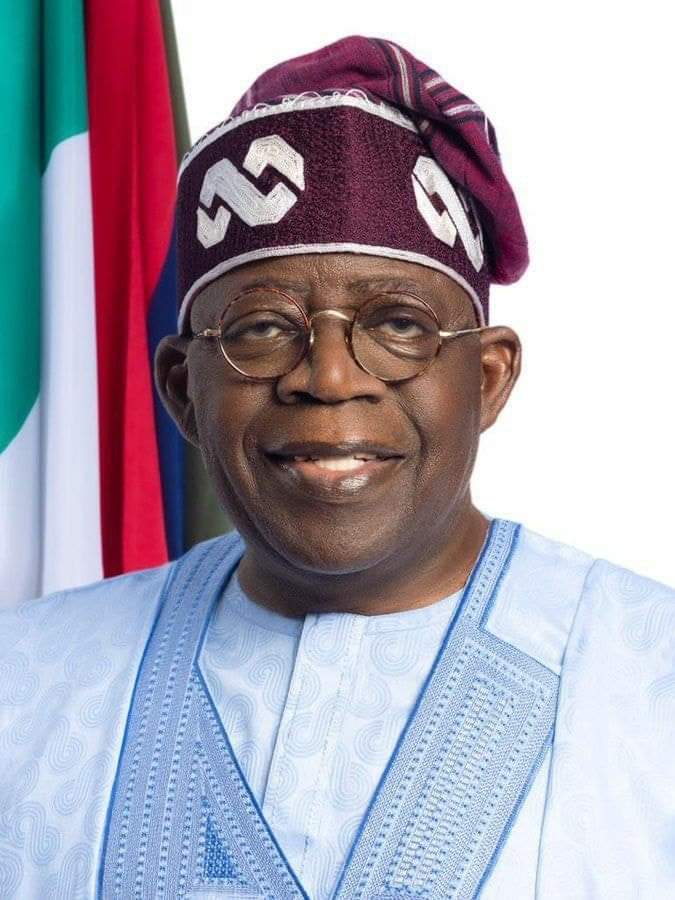
The umbrella body representing the host community of the Kolmani oil field in Bauchi State, the Pali Development Association (PDA), has expressed disappointment with the Nigerian government’s political statements on the proposed exploration activities at the site.
The PDA cautioned the government at the centre against using the Kolmani oil exploration project as a political campaign tool ahead of the 2027 general elections, instead they want firm steps for immediate remobilisation for the project.
The chairman of the association, Hashim Pali, made the call on Tuesday while reacting to the verification visit to the oil field by the Revenue Mobilisation, Allocation and Fiscal Commission (RMAFC).
Pali said the people of Bauchi State and the North-East would welcome any genuine commitment towards the resumption and completion of exploration activities at Kolmani, but stressed that the government must demonstrate its commitment through action.
He said, “As a member of the host community, it is indeed a welcome development because we welcome any genuine commitment towards the resumption and completion of the oil exploration activities at Kolmani.
“We consider it necessary to state clearly that the people of Bauchi State and the North-East will welcome any genuine commitment.
“But we cannot continue to be treated as an electoral audience because we understand that it is an election period.
“We look at it as a promise presently made because the election is approaching. We have had promises before.”
READ ALSO: Dangote Raises Petrol to N1,200/l Despite Crude Price Decline
According to him, President Bola Tinubu made commitments concerning the continuation of the Kolmani oil exploration project during his 2023 presidential campaign in Gombe State.
Pali said the host community had expected the Tinubu administration to sustain the momentum of the project after assuming office, but lamented that exploration activities were eventually halted and equipment evacuated from the site.
He said, “Our expectation and the expectation of the people of Bauchi State and the entire North-East was that upon the assumption of President Bola Tinubu into office, his administration would sustain the momentum and ensure that the project proceeded towards actual exploration and production.
“But unfortunately, after the administration assumed office, rather than witnessing the expected continuation and acceleration of the development of the project, the Kolmani site stopped.
“They evacuated all the equipment there. All the machines and equipment brought there for the work have been taken away. For more than three years in office, the people have watched and waited to see what will happen at the site.
“Now, as the country approaches another election cycle, we are once again being told that the Federal Government is interested in remobilising the project. What happened to the last three years?
“It is only now that the government is interested? No. We have to ask so many questions and continue to demand answers.”
Pali questioned why the project was allowed to lose momentum after the President assumed office and why renewed assurances were being made as another electoral season approached.
He said, “Why was the project allowed to lose momentum after the President’s administration came to office? We are very sure that all the votes he gathered from Bauchi and the North-East were as a result of these promises.
“Why should the people of Bauchi and the North-East have to wait until another electoral season before hearing fresh assurances about a project that was already presented to them as a priority in 2023?
“Now you want to still bring it as a priority in 2027. What did you take us for? We therefore wish to state unequivocally that this time the people must demand action rather than promises.”
The association chairman said Kolmani should not be treated as an electoral slogan, describing it as a strategic economic project capable of generating employment, infrastructure, energy, revenue and broader economic development.
Pali added, “Kolmani is not a campaign property. It is not an electoral slogan that will be repeated anytime when the election comes.
“It is not a project to be remembered only when politicians require our votes. It is a strategic economic project with potential to contribute significantly to employing thousands or even millions of people, bringing about infrastructure, energy, security, governance, revenue and the economic development of not only Bauchi or Gombe State, but the entire country.
“We therefore call on President Bola Tinubu and the Federal Government to move beyond statements and verification visits and demonstrate concrete commitment through immediate remobilisation, sustained funding and transparent timelines.”
The Chairman of RMAFC, Muhammad Bello, led a delegation on Monday on a verification visit to the Kolmani oil field in Bauchi State, where he pledged to facilitate the remobilisation of exploration activities at the site.
Bello said the commission visited the site to assess the current state of the project and advocate for its continuation, describing it as important to Bauchi State, the North-East and the country.
He said, “We want the momentum of the project that was started in 2023 to return. We want to come and verify for ourselves what is going on so that we can advocate for this project, this important project, to continue, so that the people of the North-East of Nigeria can further benefit.
“We know for a fact that Mr President is very much concerned as far as this project is concerned. We know that he has assured the two governors that there will be mobilisation for the project to continue.”
The RMAFC chairman said the commission would assess the project and report to relevant authorities to support efforts to revive exploration activities.
He added, “We will go back after assessing what type of project this is and what is going on. We will continue to follow it because we operate by committees, and we will be looking at oil and gas.”
In his remarks during the visit, the Bauchi State Commissioner for Natural Resources, Maiwada Bello, said exploration activities at the site stopped around July 2025.
He described the project as important not only to the host community but to Nigeria as a whole.
Maiwada said, “I can recall in the year 2024 we were here with your team to assess the progress, to assess how this project was ongoing then. And I can recall when we came here; actually, there were no activities.
“I think you came around December 2024. Shortly after you left, between January 2025 and somewhere around June 2025, work resumed.
“But around July 2025, we received news from the host community hosting this location that they called for new operations and that the company was demobilising.”
The commissioner explained that he collaborated with the Commissioner of Energy and Mineral Resources in Gombe State to form a joint team that visited the site.
According to him, the team met with the technical personnel of the company handling the project and engaged them on the development.
He said they were informed that the demobilisation was based on a directive from a higher authority.
Maiwada added that the development was reported to the governors of Bauchi and Gombe states, who subsequently engaged the President on the matter.
He said, “I can recall His Excellency, our governor, collaborated with the North-East governors and met with His Excellency, the President of the country, and complained to him about this project.
“I can also recall that Mr President promised that work would resume as fast as he could. But as I am talking to you, even though we are here today, since then we have never visited and never got any updates about the progress of this project again.”





Shock as Eagle Online Publisher Dotun Oladipo Dies Suddenly at 56
‘Beware of Misinformation’ — German Embassy Warns Nigerians Over Visa Agents

Host Community Angry at FG’s Political Undertones on Kolmani Oilfield

Dangote Raises Petrol to N1,200/l Despite Crude Price Decline

US Hails DPRP as Nigeria’s Petroleum Exports Surge Seven Times

NUPRC Sets Payment Deadline for 37 Oil Blocks

Trump’s Family Unveils New Cryptocurrency Platform

Senate Denies Receiving Petitions Against Tinubu’s Ambassadorial Nominees

Dangote Cement Lights Up Benue Host Communities With CSR Initiatives

Reps Recommend 3-year Jail Term For Aviation minister

Tems Sets New Record On Billboard Hot 100 Chart
