Gas
Change of guard at NLNG as Tony Attah takes over from Babs Omotowa

Yemie ADEOYE
PORTHARCOURT-A change of guard has occurred as the Board of Directors of Nigeria LNG Limited (NLNG) today approved Tony Attah as successor to Babs Omotowa, Managing Director and Chief Executive Officer, who after nearly five years at the helms of affairs of NLNG will be returning to Shell International in the Hague, Netherlands.
This was contained in a statement issued by the company and signed by its spokesman Kudo Eresia-Eke, a copy of which was made available to Biztellers via electronic mail.
 Omotowa leaves Nigeria LNG Limited in a stronger position and well positioned for the next chapter of the company’s growth. He will take great pride and satisfaction in his numerous achievements including consolidating the company’s position as a reliable supplier of LNG and major player in the global LNG market, restarting the Train 7 expansion program and with NLNG becoming ranked as the number one home-grown company in Nigeria.
Through sheer courage, integrity and transparency, he brought back credibility into the relationship with government at a very crucial time in the Company’s history, and his principled stand on payment of taxes yielded the now famous “Government bailout funds”. During his tenure at Nigeria LNG Limited, the company earned in excess of $40billion in revenue and returned over $22billion to Nigeria in dividend, taxes, feedgas purchases, etc. The company under his watch became the highest corporate tax paying organisation in Sub-Sahara Africa, and a major contributor to the Nigerian economy.
The company under his leadership secured $1.6 billion financing for the construction and delivery of six very modern Dual Fuel Diesel Electric (DFDE) vessels, setting a new ground breaking standard for Nigerian Content; with the training of 600 Nigerians in ship construction and repairs, ensuring Nigerian companies, for the first time, export $10 million worth of goods and services to Korea for the ship building, and facilitating a dry dock project by a Nigerian consortium.
From expanding and deepening domestic LPG market to building ultra-modern engineering laboratories across the country, launching of $1 billion NLNG Vendors Financing Scheme, providing Bonny Kingdom with a 25 year master plan and N3 billion yearly contribution for development, etc, Omotowa initiated several programmes that have garnered attention as both national and international models. This is in addition to his securing N60 billion support of the Board to part fund the Bonny-Bodo Road linking Bonny Island to the mainland as part of the company’s CSR initiative
Omotowa, who joined NLNG with a well-deserved reputation as a turnaround expert from his previous work in Europe, focused on improving the company’s operations through cost leadership management, assets rejuvenation, organisation culture alignment, change management, commercial creativity, innovative supply chain and procurement management and human capital development. These programmes made NLNG not only more profitable but a strong brand with great momentum that can sustain its competitive advantages for years to come.
A tireless campaigner for high Health, Safety and Environment (HSE) standards, Omotowa achieved over four years without fatality, Zero Lost Time Injury Frequency (LTIF) and a record of over 35 Million LTI free man-hours. Not surprising, as Vice President in Shell, he led a similar effort that drastically minimised fatalities in the company.
The Chartered Institute of Procurement & Supply (CIPS) in 2014 appointed Omotowa as its Global President for 2014/2015. In selecting Omotowa for the role CIPS’ Global Board of Trustees said his appointment was based on self-recognition and his strong contributions to global procurement and supply governance and practice.
Omotowa who was appointed Chief Executive Officer of Nigeria LNG Limited by the NLNG Board in December 2011 will be sorely missed for his uncommon vision, professionalism, compassion and commitment.
His successor, Tony Attah will be taking over from Omotowa after returning from an assignment at Shell’s Group Integrated Gas business as Senior Projects Advisor, working on projects in The Netherlands and Singapore. He was Managing Director of Shell Nigeria Exploration and Production Company (SNEPCo) before then.
He comes to NLNG with a 28 year experience in the Nigerian oil and gas industry. A trained mechanical engineer and an MBA holder, Attah started his career in Sokoto Cement Company as a Maintenance and Operations Shift Supervisor.
He joined Shell Petroleum Development Company (SPDC) in 1991, working in various technical and management roles in Field Maintenance, Production Operations, Core Engineering and Major Projects Commissioning, Rotating Equipment Engineering etc. He was also once Head of Joint Venture Economics in Commercial.
Between 2005 and 2007, Attah managed the Soku Gas Plant as Asset Superintendent and Operations Manager of the initial NLNG gas supply as well as NLNG Train 3 construction works.
He oversaw the operation-readiness of other petroleum and natural-gas production projects in Sub-Saharan Africa and the start-up of a liquefied-natural-gas extraction system north of the Russian Pacific island of Sakhalin as the Regional Manager Operations Readiness and Assurance – Account manager for EPG Africa projects and Russia Sakhalin OR&A.
In 2009, he was appointed General Manager Western Location & Sustainable Development – External Focus; and in 2010, he became the Vice President (VP), Health Safety, Environment, Sustainable development & Corporate Affairs including Communications, Crisis and Reputation Management.
In 2013, he was appointed the Vice President HR Shell Sub Saharan Africa, maintaining the business competitive edge through talent development, resourcing and providing support to the business.
In 2014, Attah assumed the position of Managing Director of Shell Nigeria Exploration and Production Company (SNEPCo), in addition to his role as VP HR. He was responsible for SNEPCo’s offshore business integration and leadership, and managing a network of external and internal stakeholder.
He is a champion for social performance and sustainable development and has an impressive record of building relationships with various levels of governments in the Niger Delta, as well as with more than a thousand local communities.
At NLNG, Attach will be responsible for sustaining NLNG’s top quartile performance in supplying LNG to the global energy market and advancing the company’s expansion programmes.
NLNG is owned by four shareholders, namely, the Federal Government of Nigeria, represented by the Nigerian National Petroleum Corporation, NNPC (49%), Shell Gas BV, SGBV, (25.6%), Total LNG Nigeria Limited (15%), and Eni International (N.A,) N. V. S. a. r. l (10.4%).

Announces ambitious expansion plans
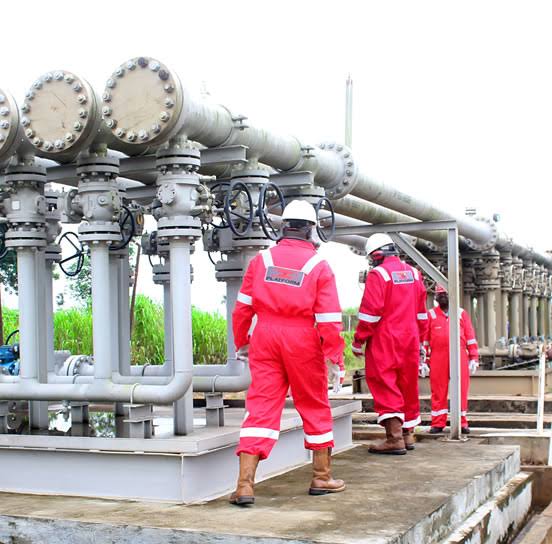
Platform Petroleum says the company is targeting a billion-dollar investment as it announces an ambitious strategic plan to bring 3 marginal fields into production by 2025, with a target of 10,000 barrels of oil and at least 50 billion standard cubic feet of gas per day.
Speaking on the sidelines of the 2024 Offshore Technology Conference (OTC) in Houston, USA, Chief Dumo Lulu-Briggs, Chairman of Platform Petroleum said that the company has scheduled a roadshow in London this June 2024 to raise extra funding to finance their ambitious expansion plans.
“The upcoming roadshow aims to attract equity partners and prepare for future opportunities, targeting a billion-dollar investment. We are seeking partners ready to invest in Nigeria’s oil and gas potential.
Our goal is to showcase the country’s vast opportunities and its potential to international investors” Lulu-Briggs said.
Platform Petroleum’s roadshow in London will highlight the company’s efficient production, upgraded flow stations, increased capacity, and achievements in nearly zero emissions.
With about one percent gas flare currently, Platform aims for zero gas flares by the last quarter.
“Nigeria is a vast market, and Platform Petroleum is thinking big. With the government’s ambitious plans, such as the Lagos-Calabar coastal line, Platform is poised for growth; pushing itself to the next level, building on a strong foundation and following Seplat’s successful precedent”, Lulu-Briggs said.
Despite being a small company, he emphasized that Platform Petroleum has demonstrated significant success and efficiency, showcasing that smaller oil and gas entities can indeed achieve remarkable feats adding that he believes that the company deserves recognition and more assets.
“Platform Petroleum is ambitious, aspiring to become a tier-1 company akin to international oil companies (IOCs) or a tier-2 company like Seplat. Interestingly, Seplat originated from Maurel & Prom, Shebah Petroleum, and Platform Petroleum, and today stands as a major player in the industry.
This history underlines Platform’s potential for substantial growth”, Lulu-Briggs said.
Furthermore, the Platform Petroleum Chairman said that the Offshore Technology Conference (OTC) is a crucial event for promoting Nigeria’s significant market potential.
“Partnering with the Petroleum Technology Association of Nigeria (PETAN) at OTC is key to attracting investment. The current proactive government understands the necessity for economic growth, and Platform is prepared to leverage every opportunity in the oil and gas industry to contribute to this expansion”, he concluded.
Precious ADELOLA
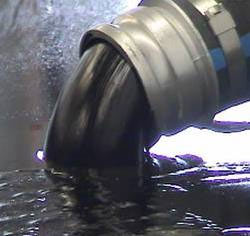
The NNPC/Aiteo Joint venture has announced the introduction of Nembe Crude Oil Grade, a new crude oil grade into the international crude oil market.
The announcement of the Nembe Crude Oil Blend, produced by Aiteo, the Operator of the NNPC/Aiteo Oil Mining Lease (OML) 29 Joint Venture (JV), was made at the ongoing Argus European Crude Conference in London, on Tuesday.
OML 29, an asset located onshore Nigeria, is operated by Aiteo Eastern Exploration & Production Ltd, Africa’s leading indigenous hydrocarbon producer, following a historic acquisition from Shell in 2014.
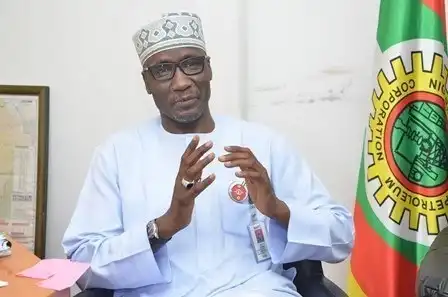
NNPCL Boss, Engr. Mele Kyari
The Nembe Crude was previously blended with the popular Bonny Light grade and exported via the Bonny Oil & Gas Terminal.
The unique selling point of the Nembe Crude Oil grade with an API gravity was highlighted by both the Aiteo E & P and NNPC Limited Leadership at the Argus Conference in London.
The Nembe Crude Oil grade also has a low sulphur content and low carbon footprint due to flare gas elimination, fitting perfectly into the required spec of major buyers in Europe.
Two cargoes of 950,000 barrels each of the Nembe Crude Oil grade have since been exported to France and the Netherlands. With its attractive Assay of API 29 and low sulphur content, the Nembe Crude Oil grade commands a premium to the global Brent benchmark.
With the NNPC-Aiteo OML 29 JV back on-stream, Nigeria now boasts of an additional crude oil export of 2 Cargoes at 950,000 barrels each per month and 1.2 Bcf of export gas monthly.
This remarkable achievement signals the commencement of activities at Nigeria’s newest crude oil terminal, the Nembe Crude Oil Export Terminal (NCOET), which was licensed in line with the extant laws and Crude Oil Terminal establishment regulations.
The terminal was conceived as a Floating Storage and Offloading Vessel (FSO) with a storage capacity of two (2) Million Barrels and the ability to offload crude oil to any export tanker from AFRAMAX to Very Large Crude Carriers (VLCC).
It has a loading capacity of 25,000 barrels per hour and will be exporting over 3.6 million barrels of Crude oil monthly at full scale of operation.
Currently, hydrocarbon production from OML 29, which was hitherto constrained due to evacuation challenges owing to the security issues around the Nembe Creek Trunk Line (NCTL) corridor, has now been resolved through a collaborative and creative approach that led to the innovation of the Alternative Crude Oil Evacuation Solution.
The Argus European Crude Conference 2023 in London is a gathering of energy majors, refiners, NOCs, traders, financial institutions, and other representatives from across the global oil markets. The event also provides a critical opportunity for business leaders to connect, discuss, share and learn from one another.

Modupe Asudo
Major players in the oil and gas sector in Nigeria led by the Nigerian National Petroleum Company Limited (NNPCL) have covenanted to optimise operations by reducing contracting cycle to not more than 180 days.
A statement issued by the company disclosed that the Memorandum of Understanding (MoU) to this effect was endorced on Monday in Abuja at the company’s head office.
Other parties to the the contract include, the Nigerian Content Development and Monitoring Board, (NCDMB) and international oil companies.
Biztellers reports that an optimised contracting cycle was expected to improve the ease of doing business, reduce cost and drive efficiency, which would eventually translate to production growth, increased revenues, and ultimately improved profitability.
In addition, the MoU was expected to contribute significantly to the double-digit economic growth rate agenda of the Federal Government and generate value for all stakeholders, including investors, companies, host communities and Nigeria.
Notable elements in the framework of the MoU, going by the statement, included a reduction of the contracting cycle for open competitive tender, selective tender, and single sourcing tender to 180, 178, and 128 working days respectively.
This was in contrast with the current best effort performance of 327, 333, and 185 working days respectively.
According to Group Chief Executive Officer, NNPCL, Mele Kyari, signing the agreement portends exciting times for Nigeria’s oil and gas industry, in addition to standing as a bold testimony that the company was plunging into the future of hope, productivity and success.
Kyari, represented at the occasion by Executive Vice President, Upstream, NNPCL, Oritsemeyiwa Eyesan, pointed out that with oil and gas as the bedrock of Nigeria’s economy, there was need to get the contracting process in the Industry right so as to get the economy back on track.
In his remarks, Executive Secretary, NCDMB, Simbi Wabote, described the MoU as a way forward and a critical step towards enhancing the nation’s crude oil production.





Christmas: Shettima Assures Of FG’s Commitment To Citizens’ Welfare

Obi’s Inspiring Christmas Message Of Hope For Women’s Football

Yuletide: Adeleke Rejoices With Christians

Archbishop Martins Champions Clamour For Better Life For Nigerians

Tinubu Sends Hearty Christmas Greetings To Christians Worldwide

Olamide, Tiwa Savage, Phyno, Others Dazzle Fans At Flytime Music Festival 2024

OSSG Raises Alarm Over Murder Plot By APC Chieftain

NCC, SMEDAN, NAICOM, SEC, Others Set for SUPERNEWS SMEs Conf June 13
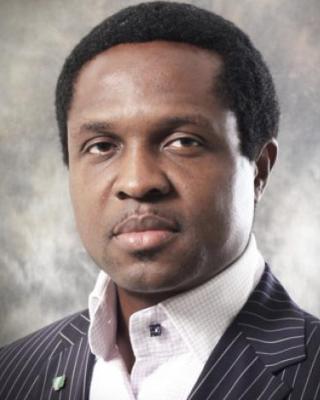
Sahara’s Tonye Cole resigns from GPHCDA

Niger Delta Avengers: President Buhari Reads riot Act …considers the carrot and stick option

Oando opens ultra-modern petrol station in Lagos