
Business
China Cinda IPO Raises $2.5 Billion

HONG KONG — China Cinda Asset Management Co. raised US$2.5 billion in Hong Kong’s biggest initial public offering of the year, as investors piled into a “bad bank” that benefits from rising levels of soured loans in the country.
Cinda, which buys bad debt from banks and companies, priced its IPO at 3.58 Hong Kong dollars (46 U.S. cents), at the top end of an indicative range, after receiving more than US$65 billion in orders. The listing, the first in Hong Kong by a Chinese distressed-asset-management company, displaces Sinopec Engineering Group Co. 2386.HK 0.00% ‘s US$1.8 billion IPO as the city’s largest this year.
A rising stock market helped spur demand: The benchmark Hang Seng 0011.HK -0.79% Index, while down Thursday, has been benefiting from a return of funds into China stocks, which dominate the city’s stock market. It is up 2% in the past month, good for third in the region behind China’s Shanghai Composite Index, up 4.5%, and Tokyo’s Nikkei, up almost 7%.
But Cinda’s success is unlikely to be replicated throughout the market, say investors. Another IPO that priced Thursday, Qinhuangdao Port Co.’s US$561 million offering, priced at the low end of its IPO price range.
“The IPO market has been improving recently but it doesn’t mean all companies would do well,” said Linus Yip, chief strategist at First Shanghai Securities Ltd. in Hong Kong. “Only companies with unique business model and bright prospect would attract investors who are still selective in investing new offerings.”
Cinda offers uniqueness, as probably the first state-owned bad bank to list in a business usually dominated by hedge fund. The success of Cinda, which benefits as bad loans grow, will make the pending IPO by midtier Chinese bank China Everbright Co Ltd. less of a surefire success, say investors.
Already listed in Shanghai. Everbright Bank 601818.SH 0.00% has tried twice before to list in Hong Kong. In its latest effort, seeking up to US$2.8 billion, Everbright Bank plans to start taking orders Tuesday, having set a price range of HK$3.86 to HK$4.30, or 3.03 yuan to 3.38 yuan, for its sale of 5 billion shares. Its planned Dec. 20 listing would follow IPOs in past month by two other smaller Chinese banks, Bank of Chongqing Co. and Huishang Bank Corp. 3698.HK +0.56% —all going public as rising bad-debt levels loom in China.
Even if Everbright Bank prices at the top end of the range, Hong Kong is far short of regaining the crown it held for 2009 through 2011 as the world’s top IPO venue. Investors grew wary after a string of new listings underperformed the broader market. The Cinda and Qinhuangdao offerings pushed Hong Kong’s IPO volume for 2013 to US$15.6 billion, but that is good enough only for fourth place, according to Dealogic—behind the New York Stock Exchange, which has raised US$40 billion, Nasdaq and the London Stock Exchange.
Cinda sold 5.3 billion shares at HK$3.58, people familiar with the situation said Thursday. The indicative range was HK$3 to HK$3.58.
There was significant interest from investors seeking exposure to a company benefiting from China’s growing bad debts. The approximately US$65 billion in orders—according to other people familiar with the situation earlier—was 26 times what the company sought.
About US$20 billion in orders was received for the portion of the IPO offered to retail investors, initially about 5% of the 5.3 billion shares. That means it was oversubscribed by 160 times; the prospectus calls for the retail allotment to be raised to 20% of the total offering if the retail portion is more than 100 times oversubscribed. The shares available to institutional investors, who ordered about US$45 billion worth of shares, will be scaled back to 80% from 95%.
Even before the IPO was launched, 44% was sold to so-called cornerstone investors, which commit to holding their shares for at least six months after the listing. Among them were hedge fund Och-Ziff Capital Management Group OZM +0.79% LLC and private-equity firm Oaktree Capital Group LLC. .
Qinhuangdao Port, which is controlled by Hebei provincial government, sold 829.9 million shares at HK$5.25 each, people familiar with the situation said Thursday. The indicative range was HK$5.25 to HK$6.70.
Of the six companies to raise more than US$200 million in Hong Kong since October, just two companies are trading at least 5% above their IPO prices, according to Dealogic. Phoenix Healthcare Group Co., which raised US$220 million in November, is up 58% and real-estate developer Hydoo International Holding Ltd., which raised US$216 million, is up 9.8%.
 The performance of the newly listed Chinese bank has been disappointing amid rising bad debt. Bank of Chongqing is down 2.7% from its IPO price, while Huishang Bank is up a bare 1.4%. Nonperforming loans in Chinese banking sector at the end of September totaled 564 billion yuan ($92.6 billion), up 18% from the year-earlier 479 billion yuan, according the China Banking Regulatory Commission, the country’s banking regulator
– WALL STREET JOURNAL

The persistent war between the United States and Iran, and the recent attacks on Saudi Arabia’s oil infrastructure continue to mount pressure on the global crude oil market, pushing prices northwards.
While the hostilities have disrupted crude shipments, the attacks on Saudi Arabia’s oil infrastructure by Iran-backed Houthis have added a new vent to an already longsuffering global energy market.
With the escalation resulting in higher crude prices, Nigeria would see herself earning more from her crude exports, while the citizens would bear the brunt, as she imports refined products and sells at commercial rates, owing to the deregulation of the market.
Already, petrol prices have climbed to N1,500/litre in some parts of Nigeria, with Lagos being the cheapest at N1,395/litre.
Cries from businesses and households crescendoed this week when pump prices of petrol were jacked up with no hope of an imminent fall.
For consumers around the world, the consequences are already becoming visible.
Higher crude prices feed into the cost of petrol, diesel, aviation fuel, transportation and industrial production.
Diesel is particularly important because it powers trucks, generators, agricultural machinery and other equipment across many economies.
Brent crude, the international benchmark, climbed above $108 a barrel yesterday after Saudi Arabia suspended operations on its strategic East-West Pipeline following attacks in the Riyadh and Madinah regions.
The pipeline is a critical alternative route for Saudi crude, particularly at a time when shipments through the Strait of Hormuz have been severely disrupted by the conflict. Although prices eased slightly on Tuesday, after new data showed an unexpected rise in United States crude inventories, the retreat did little to remove the underlying supply concerns. Brent, which Nigeria’s crude is benchmarked on, gained more than $3 in the previous session.
According to experts, Nigeria, as a major crude oil producer, stands to receive higher export earnings when international oil prices rise, provided production and export volumes are maintained.
Higher prices could strengthen government oil revenues and foreign-exchange inflows. But the benefits, experts note, are not automatic.
READ ALSO: Gas Industry Must Commercialise Methane – NLNG
The country also imports refined petroleum products and remains exposed to international energy prices through the wider economy.
Higher crude prices can, therefore, improve government revenue while simultaneously increasing costs for businesses and households.
The impact will also depend on domestic crude production, refinery output, exchange-rate movements and the volume of oil Nigeria actually exports.
Reuters reported that Saudi Arabia had been rerouting roughly four million barrels per day through the pipeline, equivalent to about four per cent of global oil supply. The closure therefore immediately raised concerns among traders about how much crude could continue reaching international markets if the disruption persists.
The crisis has also affected Saudi Arabia’s Yanbu export hub.
Oil loadings at Yanbu were suspended following the attack, while Saudi Arabia reduced shipments to Europe. The development sent physical crude prices sharply higher as refiners competed for alternative supplies.
That is where the current oil crisis differs from an ordinary price rally.
The market is not reacting to one isolated disruption. Several important links in the global oil supply chain are being threatened at the same time.
The Strait of Hormuz, one of the world’s most important oil chokepoints, has experienced a dramatic reduction in traffic since the war began.
Before the conflict, more than 20 million barrels of oil and petroleum products passed through the strait each day, representing more than one-fifth of global oil consumption.
With shipping through the waterway heavily disrupted, Saudi Arabia had increasingly turned to its East-West Pipeline as a way of keeping exports moving.
That alternative has now been hit.
The Red Sea route is also under pressure. Iran-aligned Houthi forces in Yemen have intensified attacks around the Red Sea and the Bab el-Mandeb, another strategic maritime passage connecting the Red Sea to the Gulf of Aden.
The result is a complicated squeeze on global energy supplies: the traditional route through the Strait of Hormuz is severely disrupted, while an important Saudi alternative through the Red Sea is also facing attacks.
The longer this situation continues, the greater the pressure on oil inventories and alternative suppliers.
The International Energy Agency has previously warned that prolonged disruption to Middle Eastern supplies could create a significant global shortfall. The present crisis has, therefore, raised questions about how long strategic stockpiles and alternative routes can cushion the market.
For countries that import large quantities of petroleum products, a prolonged period of crude prices above $100 could therefore translate into renewed inflationary pressure.
For the global economy, the biggest danger is not simply that Brent has crossed $100.
It is that a prolonged conflict could remove more barrels from the market at a time when alternative supply routes are themselves becoming vulnerable.
Yesterday’s fall in crude prices following the unexpected 7.1 million-barrel increase in US crude inventories provided temporary relief. Saudi Arabia has also begun offering additional crude shipments through Oman’s Sohar port, helping to ease immediate fears of a complete supply squeeze. But the fundamental risk remains.
If attacks continue to hit Saudi infrastructure, shipping through the Strait of Hormuz remains restricted and Red Sea routes become increasingly unsafe, the world’s oil market could face a prolonged supply squeeze.
That would make the Middle East conflict not just a geopolitical crisis, but a global economic problem with the price of every barrel increasingly determined by the safety of the roads, pipelines and seas through which it must travel.
Veteran journalist and strategic communication professional, Paul Nwabuikwu, has reflected on Nigeria’s troubled history, present realities and enduring possibilities in his latest book, “The Pain and the Promise”: Insights and Fragments on Nigeria and People, Public and Personal (1990–2025).
Nwabuikwu spoke on Tuesday in Yenagoa, Bayelsa State, during the fifth edition of the Nigerian Content Development and Monitoring Board (NCDMB), Book Reading Programme, held at the Conference Centre of the Nigerian Content Tower.
In his opening remarks, the NCDMB Executive Secretary, Engr. Felix Ogbe, represented by the General Manager, Corporate Communications Division, Dr. Obinna Ezeobi, said the Book Reading Programme reflected the Board’s mandate of capacity building, creating opportunities and enhancing the intellectual capacity of Nigerians to enable them contribute to national development.
READ ALSO: Gas Industry Must Commercialise Methane – NLNG
His word: “This book reading event reflects our belief and value in reading, in learning, and in continuous exchange of ideas. Knowledge, you know, plays an important role in personal growth, in professional development, and national progress.
“Books give us the opportunity to learn from the experience of others, question familiar ideas, and engage issues from different perspectives. Over the years, and of course last year and even the year before, we have organized this book reading event to enhance meaningful conversations with authors and thought leaders.
“At the NCDMB, our mandate, is not only about oil and gas, not only about developing capacity, not only about trying to increase Nigeria being a more oil and gas industry, but also we also support businesses. We develop institutions.
“We also create opportunities for Nigerians to participate meaningfully in the energy sector. And we also enable literature. We enable thought processes. We enable people to also enhance their intellectual capacities, which is why we are organizing this book reading program.
“For this reason, our commitment to human capacity development extends beyond technical and professional skills. We must continue to encourage a culture of learning. We must read widely, think critically, and engage with ideas.
“We are proud and pleased that this initiative provides a platform to celebrate Nigerian authors and intellectuals whose work contribute to national conversation, because Nigerians we have important stories to tell.”
Nwabuikwu, while discussing the book, said his experience as a newspaper columnist had shaped his humanist approach to writing, particularly his determination to provide context and depth to issues.
He said much of the writing contained in the book was his response to events that occurred during the period covered by the publication, from 1990 to 2025.
Explaining the title, “The Pain and the Promise,” Nwabuikwu said the “pain” reflected the difficulties Nigerians encounter in their daily lives, while the “promise” represented the possibilities that still exist within the country
He said: “Everybody is a story, everything you see in this world is a story, we are all stories. So the kind of writing I do is the one that captures different types of stories. And what I try to do throughout my career is not to forget the human story.”
The event was attended by members of the Association of Nigerian Authors (ANA), Bayelsa State chapter, the Nigerian Institute of Public Relations (NIPR), and the Nigeria Union of Journalists (NUJ), alongside academics and university undergraduates.
Excerpts from topical chapters of the book were read at the event and followed by question-and-answer sessions with the author and signing of autographs by the author.
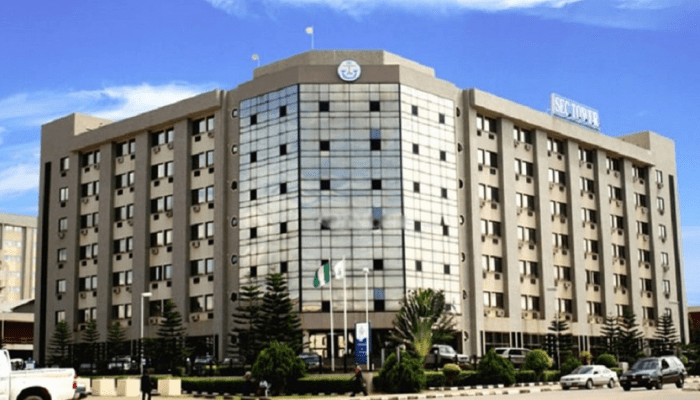
With members of the public showing much zeal to take up the equities made available by the Dangote Petroleum Refinery and Petrochemicals (DPRP), in its Initial Public Offering (IPO), financial institutions have warned against the activities of scammers.
On Tuesday, they counselled investors against disclosing sensitive banking information to parties claiming to facilitate the purchase of the refinery’s shares.
This is coming after the IPO drew about N1.5 trillion in subscriptions within the first 6 hours of trade on the floor of the Nigerian Exchange Limited (NGX), signaling extraordinary investor appetite for what could be one of Africa’s biggest share sales after the likes of MTN.
READ ALSO: Smart Filling Stations: NNPC Ltd Assuages Job-loss Worries
The rush by Nigerians to buy shares in the DPRP overwhelmed some local investment and trading platforms, with investors reporting difficulties accessing the apps as the IPO opened last Monday.
The unprecedented demand followed the commencement of the N2.15 trillion share offer by the Dangote Industries Limited (DIL), which sought to sell 4.1 billion shares in the refinery at N525 per share.
Urging Nigerians to participate, Chief Executive, Dangote Industries Limited, Aliko Dangote, assured investors that the public offering presents a compelling opportunity for strong returns and sustainable wealth creation.
Following the announcement, the Securities and Exchange Commission (SEC) in a public statement, cautioned prospective investors to be vigilant and use only approved channels when subscribing to the IPO.
The Commission confirmed that it had approved the refinery’s public offer and urged investors to ensure that all applications and payments are processed exclusively through authorised receiving agents, approved subscription platforms, and designated channels.
In the same vein, banks urged customers to be particularly careful with unsolicited messages, calls and social-media offers promising access to shares or preferential allocations.
They pointed out that legitimate banks will not request highly sensitive information such as a customer’s full card number, personal identification number (PIN), card verification value (CVV) or one-time password (OTP) through unsolicited calls, text messages or online communications.
In a notification sent to its customers, Access Bank, said, “Buying the Dangote Refinery IPO? Remember, Access Bank will never ever ask for your full card number, PIN, CVV or OTP.
If you have shared the above information with anyone, please dial *901*911# to block your account”.
The warning highlights a familiar tactic used by financial fraudsters: exploiting public interest in a major corporate transaction to make fraudulent requests appear legitimate.
Scammers may present themselves as bank officials, investment advisers, brokers or representatives involved in the share offering. They can use official-looking logos, convincing language and references to well-known companies to persuade potential victims that a transaction is genuine.
Banks are therefore advising customers to independently verify investment opportunities before transferring money or providing personal information. Investors should rely on official communications and established financial channels rather than links or contact details supplied through unexpected messages.
The DPRP, one of Africa’s most prominent industrial projects, has generated significant interest in Nigeria’s capital markets and broader business community. Any potential share offering connected to the company is likely to attract considerable attention from retail and institutional investors.
That visibility, however, also creates an opportunity for criminals.
Financial institutions say customers who have already disclosed sensitive banking information should act immediately rather than wait to determine whether their accounts have been compromised. Promptly contacting the bank and taking steps to block or secure an account can help limit potential losses.
The latest warnings also underscore the wider challenge facing Nigeria’s financial sector as digital banking and mobile transactions become increasingly common. Fraudsters have increasingly sought to exploit moments of heightened public interest, particularly when consumers are eager to participate in investments that appear to offer significant returns.
For prospective investors, the message from banks is straightforward, enthusiasm for an investment opportunity should not override basic security precautions.






Terror Threats: Osun Establishes Joint Security Task Force

Shettima Arrives Yola to Condole With Bamanga Tukur’s Family

Middle East Crises Pump Fuel Prices Upwards with Attacks on Iran, Saudi Arabia
NCDMB Book Reading Features Nwabuikwu

Gas Industry Must Commercialise Methane – NLNG

2027: South Should Complete 8 Years Before North Takes Over — Shehu Sani

Trump’s Family Unveils New Cryptocurrency Platform

Senate Denies Receiving Petitions Against Tinubu’s Ambassadorial Nominees

Dangote Cement Lights Up Benue Host Communities With CSR Initiatives

Reps Recommend 3-year Jail Term For Aviation minister

Tems Sets New Record On Billboard Hot 100 Chart