
Politics
Claudia Sheinbaum Makes History As Mexico’s First Woman President

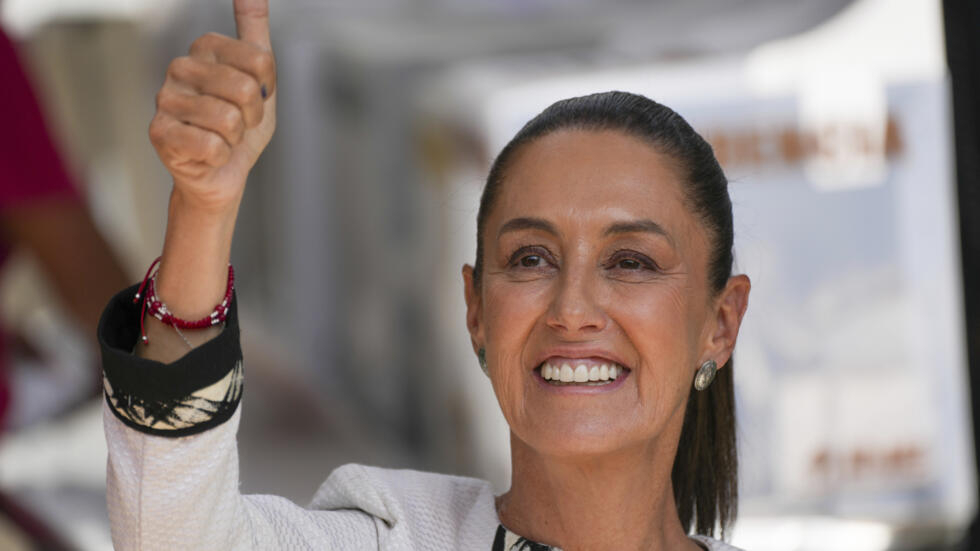
Claudia Sheinbaum was elected Mexico’s first woman president by a landslide Sunday, preliminary official results showed, making history in a country plagued by rampant criminal and gender-based violence.
Crowds of flag-waving supporters sang and danced to mariachi music in Mexico City’s main square celebrating the ruling party candidate’s victory.
The 61-year-old former Mexico City mayor, a scientist by training, won around 58-60 percent of votes, the National Electoral Institute announced after a quick count.
That was more than 30 percentage points ahead of her main opposition rival Xochitl Galvez, and some 50 percentage points ahead of the only man running, long-shot centrist Jorge Alvarez Maynez.
Voters had flocked to polling stations across the Latin American nation, despite sporadic violence in areas terrorized by ultra-violent drug cartels.
Thousands of troops were deployed to protect voters, following a particularly bloody electoral process that has seen more than two dozen aspiring local politicians murdered.
Earlier, Sheinbaum hailed what she called a “historic” election day.
After casting her ballot, she revealed she had not voted for herself but for a 93-year-old veteran leftist, Ifigenia Martinez, in recognition of her struggle.
“Long live democracy!” Sheinbaum declared.
After the polls closed, Galvez urged her followers to closely monitor the count.
“We are competing against authoritarianism and power and they are capable of anything,” said the 61-year-old senator and businesswoman with Indigenous roots.
– ‘Transformation’ –
Mexican women going to the polls had cheered the prospect of a woman breaking the highest political glass ceiling in a country where around 10 women or girls are murdered every day.
“A female president will be a transformation for this country, and we hope that she does more for women,” said Clemencia Hernandez, a 55-year-old cleaner in Mexico City.
“Many women are subjugated by their partners. They’re not allowed to leave home to work,” she said.
Daniela Perez, 30, said that having a woman president would be “something historic,” even though neither of the two main candidates was “totally feminist” in her view.
“We’ll have to see their positions on improving women’s rights, resolving the issue of femicides — which have gone crazy — supporting women more,” added the logistics company manager.
Nearly 100 million people were registered to vote in the world’s most populous Spanish-speaking country, home to 129 million people.
Sheinbaum owes much of her popularity to outgoing President Andres Manuel Lopez Obrador, a fellow leftist and mentor who has an approval rating of more than 60 percent but is only allowed to serve one term.
Reina Balbuena, a 50-year-old street food seller, said she voted for Sheinbaum because the ruling Morena party “has given a lot of support to older adults, to children.”
– ‘Hugs not bullets’ –
In a nation where politics, crime and corruption are closely entangled, drug cartels went to extreme lengths to ensure that their preferred candidates win.
Hours before polls opened, a local candidate was murdered in a violent western state, authorities said, joining at least 25 other political hopefuls killed this election season, according to official figures.
In the central Mexican state of Puebla, two people died after unknown persons attacked polling stations to steal papers, a local government security source told AFP.
Voting was suspended in two municipalities in the southern state of Chiapas because of violence.
Sheinbaum has pledged to continue the outgoing president’s controversial “hugs not bullets” strategy of tackling crime at its roots.
Galvez vowed a tougher approach to cartel-related violence, declaring “hugs for criminals are over.”
More than 450,000 people have been murdered and tens of thousands have gone missing since the government deployed the army to fight drug trafficking in 2006.
The next president will also have to manage delicate relations with the neighboring United States, in particular the vexed issues of cross-border drug smuggling and migration.
As well as choosing a new president, Mexicans voted for members of Congress, several state governors and myriad local officials — a total of more than 20,000 positions.
– AFP











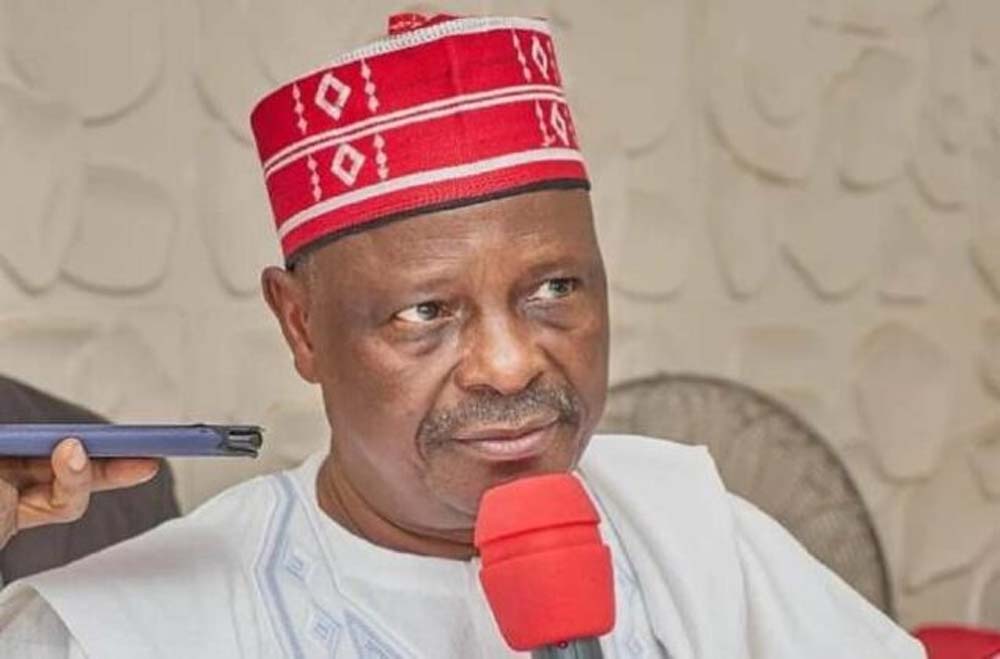
Rabiu Musa Kwankwaso, running mate to Peter Obi on the Nigeria Democratic Congress (NDC) presidential ticket, has rejected allegations by the African Democratic Congress Presidential Campaign Council (ADC-PCC) that he is working to advance President Bola Tinubu’s political interests ahead of the 2027 general election.
Kwankwaso stated this in a post on his X account on Sunday, insisting that the NDC would not withdraw from the presidential race in favour of the ADC or any other political party.
He described the attacks directed at him, Obi and the NDC as unnecessary, accusing the ADC campaign council of attempting to undermine his party instead of presenting its own candidate’s credentials to Nigerians.
SEE MORE: Peter Obi Slams Tinubu Over ₦7.7tn Debt Interest Against ₦6.2tn Revenue
“The attacks directed at me, our presidential candidate His Excellency Peter Obi, and our party, the Nigeria Democratic Congress (NDC), are unnecessary and unhelpful,” he said.
Kwankwaso alleged that the ADC-PCC was attempting to portray the NDC ticket as working for the ruling All Progressives Congress (APC) and spreading suggestions that the party could withdraw from the presidential contest at the last minute.
“Let me state clearly and unequivocally: we will not withdraw our candidature for the ADC or any other party. We remain confident in our capacity, competence, and readiness to lead Nigeria,” he said.
He also dismissed allegations that the NDC ticket was acting on behalf of Tinubu or the APC.
“The OK ticket is neither working for nor acting on behalf of the APC or any of its candidates,” he added.
Kwankwaso’s statement came amid a dispute with the ADC Presidential Campaign Council over his comments concerning the opposition’s preparations for the 2027 presidential election.
The ADC-PCC had accused him of advancing Tinubu’s political interests after he called on former Vice-President Atiku Abubakar to step aside in favour of Obi.
The campaign council argued that Kwankwaso should focus on challenging the ruling APC rather than directing his attention towards other opposition figures.
It also alleged that his position could deepen divisions among opposition parties and undermine efforts to defeat Tinubu in the next general election.
The ADC-PCC’s criticism prompted Kwankwaso to defend his political intentions and reject suggestions that he was working to weaken the opposition or facilitate the ruling party’s electoral prospects.
Responding to the allegations, Kwankwaso argued that the ADC offered no better alternative to the ruling APC, insisting that the NDC presented a credible option for Nigerians seeking political change.
“The APC-led government has failed Nigerians. The ADC offers no better alternative,” he said.
He described the NDC presidential ticket as a viable option backed by competence, credibility, a strong track record and support across Northern and Southern Nigeria.
According to him, the ticket is committed to uniting the country and addressing challenges in security, education, agriculture, infrastructure, healthcare and the economy.
Kwankwaso also maintained that the NDC remained the country’s most formidable and viable opposition party.
He urged supporters and other Nigerians to remain committed to the party’s electoral campaign.
“I therefore urge all our supporters and well-meaning Nigerians to continue working toward the victory of our great party,” he said.
He concluded with the assurance: “Nigeria will be OK.”
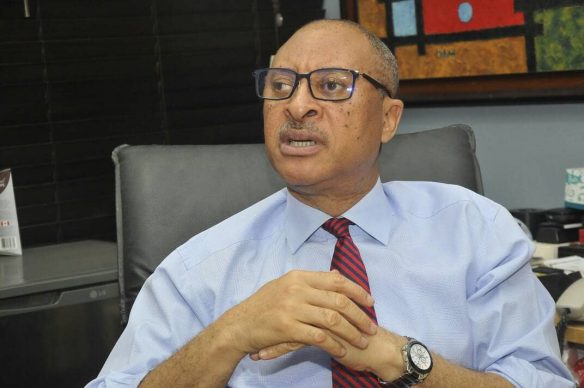
Political economist and former presidential candidate, Pat Utomi, has blamed election-related judicial decisions for the declining public perception of Nigeria’s judiciary, saying rulings on electoral disputes have contributed significantly to the loss of confidence in the institution.
Utomi said the impact of such decisions was evident in the questions ordinary Nigerians were asking about the judiciary, particularly when court judgments produce electoral outcomes that appear inconsistent with the results initially announced by the Independent National Electoral Commission (INEC).
Speaking in a video, he described election rulings as a major source of the judiciary’s diminishing public standing.
SEE ALSO: 2027: Sowore Disowns Involvement in Utomi-Led Single-Candidate Talks
“Elections and rulings on matters of elections have been the biggest source of the diminishing of the judiciary in Nigeria,” he said.
Utomi recalled visiting a rural community where residents questioned the logic behind judicial decisions determining electoral outcomes.
He cited the 2020 Imo State governorship election, in which the Supreme Court overturned the declaration of Emeka Ihedioha as governor and declared Hope Uzodimma the winner.
According to Utomi, the judgment had become an example cited by citizens questioning the credibility of the judicial process.
“They say to you, this kind of judiciary we have, when you have election, and number four suddenly becomes the winner. Is there any logic in this, your judiciary functions?” he said, recounting the concerns expressed by the residents.
The Supreme Court delivered the judgment on January 14, 2020, declaring Uzodimma of the All Progressives Congress (APC) the winner of the Imo State governorship election and removing Ihedioha of the Peoples Democratic Party (PDP) from office.
The decision generated considerable debate about the role of the judiciary in resolving electoral disputes and its implications for public confidence in Nigeria’s democratic institutions.
Utomi also questioned whether members of the legal profession were concerned about the effect of public perceptions on the dignity of the judiciary.
He challenged lawyers and judges to reflect on the declining respect for the profession and consider what could be done to restore public confidence in the courts.
“Is the legal profession, the bar, the bench, not concerned with the diminishing of… you know, used to be, somebody’s a lawyer in the nineteen fifties, people would say, ‘Wow, lawyer.’ But today people are saying judge,” he said.
He further questioned whether legal practitioners recognised the need to rebuild the judiciary’s reputation.
“Is there no professional sense of a need to reestablish dignity behind the bench?” Utomi asked.
His comments highlight concerns about the relationship between judicial decisions, electoral credibility and public trust in democratic institutions.
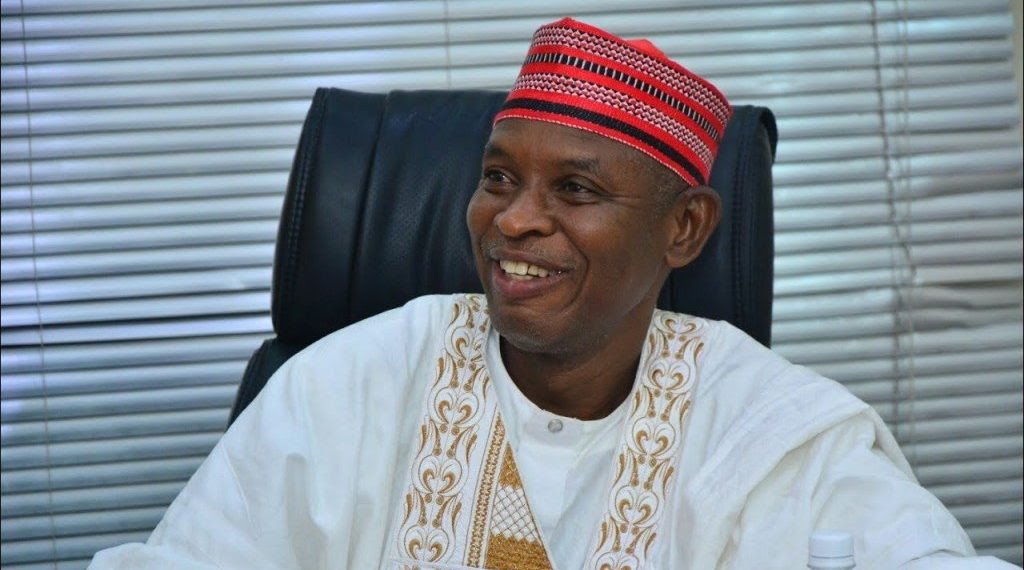
Kano State Governor Abba Kabir Yusuf has declared his support for President Bola Tinubu’s re-election bid in 2027, arguing that the North should respect an alleged power-sharing agreement between northern and southern political leaders.
Yusuf made the declaration at the unveiling of the Arewa for Asiwaju (A4A) National Headquarters in Abuja, where he pledged 100 per cent Northern support for Tinubu in the next presidential election.
SEE ALSO: DPRP’s Free Fuel Delivery Expands to Kano, Imo, Nearly 10 More States
The governor cited an alleged agreement reached in 1999 under which the North and South would take turns to produce Nigeria’s president, with the North allowed to serve two consecutive terms.
He referenced the eight years served by former President Muhammadu Buhari, who governed Nigeria for two consecutive terms before Tinubu assumed office in 2023.
According to Yusuf, the North should respect the arrangement rather than seek to produce another presidential candidate in 2027.
“For me, and for every right-thinking Nigerian, especially for us here in the North, we don’t have any reason, we don’t have any cause to now contribute on that premise, even though not constitutionally,” he said.
“Common sense dictates that we have to respect this mutual agreement.”
Yusuf subsequently declared his support for Tinubu on behalf of the northern states and what he described as patriotic Northerners.
“I therefore, on behalf of all the northern states, on behalf of all Democrats, on behalf of all patriotic northern states, indigenous, we want to assure His Excellency Bola Ahmed Tinubu of our full support one hundred percent,” the governor said.
He also urged members of the All Progressives Congress (APC) to openly support the president and work together towards victory in the 2027 election.
“We have all agreed we are members of the APC, and therefore we must work together to ensure that President Bola Ahmed Tinubu and his vice president emerge victorious,” Yusuf said.
The governor further called on party members to extend similar support to members of the National Assembly, state governors and members of state assemblies.
He congratulated the organisers of the event and wished participants well.






Tinubu vs Obi: Omokri Fires Back at Peter Okoye Over Call to Retire Older Politicians
Kwankwaso Rejects ADC Claims, Says NDC Won’t Withdraw From 2027 Race
‘World Bank’s 124% Debt Interest Figure Misleading’ – Finance Ministry Insists

‘Election Rulings Have Diminished Nigeria’s Judiciary’ – Utomi

NDLEA Arrests 85-Year-Old Woman With 179kg of Cannabis in Edo

Ambakederimo Questions NNPC Over Crude Oil Sales, Upfront Payments

Trump’s Family Unveils New Cryptocurrency Platform

Senate Denies Receiving Petitions Against Tinubu’s Ambassadorial Nominees

Dangote Cement Lights Up Benue Host Communities With CSR Initiatives

Reps Recommend 3-year Jail Term For Aviation minister

Tems Sets New Record On Billboard Hot 100 Chart
