
International News
Court Halts Ramaphosa’s Impeachment Over $580,000 Farm Cash Scandal

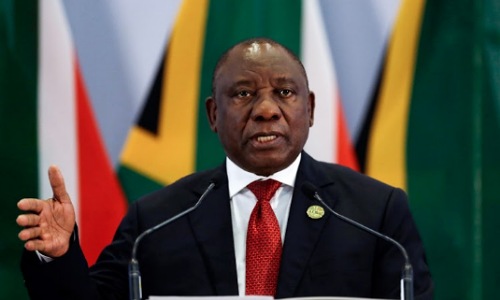
A South African court has ordered a temporary halt to impeachment proceedings against President Cyril Ramaphosa over the controversial $580,000 Phala Phala farm cash scandal, pending the outcome of his legal challenge against an earlier investigative report.
The Western Cape High Court ruled on Friday in favour of Ramaphosa, granting his request to suspend the parliamentary impeachment process while the court reviews a November 2022 independent panel report that concluded the president “may have committed” serious violations and misconduct.
SEE ALSO: 282 Nigerians to Arrive in Lagos Today as FG Continues South Africa Evacuation
In his ruling, Judge Andre le Grange ordered that Parliament’s impeachment committee must not proceed with public hearings until the judicial review has been concluded.
“Pending the determination by this court of the applicant’s review… respondents are interdicted from proceeding with a public impeachment hearing,” the judge ruled.
The controversy dates back to a 2020 burglary at Ramaphosa’s luxury Phala Phala game farm in Limpopo Province, where thieves allegedly stole $580,000 hidden inside a sofa.
Ramaphosa has consistently denied any wrongdoing, maintaining that he reported the break-in to the police and that the money was the legitimate proceeds from the sale of 20 buffaloes.
The complaint was filed by a former South African intelligence chief and one-time ally of former President Jacob Zuma.
The complainant alleged that Ramaphosa concealed the robbery from both police and tax authorities and claimed the amount involved was as much as $4 million.
Despite mounting pressure from opposition parties demanding accountability, Ramaphosa has repeatedly ruled out resigning over the scandal.
Reacting to Friday’s ruling, the South African president reaffirmed his commitment to the country’s constitutional principles and judicial system.
“The President will continue to cooperate with and abide by processes of accountability,” a statement from his office said, adding that he remains committed to respecting the independence of the judiciary and the separation of powers.
The impeachment process had initially been rejected by South Africa’s National Assembly, where Ramaphosa’s ruling African National Congress (ANC) held a parliamentary majority, effectively blocking impeachment proceedings at the time.
Although prosecutors dropped related charges in 2024, the Constitutional Court overturned Parliament’s earlier decision in May 2026, paving the way for the establishment of a parliamentary impeachment committee.
If the impeachment proceedings eventually resume, Ramaphosa would become the first sitting South African president to face such a process.
The High Court is expected to hear his application seeking to overturn the 2022 independent panel report in September.





Federal agents raided the Washington, D.C., home of Democratic Congresswoman Ilhan Omar early Monday morning as part of an ongoing federal criminal investigation, the United States Department of Justice (DOJ) has confirmed.
Homeland Security Investigations agents arrived at the Minnesota congresswoman’s residence at about 6:00 a.m. Eastern Time, according to a report by Fox News.
SEE MORE: Trump Sparks Outrage With Shock Proposal to Rename New Mexico
The report said both the Department of Homeland Security (DHS) and the DOJ are involved in the investigation.
A DOJ spokesperson confirmed the operation, stating: “Today in the Washington, D.C. area, Homeland Security Investigations executed a judicially authorized search warrant secured by the Department of Justice.”
The spokesperson added: “This enforcement action is part of an ongoing federal criminal investigation.”
Details later……….
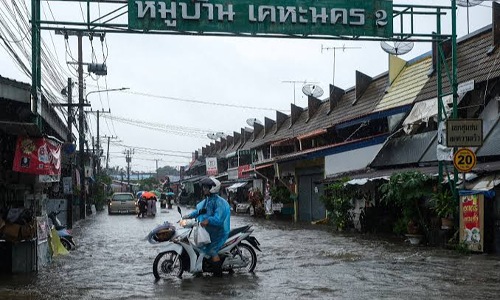
Heavy rains have triggered severe flooding across parts of Bangkok, Thailand, forcing nearly 4,900 residents to evacuate to shelters as floodwaters swept through roads and residential areas.
The flooding has disrupted movement across parts of the Thai capital, with motorists and pedestrians forced to navigate submerged roads and seek alternative routes.
SEE ALSO: NAFDAC Warns Nigerians As Fake Cowbell Milk Floods Market
According to the Bangkok Metropolitan Administration, about 52,000 households have been affected by the flooding, prompting authorities to declare a flood disaster and intensify emergency response efforts.
Emergency teams have been deployed to assist affected communities and move residents from vulnerable areas to safer locations as water levels rise.
Bangkok is accustomed to seasonal heavy rainfall, but intense downpours can overwhelm drainage systems, particularly in low-lying areas, resulting in widespread flooding and disruption.
Authorities are continuing to monitor affected locations while coordinating evacuations and other emergency measures.
For thousands of residents, the immediate priority remains securing safe shelter and protecting homes and livelihoods as authorities work to manage the situation and restore normal activities once the floodwaters recede.
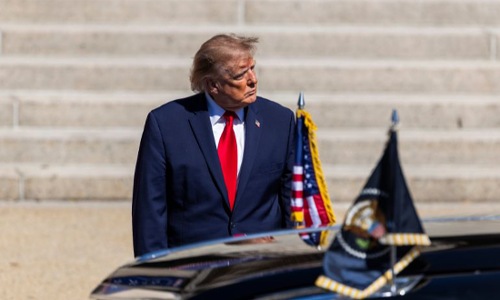
US President Donald Trump has explained his decision to reject Iran’s latest proposal to reopen the Strait of Hormuz, saying Tehran was seeking an agreement because it was losing revenue.
Speaking to reporters at the White House, Trump said Iran wanted to immediately reopen the strategically important waterway but argued that the proposal was not acceptable to his administration.
“They want to make a deal, and I think that’s fine. I like making a deal, too, but that deal would not be acceptable,” Trump said.
SEE ALSO: How the Strait of Hormuz Attack Could Trigger a Fresh Global Oil Shock
According to the US president, Iran’s push to reopen the strait was driven by the economic pressure it was facing.
“What they want to do is immediately open the Hormuz Strait. Do you know why? Because they are dying,” Trump said.
“You know why they’re dying? Because they have no money coming in, because they get their money from the Hormuz Strait.”
Trump also claimed that the US had established an unprecedented naval blockade against Iran, describing it as “a wall of steel.”
“So they outsmarted themselves. We put up the greatest blockade ever in military history. It’s a wall of steel,” he said.
“And guess what? They don’t have any money now because they wanted to close the strait.”
The Strait of Hormuz is a major global energy shipping route, and disruption to traffic through the waterway has significant implications for international oil markets and countries that depend on energy imports.
Trump’s remarks came amid continued tensions between Washington and Tehran over the reopening of the strategic waterway and negotiations involving Iran.






Showunmi Urges South-East to Judge Tinubu by Projects, Not Propaganda

2027: ‘North Has No Reason to Break Agreement’ — Gov Yusuf Backs Tinubu

Aircraft Averts Crash, After Losing Door Mid-Air in Abuja

Bandits Kill 70-Year-Old Man in Katsina, 27 Victims Rescued

‘Nigeria Is Doomed Under Tinubu’ — Kenneth Okonkwo Backs Atiku for 2027

Lagos: LASTMA Announces Traffic Restrictions Along Route to Toll Gate

Trump’s Family Unveils New Cryptocurrency Platform

Senate Denies Receiving Petitions Against Tinubu’s Ambassadorial Nominees

Dangote Cement Lights Up Benue Host Communities With CSR Initiatives

Reps Recommend 3-year Jail Term For Aviation minister

Tems Sets New Record On Billboard Hot 100 Chart
