
International News
How the Strait of Hormuz Attack Could Trigger a Fresh Global Oil Shock

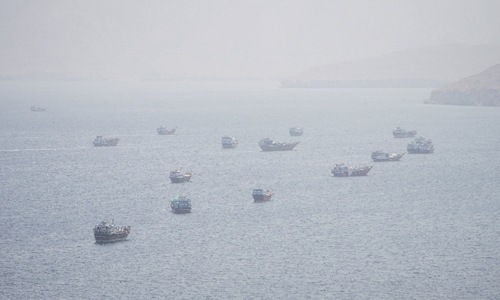
A fresh report of an attack on a vessel in the Strait of Hormuz has intensified fears over global oil supplies, as escalating attacks across the Middle East threaten two of the region’s most important energy and shipping corridors.
The British navy-affiliated United Kingdom Maritime Trade Operations (UKMTO) said early Sunday, that it had received a report of a projectile striking a vessel as it travelled through the Strait of Hormuz.
The latest incident came just a day after Saudi Arabia temporarily shut down its vital East-West oil pipeline following a drone attack, adding another layer of uncertainty to global energy markets.
RELATED NEWS: JUST IN: Iran Blames ‘US Terrorist Enemy’ for Deadly Hormuz Ship Attack
The developments have raised concerns that continued attacks could further restrict oil shipments and push energy prices even higher after Brent crude surged back above $100 a barrel during the past week.
Saudi Arabia Shuts Vital Oil Pipeline
Biztellers report on Saturday that Saudi Arabia announced the temporary closure of its 1,200-kilometre (745-mile) East-West pipeline as a precaution after a drone attack.
Both Riyadh and Baghdad said the drones originated in Iraq, where Iranian-backed militias operate.
The pipeline has become a critical alternative route for Saudi oil exports because the Strait of Hormuz has been largely shut by the ongoing war.
It has been carrying between 4 million and 5 million barrels of oil per day, equivalent to around 4% to 5% of global oil supply.
The pipeline’s role has helped Saudi Arabia avoid some of the disruption that has hit other Gulf oil and gas exporters.
There was no immediate claim of responsibility for the pipeline attack.
Satellite images showed black smoke rising from an area of the pipeline south of Medina. Saudi Arabia’s Foreign Ministry said the attack caused some injuries and damage that was being assessed, but it did not provide details about the impact on oil exports.
U.S. President Donald Trump said on Saturday that Iran was probably responsible for the attack.
Houthi Attacks Add to Energy Supply Fears
The threat to energy infrastructure is also spreading across the Red Sea.
On Saturday, Saudi Civil Defence said a projectile fired by the Houthis injured two people in the Jazan region and damaged several buildings, including a mosque.
The developments came as the Houthis expanded their offensive along the Red Sea, creating an additional challenge for Washington and increasing concerns about the security of the region’s major energy and shipping routes.
Four Yemeni government sources told Reuters that the Houthis seized the strategic island of Perim on Friday, September 11, in the middle of the Bab el-Mandeb Strait — the “Gate of Tears” at the southern entrance to the Red Sea.
The Houthis have been attacking Saudi ships in the area since declaring a blockade in July and have also targeted other Saudi oil facilities.
Saudi Crown Prince Seeks U.S. Military Help
The widening attacks have also created a difficult decision for Washington over whether to directly support Saudi Arabia against the Houthis and risk expanding the war.
Saudi Arabia’s de facto ruler, Crown Prince Mohammed bin Salman, called Trump on Thursday, September 10, and asked for U.S. military assistance in fighting the Houthis, according to three sources who spoke to Reuters.
The sources said the crown prince was told that Washington would not intervene directly for now but would provide intelligence support.
Trump confirmed on Saturday that he had spoken with the crown prince.
He also said the Houthis had contacted his administration and asked Washington not to become directly involved in the conflict.
Meanwhile, oil prices have climbed sharply during the past week, while the retail price of diesel in the United States surged above a record $6 per gallon.
Iran Plays Down Prospects of Oman Talks
The latest attacks came shortly before planned talks involving Iran and Gulf Arab states in Oman.
Iran’s Foreign Ministry announced on Friday, September 11, that Iran would attend a meeting with Gulf Arab states in Oman on Monday, September 14, where the future of the Strait of Hormuz would be discussed.
However, a senior Iranian official speaking to Reuters on Saturday played down expectations of a breakthrough.
The official said the meeting, which was initiated by Oman, would discuss issues including the Strait of Hormuz but was not expected to produce a signed agreement.
Iranian parliament national security committee chief Ebrahim Azizi also warned that Tehran would not consider negotiations useful unless Washington accepted Iran’s conditions.
“As long as the American side does not accept all of Iran’s conditions, dialogue and negotiation are of no use,” Azizi said in a post on X on Saturday.
A source cited by Iran’s Tasnim news agency said an agreement concerning routes through the Strait of Hormuz between Iran and Oman would be presented at Monday’s meeting.
However, the source said the strait would not reopen unless seven conditions conveyed by Iran to the United States were met, without elaborating on the conditions.
Iran wants its control of the Strait of Hormuz to be recognised, which would allow it to collect fees from ships using the waterway.
Washington rejects that demand.
Oman, which controls the opposite bank of the strait, says it is negotiating with the agreement of other regional states.
Before the war began, ships had free and open passage through the Strait of Hormuz.
Global Oil Market Faces Fresh Pressure
The latest vessel attack report, the death and injuries reported aboard an Iranian commercial vessel, Saudi Arabia’s pipeline shutdown and the expanding Houthi offensive have combined to raise concerns about further disruption to the global energy market.
The 1,200-kilometre East-West pipeline had provided an important alternative route for Saudi oil exports while the Strait of Hormuz was largely shut by the war.
With that pipeline now temporarily closed and shipping through the Strait facing renewed security threats, further disruption could place additional pressure on already-tight oil supplies.
For global consumers and oil-importing economies, the developments create the possibility of higher crude prices, increased fuel costs and broader economic pressure if the disruption continues.









Federal agents raided the Washington, D.C., home of Democratic Congresswoman Ilhan Omar early Monday morning as part of an ongoing federal criminal investigation, the United States Department of Justice (DOJ) has confirmed.
Homeland Security Investigations agents arrived at the Minnesota congresswoman’s residence at about 6:00 a.m. Eastern Time, according to a report by Fox News.
SEE MORE: Trump Sparks Outrage With Shock Proposal to Rename New Mexico
The report said both the Department of Homeland Security (DHS) and the DOJ are involved in the investigation.
A DOJ spokesperson confirmed the operation, stating: “Today in the Washington, D.C. area, Homeland Security Investigations executed a judicially authorized search warrant secured by the Department of Justice.”
The spokesperson added: “This enforcement action is part of an ongoing federal criminal investigation.”
Details later……….
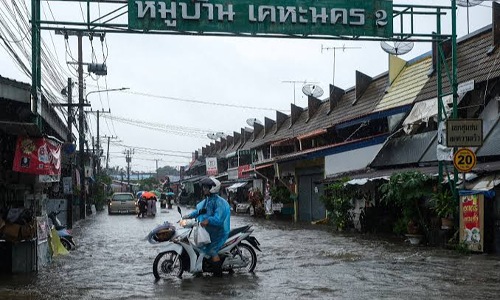
Heavy rains have triggered severe flooding across parts of Bangkok, Thailand, forcing nearly 4,900 residents to evacuate to shelters as floodwaters swept through roads and residential areas.
The flooding has disrupted movement across parts of the Thai capital, with motorists and pedestrians forced to navigate submerged roads and seek alternative routes.
SEE ALSO: NAFDAC Warns Nigerians As Fake Cowbell Milk Floods Market
According to the Bangkok Metropolitan Administration, about 52,000 households have been affected by the flooding, prompting authorities to declare a flood disaster and intensify emergency response efforts.
Emergency teams have been deployed to assist affected communities and move residents from vulnerable areas to safer locations as water levels rise.
Bangkok is accustomed to seasonal heavy rainfall, but intense downpours can overwhelm drainage systems, particularly in low-lying areas, resulting in widespread flooding and disruption.
Authorities are continuing to monitor affected locations while coordinating evacuations and other emergency measures.
For thousands of residents, the immediate priority remains securing safe shelter and protecting homes and livelihoods as authorities work to manage the situation and restore normal activities once the floodwaters recede.
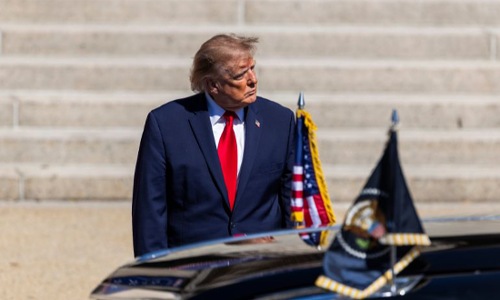
US President Donald Trump has explained his decision to reject Iran’s latest proposal to reopen the Strait of Hormuz, saying Tehran was seeking an agreement because it was losing revenue.
Speaking to reporters at the White House, Trump said Iran wanted to immediately reopen the strategically important waterway but argued that the proposal was not acceptable to his administration.
“They want to make a deal, and I think that’s fine. I like making a deal, too, but that deal would not be acceptable,” Trump said.
SEE ALSO: How the Strait of Hormuz Attack Could Trigger a Fresh Global Oil Shock
According to the US president, Iran’s push to reopen the strait was driven by the economic pressure it was facing.
“What they want to do is immediately open the Hormuz Strait. Do you know why? Because they are dying,” Trump said.
“You know why they’re dying? Because they have no money coming in, because they get their money from the Hormuz Strait.”
Trump also claimed that the US had established an unprecedented naval blockade against Iran, describing it as “a wall of steel.”
“So they outsmarted themselves. We put up the greatest blockade ever in military history. It’s a wall of steel,” he said.
“And guess what? They don’t have any money now because they wanted to close the strait.”
The Strait of Hormuz is a major global energy shipping route, and disruption to traffic through the waterway has significant implications for international oil markets and countries that depend on energy imports.
Trump’s remarks came amid continued tensions between Washington and Tehran over the reopening of the strategic waterway and negotiations involving Iran.






Two Suspected Political Thugs Killed After Attacking NDC Candidate’s Convoy in Ebonyi

Shettima Arrives Maiduguri to Commission Hospital, Schools, 104 Housing Units

Lagos CP Warns Officers Against Extortion, Brutality Ahead of 2027 Elections

‘Show Nigerians Where the Money Is’ — ADC Challenges Tinubu Over ₦10bn Ebola Fund

Nollywood Mourns as Veteran Actor Francis Duru Dies at 57

Why Ebola Outbreaks Keep Returning to Africa, Dr Jean Kaseya Explains

Trump’s Family Unveils New Cryptocurrency Platform

Senate Denies Receiving Petitions Against Tinubu’s Ambassadorial Nominees

Dangote Cement Lights Up Benue Host Communities With CSR Initiatives

Reps Recommend 3-year Jail Term For Aviation minister

Tems Sets New Record On Billboard Hot 100 Chart
