
NEWS
Court Sets Date For Shaibu’s Suit Against Edo Assembly

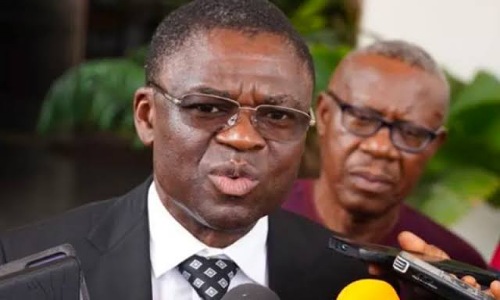
A Federal High Court in Abuja has scheduled a hearing date for a lawsuit initiated by Philip Shaibu, the impeached Deputy Governor of Edo State, against the state’s house of assembly and others.
Filed on March 27, the suit listed the Inspector-General (I-G) of Police and State Security Service (SSS) as the first and second respondents.
Additionally, it included Hon. Justice S.A. Omonua (rtd.), the Chairman, and members of the Panel of Seven Appointed by the 4th Defendant, the Chief Judge of Edo, and Prof. Theresa Akpoghome as the third to fifth respondents.
Shaibu, represented by O.A. Gbadamosi, SAN, also named President Aigbokhian, Oghogho Ayodele Oviasu, and the Edo State House of Assembly as the sixth to eighth respondents, respectively.
In the originating motion on notice, Shaibu sought a declaration asserting that the failure of the 3rd to 8th respondents to afford him a fair hearing during the impeachment proceedings instigated by the 8th respondent was unlawful, unconstitutional, and a blatant breach of his fundamental right to fair hearing, as enshrined in Section 36 of the 1999 Constitution, as amended.
Additionally, he is pursuing a declaration highlighting that the assembly’s neglect to personally serve the purported impeachment notice on him and each member of the House of Assembly, as mandated by Section 188(2) of the 1999 Constitution, constitutes a violation of his right to fair hearing.
He additionally requested a declaration stating that the appointment of the 3rd, 5th, 6th, and 7th respondents as chairman and members of the seven-member investigation panel tasked with probing allegations outlined in a purported impeachment notice against him is marred by a reasonable suspicion of bias and will lead to a breach of his fundamental right to fair hearing, as guaranteed under Section 36 of the 1999 Constitution of the Federal Republic of Nigeria, as amended.
In additionhe sought an order instructing the respondents to refrain from taking any further actions that would infringe upon his fundamental right to fair hearing, as guaranteed under Section 36 of the 1999 Constitution.
In the same vein, he requested an order directing the 3rd, 5th, 6th, and 7th respondents to disqualify themselves from serving as Chairman and members of the 7-Man Investigating Panel appointed by the 3rd respondent, due to the potential bias against him, among other reliefs.
Shaibu provided seven grounds of argument, asserting that until now, he had never been presented with any such notice or allegations of misconduct, abuse of office, or any allegations whatsoever, whether during his tenure as deputy governor or acting governor.
He stated that he had not received any letter or notice as mandated by Section 188(2) of the 1999 Constitution, as amended. Furthermore, he emphasized that the assembly had not granted him any opportunity to respond to any purported allegations, thus lacking any justification for initiating a process aimed at his removal from office as deputy governor.
He said, “The 3rd respondent via a letter dated 25th March, 2024 was appointed by the 4th respondent as the chairman of a panel of seven persons to investigate the allegations contained in a purported impeachment notice, which is yet to be personally served on the applicant.
“The 3rd respondent is a retired judicial officer and community leader from Esan North East Local Government Area of Edo Central Senatorial District, where there is strong clamour against the gubernatorial ambition of the applicant.
“The 3rd respondent appears to have been given the hatchet job of recommending the removal from office of the applicant, in order to weaken his political ambition of becoming governor of Edo State.
“The 4th respondent being a protégé of the 3rd respondent, appointed him as chairman of the Investigating Panel, when other persons he offered the same appointment rejected it, because it was a politically motivated job.”
The case, presided over by Justice Inyang Ekwo, was scheduled for hearing on Friday, following the appearance of a team of lawyers, including Alex Ejesieme, SAN, who attended to request a date for the case.
Despite the suit, identified as FHC/ABJ/CS/405/24, not being listed on the cause list, the defense lawyers attended the court session.
Just before adjourning the session, one of the lawyers informed Justice Ekwo that the matter was initially slated for Thursday but was postponed due to a public holiday, resulting in the court’s non-sitting.
However, Justice Ekwo clarified that he could not preside over a matter not present in the file, instructing them to coordinate with the court registrar for the next adjourned date.
The hearing was subsequently rescheduled for April 19.
Recall that on Monday, Shaibu faced impeachment by the state’s house of assembly following the panel’s finding of guilt on charges of perjury and divulging government secrets.
The retired Justice Omonuwa-led panel commenced its sessions on April 3 in Benin and concluded on April 5, with neither Shaibu nor his counsel in attendance.







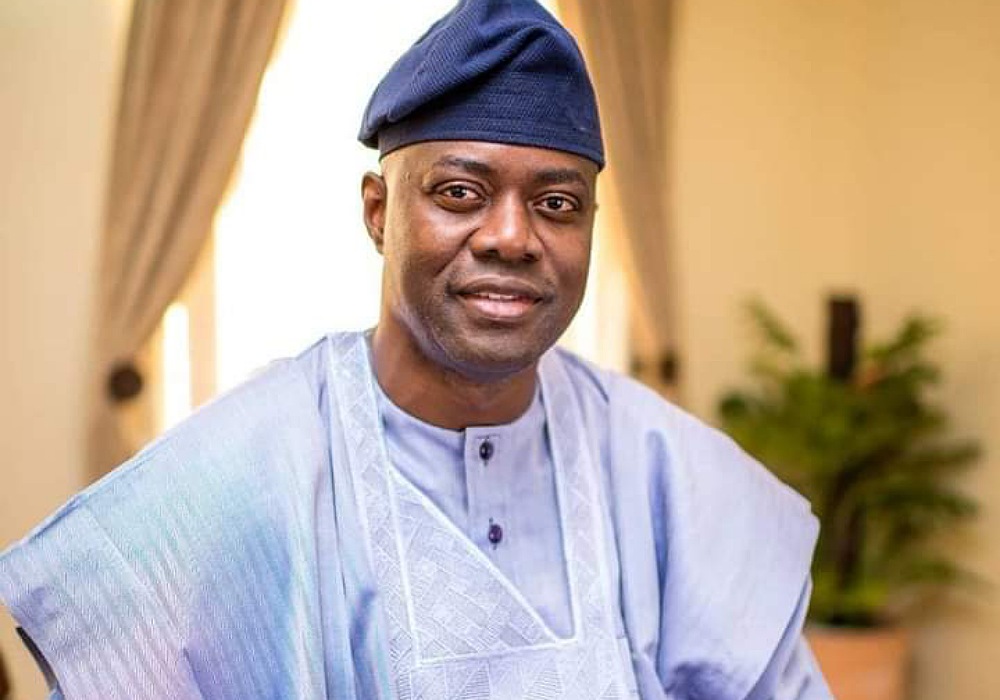
Oyo State Governor Seyi Makinde has challenged the Presidency to explain how Nigeria Liquefied Natural Gas (NLNG) dividends were distributed among states and local governments, insisting that a reconciliation exercise identified a shortfall of about ₦9 trillion.
Makinde’s position was contained in a statement issued on Sunday by his Special Adviser on Media, Dr Sulaimon Olanrewaju, in response to the Presidency’s rejection of the governor’s earlier claims over NLNG dividend payments.
RELATED NEWS: JUST IN: Presidency Rejects Makinde’s Claim of ₦250bn NLNG Dividends for Each State
The statement said the Nigeria Governors’ Forum (NGF), with the support of the Federal Government, engaged a consultant to reconcile NLNG dividend payments, adding that the exercise identified approximately ₦9 trillion allegedly due to states and local governments.
“The exercise identified a shortfall of about ₦9 trillion due to states and local governments. The Federal Government accepted the findings,” the statement said.
The governor maintained that the reconciliation report remained in the custody of both the Federal Government and the NGF.
“The report remains in the custody of both the Federal Government and the NGF. We trust the Presidency will not deny its existence,” the statement added.
The statement also noted that Makinde is the incumbent Vice-Chairman of the NGF.
Makinde Questions $21.5bn NLNG Dividend Payments
The governor questioned the Presidency’s statement that NLNG had paid $21.5 billion in dividends into the Federation Account since its inception, including $3 billion received under the current administration.
According to Makinde, the Presidency’s response did not explain how the payments were distributed or establish the amounts received by states and local governments.
“The Presidency stated that NLNG had paid $21.5 billion in dividends into the Federation Account since inception, including $3 billion received under the current administration. But it did not explain how these funds were disbursed,” the statement said.
The governor also questioned whether states and local governments had received their shares, how much they received and the basis for calculating their allocations.
“Have states and local governments received their shares? How much did they receive, and how were those amounts calculated? What happened to the $3 billion received under this administration?” the statement asked.
Makinde defended the figures he had previously cited, maintaining that his claims were based on verifiable information.
“Governor Makinde conducts public discourse with decorum and does not make unfounded claims or quote figures without a basis,” the statement said.
The governor maintained that he was ready to provide further clarification on the matter while urging the Presidency to address the substance of the allegations.
“We remain ready to provide further clarification while we urge the presidency to address the substance of the matter,” the statement added.
Recall that Biztellers had earlier reported the Presidency’s rejection of Makinde’s claim concerning NLNG dividends allegedly withheld from states and local governments.
The Presidency stated that NLNG had paid $21.5 billion in dividends into the Federation Account since its inception, including $3 billion received under the current administration.
However, in his latest response, Makinde argued that disclosing the total amount paid into the Federation Account did not address how the funds were distributed among the different tiers of government.
The governor is now demanding clarification on the distribution of the dividends and the findings of the reconciliation exercise that reportedly identified the ₦9 trillion shortfall.

The National Association of Nigerian Students (NANS) has threatened to shut down Alex Ekwueme Federal University, Ndufu-Alike (AE-FUNAI), Ebonyi State, if the institution’s management fails to reverse the reported increase in school fees.
The association, in a press release dated Sunday, October 18, 2026, described the reported tuition increment as insensitive, unjustifiable and unacceptable, citing the economic difficulties confronting Nigerian students.
The statement was signed by the NANS President, Dist. Comr. Akinteye Babatunde Afeez, GCNS, who warned that the increase could frustrate the academic aspirations of countless students.
SEE MORE: BREAKING: OAUSTECH Student Akinteye Babatunde Elected New NANS National President
“To be clear, education cannot be commercialised. Students cannot be made to pay for the financial challenges confronting our universities,” the statement read.
NANS acknowledged that universities require adequate funding but argued that their managements, particularly vice-chancellors, should explore innovative revenue-generating opportunities rather than impose additional financial burdens on students.
The association maintained that the Federal Government was investing heavily in education to keep students in school and ensure that access to education was not determined by their financial background or status.
NANS Gives University Management Conditions
The student body warned the vice-chancellor and the entire university management against policies capable of pushing students out of school.
It said the national leadership would not stand by while Nigerian students faced additional financial pressure that could threaten their academic futures.
“Going forward, we wish to make it clear to the Vice-Chancellor and the entire University Management that the National Leadership of NANS will not stand by while Nigerian students are subjected to policies capable of pushing them out of school,” the statement said.
NANS subsequently demanded an immediate reversal of the reported tuition increase and called on the university to restore fees to the affordable and reasonable levels that existed before the increment.
The association warned that failure to meet its demand would lead to a mobilisation of its national leadership to the institution.
“To this end, we call on the management of Alex Ekwueme Federal University to immediately reverse the reported tuition increment and return the fees to the affordable and reasonable level that existed before the increment. Otherwise, we will mobilise the National Secretariat of NANS to Alex Ekwueme Federal University and shut down the school until the fee is reversed,” the statement added.
NANS Reaffirms Commitment to Students
The association reiterated its commitment to defending the interests, welfare and aspirations of Nigerian students.
It pledged to continue speaking firmly against policies that place unnecessary and unbearable financial burdens on students.
NANS maintained that students should not be made to bear the financial challenges confronting universities and called on the management of AE-FUNAI to reverse the reported increase.

Kaduna State Governor Uba Sani has handed over land titles to displaced residents of nine communities in Birnin Yero, Igabi Local Government Area, to enable them to rebuild their homes and regain shelter.
The Kaduna State Ministry of Information and Culture disclosed the development on Sunday, October 18, 2026, describing the exercise as an intervention aimed at helping displaced residents rebuild their homes.
According to the ministry, each beneficiary is being allocated a plot of land to support resettlement and provide shelter for affected residents.
SEE ALSO: Kaduna Moves to Clear 5-Year Promotion Backlog for 24,000 Teachers
“ He is officially handing over land titles, giving each person a plot of land to rebuild their homes and regain shelter,” the ministry’s announcement stated.
The ministry also noted that Governor Sani had continued to support displaced communities across Kaduna State since assuming office.
The latest exercise focuses on nine communities in Igabi Local Government Area, with the allocation of land intended to help affected residents rebuild their homes and regain stability.
The development comes amid previous reports concerning land disputes and displacement affecting communities in Kaduna State.
In September 2026, reports indicated that the Kaduna Geographic Information Service (KADGIS) had resolved more than 5,000 land disputes and restored over 150 property titles.
The agency also reported that alternative plots had been provided to some communities affected by previous demolitions.





APC Campaign Council Sets Inaugural Meeting for Tuesday Ahead of Kaduna Flag-Off

Renaissance Capital Sees Significant Upside in Dangote Refinery, Lifts Valuation by 33.4%

Dangote Refinery IPO Elicits Participation in 90 Countries Globally

Makinde Fires Back at Presidency, Insists on ₦9tn NLNG Dividend Shortfall

‘NELFUND Is Not an Excuse for School Fees Hikes’ – NANS Warns Universities

NANS Threatens to Shut Down AE-FUNAI Over School Fees Hike

Trump’s Family Unveils New Cryptocurrency Platform

Senate Denies Receiving Petitions Against Tinubu’s Ambassadorial Nominees

Dangote Cement Lights Up Benue Host Communities With CSR Initiatives

Reps Recommend 3-year Jail Term For Aviation minister

Tems Sets New Record On Billboard Hot 100 Chart
