
NEWS
Diezani Claims Being Scapegoated over Subsidy at London Court

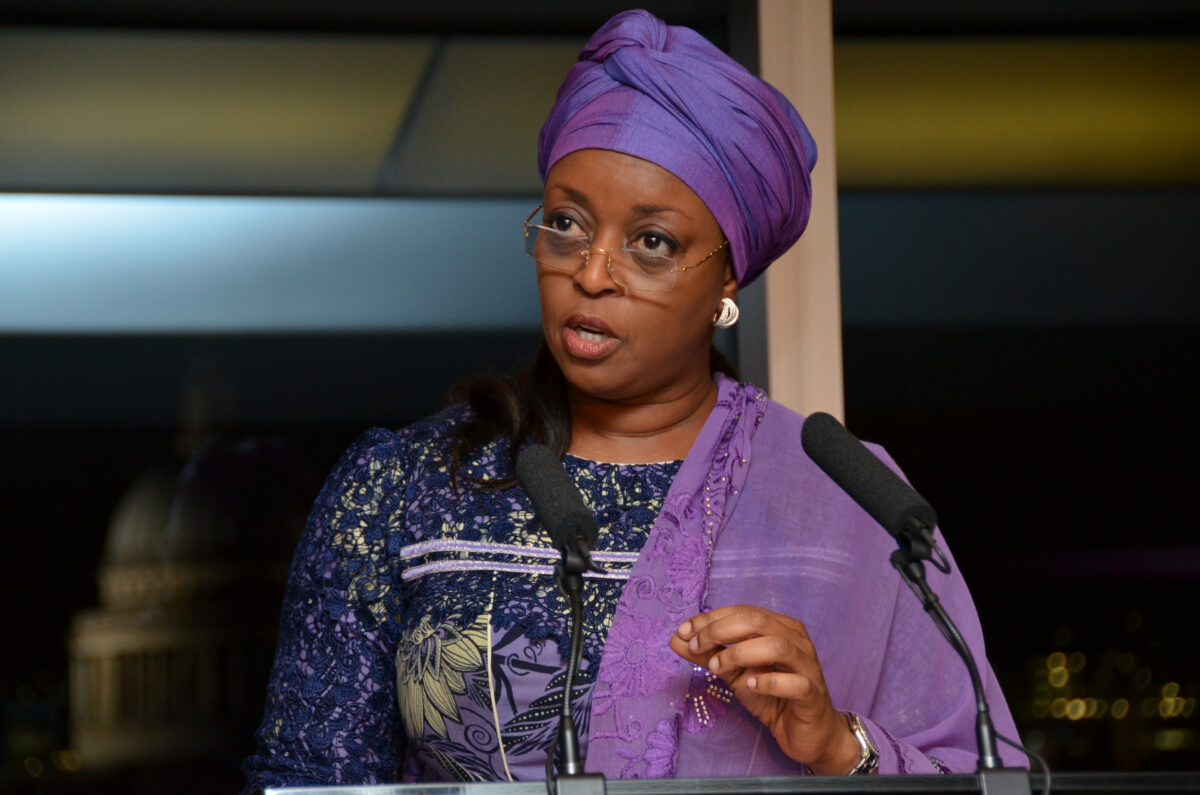
Nigeria’s former petroleum minister, Diezani Alison-Madueke, has submitted that she was irrationally blamed and scapegoated for decisions taken at the highest levels of government, particularly during the fallout from Nigeria’s 2012 fuel subsidy crisis.
She made the assertion when her trial resumed on Day 23 at the Southwark Crown Court in London.
Testifying under cross-examination, Diezani said she felt “betrayed” by the manner in which the subsidy removal was implemented under former President Goodluck Jonathan, noting that the abrupt New Year’s Day announcement triggered nationwide unrest and placed her, as petroleum minister, at the centre of public outrage.
She insisted that the policy had been the subject of prior deliberations and that its sudden execution exposed her to criticism for decisions she did not solely control.
ALSO READ: Tinubu Removes Wale Edun as Finance Minister, Appoints Oyedele
“I felt betrayed to a certain extent,” she said, referring to the decision taken under former President Goodluck Jonathan.
“I felt like a scapegoat because I was ultimately responsible as oil minister.”
Diezani rejected suggestions by the prosecution that she exercised authority over luxury properties allegedly connected to businessman Ben Peters, insisting that her involvement was limited to offering interior design advice.
“I was giving advice, not instructions,” she told the court, pushing back against claims that she directed refurbishment works or controlled the properties in question.
According to her, communications with contractors and intermediaries were purely advisory and did not translate into ownership or decision-making authority.
She further argued that there was no documentary evidence directly linking her to legal ownership of the properties, maintaining that any inference to the contrary was speculative.
On the issue of her alleged use of a property known as Harbour House, she said she did not stay there and, at most, may have visited once.
At several points during the proceedings, Diezani challenged the credibility of witnesses whose accounts the prosecution relied upon.
She questioned the accuracy of a furniture dealer’s testimony regarding payment arrangements and dismissed attempts to identify her through visitor logs under a different name.
“You are implying that the black woman is me, and I’m telling you that I’m not the one,” she said, firmly rejecting the suggestion.
A key plank of her defence was her insistence that she did not improperly benefit from luxury goods.
While acknowledging that she selected furniture and decorative items during the period under review, she maintained that any items used personally were paid for.
“There was always someone to pay at the point of purchase,” she said, explaining that while third parties may have handled payments initially, reimbursements were made in cash.
She told the court that this reflected the realities of Nigeria’s largely cash-based economy at the time.
Diezani also offered explanations for the movement and storage of items cited by the prosecution, describing them as part of a normal interior design process rather than evidence of personal acquisition.
According to her, items were often moved between locations or placed in storage as part of staging and refurbishment decisions.
Addressing allegations of financial benefits flowing through associates to her family, the former minister distanced herself from such transactions and denied prior knowledge of them.
She told the court she was unaware of donations allegedly made to her brother’s church and had no involvement in its affairs beyond attending an award ceremony.
“I was not involved in any way,” she said, adding that her brother never discussed such matters with her.
On payments made by associates for personal or family-related expenses, including school fees, Diezani framed such gestures within the context of Nigerian social norms.
She explained that it was not unusual for wealthy individuals to assist others financially, and that such actions should not automatically be construed as improper.
In one instance, she said her son’s school fees in the United Kingdom were paid by Peters after he overheard a conversation about the issue.
She insisted that the payment was unsolicited and consistent with a culture of generosity.
“We did not ask for it,” she said, maintaining that there was no intention to derive undue benefit.
Diezani also addressed questions surrounding her use of a private jet, which prosecutors suggested reflected extravagant spending.
She maintained that the flight was necessitated by the urgency of the situation in Nigeria at the time of the fuel subsidy crisis.
According to her, she had originally planned to return to Nigeria on a commercial flight but had to leave earlier due to the sudden escalation of unrest.
“We were taken completely by surprise,” she said, explaining that her immediate return was required in response to the deteriorating situation.
Throughout the cross-examination, Diezani frequently stated that she could not recall specific details relating to emails, invoices, and transactions dating back more than a decade.
She attributed these memory gaps to the passage of time and the volume of material presented in court.
“Madam Prosecutor, I cannot possibly answer that question in 2026, after all these years,” she said during one exchange.
The prosecution, however, continues to argue that the pattern of communications, payments, and asset movements forms part of a broader scheme in which Diezani benefited from assets held in the names of others.
Proceedings are expected to continue with further cross-examination as the court examines the competing narratives.









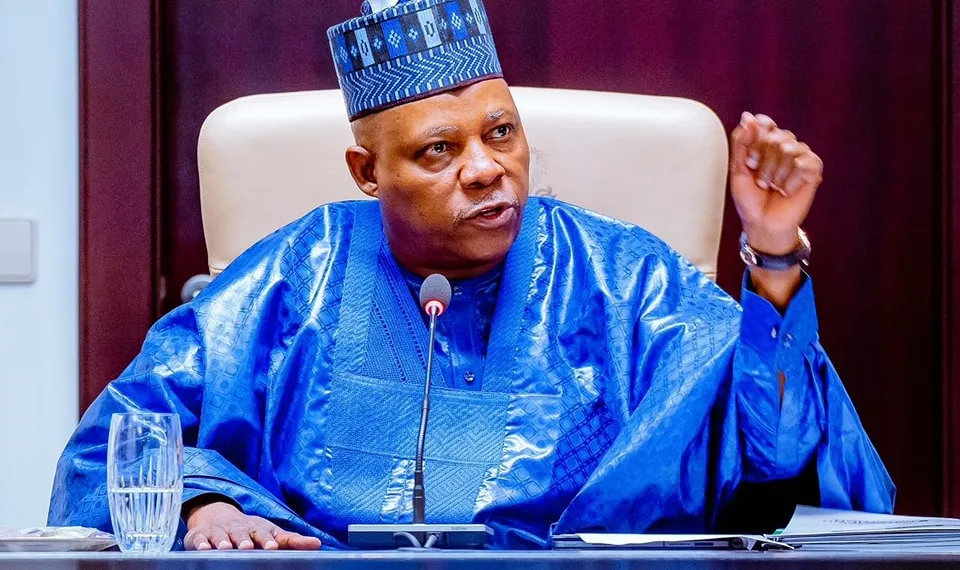
Vice President Kashim Shettima has urged Nigerians to celebrate President Bola Tinubu, saying his leadership saved the country from a potential implosion.
Shettima said Nigeria’s economy had been teetering on the edge of collapse before Tinubu’s intervention, adding that the country could have faced a different situation.
“The economy was teetering on the edge of collapse, we were on a cliff edge,” the Vice President said.
ALSO READ: Subsidy Removal, FX Reforms Driving Fresh Oil Sector Investment – Shettima
“So he literally saved the nation from an implosion. That could have been the scenario. So, instead of demonizing him, Nigerians ought to celebrate this poor man.”
Shettima also called for a return to the drawing board, expressing confidence in the leadership’s commitment and the prospects for the 2027 elections.
“I believe on the bottom of my heart that with this presentation I have seen, and with the commitment of our leadership, by the grace of God, we are going to win,” he said.
Speaking about the 2027 elections, the Vice President reminded his audience that social media platforms should not be mistaken for actual polling stations.
“There are no polling stations on Facebook or Instagram,” he said.
Shettima also expressed gratitude for the efforts made towards promoting the cause of the 2027 elections.
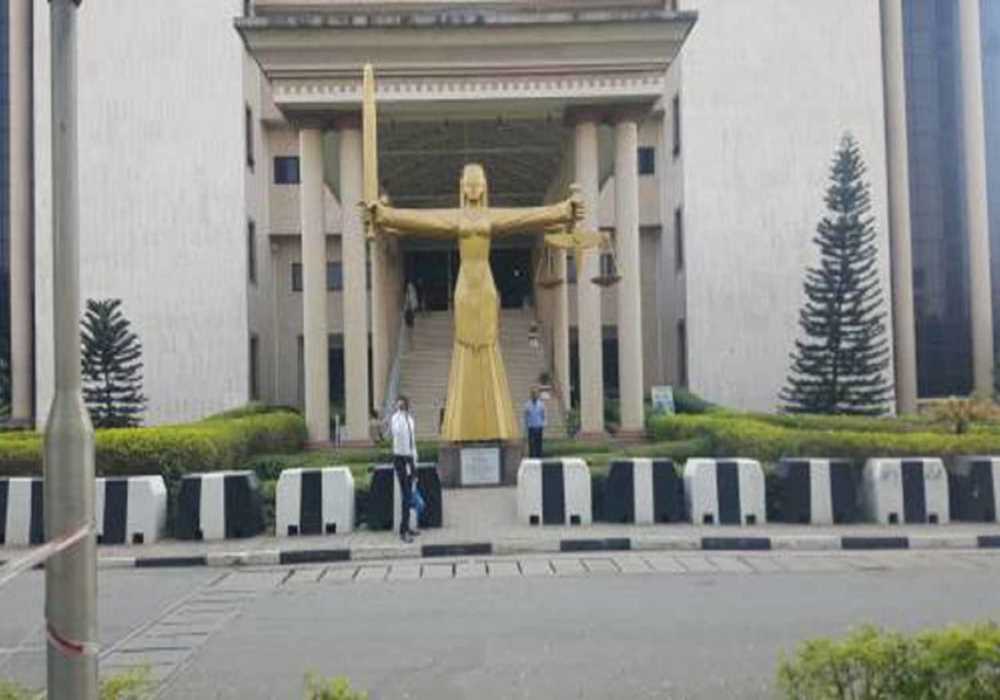
Following observed mis-steps, the Federal Government of Nigeria has withdrawn the eight-count criminal charge brought against the alleged fake Director General (DG) of the Presidential Foreign Intervention Promotion Council (PFIPC), Adeniyi Adeyemi.
Biztellers reports that the matter, in accordance with the counsel of the Attorney General of the Federation (AGF) and Minister of Justice, Prince Lateef Olasunkanmi Fagbemi, (SAN), the matter will be filed at the High Court of the Federal Capital Territory (FCT), instead of the Federal High Court (FHC).
Consequently, upon an unopposed application for termination by the prosecution counsel and Director of the Public Prosecution of the Federation (DPPF), Rotimi Oyedepo (SAN), on Monday, Justice Mohammed Umar of a Federal High Court, Abuja on Monday, struck out the matter.
READ ALSO: Shell Identifies Keys to Nigeria’s Energy Future
In a motion for the termination of the charges, Oyedepo informed the court that the Attorney General of the Federation (AGF) and Minister of Justice has carried out a review of the case file of Adeyemi and the charge filed by the Inspector General of Police (IGP) and found some loopholes.
The DPPF added that the documents allegedly forged by Adeyemi during his operations of the fake agency are those that can be prosecuted by the High Court of the Federal Capital Territory (FCT).
He also informed the court that a new charge has been filed at the High Court of the FCT and that Adeyemi would be expeditiously arraigned afresh.
He therefore urged the judge to strike out the charge as required by law.
Following no objections from Ibrahim Angulu (SAN), who stood in for Adeyemi, Justice Umar subsequently terminated the charge.
Adeniyi, 38, was being tried alongside two others whose whereabouts are unknown, on charges bordering on conspiracy and forgery.
The two others said to be at large were identified as Femi (surname unknown) and Anu (surname unknown).
The charge marked: FHC/ABJ/CR/25/2025, was entered against the defendant by the DPPF.

To secure a bright energy for her teeming population, Nigeria must sustain the momentum of reform, accelerate investment, and deepen partnerships.
This view was expressed by Managing Director, Shell Nigeria Exploration and Production Company of Nigeria Limited (SNEPCo) Ronald Adams in Lagos at the weekend.
Delivering a keynote address at the Africa Energy Conference (AEC) of the Lagos Business School (LBS), Adams called for regulatory certainty through efficient execution of reforms, sustained investment appeal to enable projects to move more swiftly from opportunity to production and partnership by operators, regulators, NNPC Limited and communities to unlock the full value of Nigeria’s resources.
Adams cited Nigeria’s huge oil and gas resources as an advantage but pointed out: “Resources alone do not guarantee prosperity. Prosperity comes when resources are matched with investment, technology, sound policy and disciplined execution. Success will be determined not by the size of our resources, but by our ability to convert them into investment and economic growth.”
Adams pledged the support of Shell towards a bright energy future of Nigerians. He said: “For more than six decades, Shell has been part of Nigeria’s energy journey. Together with our partners, we have helped develop major energy infrastructure, supported Nigerian businesses, invested in talent, and contributed to economic development. Bonga remains a powerful example of what technology, partnership and Nigerian capability can achieve in deepwater operations. Today, that story continues through Bonga North.”
READ ALSO: ADF Targets 5 Million Students, 2 Million Vulnerable Women
Issuing a clarion call for action by all stakeholders, he added: “The world is not standing still. Capital is moving, technology is advancing and competition is intensifying. The countries that attract investment tomorrow are those that improve competitiveness today. Nigeria has begun that journey. Our task is to sustain the momentum and translate reform into projects, projects into growth, and growth into shared prosperity.”
The conference, the 4th in the series had at its theme; “Securing Nigeria’s Energy Future: Policy Reform, Capital Mobilisation, and Pathways to a Sustainable Power and Energy Market” and was attended by top government officials, industry captains, energy professionals, and students.
Lagos State Deputy Governor Obafemi Hamzat represented Lagos State Governor Babajide Sanwo-Olu as the guest of honour. SNEPCo was a principal sponsor of the Africa Energy Conference (AEC) and mounted a well-received exhibition on its deepwater operations and social investments across Nigeria.






State Govs, Wike Endorse One-Party State, Join APC Campaign Council

2027: ‘Tinubu Has Done Well’ – Wike Tells Opposition to Speak the Truth

‘Celebrate This Poor Man’ – Shettima Defends Tinubu Over Economic Crisis
FG Withdraws Charges Against ‘Fake Agency’ DG, Adeniyi Adeyemi

Shell Identifies Keys to Nigeria’s Energy Future

Nigeria Records Biggest Rise in Multidimensional Poverty Among Five Countries – UN

Trump’s Family Unveils New Cryptocurrency Platform

Senate Denies Receiving Petitions Against Tinubu’s Ambassadorial Nominees

Dangote Cement Lights Up Benue Host Communities With CSR Initiatives

Reps Recommend 3-year Jail Term For Aviation minister

Tems Sets New Record On Billboard Hot 100 Chart
