
NEWS
Oye Alleges NNPC Ltd’s N17.5trn Energy Security Expenses is ‘Fuel Subsidy’

The N17.5 trillion debt owed the Nigerian National Petroleum Company Limited (NNPC Ltd) by the Nigerian government is a disguised fuel subsidy.
Chairman of Alliance for Economic Research and Ethics Ltd/GTE, Dele Oye, made the allegation in a statement, adding that Nigeria was currently operating the most expensive subsidy programme in its history, despite the government’s claimed removal of fuel subsidy.
The erstwhile President of Nigerian Association of Chambers of Commerce, Industry, Mines and Agriculture (NACCIMA), added that the huge liability, accumulated through what NNPC described as “energy security expenses,” “under-recovery” and other receivables, represented a continuation of the subsidy regime under a different name.
ALSO READ: NLNG Celebrates Nnaji’s Contribution to Science, Innovation
Oye, who is also the immediate past President of Organised Private Sector of Nigeria (OPSN), averred that the government’s 2023 announcement of fuel subsidy removal did not eliminate the financial burden but merely transformed it into an accounting arrangement that had placed additional pressure on public finances.
He said, “Nigeria is currently executing the most expensive subsidy programme in its history, yet almost no one is calling it by its true name.
“A N17.5 trillion liability has been accumulated in the shadows, hidden behind accounting terminologies designed to obscure rather than illuminate.
“This is not energy security; it is fiscal capture, the systematic transfer of public wealth through mechanisms that evade democratic oversight. The Petroleum Industry Act was designed to dismantle such opaque structures, not to be weaponised to legitimise them.
“Three years after the declaration that ‘subsidy is gone’, the burden has never been heavier. It has merely been rebranded. And that, tragically, is the most expensive word game in Nigerian history.”
He noted that the NNPC Ltd’s 2024 financial statements showed that the federation’s obligations to the company had risen to about N17.5 trillion, comprising energy security expenses, under-recovery claims, and other receivables.
Oye asserted that the development raised concerns over transparency, accountability, and the sustainability of Nigeria’s petroleum policy.
He stated, “On May 29, 2023, President Bola Ahmed Tinubu stood before the nation and declared, with theatrical finality: ‘Subsidy is gone.’ It was a bold proclamation, one that signalled a definitive break from decades of fiscal haemorrhage.
“Yet, three years later, as the Nigerian National Petroleum Company Limited (NNPC) released its 2024 Consolidated and Separate Financial Statements, the numbers revealed a profoundly different reality.
“The subsidy did not vanish; it metamorphosed. Today, the federation owes NNPC a staggering N17.5 trillion, an exposure nearly double the N9.36 trillion recorded in 2023. The anatomy of this colossal liability is as stark as it is revealing: N7.13 trillion categorised as ‘Energy Security Expense’, N8.67 trillion labelled as ‘under-recovery” and N8.84 trillion grouped under ‘Other Receivables from the Federation’.
“NNPC’s auditors, PwC, SIAO, and Muhtari Dangana & Co., have certified these figures. The company proudly posted a record N5.4 trillion profit after tax in 2024, a 64 per cent surge from the previous year. Yet, this ‘profit’ was declared even as the company simultaneously booked nearly N18 trillion in debts owed by the very federation to which it is mandated to remit dividends.”
According to Oye, “NNPC insists this is not a subsidy. They call it ‘energy security.’ But as the late economist, Thomas Sowell, astutely observed: ‘It is hard to imagine a more stupid or more dangerous way of making decisions than by putting those decisions in the hands of people who pay no price for being wrong.’
“In Nigeria’s case, the price is being paid by 220 million citizens, while the decision-makers engage in a deeply expensive exercise in linguistic gymnastics.”
He said the current arrangement had created a situation where government revenue was reduced through deductions from NNPC remittances while Nigerians continued to experience high petrol prices.
The alliance chairman further questioned the continued accumulation of the liability despite the passage of the Petroleum Industry Act (PIA) 2021, which was designed to promote transparency and commercial efficiency in the petroleum sector.
Oye also criticised the continued reliance on petrol imports, despite the commissioning of the Dangote Petroleum Refinery and Petrochemicals (DPRP), describing it as a contradiction in Nigeria’s quest for energy independence.
He stated, “The narrative becomes truly surreal when we consider the Dangote Petroleum Refinery. Commissioned to end Nigeria’s decades-long dependence on imported fuel and save precious foreign exchange, Africa’s largest refinery (with a capacity of 650,000 barrels per day) should have rendered the ‘energy security expense’ entirely obsolete.
“Instead, Nigeria finds itself embroiled in a crisis over whether the Dangote Refinery should even be permitted to supply the domestic market effectively.”
He called for a comprehensive forensic audit of all energy security expenses and related claims, stating that Nigerians deserve clarity on the financial obligations being accumulated in their name.






President Bola Ahmed Tinubu has called on African countries to unite and end the export of raw mineral resources, urging the continent to focus on local processing, manufacturing and value addition.
Tinubu made the call on Tuesday in New York, United States, while declaring open the 3rd Africa Minerals Strategy Group (AMSG) High-Level Roundtable on Critical Minerals Development in Africa, held on the sidelines of the ongoing 81st Session of the United Nations General Assembly.
The high-level meeting, which was chaired by Tinubu, was themed, “From Resources to Wealth: Continental Cooperation for Mineral Value Addition, Data Sovereignty, Innovative Financing and Critical Minerals Security.”
ALSO READ: Shettima Arrives Yola to Condole With Bamanga Tukur’s Family
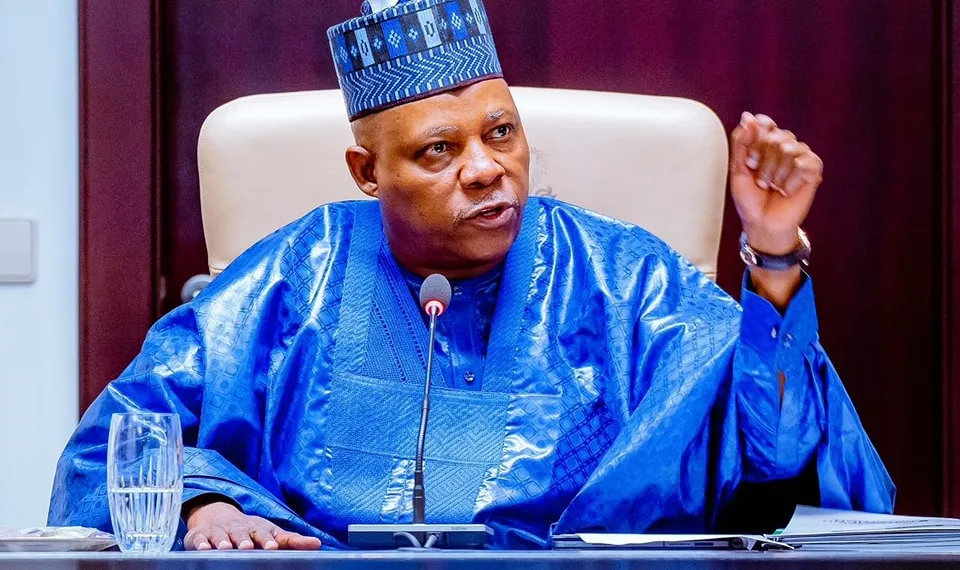
Represented by Vice President Kashim Shettima, Tinubu told African leaders and stakeholders that the continent must move away from its long-standing position as a supplier of raw materials and develop industries capable of processing its mineral resources locally.
“For generations, Africa has furnished the materials of prosperity elsewhere. Our duty is to ensure that the future being fashioned from African minerals has room for African ambition,” the President said.
Tinubu expressed concern that mineral-rich communities across Africa continue to suffer from inadequate infrastructure, limited employment opportunities and insufficient participation in the wealth generated from their natural resources.
He noted that rising global demand for clean energy, artificial intelligence and advanced manufacturing had made African critical minerals such as cobalt, copper, lithium and rare earth elements increasingly important to global supply chains.
According to the President, Africa’s response should include mineral processing and refining, battery production, component manufacturing, African technologies and the development of competitive skills.
“The worth of a mine must be counted in the lives it improves,” Tinubu said.
“Jobs, industries, infrastructure, technology transfer, African enterprise participation and prosperity retained across generations must measure our progress from resources to wealth.”
Tinubu Warns Against African Fragmentation
The President said no African country could achieve the desired transformation of its mineral sector alone.
He warned that countries competing against one another by offering lower royalties, weaker local-content requirements and excessive concessions could undermine the continent’s collective bargaining power.
“Fragmentation leaves us exporting raw materials and buying finished goods at a premium. Cooperation gives our markets scale, our industries integration, our financing reach and our negotiations authority,” he said.
Tinubu called for greater continental cooperation, saying African countries must negotiate collectively where their interests converge and ensure that partnerships with external investors strengthen rather than undermine African industrial capacity.
“Reliability must never mean dependency, and partnership must never demand inequality,” he added.
President Highlights Nigeria’s Mining Reforms
Tinubu also highlighted reforms in Nigeria’s mining sector, saying the country must require local value addition for new mining licences, strengthen geological data and investor access, organise artisanal miners into cooperatives, combat illegal mining and improve regulatory accountability.
He disclosed that revenue from Nigeria’s mining sector rose from approximately ₦6 billion in 2023 to over ₦38 billion in 2024, and further to between ₦68.1 billion and ₦70 billion in 2025.
The President also pointed to major foreign investment commitments and the development and commissioning of large-scale lithium processing capacity in Nasarawa State as evidence of the opportunities available in the sector.
He said his administration’s mining policy was designed to ensure that minerals extracted in Nigeria contribute to the country’s industries, workers, skills and communities.
According to Tinubu, ongoing reforms have demonstrated that “firm terms can attract serious capital.”
Tinubu Backs Continental Minerals Framework
The President also endorsed the Continental Integration and Economic Assurance Declaration (CIEAD) adopted at the roundtable.
He said the declaration should create a predictable and investment-ready environment for Africa’s strategic mineral corridors through harmonised policies, responsible investment and shared infrastructure.
Tinubu, however, stressed that the declaration must go beyond a ceremonial signing and be backed by clear timelines, financing, implementation mechanisms and public accountability.
“Africa’s power resides in its people, markets and ingenuity. No outsider will organise our continent or place our industrial interests above their own,” he said.
“We must integrate our markets, mobilise African capital and negotiate with one voice wherever our interests converge.”
He added: “Our industrial growth can strengthen global prosperity, the energy transition and secure supply chains. Minerals confer no automatic prosperity; vision, investment and industry must earn it. Political will must turn mineral promise into enduring African wealth.”
Alake Calls for More African Countries to Join AMSG
Earlier, AMSG Chairman and Nigeria’s Minister of Solid Minerals Development, Dele Alake, said the group was proposing the Continental Integration and Economic Assurance Declaration as a framework for establishing a unified architecture for Africa’s critical and solid minerals value chains.
Alake urged African countries that have yet to join the AMSG to become members, stressing the importance of coordinating efforts, ideas and resources to develop the continent’s natural resources.
He said Africa’s mineral ambitions could not be achieved through policy implementation alone, arguing that integrated partnerships covering financial transactions and infrastructure development were also necessary.
Kenya’s Minister of Blue Economy and Maritime Affairs, Hassan Ali Joho, also emphasised the importance of domestic resource mobilisation for solid mineral development.
Joho called for transparency, competitiveness and greater alignment of licensing procedures among AMSG members while respecting the sovereignty of individual countries.
Representatives of Liberia, Chad and Tanzania, alongside other stakeholders, also contributed to the discussions.
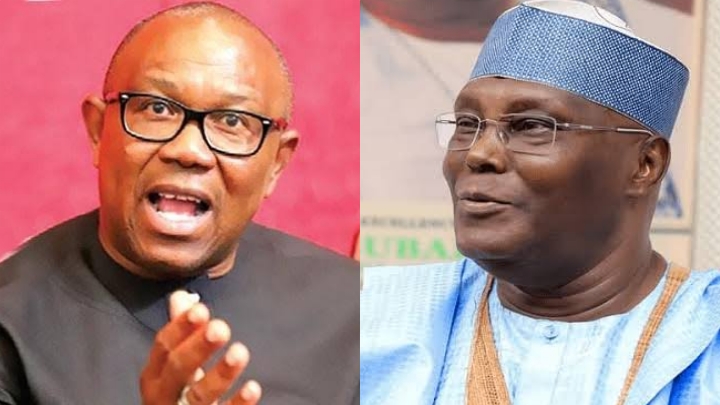
Former Vice President Atiku Abubakar has questioned President Bola Tinubu’s third consecutive absence from the United Nations General Assembly (UNGA), demanding an explanation for the president’s decision not to attend the global gathering.
Atiku made the remarks in a statement issued by his Senior Special Assistant on Public Communication, Phrank Shaibu, as Vice President Kashim Shettima leads Nigeria’s delegation to the 81st UNGA in New York.
According to Atiku, Tinubu was absent from the 79th UNGA in 2024 and the 80th session in 2025, and has again stayed away from the 81st session in 2026.
ALSO READ: ‘Calling Tinubu Bola, Giving Him Orders Is Insolence’ — Sunday Dare Blasts Atiku
The former vice president said the repeated absences could no longer be regarded as a coincidence or routine delegation, arguing that they required an explanation.
Atiku also questioned whether Tinubu’s documented history with United States law-enforcement agencies had become a burden on Nigeria’s foreign relations.
“The United Nations General Assembly is one of the world’s most important diplomatic gatherings. It brings together the representatives of the UN’s 193 member states and provides a unique platform for presidents and prime ministers to defend their countries’ interests, negotiate partnerships and shape global decisions on trade, security and development,” Atiku said.
He acknowledged that Shettima could represent Nigeria at the gathering but maintained that the vice president’s representation could not permanently substitute for the president’s personal authority and visibility.
“Vice President Shettima may represent Nigeria capably, but representation by delegation cannot permanently substitute for the personal authority, visibility and responsibility of the president,” he said.
“Tinubu cannot continue to treat Nigeria’s seat at the world’s biggest diplomatic table as though it were an inconvenient appointment that can be endlessly outsourced.”
Atiku further argued that UNGA was not simply a ceremonial event, noting that important bilateral meetings, investment discussions, trade negotiations and development-financing engagements take place on the sidelines of the gathering.
“Presidential absence on the global stage has consequences. UNGA is not merely a ceremonial gathering or an annual photo opportunity,” he said.
“Its side-lines are where leaders hold decisive bilateral meetings, court investors, negotiate trade partnerships, mobilise development finance and make the case for their countries.”
The former vice president said Nigeria could lose investment and other economic opportunities as a result of the president’s continued absence.
“When a president makes himself absent from that stage for three consecutive years, his country loses opportunities. Investment does not follow silence. International capital does not pursue a country whose leader repeatedly abandons the room in which consequential economic relationships are being built,” Atiku said.
He linked the issue to investment, employment and capital inflows, arguing that reduced investment could increase pressure on the naira and contribute to higher costs for Nigerians.
“The cost is eventually transferred to ordinary citizens: fewer investments mean fewer businesses and fewer jobs. Reduced capital inflows place additional pressure on the local currency,” he said.
“A weaker naira raises the cost of imports, production, transportation and food. These are among the economic pressures now punishing Nigerian families through the worst cost-of-living crisis in living memory.”
Atiku concluded by saying that while the president could regard attendance at UNGA as a matter of personal prerogative, Nigeria would ultimately bear the consequences of the decision.
“Tinubu may consider attending UNGA a matter of personal prerogative, but the economic and diplomatic consequences of his absence are being paid by Nigerians. A President may surrender his seat, but a nation cannot escape the bill,” he said.
President Bola Ahmed Tinubu has reacted to the death of former Kogi State Governor, Alhaji Ibrahim Idris, who died on Sunday at the age of 77.
Tinubu expressed deep sorrow over the former governor’s death and extended his heartfelt condolences to the Idris family, the government and people of Kogi State, as well as his friends, associates and political colleagues.
The President’s reaction was contained in a statement issued on Monday, September 21, 2026, by his Special Adviser on Information and Strategy, Bayo Onanuga.
SEE MORE: Tinubu Sets October 1 Deadline for Lower Transport Fares Nationwide
Tinubu described Idris’ death as a significant loss to Kogi State and Nigeria, noting that the former governor devoted a substantial part of his life to public service and the development of the state.
Ibrahim Idris served as Governor of Kogi State from 2003 to 2011.
According to the President, Idris’ administration recorded interventions in infrastructure, education, healthcare and other critical sectors.
Tinubu also acknowledged the late former governor’s contributions to Nigeria’s democratic development and his many years of engagement in public affairs.
The President said: “Alhaji Ibrahim Idris was a committed public servant whose years in office formed an important chapter in the political and developmental history of Kogi State.
“His passing is a painful loss to his family, Kogi State and Nigeria. At this difficult moment, we must remember and honour his contributions to the growth of his state and our nation.
“I extend my deepest condolences to his family and the people of Kogi State. May Almighty Allah forgive his shortcomings, accept his good deeds and grant him Aljannah Firdaus.”
Tinubu further prayed that Almighty Allah would grant the deceased’s family the strength and fortitude to bear the loss.






‘We’ll Bring Back Subsidy in Our Own Way’ — Kwankwaso

Stop Exporting Raw Minerals, Start Building Wealth From Your Resources – Tinubu to Africa

Adeleke Celebrates First Lady Oluremi Tinubu

‘Obi Has Nowhere to Hide’ — APC Campaign Council Tackles Peter Obi Over Anambra Record

‘A Nation Cannot Escape the Bill’ — Atiku Questions Tinubu’s Third UNGA Absence

Tinubu Reacts as Former Kogi Governor Ibrahim Idris Dies at 77

Trump’s Family Unveils New Cryptocurrency Platform

Senate Denies Receiving Petitions Against Tinubu’s Ambassadorial Nominees

Dangote Cement Lights Up Benue Host Communities With CSR Initiatives

Reps Recommend 3-year Jail Term For Aviation minister

Tems Sets New Record On Billboard Hot 100 Chart
