
NEWS
Dissolve Contentious HCDT Immediately – RMAFC to NUPRC

Following concerns about the constitution and representation of Host Community Development Trust (HCDT), the Revenue Mobilisation Allocation and Fiscal Commission (RMAFC) has ordered the Nigerian Upstream Petroleum Regulatory Commission (NUPRC) to dissolve the affected HCDT within 48 hours.
The directive was contained in a statement issued by the commission on Friday and signed by the Head of Information and Public Relations Unit, Maryam Umar-Yusuf.
The directive was ignited by an investigative hearing into the operations of Sterling Oil Exploration and Energy Production Company (SEEPCO) and the implementation of the HCDT provisions under the Petroleum Industry Act (PIA) 2021.
According to the statement, the ultimatum was issued during the hearing of the commission’s Investment Monitoring Committee (IMC) after concerns were raised over the establishment of the trust for affected host communities.
The Chairman of the RMAFC, Mohammed Shehu, reaffirmed the commission’s commitment to protecting the interests of oil-producing host communities, saying it would continue to strengthen oversight of operators and institutions responsible for ensuring that communities receive the benefits due to them under the law.
READ ALSO: Domestic Refineries’ Crude Supply Shortages Compel NMDPRA, NUPRC Negotiation
Shehu, who spoke at the investigative hearing held at the commission’s headquarters on Thursday, described the exercise as “an important national service and a critical national responsibility.”
He commended the committee for its diligence and urged members to remain resolute, stressing that the commission’s constitutional mandate required “firm oversight, transparency and accountability in the management of national revenue assets.”
According to the statement, he expressed confidence that the investigation would strengthen trust in the petroleum sector and ensure that host communities received the full benefits guaranteed under the PIA.
Leading the hearing, the Chairman of the IMC and Federal Commissioner representing Anambra State, Ekene Enefe, conducted an extensive investigation into SEEPCO’s compliance with the statutory provisions governing Host Community Development Trusts.
He maintained that host communities should no longer bear the environmental and social consequences of oil exploration without corresponding development, adding that the commission would ensure operators and regulatory institutions discharged their statutory obligations.
The committee also criticised SEEPCO for repeatedly failing to honour invitations to appear before it despite previous engagements.
Addressing officials of the NUPRC during the hearing, Enefe said the commission would hold every institution in the petroleum value chain accountable for the effective discharge of its responsibilities.
He consequently ordered the regulator to address concerns surrounding the trust established for the affected communities, declaring, “We are going to give you 48 hours to dissolve that Host Community Development Trust.”
The committee chairman also faulted SEEPCO over what he described as its failure to meet obligations owed to host communities. “We are going to write them, and we are going to give them an ultimatum to pay up what is owed to the host communities,” Enefe said.
He added that the committee would conclude its investigation and submit its findings to the appropriate authorities, insisting that the commission would carry out its constitutional oversight responsibilities “without fear or favour.”
Earlier, the NUPRC delegation, led by the Director of Host Communities, Ufondu Ejiro, defended the implementation of the HCDT established under the PIA.
According to the statement, Ejiro told the committee that the trust had been duly incorporated, funded and structured in accordance with the law.
She said the commission had processed documents relating to community consultations, governance structures, funding arrangements and Community Development Plans, while also presenting records of statutory contributions made into the trust.
The NUPRC maintained that it discharged its responsibilities within the framework of the Petroleum Industry Act and the Host Community Development Regulations.
However, counsel representing the affected host communities, Peter Chukwudi, rejected the regulator’s submissions, insisting that several persons recognised as community representatives were not accepted by the communities.
He also argued that adequate consultations were not conducted before the HCDT was constituted and questioned the level of development recorded in the affected communities despite years of oil production.
Chukwudi urged the committee to ensure that the grievances raised by the communities were thoroughly investigated.
Also speaking, the Anambra State Commissioner for Petroleum and Mineral Resources, Prof Charles Ofoegbu, called for stronger collaboration between the NUPRC and the state government in verifying community representation and monitoring compliance with statutory obligations.
He advocated greater transparency in calculating statutory contributions, operational expenditure and the execution of community development projects, stressing that the state government had a responsibility to protect the interests of its oil-producing communities.
Other members of the commission also raised concerns during the hearing. The Federal Commissioner representing Rivers State, Desmond Akawor, said there appeared to be a disconnect between the regulator and affected state governments, adding that closer collaboration and direct engagement with operators were necessary for effective oversight.
He also criticised SEEPCO for failing to attend the hearing and urged all parties to cooperate with the investigation.
The Federal Commissioner representing Kogi State, Abdulazeez Idris-King, questioned the effectiveness of the NUPRC’s verification process, saying reliance solely on documents submitted by operators might not sufficiently establish that genuine consultations had taken place with host communities.
Similarly, the Federal Commissioner representing Jigawa State, Hauwa Umar-Aliyu, stressed the need for regulators to uphold professionalism and impartiality, saying public confidence would only be strengthened if the interests of host communities received equal attention alongside those of operators.
According to the statement, the hearing forms part of the commission’s ongoing oversight initiative aimed at promoting transparency, strengthening accountability and ensuring that host communities derive the benefits guaranteed under the PIA.
Recall that the HCDT was created under the PIA 2021 as a framework for ensuring that communities where oil and gas operations take place receive direct and sustainable benefits from petroleum activities.
The PIA requires petroleum operators, known as settlors, to establish trusts for their host communities and contribute 3 per cent of their actual annual operating expenditure in the preceding year to the funds. The trusts are intended to finance community development projects and promote peaceful relations between operators and host communities.
The NUPRC is responsible for regulating the trusts, including their incorporation, funding, governance and the implementation of development projects. The provision was introduced against the background of decades of grievances in oil-producing communities over environmental impacts, inadequate development and disputes with petroleum companies.









The Nigerian Upstream Petroleum Regulatory Commission (NUPRC) has opened the registration portal for its 2026 oil and gas licensing round.
Information on the portal, which opened during the weekend, disclosed that the bid commenced on November 20, 2026 and will close on January 15, 2027, for 17 onshore blocks, 14 shallow water and nine deep offshore assets.
Biztellers reports that the bid is offering 40 blocks across onshore, shallow water and deep offshore terrains to prospective investors.
The commission urged interested investors to visit the portal to access the full list of available blocks, bidding guidelines and frequently asked questions, explaining that the platform was designed to provide a seamless experience for prospective bidders.
READ ALSO: Indian Firms to Supply DPRP with $38.94m Pumping Systems
The licensing process, a statement by the commission said, will run through five stages, including registration and prequalification, access to data, submission of technical and commercial bids, technical evaluation and commercial conference.
According to the upstream regulator, the next major activity would be a pre-bid conference scheduled to hold in Lagos on December 16, 2026, stressing that further information and updates would be communicated through the portal and its official social media platforms.
The 2026 licensing round was announced by the Commission Chief Executive, Oritsemeyiwa Eyesan, on October 6, following approval by President Bola Tinubu, who also serves as Minister of Petroleum Resources.
Meanwhile, the commission has pledged to ensure timely delivery of Nigeria’s upstream climate commitments, declaring that its gas flaring and methane reduction targets were regulatory obligations rather than mere aspirations.
It disclosed that metering compliance across flare sites had reached 92 per cent, describing the progress as part of efforts to strengthen emissions monitoring and ensure that climate commitments are backed by verifiable data.
Speaking on behalf of Eyesan at a side event organised by the African Green Economy and Sustainability Institute (AGESI) at the Gabon Pavilion during COP31 in Türkiye, Assistant Director, Remediation and Sustainability, Ibrahim Alhaji, said the commission was moving from estimates to evidence in monitoring emissions.
Under Nigeria’s Nationally Determined Contributions (NDCs) 3.0, the country said it was committed to ending routine gas flaring by 2030 and reducing fugitive methane emissions by 60 per cent.
According to the NURPC, the development has a potential to reduce more than 27 million tonnes of fugitive methane emissions and 2 million tonnes of carbon dioxide equivalent from flaring by 2035.
Eyesan identified transparency, investment readiness and capacity building as the three critical pillars for achieving the targets, stressing that credible emissions data would make climate-related projects more attractive to investors and improve access to climate and blended finance.
The session, convened by AGESI, the Society for Planet and Prosperity and Natural Eco Capital, ended with a follow-up plan focused on partnerships, data disclosure, capacity building and progress reporting beyond COP31.

The Osun State Executive Council (SEC) has approved a 2027 draft budget as submitted by the various Ministries, Departments and Agencies of government
This follows a presentation by by the Commissioner for Economic Planning, Budget and Development, Prof. Moruf Ademola Adeleke, according to a government house statement on Osogbo on Friday.
It added that it was part of the resolutions reached after the SEC meeting presided over by Osun State Governor, Senator Ademola Adeleke at the Executive Council Chambers, Governor’s Office, Bola Ige House, Osogbo.
The Commissioner said after due consideration of the memo presented by the Commissioner for Economic Planning, Budget and Development, Prof. Moruf Ademola Adeleke for the draft 2027 Recurrent and Capital Budget estimates of the State Government, the Executive Council approved the budget draft estimates with immediate effect.
The Council, has consequently directed the transmission of the approved draft budget to the Osun State House of Assembly (OSHA) for subsequent legislative action.

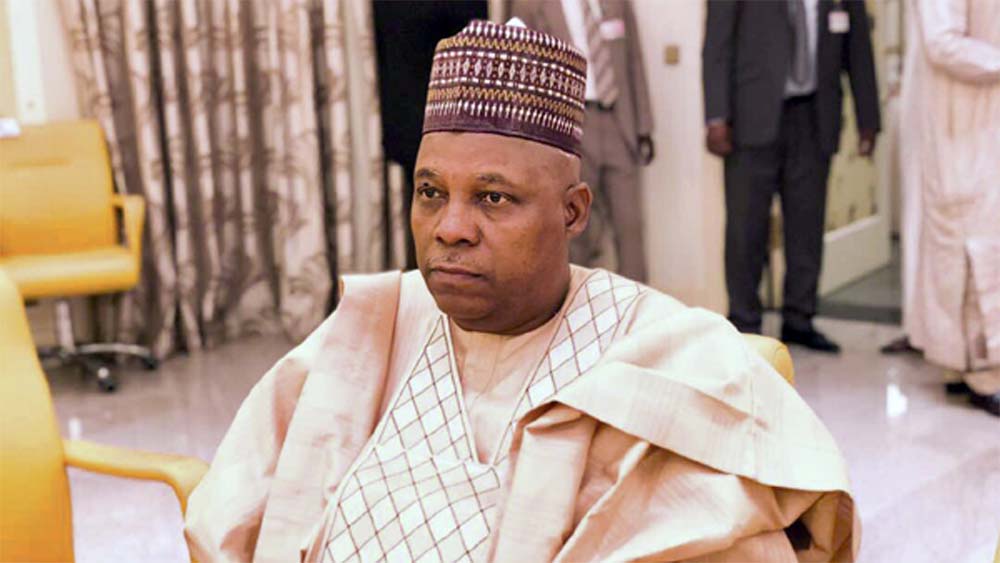
Vice President Kashim Shettima on Friday attended the grand opening of Ashley Furniture Nigeria’s showroom in Lagos.
The development was disclosed by the Vice President’s Senior Special Assistant on Media and Communications, Stanley Nkwocha, in a statement released on Friday.
The opening marks a significant development in Nigeria’s furniture and retail industry, following a strategic partnership between Ashley Furniture Industries, a major American home furnishings manufacturer, and Vento Furniture, a Nigerian furniture company.
SEE ALSO: Shettima, Wife Depart Abuja for Jos as Tinubu–Shettima Campaign Takes Rally to Plateau
The partnership, announced in 2025, is aimed at expanding Nigerians’ access to quality home furnishings while creating opportunities for investment, commercial partnerships and the development of the country’s furniture industry.
At the time of announcing the partnership, Ashley Furniture Industries’ President and Chief Executive Officer, Todd Wanek, described the company’s entry into Nigeria as a major step in its international expansion.
“We are incredibly excited to partner with Vento Furniture. Opening in Nigeria, the largest economy in Africa, is a monumental step for our international growth,” Wanek said.
He added that the company looked forward to opening more stores in Nigeria and supporting Vento Furniture as its anchor partner.
Vento Furniture’s Chief Executive Officer, Cemal Yigit, also expressed optimism about the partnership, describing it as an important development for Nigeria’s home furnishings market.
“We are very excited about this alliance,” Yigit said, expressing confidence in Ashley Furniture’s growth in the Nigerian market.
The partnership aligns with President Bola Ahmed Tinubu’s economic reform agenda, which places private-sector investment, enterprise development and job creation at the centre of efforts to stimulate economic growth.






2026 Licensing Round: NUPRC Opens Portal for 40 Oil, Gas Blocks

Indian Firms to Supply DPRP with $38.94m Pumping Systems
Osun SEC Approves Draft 2027 Budget

Dangote Cement Honours Outstanding Drivers for Safety Excellence, Records 60% Reduction in Road Traffic Accidents

APPO Lauds Nigeria on Energy Bank Initiative
Shettima Attends Grand Opening of Ashley Furniture Showroom in Lagos

Trump’s Family Unveils New Cryptocurrency Platform

Senate Denies Receiving Petitions Against Tinubu’s Ambassadorial Nominees

Dangote Cement Lights Up Benue Host Communities With CSR Initiatives

Reps Recommend 3-year Jail Term For Aviation minister

Tems Sets New Record On Billboard Hot 100 Chart