NEWS
ECOWAS Leaders Ponder Soft-landing For Burkina Faso, Guinea, Niger, Mali


Heads of State of the Economic Community of West African States (ECOWAS) are in a meeting in Abuja, to carve out a diplomatic resolution to the Burkina Faso, Niger Republic and Mali exit threat.
The 15-member country sub-regional body found itself faced with military interventions in the three francophone countries in quick succession and threatened them to restore democracy or face military action.
However, the countries snubbed the threats and reacted by severing relations with the ECOWAS.
It was gathered that Heads of State summoned an Extraordinary Summit on the Political, Peace, and security situation in the region, contemplating alternatives to the sanctions dangled on the military-ruled member-states of Burkina Faso, Guinea, Mali, and Niger.
Nigeria’s President Bola Tinubu, who chairs the ECOWAS Authority of Heads of State is being confronted with threat of mass revolt, which induced by economic hardship.
Recall that following failure of diplomatic shuttles to coerce the military in the four countries to retreat to the barracks and hand power back to civilians, the military leaders in Burkina-Faso, Mali and Niger, made public their withdrawal from ECOWAS over what they dubbed “illegal sanctions” in January.
Their action was based on protecting their respective national interests with allegations that the ECOWAS had fallen under the influence of foreign governments whose interests were anti-Africa.
Recall that in July 2023, the ECOWAS approved the “Suspension of all commercial and financial transactions between ECOWAS Member States and Niger. Freeze all service transactions, including energy transactions.”
Consequently, it froze assets of the Niger Republic in Aqua Central Bank, the state enterprises and parastatals in commercial banks.
Similar actions were also taken against Mali and Burkina-Faso who were also under military rule.
In a decisive move, the three francophone countries ignored ECOWAS’ rules that a withdrawing member state should issue one year’s notice, and declared their secession immediate.
Biztellers reports that this marked the first state withdrawal from ECOWAS since Mauritania took a similar step in December 2000.
Ministers from Burkina Faso, Mali and Niger Republic announced plans to establish a confederation on February 15.
The meeting in Abuja, Nigeria’s capital city is holding, even as ECOWAS maintains the official position that the three countries have yet to formally withdraw from the sub-regional body.




Human rights activist, Omoyele Sowore has rejected the bail conditions set by the Nigeria Police Force (NPF) following his invitation for questioning over a viral video he posted, which highlighted alleged extortion by police officers on the Murtala Muhammed International Airport Access Road in Lagos.
In a post on his X account on Monday, Sowore stated, “I have rejected a bail condition asking me to present a level 17 Permanent Secretary. Instead, I have offered to remain in police custody pending when the joke is over with.”
This came after Sowore was informed by the Deputy Inspector General of Police at the Federal Intelligence Department (FID) that bail would be granted pending the completion of the investigation into the matter.
READ MORE: Lawmaker Introduces Bill To Allow Trump A Third Presidential Run
The police have charged Sowore with multiple offenses, including resisting and obstructing public officers, disobedience to lawful orders, acts intended to cause harm, cyberstalking, and refusal to assist public servants.
This follows his recording of a video in which he confronted officers allegedly setting up roadblocks for the purpose of soliciting bribes.
Sowore’s decision to reject the bail conditions stemmed from his refusal to accept terms that he deemed unreasonable and compromising.
“I have also advised the DIG that in accepting ‘bail,’ I will not agree to conditions that compromise my innocence, dignity, and integrity. If such unreasonable conditions are imposed, I will choose to remain in detention until I am charged to court,” he added.
Sowore further criticized the investigation, calling it an exercise in impunity and asserting that no crime had been defined in relation to his case.
Earlier, Sowore revealed that he had completed his “interview” with the police at the Force Intelligence Department (FID) in Abuja, where he was questioned about the viral video. “
The police relied on a rehashed set of information sourced mostly from the internet,” Sowore explained.
When he asked them to identify the location of the alleged crime, they provided a vague response, mentioning only the airport road. He chose not to provide a written statement, noting that in the absence of a defined crime, there was no need for such a process.
Sowore also reported that the police took a break during the session, later informing him that they were awaiting further instructions from higher authorities.
He expressed concern that the police were planning to take him to Lagos for a “kangaroo trial.” “It seems their plan is to detain me and take me to Lagos for a kangaroo trial. However, I am prepared to face any consequences,” he said.
In a direct challenge to the leadership of the Nigerian police, Sowore reiterated his stance against the current Inspector General of Police, Kayode Egbetokun, whom he accused of extending his tenure illegally.
“I made it clear to the team that the matter revolves around my publicly stated view that the Inspector-General of Police, Kayode Egbetokun, who is due for retirement and clearly tired, had his tenure extended illegally,” Sowore stated.
Despite the mounting pressure, Sowore remained resolute, asserting that his fight for justice would continue.
“We are entering a promising year, and our fight for justice will persist,” he concluded, with the hashtag #RevolutionNow, further solidifying his commitment to advocating for human rights and challenging the impunity within Nigeria’s police force.
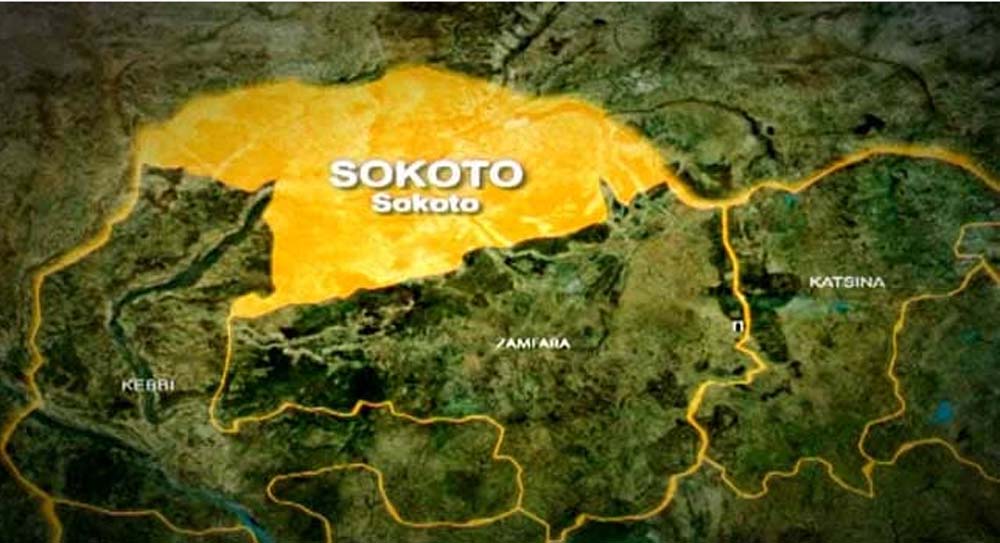
The Sokoto State Government, led by Governor Ahmed Aliyu, has announced the implementation of the revised N70,000 national minimum wage for all state civil servants, local government employees, and the Local Government Education Authority.
This new policy will take effect on Monday, signaling a significant step towards improving workers’ welfare in the state.
Governor Aliyu, in a statement issued by his Press Secretary, Abubakar Bawa, emphasized that the new minimum wage reflects his administration’s commitment to ensuring the well-being of Sokoto’s workforce.
READ MORE: Tinubu Urges Stakeholders To Join Forces To Restart Oil Production In Ogoniland
He also encouraged civil servants to match the gesture with greater dedication, professionalism, and hard work.
“With the commencement of the payment of this new national minimum wage, we expect renewed commitment, hard work, punctuality, and, above all, seriousness from our civil servants,” the governor remarked.
Aliyu also reassured workers that his administration is committed to maintaining timely salary payments, with salaries to be paid between the 19th and 22nd of each month.
This consistent schedule is designed to further solidify Sokoto State’s reputation as a worker-friendly administration.
In addition to the new wage policy, the governor has placed a high priority on clearing the backlog of unpaid gratuities owed to retired workers.
A total of N500 million will be allocated monthly to offset these outstanding payments, with an additional N300 million designated for retirees who left service in 2023 and beyond.
Governor Aliyu assured the public that by the end of his tenure, no civil servant would be left owing gratuities.
“This strategic approach ensures that by the end of my administration, no civil servant will be owed gratuities,” Aliyu stated, highlighting the stark contrast with previous administrations where salary delays often stretched beyond 50 days, leaving workers facing financial uncertainty.
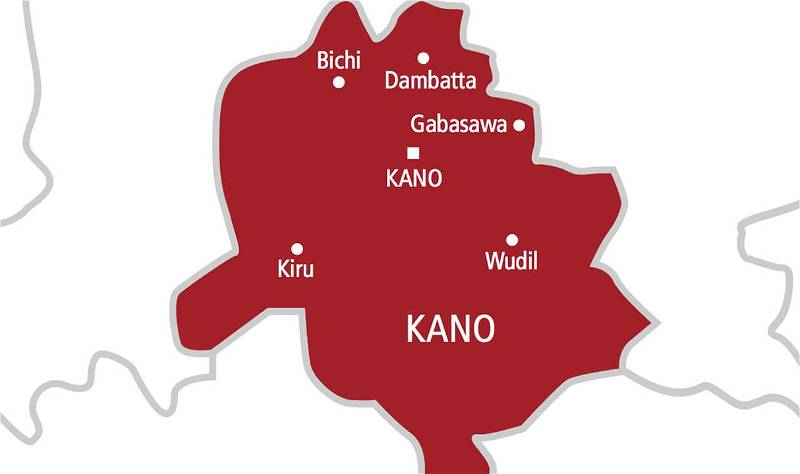
Muhuyi Rimingado, the Chairman of the Kano State Public Complaints and Anti-Corruption Commission (PCACC), has accused a suspect under his agency’s investigation of orchestrating his recent arrest.
Rimingado, who was detained last week, described the incident as a direct consequence of his work in tackling corruption, asserting that “corruption is fighting back.”
Appearing as a guest on Channels Television’s The Morning Brief programme on Monday, Rimingado explained that the arrest was part of a larger attempt to undermine his efforts.
READ MORE: ‘I Won’t Back Down On Exposing Corruption On JAMB,’ – Ex-Official Tells Court
“When you fight corruption, corruption will fight back. Anti-corruption fight (is) fair but corruption fight is dirty,” he said.
Rimingado revealed that three federal agencies had been mobilized against him, alleging that “there are lots of activities going around targeted against my person.”
He connected the arrest to an investigation into a massive fraud case involving the former Managing Director of the Kano Agricultural Supply Company Limited (KASCO).
According to Rimingado, his commission uncovered that N4 billion of Kano State Government funds had been siphoned through various entities.
As part of the investigation, his commission seized assets linked to the crime in accordance with legal procedures. After charging the accused to court, Rimingado said the suspect sought to unlawfully seize the evidence.
“He came up with a series of tactics to snatch away the exhibit of the crime, and that is not allowed in law,” he explained.
To prevent tampering, Rimingado’s commission moved the seized property to a safer location.
He believes that this action prompted the police to arrest him, stating, “When they cannot wait for the court processes and they know they cannot succeed in that case, they now activate the police to arrest me.”
The police officers who detained him accused him of abuse of power, mischief, and trespass, charges Rimingado vehemently denied. “My commission is empowered by law to prosecute suspects of corrupt practices,” he stated.
As of now, the police have not issued any comment on the ongoing developments.






‘Long Face Sent Killers My Way’ – Speed Darlington Alleges Assassination Attempt

I’ll Remain In Custody Until The Joke Is Over – Sowore Rejects Bail
Aregbesola Led Faction Quits APC, Party Hits Back
Ex-Belgian Footballer, Radja Nainggolan Arrested In Cocaine Trafficking Probe

Police Plotting Kangaroo Trial Against Me – Sowore

Five Kidnapped, Woman Injured As Bandits Strike Abuja Community

OSSG Raises Alarm Over Murder Plot By APC Chieftain

NCC, SMEDAN, NAICOM, SEC, Others Set for SUPERNEWS SMEs Conf June 13
Sahara’s Tonye Cole resigns from GPHCDA
Niger Delta Avengers: President Buhari Reads riot Act …considers the carrot and stick option

Oando opens ultra-modern petrol station in Lagos