
Energy
EERC Prohibits Sale Of Meter By Service Providers In Enugu

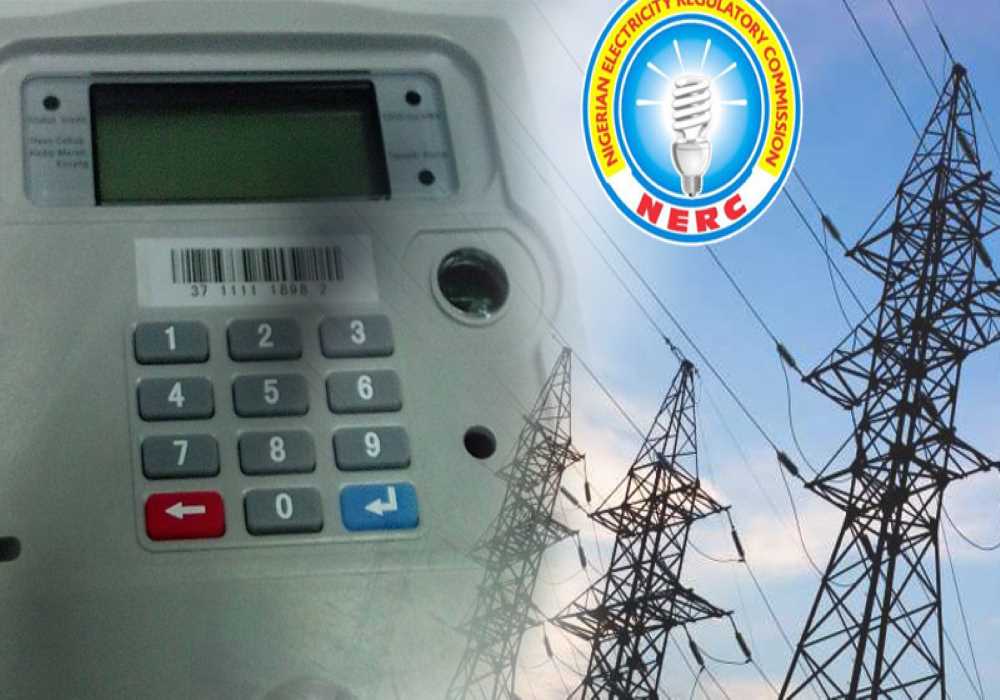
The Enugu State Electricity Regulatory Commission (EERC) has prohibited the sale of meters and other connection materials to members of the public by service providers within its jurisdiction.
This was contained in a public service announcement on its socials where it cited relevant portions of “the Enugu State Electricity Law 2023 and other extant rules”.
The Management of the EERC reminded stakeholders that the laws stipulate thus, “2. The Service Provider shall be responsible for the provision of connection materials in accordance with its standards and also responsible for the connection from the available supply to the customer’s metering point.”
The announcement reads, “It has come to the attention of the Enugu State Electricity Regulatory Commission that some members of the public in Enugu State are being requested to pay for materials and other accessories needed for the connection of electricity and installation of meters in their premises by the meter installers and service providers.
ALSO READ: Why Burkina Faso Is Assuaged From Ravaging Trump Effect – Hundeyin
“Pursuant to section 35 of the Enugu State Electricity Law 2023 and other extant rules, this is to inform the public of the following provisions under regulations 10 and 11 of the Customer Service Standards and Protection Regulations 2024 of the Commission:
“Section 10:
“1. The materials required to effect connections including meters and accessories from the nearest voltage network for each connection design stipulated under these Regulations shall be the responsibility of the Service Provider.
“2. The size and quality of the connection materials required to effect connection are dependent on the connection design and the distance of the customer’s premises to the nearest available electricity supply point.
“Section 11:
“1. All connections shall be in compliance with the procedures stipulated in these Regulations.
“2. The Service Provider shall be responsible for the provision of connection materials in accordance with its standards and also responsible for the connection from the available supply to the customer’s metering point.
“Sequel to the provisions above, Customers of Mainpower Electricity Distribution Company Limited are hereby notified that they are not required to provide materials (e.g. wires, circuit breakers, ladders) or pay money for meter installation.
“Please do not hesitate to contact the Commission via email at [email protected] or call 09122642755 if any Mainpower’s meter installer(s) or agent(s) demand for money or materials to install meter(s) for the Commission’s information and necessary action.”











The appetite for improving access to capital for indigenous oil and gas contractors, strengthening the capacity of Nigerian businesses to execute critical energy projects and contribute to the country’s production ambitions, has seen the Renaissance Africa Energy Company Limited (‘Renaissance’) go into a strategic financing partnership with Sterling Bank Limited.
The partnership, formalised through a Memorandum of Understanding (MoU), brings Sterling Bank into the renewed Renaissance Vendor Financing Scheme (RVFS), a structured financing programme designed to address one of the longstanding challenges confronting indigenous service providers in Nigeria’s oil and gas industry: access to timely and affordable funding for contract execution.
READ ALSO: Group Demands Fair Share of NNPC Jobs for Ogoni Oil Exploration
The expanded programme brings together 13 financial institutions with combined financing commitments of $4.1 billion and ₦435 billion, creating a substantial pool of capital to support eligible contractors delivering projects for Renaissance, operator of the former Shell Petroleum Development Company (SPDC) joint venture assets.
Speaking on its participation, Dele Faseemo, Group Executive, Corporate and Investment Banking at Sterling Bank, described the partnership as an important opportunity to connect financial capacity with productive enterprise in one of Nigeria’s most strategically important sectors.
“At Sterling Bank, we believe financing should enable capable businesses to deliver, grow and compete. Our participation in the Renaissance Vendor Financing Scheme reflects that conviction. By providing structured funding to qualified contractors, we are supporting the businesses that keep the energy value chain moving, strengthening Nigerian content participation and contributing to the broader objective of increasing the country’s productive capacity,” Faseemo said.
For many indigenous contractors, securing a major contract represents only the first step towards business growth. The ability to mobilise equipment, procure materials, retain skilled personnel and meet demanding project timelines often depends on access to adequate working capital. Financing constraints can therefore limit the capacity of otherwise qualified businesses to execute contracts, scale their operations and participate more meaningfully in the energy value chain.
Through the RVFS, participating financial institutions will provide structured financing to eligible contractors against confirmed contracts awarded by Renaissance, subject to applicable credit assessment and approval processes. The arrangement is intended to ease funding pressures, improve project execution and strengthen the financial capacity of indigenous service providers.
Tony Attah, Managing Director and Chief Executive Officer of Renaissance Africa Energy Company Limited, highlighted the importance of the financing arrangement to the company’s growth ambitions.
“What we’ve been able to achieve as Renaissance is to go into that partnership with these incredible 13 banks who have come up to support this vendor scheme at over $4 billion and over ₦435 billion funds available for the vendors to be able to support us in our growth agenda,” Attah said.
He further emphasised the financial advantage the scheme offers participating contractors, noting that, “The interest rate that the banks are offering to the contractors is very competitive, and it is certainly better than the vendors going out to the respective banks on their own.”
The Renaissance Vendor Financing Scheme builds on a contractor financing programme established in 2010, which has evolved over the years to support local service providers executing projects across the oil and gas value chain. Its latest expansion comes as Renaissance pursues an ambitious growth strategy, including its aspiration to achieve production of one million barrels of oil equivalent per day by 2030.
Delivering on this ambition will require sustained investment not only in upstream production assets but also in the network of engineering firms, equipment suppliers, logistics providers, technical specialists and other indigenous businesses whose services are essential to operational performance.
With an established presence in corporate banking and energy sector financing, Sterling Bank continues to support businesses operating across critical segments of the Nigerian economy through tailored financial solutions, strategic partnerships and sector-specific expertise.
The collaboration reinforces the Bank’s commitment to supporting indigenous enterprise development, strengthening local capacity and financing productive economic activity, while contributing to efforts to improve Nigeria’s energy security and long-term industrial competitiveness.
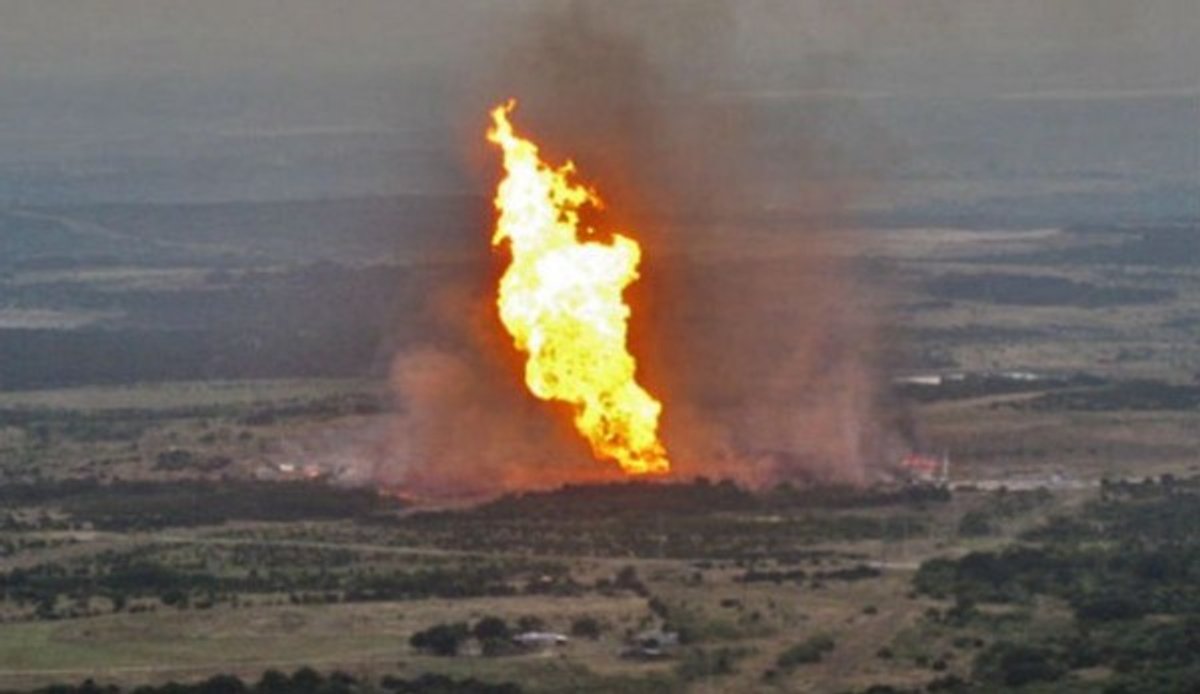
The Niger Delta Youths are primed to assume national responsibilities in critical areas of the economy by protecting vital oil and gas assets in the region.
The United Niger Delta Congress (UNDC) gave the assurance at a media briefing in Abuja, over the weekend, adding that the youths of Niger Delta were ready to work with the federal government in this regard.
The group maintained that youths in the region have shown that such responsibilities, including the security of pipelines, can be entrusted to them.
Speaking at the news conference, Niger Delta Youth activist, Mallam Julius Obi, said the Niger Delta is safer while the nation’s crude is flowing based on the fact that youths in the region are doing the job.
He said that being a youth should not be a disqualification from strategic national assignments but when matched with preparation and character, a national asset.
“We are calling on the federal government to note that Nigeria is full of young men and women who are prepared, disciplined and ready to carry out national responsibilities.
“We urge the federal government to keep opening the doors of strategic national service to young Nigerians who have earned trust the only way it can be earned, by delivery,” Obi said.
READ ALSO: JUST IN: Ex-Delta Governor Emmanuel Uduaghan Is Dead
The group commended President Bola Tinubu for sustaining the security reforms in the oil and gas industry and the the National Security Adviser (NSA), Mallam Nuhu Ribadu, for coordinating the protection of the nation’s pipelines, and the management of NNPCL for providing the enabling environment.

Joseph Ambakederimo, convener of the South-South Reawakening Group, has questioned the accountability of Nigeria’s crude oil forward sales, demanding clarification on the volume of crude lifted, outstanding balances and the use of upfront payments.
Speaking during an interview on Arise TV on Sunday, Ambakederimo expressed concern over the monitoring of crude oil transactions, questioning who was responsible for tracking deliveries and providing feedback on the arrangements.
“We don’t even know who is monitoring and giving us the feedback of the barrels of crude that have been lifted on forward sales basis,” he said.
SEE MORE: South-South Group Opposes Coastal Road Alignment With East-West Road
He challenged the Nigerian National Petroleum Company Limited (NNPC) to provide details of the transactions, including the quantity of crude already lifted, the outstanding balance and whether the agreed deliveries had been completed.
“Today, can we get this from NNPC? How much have they lifted? What is the balance remaining? Have they been completed?” he asked.
Ambakederimo also questioned how the money collected upfront under the arrangements had been spent, demanding an explanation of its use.
“That money that was collected upfront, what was the use of the money? Can you justify it?” he asked.
He argued that Nigeria should make better use of its natural resources to accelerate infrastructure development and improve living conditions.
Citing land reclamation projects in the United Arab Emirates, Ambakederimo said Nigeria could explore similar opportunities to create additional land for residential and other developments.
He recalled seeing a signpost while travelling from Dubai to Abu Dhabi describing a project to reclaim land from the sea, using the example to highlight the development possibilities he believes Nigeria could explore.
The South-South Reawakening Group convener also argued that Nigeria could reclaim land in suitable areas, provided environmental concerns were properly managed.
He called for the country to translate its natural resource wealth into infrastructure and improved living conditions, stressing the need for greater accountability in crude oil transactions.






Why Ebola Outbreaks Keep Returning to Africa, Dr Jean Kaseya Explains

Peter Obi Meets UK Officials, Diaspora Stakeholders on Rebuilding Nigeria

Grains-Laden Truck Falls on BRT Lane in Lagos

Ogun Police Chief Urges POWA to Turn Skills Centre into Industrial Hub

Thor Empowers Host Communities with 10 Cassava, Palm Oil Processing Plants

FG Puts Daily Gas Output at 8bcf

Trump’s Family Unveils New Cryptocurrency Platform

Senate Denies Receiving Petitions Against Tinubu’s Ambassadorial Nominees

Dangote Cement Lights Up Benue Host Communities With CSR Initiatives

Reps Recommend 3-year Jail Term For Aviation minister

Tems Sets New Record On Billboard Hot 100 Chart

I like what you guys are up also. Such intelligent work and reporting! Carry on the superb works guys I have incorporated you guys to my blogroll. I think it will improve the value of my site :).
Thank you for the sensible critique. Me and my neighbor were just preparing to do a little research on this. We got a grab a book from our area library but I think I learned more from this post. I’m very glad to see such excellent information being shared freely out there.
I’ve been browsing online more than 3 hours lately, but I by no means found any attention-grabbing article like yours. It is beautiful value enough for me. Personally, if all website owners and bloggers made good content material as you probably did, the internet will probably be much more useful than ever before.
Admiring the time and energy you put into your blog and in depth information you offer. It’s good to come across a blog every once in a while that isn’t the same old rehashed information. Wonderful read! I’ve bookmarked your site and I’m adding your RSS feeds to my Google account.
174114 679861I like this web site its a master peace ! Glad I found this on google . 943728
I’ll immediately clutch your rss as I can’t to find your e-mail subscription hyperlink or e-newsletter service. Do you’ve any? Kindly let me realize in order that I could subscribe. Thanks.
I have recently started a website, the information you provide on this web site has helped me greatly. Thanks for all of your time & work. “Patriotism is often an arbitrary veneration of real estate above principles.” by George Jean Nathan.
I genuinely prize your work, Great post.
You could certainly see your enthusiasm in the work you write. The sector hopes for more passionate writers like you who are not afraid to say how they believe. Always go after your heart.
Hi there! I just wanted to ask if you ever have any issues with hackers? My last blog (wordpress) was hacked and I ended up losing many months of hard work due to no back up. Do you have any methods to prevent hackers?
I’m still learning from you, as I’m trying to achieve my goals. I certainly liked reading everything that is written on your website.Keep the posts coming. I enjoyed it!
Some truly great blog posts on this internet site, appreciate it for contribution. “A religious awakening which does not awaken the sleeper to love has roused him in vain.” by Jessamyn West.
I will immediately grab your rss as I can not to find your email subscription hyperlink or newsletter service. Do you have any? Kindly permit me realize so that I may just subscribe. Thanks.
321077 40510Most beneficial gentleman speeches and toasts are made to enliven supply accolade up to the wedding couple. Newbie audio system the attention of loud crowds ought to always think about typically the wonderful norm off presentation, which is their private. best man speaches 891020
Good write-up, I am regular visitor of one¦s web site, maintain up the excellent operate, and It’s going to be a regular visitor for a lengthy time.