
Crime
EFCC Arrests Fake NNPC Director For N100m Fraud

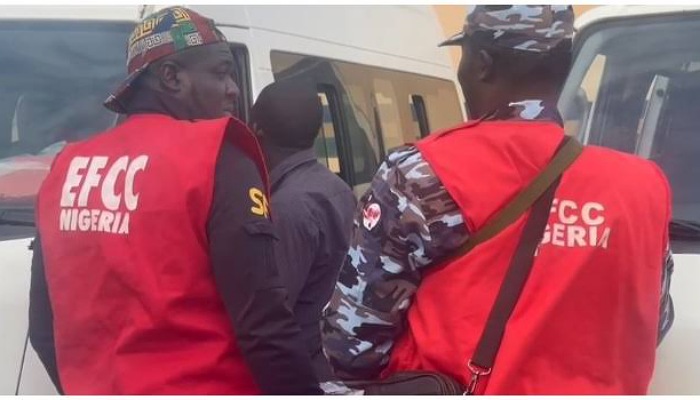
The Economic and Financial Crimes Commission (EFCC) has charged Ibrahim Shuaibu with fraud before Justice Darius Khobo at the Kaduna State High Court.
Shuaibu faces seven counts, including criminal breach of trust, impersonation, and obtaining by false pretenses, involving N100 million.
Read Also: BREAKING: NLC President, Joe Ajaero Arrested By DSS
The EFCC announced the case in a statement released via it’s X account on Monday.
Shuaibu pleaded “not guilty” to all charges, leading prosecution counsel M. Lawal to request a trial date.
His defense attorney, AbdulKareem Audu, did not submit a bail application, prompting Justice Khobo to remand Shuaibu in EFCC custody.
The charges stem from an incident in 2017 when Shuaibu fraudulently claimed to be the Group Executive Director of NNPC, promising to help his victim acquire over 2,000 litres of petroleum products.
The victim made several payments to Shuaibu’s bank accounts, but Shuaibu failed to deliver the products or return the funds.
Count one of his charges reads, “That you, Nuhu Ibrahim Shuaibu (a.k.a Ishaku Abdulrazak) (M) and lIya Garba (now deceased) sometime in 2017 in Kaduna within the judicial division of this honourable court did conspire between yourselves to do an illegal act, to wit: obtaining money under false pretence and thereby committed an offence contrary to Section 8(a) of the Advance Fee Fraud and Other Fraud Related Offences Act, 2006 and punishable under Section 1(3) of the same Act.”
Another reads, “That you, Nuhu Ibrahim Shuaibu (a.k.a Ishaku Abdulrazak)(M) sometime in 2018 at Kaduna within the judicial division of this honourable court, with intent to defraud, obtained the total sum of N47,050,000.00 (Forty-Seven Million and Fifty Thousand Naira) from one Faisal Safiyanu, when you claimed to supply him petroleum products, which pretence you knew to be false and thereby committed an offence contrary to Section 1(1)(a) of the Advance Fee Fraud and Other Fraud Related Offenses Act 2006 and punishable under Section 1(3) of the same Act.”













The Ogun State Police Command has taken a 56-year-old man, Madarikan Emehinola, into custody in connection with a suspected arson incident that claimed the life of his 40-year-old wife, Igbagbo Erobe, in the Igbo-Edu area of Ogun Waterside Local Government Area.
The incident was reported at the Abigi Divisional Police Headquarters on Sunday, October 18, 2026, following information that a house had been set ablaze, resulting in the woman’s death.
SEE ALSO: Tinubu vs Obi: Omokri Fires Back at Peter Okoye Over Call to Retire Older Politicians
The Ogun State Police Command disclosed the development in a press release issued on Sunday, stating that the husband was in custody in connection with the incident.
The deceased’s body has been deposited at a mortuary for post-mortem examination to establish further details surrounding her death.
The police also disclosed that the case was being processed for transfer to the State Criminal Investigation Department (SCID), Eleweran, Abeokuta, for further investigation.
The Commissioner of Police in Ogun State, CP Bode Ojajuni, psc, FCSS, MNIPR, assured the public that the matter would be investigated diligently and professionally in accordance with the law.
According to the statement, the commissioner assured the public that “the matter will be investigated diligently and professionally in accordance with the law.”
Ojajuni reiterated the command’s commitment to protecting lives and property, stressing that allegations of serious crimes would receive appropriate investigative attention.
The command also called on members of the public to report suspicious activities promptly and provide credible information that could assist crime prevention and ongoing investigations.
“The Command urges members of the public to report suspicious activities promptly and provide credible information that may assist crime prevention and ongoing investigations,” the statement read.
The circumstances surrounding the fire and the alleged involvement of the husband remain subject to investigation.
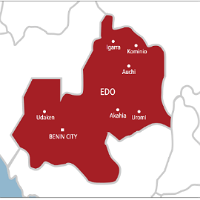
The National Drug Law Enforcement Agency (NDLEA) has arrested an 85-year-old woman, Grace Ehimeka, after recovering 179 kilogrammes of skunk from her during anti-drug operations in Owan East Local Government Area of Edo State.
Ehimeka was among six suspects arrested during raids conducted by NDLEA operatives in the area as part of a series of nationwide operations targeting illicit drugs.
The operations in Edo State also led to the recovery of another 220.8 kilogrammes of skunk, alongside smaller quantities of cannabis and other controlled substances.
ALSO READ: Edo Police Probe Officer Seen Firing Rifle During Clash With Traffic Officials
The arrest was one of several recorded during the agency’s nationwide operations, which resulted in major drug seizures across multiple states.
In Lagos, the NDLEA seized 8,725 kilogrammes of tramadol hydrochloride powder worth over ₦6.98 billion at Apapa Port. The shipment, which originated from India, had been declared as maize starch.
The agency also intercepted cannabis concealed in palm oil at the Mallam Aminu Kano International Airport. The consignment was allegedly intended for Saudi Arabia, while two suspects were arrested in connection with the case.
In Ondo State, operatives destroyed an estimated 7,500 kilogrammes of skunk cultivated on three hectares of farmland and arrested five suspects.
Other seizures were recorded in Bauchi, Kano, Kaduna and the Federal Capital Territory, including large quantities of tramadol, Exol-5 tablets and cannabis.
The operations formed part of the NDLEA’s ongoing efforts to disrupt the trafficking and distribution of illicit drugs across the country.

A 70-year-old man, Alhaji Saleh Kasim, has been killed during a bandit attack on Gamji Village in Sabuwa Local Government Area of Katsina State, while 27 abducted residents have been rescued by security forces.
The Katsina State Government disclosed this in a press release issued on Saturday by the Commissioner for Internal Security and Home Affairs, Dr Nasir Mu’azu.
According to the statement, about 40 armed bandits, led by a suspected gang leader identified as Kachalla Alhaji Bawa Kabir, invaded the community in the early hours of October 16, 2026.
SEE ALSO: Two Suspected Bandits in Police Net in Katsina
The attackers reportedly arrived on 20 motorcycles, abducted 27 residents, mostly women, children and elderly people, and rustled six cows.
The government said Kasim was shot dead during the attack.
Following credible intelligence, troops of the 17 Brigade, working with local hunters and the Community Watch Corps, moved to block the attackers’ escape routes towards the Madaci forest enclave.
At about 6 p.m. on the same day, the troops engaged the bandits at Tashar Bawa forest and successfully rescued all 27 abducted residents.
The rescued victims were subsequently taken to the Machika Military Forward Operating Base for medical attention.
The statement added that joint security teams had commenced clearance operations to flush out the remaining members of the gang and prevent possible reprisal attacks on the community.
The Katsina State Government, under Governor Dikko Umaru Radda, reaffirmed its commitment to protecting residents across the state.
Mu’azu commended the troops and community-based security groups for their swift response to the incident.






Renaissance, Sterling Bank Back Indigenous Oil and Gas Contractors Financially

Group Demands Fair Share of NNPC Jobs for Ogoni Oil Exploration

NNPC Ltd Exploration Spending Down 87%

200 Imo Teachers Benefit from NCDMB’s Effective Curriculum Training

FG to Launch National Lead Poisoning Prevention Plan Wednesday

EndSARS Memorial: ‘Nigerians Still Deserve Answers’ – Atiku

Trump’s Family Unveils New Cryptocurrency Platform

Senate Denies Receiving Petitions Against Tinubu’s Ambassadorial Nominees

Dangote Cement Lights Up Benue Host Communities With CSR Initiatives

Reps Recommend 3-year Jail Term For Aviation minister

Tems Sets New Record On Billboard Hot 100 Chart
