Politics
Ekiti Tribunal Upholds Governor Oyebanji’s Election


The Ekiti State Governorship Election Petitions Tribunal sitting in Ado Ekiti has upheld the victory of the candidate of the All Progressives Congress (APC), Biodun Oyebanji, in the June governorship election in the state.
Oyebanji had polled a total of 187,057 votes to defeat his two closest challengers – Segun Oni of the Social Democratic Party (SDP) and Bisi Kolawole of the People’s Democratic Party.
The SDP emerged in second place with total votes of 82,211 while the PDP was third with 67,457 votes.
Unsatisfied with the outcome of the election, SDP’s Oni had on July 7 filed a petition at the tribunal challenging the declaration of the All Progressives Congress (APC) candidate, Biodun Oyebanji, by the Independent National Electoral Commission as the winner of the election.
He hinged his case on alleged election rigging by voter inducement and bypass of the Bimodal Voter Accreditation System (BVAS) at some polling stations; the authenticity of the WAEC certificate presented by the Deputy Governorship candidate of the All Progressives Congress, Monisade Afuye among other grounds.






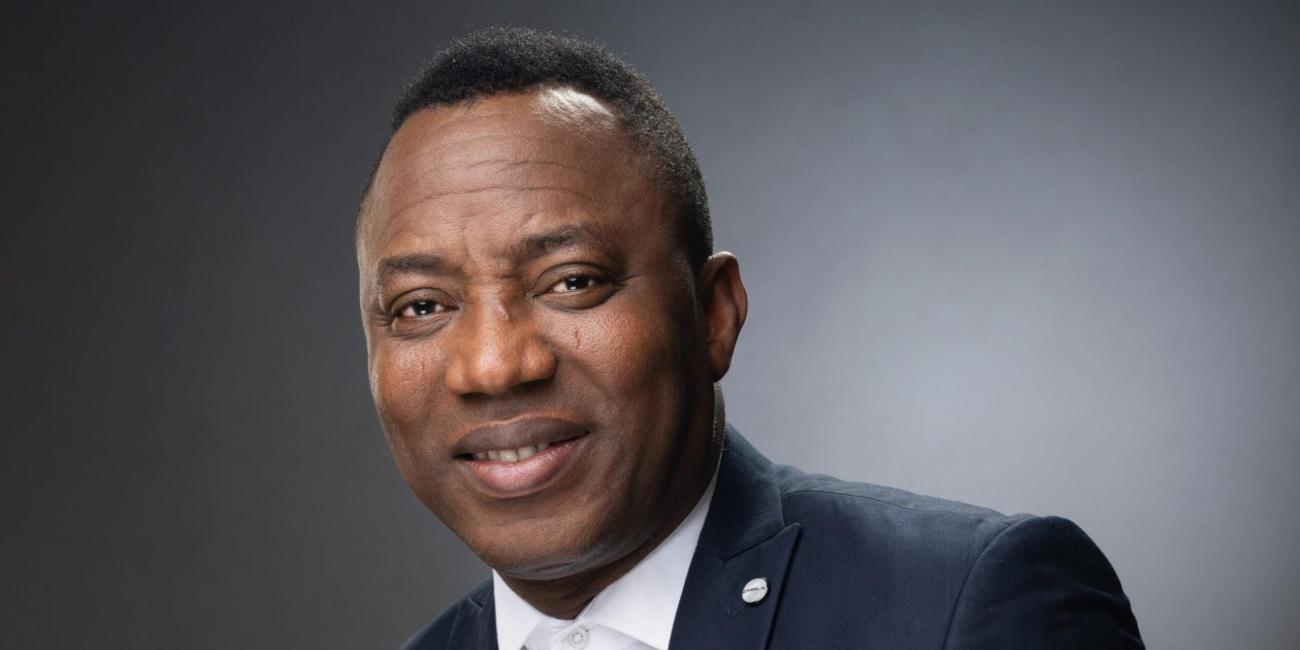
Human rights activist and African Action Congress (AAC) presidential candidate for the 2027 general election, Omoyele Sowore, has led a fresh protest at the headquarters of the Independent National Electoral Commission (INEC) in Abuja, with demonstrators chanting “Tinubu Must Go” during a rally against electoral violence and manipulation.
Sowore disclosed his participation in the protest in a post on his verified X account on Monday, November 23, describing the atmosphere at the commission’s headquarters as “electrifying” as protesters erupted into a chorus of “Tinubu Must Go” upon his arrival.
Titled “Arrival at INEC Headquarters: Nigerians Reject Electoral Violence and Manipulation!”, the statement highlighted the protesters’ opposition to electoral violence and alleged manipulation ahead of the 2027 general elections.
SEE ALSO: Ekiti Attack: Sowore Tracks Stolen Phones Near Governor’s Office, Demands CCTV Footage
During the protest, Sowore also took a swipe at opposition presidential aspirants, accusing some of them of waiting for ordinary Nigerians to make sacrifices on their behalf while remaining preoccupied with political negotiations.
He criticised politicians who, according to him, were staying away from street demonstrations while citizens confronted the system.
“I made it a duty to remind Nigerians that many of the so-called opposition presidential aspirants are waiting for others to make the sacrifices on their behalf,” he wrote.
“While ordinary Nigerians confront the system on the streets, these politicians remain tucked away in cozy conference rooms, negotiating who gets what and who will control Nigeria’s resources if they eventually capture power.”
Sowore insisted that political change could not be achieved by leaving the responsibility of challenging the system to ordinary citizens while politicians waited to benefit from their sacrifices.
“You cannot outsource the struggle for liberation and expect to inherit its rewards!” he declared.
The November 23 demonstration followed an earlier call by Sowore on opposition politicians to organise nationwide protests against what he described as political violence under President Bola Tinubu’s administration.
On November 16, the AAC presidential candidate challenged former Bayelsa State Governor and Nigeria Democratic Congress (NDC) leader, Seriake Dickson, over his proposal for an emergency summit involving political parties to address rising political violence and attacks on party members and supporters.
Dickson had called on the Independent National Electoral Commission, the Inter-Party Advisory Council, the National Peace Committee led by former Head of State Abdulsalami Abubakar, and security agencies to convene an all-party summit to address the growing concerns.
However, Sowore dismissed the proposed meeting as another political gathering unlikely to produce meaningful results, arguing that Nigeria had witnessed too many summits, speeches, communiques and declarations without corresponding action.
In his November 16 post, he directly challenged Dickson to mobilise Nigerians for nationwide demonstrations beginning November 23.
“Former Governor Seriake Dickson, the supreme leader of the NDC, should stop bothering ‘political parties’ with yet another jamboree disguised as an ‘emergency summit’,” Sowore wrote.
He further urged opposition leaders to organise demonstrations and lawful strikes across the country.
“Mobilize and put people on every street corner on November 23, 2026, to mark the beginning of sustained, nationwide mass action, including lawful strikes and demonstrations, demanding an end to political violence from the Tinubu regime,” he stated.
Sowore also challenged the opposition to prove that they were genuinely committed to resisting the administration rather than pursuing political arrangements ahead of the next election.
“You all have a chance now to prove to Nigerians that you’re not working for Bola Ahmed Tinubu’s 2027 ‘re-selection’,” he added.
The latest protest at INEC headquarters and Sowore’s renewed criticism of opposition politicians highlight growing disagreements among opposition figures over how to confront alleged political violence and strengthen democratic participation ahead of the 2027 elections.
While Dickson had advocated dialogue through an emergency summit, Sowore has continued to push for street mobilisation and sustained public action as a means of demanding accountability from political leaders and challenging electoral concerns.
Politics
2027 Elections: NEIS Unveils Operational Timetable, Sets November 28 for Mock Election Simulation

The Nigeria Election Intelligence System (NEIS) has unveiled a tentative operational timetable for its preparations ahead of the 2027 presidential and National Assembly elections, with its first public mock election night simulation scheduled for November 28.
According to the timetable released on Monday, the organisation will commence civic agent training on November 30, while the launch of its ward and local government collation features is scheduled for December 2.
NEIS also listed December 16 as the deadline for commissioning its last general election opinion poll ahead of the polls.
SEE MORE: NEIS Offers 9,583 Agents to Monitor 2027 Election Results
The organisation described the schedule as tentative, noting that the dates and activities could be adjusted.
The development comes as preparations for the 2027 general elections gather momentum, with growing attention on electoral technology, result management and transparency.
The November 28 simulation is expected to provide an opportunity to demonstrate aspects of the organisation’s election-night operations ahead of the general elections.
The latest timetable follows an earlier announcement by NEIS that it was prepared to deploy 9,583 collation agents across Nigeria to independently monitor results during the 2027 general elections.
In a previous report, Biztellers reported that the organisation proposed deploying 8,809 ward collation agents and 774 Local Government Area (LGA) collation agents as part of efforts to strengthen transparency in the result collation process.
NEIS also pledged to make images of collation sheets publicly available to enable Nigerians independently examine results as they move through the collation process.
“We will publish images of the Collation sheets publicly for all Nigerians,” the organisation stated.
It added: “We have the Technology and the Manpower.”
The proposal followed concerns surrounding the Independent National Electoral Commission’s (INEC) position that it would not upload results from ward, local government and state collation levels to its Result Viewing Portal (IReV) during the 2027 elections.
INEC’s Director of Information and Communication Technology, Lawrence Bayode, had earlier disclosed at a stakeholder roundtable in Abuja that the commission had neither developed nor tested the technological infrastructure required to upload results from those collation levels.
“We have not built the system; we have not tested the system,” Bayode said.
NEIS’s proposed deployment of collation agents is aimed at providing an independent monitoring mechanism that would allow citizens to follow results beyond the polling unit level.
The organisation describes itself as an independent and non-partisan election intelligence platform, with INEC retaining the statutory responsibility for conducting elections and officially declaring results.
The Nigeria Election Intelligence System (NEIS) has offered to deploy 9,583 collation agents across the country to monitor election results at ward and local government levels, following the Independent National Electoral Commission’s (INEC) position that it would not upload results from the collation levels to its Result Viewing Portal (IReV) during the 2027 general elections.
NEIS said it was prepared to deploy 8,809 ward collation agents and 774 Local Government Area (LGA) collation agents as part of efforts to promote transparency and public access to election results.
The organisation also pledged to publish images of the collation sheets publicly, giving Nigerians an opportunity to examine the documents and independently monitor the collation process.
SEE MORE: INEC Debunks Amupitan Resignation Rumour After London Protest, Voter Register Controversy
“We will publish images of the Collation sheets publicly for all Nigerians,” NEIS stated.
It added: “We have the Technology and the Manpower.”
The organisation called on Nigerians to demand that INEC either upload the collation sheets to IReV or grant its collation agents access to obtain images of the documents directly from collation centres.
The proposal comes amid concerns over INEC’s decision not to extend electronic publication of results on IReV beyond polling unit-level results ahead of the 2027 elections.
On November 18, INEC’s Director of Information and Communication Technology, Lawrence Bayode, disclosed that the commission had not developed or tested the technological infrastructure required to upload results from ward, local government and state collation centres to IReV.
Bayode made the disclosure during a stakeholder roundtable on election results tabulation organised by Yiaga Africa in Abuja.
Responding to questions about why the commission could not upload Forms EC8B, EC8C and EC8D, which contain results from ward, local government and state collation centres, respectively, he said: “We have not built the system; we have not tested the system.”
He explained that the commission’s existing arrangement provides for the upload of polling unit results recorded on Form EC8A, while the infrastructure required to publish results from subsequent collation stages was not yet in place.
The disclosure generated renewed debate over electoral transparency, particularly the availability of results at different stages of the collation process.
INEC’s position also raised questions about how Nigerians would independently verify results as they move from polling units through ward and local government collation centres.
NEIS’s offer seeks to address part of that concern through an independent monitoring arrangement involving thousands of agents and the public release of collation sheet images.
However, the organisation’s request for access to collation centres would require appropriate arrangements with the electoral commission.



Sahara’s MT Asharami Geneva to Boost Africa’s LPG Supply

‘Tinubu Must Go’: Sowore Leads Fresh Protest at INEC, Knocks Opposition Aspirants
Oando Calls for Greater Inclusion in Energy Sector
2027 Elections: NEIS Unveils Operational Timetable, Sets November 28 for Mock Election Simulation

2026 Licensing Round: NUPRC Opens Portal for 40 Oil, Gas Blocks

Indian Firms to Supply DPRP with $38.94m Pumping Systems

Trump’s Family Unveils New Cryptocurrency Platform
Senate Denies Receiving Petitions Against Tinubu’s Ambassadorial Nominees

Dangote Cement Lights Up Benue Host Communities With CSR Initiatives

Reps Recommend 3-year Jail Term For Aviation minister

Tems Sets New Record On Billboard Hot 100 Chart