
Politics
Ekweremadu says for Nigeria’s democracy to work, Direct Primary remains the only viable mode

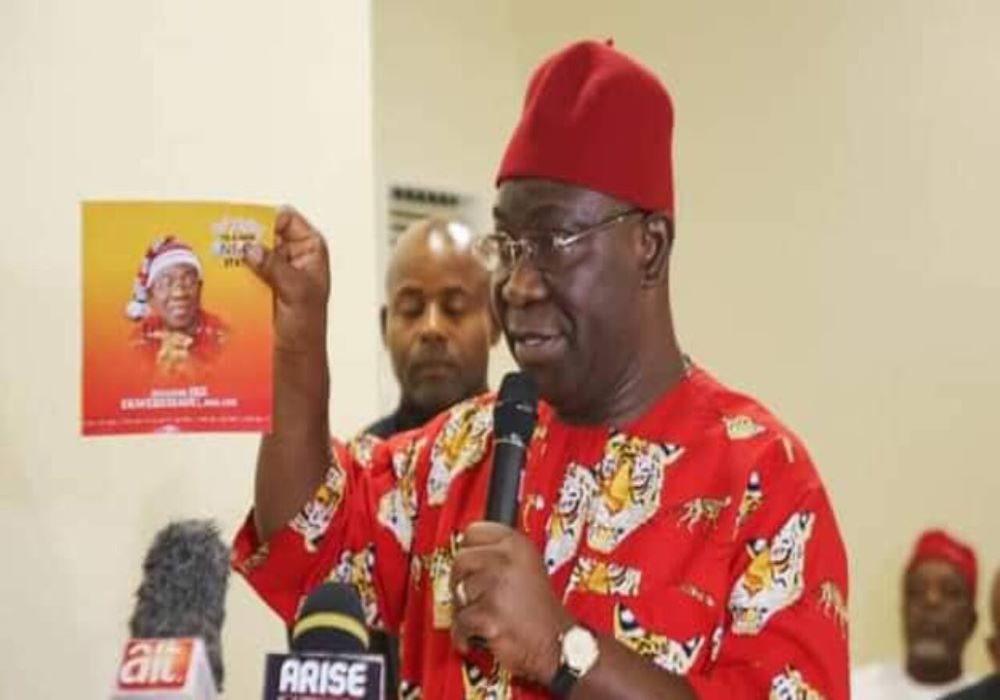
To consolidate on the Nigerian Nascent democracy former Deputy President of the Senate, Senator Ike Ekweremadu, has indicated that only direct primary election option is most viable in the nomination of candidates.
The senate had infused direct primary as the only option in the 2022 electoral act which prompted President Buhari to decline assent to the bill until the National assembly deleted the clause to allow for Indirect, Direct and Consensus options
Again, most of the senators lost out due to the supremacy battle with their governors as the consensus option was adopted by most States.
A statement issued by his special adviser on media Uche Anichukwu also quoted the lawmaker to have rued the negative influence of narrow and partisan interests in the making of 2022 Electoral Act, as the long-delayed creation of state police could no longer guarantee internal security.
He also called on the nation’s leaders to seek urgent help of the international community to flush out terrorist cartels or risk Nigeria becoming another Somalia.
Ekweremadu spoke at a commemorative lecture, “Nigeria’s Democratic Experience: Reflections on Leadership Recruitment and Democratic Institution Building”, organised by the National Legislative and Democratic Institute (NILDS) in Abuja on Tuesday.
“When we mounted the leadership of the 6th National Assembly in 2007, and in subsequent Assemblies, we took it upon ourselves to reform the electoral system, including strengthening the critical institutions in the electoral process, namely the Independent National Electoral Commission (INEC) and the political parties.
“Whereas the INEC has really stabilised and improved greatly, the political parties have not made the expected progress.
Read Also >> Lawan Hails President Buhari Over Successful APC Presidential Primary
“Some of our efforts include financial autonomy for the INEC; administrative autonomy for the INEC; removal of membership of a political party as a qualification for appointment into the INEC; early release of funds to INEC; early primaries to allow time for resolving any issues, while also allowing the INEC 360 days to prepare for elections; barring of the INEC from rejecting/disqualifying candidates; removal of the INEC officials as respondents in election petitions; removal of restriction on electronic voting; legal backing for smart card readers and any other voter accreditation technology that the INEC may deploy; and electronic transfer of results; and ending of disqualification of candidates by administrative panels.
“Others are compulsory conduct of party primaries to address the issue of impositions; substitution of candidates only in the event of death or written withdrawal by a candidate; early commencement of election campaigns; empowerment of political parties to conduct primary election to replace a candidate who died in the course of an election; timeframe for determination of pre-election matters; timeframe for determination of election petitions; stoppage of government subventions for political parties; window for direct primaries; reduction of age qualification for political offices; stipulation of the conditions and process for deregistration of political parties, among other vital reforms”, he stated.
Ekweremadu, however, said that whereas several milestones were achieved in the Electoral Act 2022, the Act could have been better were the processes not hijacked by narrow and political interests.
He said: “A thorough scrutiny of the Act would show that unlike the Electoral Act 2010, Electoral Act 2022 lacks sequence and coordination, as lot of things were jumbled up.
“Furthermore, it took the intervention of some of us for critical provisions to make it into the Electoral Act. For instance, I personally drafted the provision for the Electronic Transmission of Results for inclusion in the Bill because for whatever reason, it was not there originally.
“It took enormous push by some progressives among the Committee members to push such provisions through.
“Even after we had signed off on the report, there were still attempts to water it down to suit narrow and party interests. Thank God, some of us as well as the media and CSOs were alert.
“It was also the hijack of the process to tailor the law to serve narrow group and partisan interests that resulted in the grave error of the exclusion of statutory delegates, including lawmakers themselves, from participation in party primaries”.
Ekweremadu explained that the whole essence of direct primary was to ensure that all bona fide members of each political party partake in the primary elections and make hijack of the process by a few persons difficult, adding that the result of the veto of that provision by the President and insistence on the restoration of delegate mode and inclusion of consensus mode of nomination was “the recent political fraud perpetrated across the nation and across various political parties in the name of party primaries”.
“Today, not only does money play greater roles in the emergence of candidates, turning delegates to overnight millionaires, because the delegates are fewer, the non-participation of statutory delegates was fate playing into the hands of the governors, who colluded with greedy party leaders to manipulate the emergence of ad-hoc delegates and weaponise them fully for their selfish political interests.
“At the end of the day, democracy and the people, are at the receiving end, as the masses can only elect candidates thrown up by the various political parties.
“My advise, therefore, is that we need to restrict political parties to direct primaries as the only mode of nominating candidates if we truly want to preserve and grow our democracy, and recruit leaders that will truly serve the collective interest” he added.
Ekweremadu, further advocated that only political parties, which made their electronic and biometric membership registers available to INEC at least one year to the commencement of the primary elections, should be allowed to nominate candidates for the general election.
He, however, called for bold steps to “recalibrate our security system because we must first have a secure country before we can have a meaningful democracy”.
“Currently, Nigeria is gliding down the slope and we all have ourselves to blame for refusing to do the right thing over the years.
“Before now, some of us had shouted on top of our voices on the need to decentralise the police system, but to no avail. I sponsored a Bill for the Creation of State Police in the 8th and the current National Assembly, but nobody seemed to pay attention.
“I regret to inform you that by my own estimation and taking lessons from other climes, our condition has become so bad that even state police can no longer save us now.
“Terrorists, bandits, and all manner of criminal cartels have taken the nation by the jugular, and we must now urgently seek the help of the international community, lock the country down, and deal with our security situation.
Otherwise, once a few of the terrorist cartels are able to take full control of a few states for their respective selves, our fate would be like that of Somalia. God forbid”, he concluded.





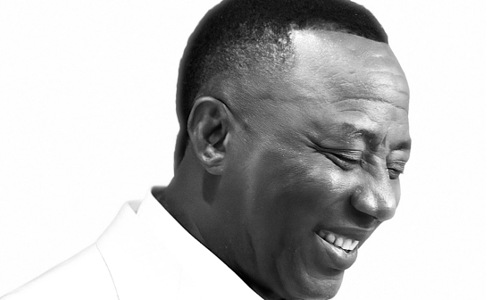
The African Action Congress (AAC) has asked President Bola Tinubu to approve the inauguration of its Presidential Campaign Council at the Presidential Villa, Aso Rock, Abuja, ahead of the 2027 general elections.
The party also requested food, drinks and other logistical support for 5,000 participants expected to attend the event from within and outside Nigeria.
The requests were contained in a letter dated October 21, 2026, and addressed to the President at the Presidential Villa. The party proposed November 11, 2026, for the inauguration ceremony.
SEE ALSO: 2027: Sowore Unveils Sweeping Agenda, Says AAC Will Transform Nigeria
In the letter, the AAC said its requests were based on the principles of multiparty democracy, political inclusiveness and equal treatment of political parties.
The party also referred to arrangements reportedly extended to the All Progressives Congress (APC) for a similar political engagement, arguing that its request should receive equal consideration.
The AAC said approving the requests would demonstrate the Presidency’s commitment to fairness and equal access to public institutions, regardless of political affiliation.
“We believe that granting this request would demonstrate the Presidency’s commitment to fairness, equal access, and the principle that public institutions must serve all Nigerians without partisan discrimination,” the letter stated.
The party further requested information on the applicable procedures and conditions for approval.
The letter was signed by the AAC National Secretary, Oshiokhue Philip Ikpeminoghena, on behalf of the party.
The proposed inauguration is part of the party’s preparations for the 2027 general elections.


The House of Representatives Committee on Petroleum Resources (Downstream) has launched investigations into petitions seeking the cancellation of gas distribution licences held by NIPCO Plc in five locations.
This is as the Committee accused the Executive Vice President (Downstream) of the Nigerian National Petroleum Company Limited (NNPC Ltd), Dr Mumuni Dagazu, of money laundering and abuse of office.
The Committee also constituted two sub-committees to conduct preliminary investigations into the petitions, which its Chairman, Ikenga Ugochinyere, described as serious complaints requiring urgent attention.
READ MORE: UNDC Assures on Readiness to Protect Oil, Gas Pipelines
The decision was announced on Monday in Abuja at the technical briefing marking the end of Downstream Week 2026.
The Sub-Committee investigating the allegations against Dagazau will be chaired by Aliyu Al-Mustapha, with Amobi Ogah as Deputy Chairman. It has seven days to conduct a preliminary investigation and report its findings to the main Committee.
The Sub-Committee examining the NIPCO petition will be chaired by Peter Aniekwe, while Shehu Dalhatu would serve as Deputy Chairman.
The petition against NIPCO calls for the investigation, suspension and cancellation of gas distribution licences issued by the Nigerian Midstream and Downstream Petroleum Regulatory Authority (NMDPRA) to the company for Lagos, Ogun, Oyo and Osun states, as well as the Lagos and Lekki Free Trade Zones.
In the second petition, the complainants accused Dagazau of money laundering and abuse of office. The Committee, however, stressed that the allegations had not been established and that the investigation would determine the merits of the complaints.
Addressing journalists at the event, Ugochinyere said the Committee had not reached any conclusion on either matter, assuring all parties of a fair hearing.
“These are allegations, and the Committee has reached no conclusion on them. All parties will be given a full and fair opportunity to be heard,” he said.
He added that the Committee would not ignore complaints touching on the integrity of the downstream petroleum sector and promised that Nigerians would be informed of the outcome of the investigations.
Neither NIPCO Plc nor Dagazau had publicly responded to the petitions as of the time of the briefing.
The investigations formed part of the Committee’s wider review of developments in the downstream petroleum sector during Downstream Week 2026, at which it also passed votes of confidence in President Bola Tinubu, the leadership of the NMDPRA and Alhaji Aliko Dangote.
The Committee said reforms in the sector were yielding results but identified pipeline security, reliable crude supply to domestic refineries and a properly regulated import market as areas requiring sustained government attention.
Ugochinyere praised the NMDPRA’s Chief Executive, Rabiu Umar, and the authority’s Executive Directors, saying their work had helped stabilise the sector.
Figures presented at the briefing indicated that “domestic refineries increased their contribution to national petrol supply by more than 75 per cent, with no supply shortfalls recorded and more than 25 days of national sufficiency maintained.”
The committee also cited “the commissioning of the Port Harcourt Petroleum Product Laboratory, the licensing of a petroleum liquid trading exchange and the finalisation of a framework for a national strategic stock of up to 20 days,” adding that, “plans are in place to raise the reserve to 90 days in 2027.”
Despite the progress, Ugochinyere insisted that energy security depended on effective pipeline protection and adequate crude supply to local refineries.
“There is no supply security without pipeline security,” he said, adding that importation should supplement verified shortfalls rather than become a permanent substitute for domestic production.
He also called for strict enforcement of the Domestic Crude Supply Obligation, saying local refineries must have reliable access to feedstock to remain viable.
The Committee disclosed that it had opened an inquiry into alleged underpayment for crude oil by some companies and questioned NNPCL over legacy transactions and refinery rehabilitation.
“We will not accept silence as an answer,” Ugochinyere warned.
The committee further urged the Federal Government to increase funding for pipeline surveillance and ensure timely provision of logistics to operators, arguing that improved security had contributed to the rise in crude oil production.
It expressed confidence that Nigeria could achieve its target of producing three million barrels of crude oil per day with sustained government support.
The committee also said it would continue to pursue amendments to the Petroleum Industry Act to strengthen provisions on crude supply to domestic refineries, licensing and protection of local refining investments, while maintaining a regulated import market.
Ugochinyere said the objective was to balance immediate security of supply with the long-term development of Nigeria’s domestic refining capacity.
“Our goal is balance: security of supply today, and a strong domestic refining industry for tomorrow,” he stressed.
The All Progressives Congress (APC) Presidential Campaign Council is scheduled to hold its inaugural meeting on Tuesday, October 20, 2026, to consider its campaign calendar and preparations for the campaign flag-off in Kaduna.
The meeting, according to an internal memorandum released on Sunday and signed by Imo State Governor Hope Uzodimma, Secretary of the Presidential Campaign Council, will take place at 2 p.m. at the council’s headquarters, Plot 781, Herbert Macaulay Way, Central Business District, Abuja.
SEE ALSO: ‘The Entire North Has Made Up Its Mind for Tinubu’ — APC Chieftain
The notice states that attendance is “strictly by invitation” and restricted to the 134 members of the Presidential Campaign Council listed in the distribution list.
It explains that the meeting will formally commence the council’s collective assignment and provide an opportunity for members to consider and adopt the campaign calendar.
“The meeting will formally commence the collective assignment of the Council and provide an opportunity to consider and adopt the Campaign Calendar,” the memorandum stated.
It added that members would also deliberate on other related matters, including preparations for the campaign flag-off scheduled to take place in Kaduna on Saturday, October 24, 2026.
Governors, National Assembly Leaders Listed
The distribution list includes state governors, National Assembly leaders and officials assigned to various campaign directorates.
Among those listed as state coordinators are Imo State Governor Hope Uzodimma, Lagos State Governor Babajide Sanwo-Olu, Kaduna State Governor Uba Sani, Enugu State Governor Peter Mbah, Borno State Governor Babagana Zulum and Rivers State Governor Nyesom Wike.
Others include Akwa Ibom State Governor Umo Eno, Anambra State Governor Charles Soludo, Delta State Governor Sheriff Oborevwori, Ogun State Governor Dapo Abiodun and Osun State Governor Ademola Adeleke.
Senate President Godswill Akpabio and House of Representatives Speaker Tajudeen Abbas are also listed among the council’s leadership.
Campaign Directorates
The memorandum identifies officials responsible for coordinating different aspects of the campaign, including media and strategic communications, new media, finance and treasury, fundraising, policy and manifesto development, legal affairs, security and intelligence, data management, and contact and mobilisation.
The Directorate of Media and Strategic Communications lists Mohammed Idris Malagi as Coordinating Director I and Abdulaziz Abdulaziz as Coordinating Secretary I.
Segun Dada and Solomon Arowolo are listed as director and secretary, respectively, of the Directorate of New Media.
Other directorates listed include infrastructure mobilisation and sensitisation, creative sector mobilisation, artisan mobilisation, diaspora mobilisation, women mobilisation, sport sector mobilisation and mobilisation of people living with disabilities.
The document also identifies a Parliamentary Mobilisation Directorate for State Assemblies.
In the memorandum, Uzodimma thanked members for their cooperation and commitment to the assignment.
“Thank you for your usual cooperation and dedication to the success of this important assignment,” he stated.
The meeting is scheduled to hold four days before the campaign flag-off in Kaduna, which the memorandum identifies as a key item for discussion.






With Crude at $111, IEA Sees Prolonged Crisis
NCDMB Joins Hand with Manufacturers to Boost Local Oil, Gas Components Production

Dangote Preaches Ambition, Africa First to Nigerian Creatives

Protest Against Oil Company’s Vessel in Rivers Takes 10 Lives

FRSC Warns Drivers After Brake Failure Kills Two in Kano Crash

AAC Seeks Tinubu’s Approval, Logistical Support for 5,000 at Campaign Event

Trump’s Family Unveils New Cryptocurrency Platform

Senate Denies Receiving Petitions Against Tinubu’s Ambassadorial Nominees

Dangote Cement Lights Up Benue Host Communities With CSR Initiatives

Reps Recommend 3-year Jail Term For Aviation minister

Tems Sets New Record On Billboard Hot 100 Chart
