
Politics
Enugu Gov-Elect Shops NYSC Certificate from FHC

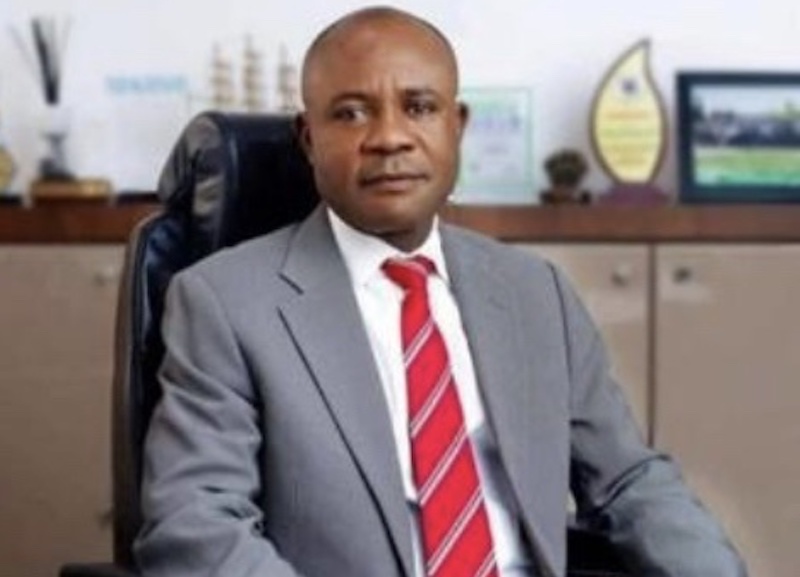
The controversy surrounding the performance of the mandatory one-year national youth service by the governor-elect of Enugu State, Peter Mbah has become subject to legal fireworks.
A senior advocate of Nigeria, Emeka Ozoani, counsel to Mbah had filed a motion ex-parte before the Federal High Court (FHC), Abuja, praying the court to restrain the National Youth Service Corps (NYSC) from further publishing a disclaimer, denying the issuance of a certificate dated January 6, 2003 to Mbah.
Recall that the Independent National Electoral Commission (INEC) announced Mbah of the Peoples Democratic Party, (PDP) as the winner of the Enugu State governorship election held on March 18.
Ruling on the motion, Justice Inyang Ekwo also barred Director, Corps Certification, NYSC, Ibrahim Muhammad, from continuing to issue a disclaimer to the effect that Mbah’s NYSC certificate was not issued by the corps.
Biztellers reports that Ozoani brought the motion under Section 13(1) & (2) of the Federal High Court Act Cap F12, Vol. 6, Law of Federation of Nigeria, 2004, and Order 26 Rule 6(1) of the Federal High Court (Civil Procedure) Rules 2019.
The storyline as detailed by the motion has it that after Mbah graduated in law from the University of East London in 2000, he returned to Nigeria and as a pre-requisite to practice as a barrister and solicitor of the Supreme Court of Nigeria, applied and was admitted into the Bar part 1 programme of the Nigerian Law School.
Mbah said upon completing the Bar Part I exam, he had to wait for the Bar Part 2 programme and was advised that instead of spending time idling around, he should proceed to the mandatory one-year NYSC programme.
He said he was called up for NYSC and was deployed initially to Nigerian Ports Authority Apapa for his primary assignment but was rejected by NPA before securing the law firm of Ude & Associates.
It stated, “The plaintiff in the course of his service year and after six months of NYSC, applied and was granted approval to defer the NYSC in order to enable him to complete the bar final exam.
“Thereafter, the plaintiff was re-mobilized to finish the NYSC programme, which he did complete.”
Mbah averred that upon completion of the NYSC, he was issued the certificate of National Service No. A.808297 dated January 6, 2003.
Justice Ekwo adjourned the matter until May 22 for hearing.
Recall that the NYSC on February 1 wrote a letter under the signature of Muhammed to the effect that the NYSC certificate being paraded by Mbah was not issued by the corps.






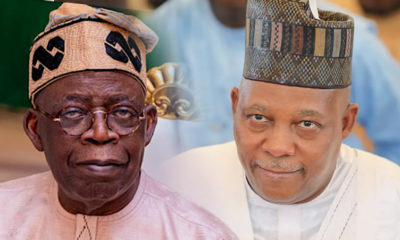


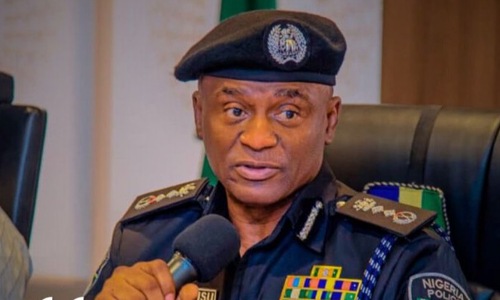
The Nigeria Police Force has warned Nigerian youths against allowing themselves to be used as instruments of political violence ahead of the 2027 general elections, saying their future is more valuable than temporary political inducements.
The warning was contained in a goodwill message delivered by the Force Public Relations Officer, CSP Annie Iniedu, on behalf of the Inspector-General of Police, Olatunji Rilwan Disu, at a National Orientation Agency (NOA) initiative to mobilise Nigerians at the grassroots ahead of the elections on Thursday.
SEE ALSO: IGP Disu Proposes New Police Desk for Nigeria’s Creative Economy, Intellectual Property
The initiative was held under the theme, “Your Vote, Your Voice, Your Future.”
In the message, the Inspector-General urged political parties, candidates and their supporters to embrace issue-based campaigns, tolerance and respect for the rule of law.
“Elections must never become a licence for thuggery, intimidation, vote-buying, ballot-snatching, destruction of electoral materials, or violence,” he said.
Addressing young Nigerians, the police chief warned them against becoming instruments of political violence.
“To our youths in particular: do not allow yourselves to be used as instruments of political violence. Your future is more valuable than any temporary political inducement,” he said.
He also urged eligible voters to reject voter apathy and vote-buying, encouraging them to protect their votes and participate peacefully in the electoral process.
“To all our eligible voters, I urge you to reject voter apathy and vote-buying. Your vote is your voice. Protect it, exercise it peacefully, and allow democracy to work for our nation,” he said.
The Inspector-General assured Nigerians that the police would work with the Independent National Electoral Commission (INEC), other security agencies and relevant stakeholders to protect the integrity of the 2027 elections.
He said the collaboration would involve intelligence sharing, inter-agency cooperation and professional policing to provide a safe and secure environment for voters.
“The Nigerian Police Force assures all Nigerians that we shall remain professional, impartial, and firm against criminal elements seeking to undermine the electoral process,” he said.
The police chief further called for collective efforts to ensure peaceful and credible elections in 2027.
“Let us collectively ensure that in 2027, the ballot defeats the bullet, ideas defeat intimidation, and democracy defeats violence,” he said.
He also urged Nigerians to mobilise for peace, responsible leadership and a credible electoral process ahead of the general elections.


The efforts of the members of the All Progressives Congress (APC) Presidential Campaign Council (PCC) would count for nothing, except for the person who delivers his or her ward at the polls.
Nigeria’s President, and party’s presidential candidate for the 2027 election, Bola Ahmed Tinubu made it clear during the inauguration of the council at the Banquet Hall of the Presidential Villa in Abuja, on Wednesday.
“No one gets credit for an incomplete assignment. So, until you deliver the next election, until you deliver your wards, until you deliver the votes, before we can say thank you,” he said.
READ ALSO:Marketers Eye Portion of FG’s Petrol Discount
The president, who expressed gratitude to party members for their support in the previous election, said the inauguration was more than a formal gathering, describing it as a renewed commitment to Nigerians.
“The APC is ready. We have not gathered merely to inaugurate a council; we have gathered to renew a covenant, a covenant with the Nigerian people and the historic responsibility they have entrusted to us as Nigeria’s governing party. We promise we will not let them down,” he said.
Tinubu also expressed confidence in the party’s ability to secure victory.
“I celebrate you. I celebrate you, no doubt about that. Nigeria will continue to celebrate you. You will see the joy of this victory. You will share in the joy,” he said.
The president also said he would not participate in every aspect of the campaign, stressing that his responsibilities as head of state would remain a priority.
He said party members had cautioned him against allowing the demands of campaigning to distract him from governance, adding that he agreed with their position.
“You have warned me and asked me not to allow the rigour of the campaign to distract me from governance. I hear you. I am in full agreement with your decision. Nigeria needs more attention now than ever before.
“The responsibility of this office does not pause. That responsibility did not recognise our agenda here today. The Constitution allows INEC to make room for parliament but not for the campaign. The job must go on,” he stated.
He, however, pledged to make time to address Nigerians directly while the campaign council coordinates activities across the country.
“However, I will still make time to speak directly with Nigerians even as you lead the campaign in the states and local government areas, so you will excuse me from going everywhere with you,” he said.
The campaign council is chaired by Tinubu, with Vice-President Kashim Shettima and APC National Chairman Nentawe Yilwatda serving as first and second vice-chairmen, respectively.
Senate President Godswill Akpabio, Speaker of the House of Representatives Tajudeen Abbas and Kwara State Governor AbdulRahman AbdulRazaq are the deputy vice-chairmen.
Former Zamfara State Governor Abdulaziz Yari was named director-general of the council.
Other appointments include Femi Gbajabiamila as head of administration, Imo State Governor Hope Uzodimma as secretary, and former APC National Chairman Abdullahi Ganduje as director of stakeholder mobilisation.
Lagos State Governor Babajide Sanwo-Olu was also listed among the party’s campaign officials, while Dele Alake was named spokesman.
The council’s structure includes directorates responsible for mobilisation, election planning and monitoring, finance, fundraising and regional coordination.
The party has also named political figures outside its ranks to coordinate support in some states and regions, including Federal Capital Territory Minister Nyesom Wike for Rivers State and the FCT, Anambra State Governor Chukwuma Soludo for Anambra, and Osun State Governor Ademola Adeleke for Osun.
President Tinubu is seeking a second term in the 2027 presidential election, which the Independent National Electoral Commission has scheduled for January 16, 2027.
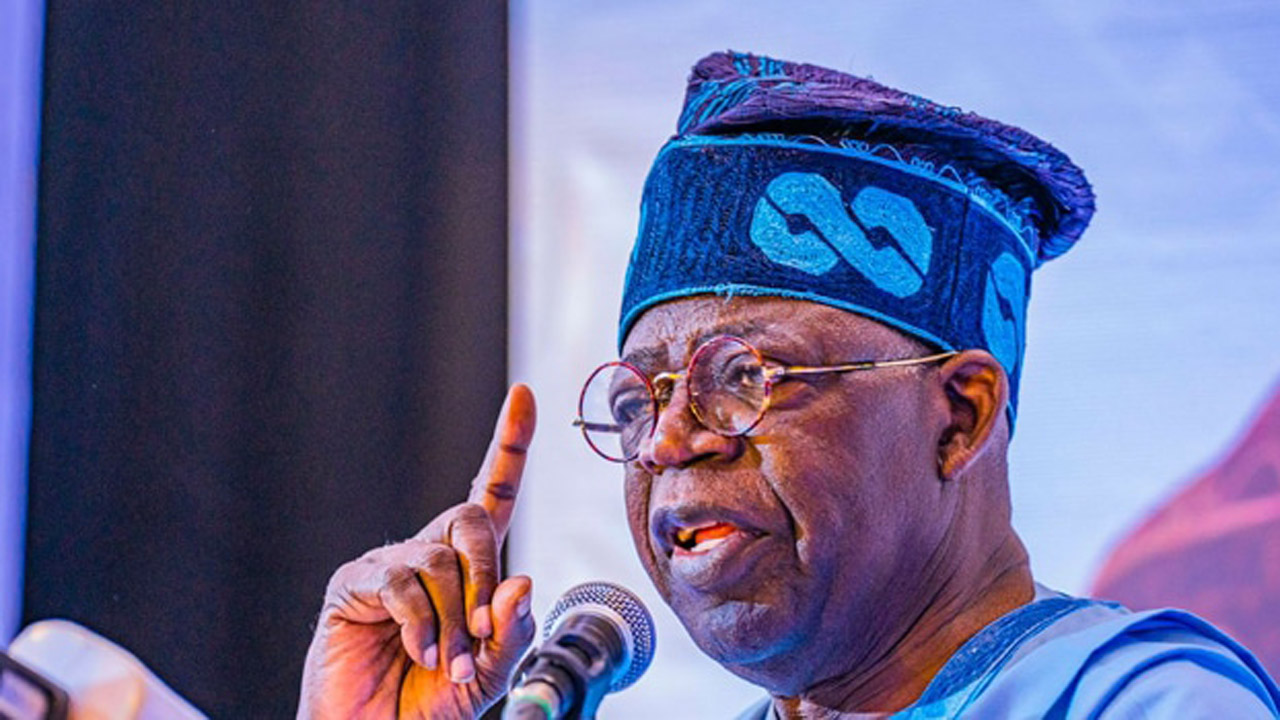
President Bola Tinubu will remain focused on governance despite preparations for the 2027 general elections, according to his Senior Special Assistant on Public Engagement, Fredrick Nwabufo.
Nwabufo made this known in an article titled “Takeaways from the APC Presidential Campaign Inauguration,” in which he highlighted key messages from the inauguration of the All Progressives Congress (APC) Presidential Campaign Council.
He said the decision to maintain governance during the campaign period was important because the President’s mandate would continue until May 29, 2027.
SEE MORE: 2027: ‘Tinubu Has Done Well’– Wike Tells Opposition to Speak the Truth
According to him, campaigns should not come at the expense of governance, stressing that the responsibility of leadership to the people must not be abandoned under any circumstances.
“Campaigns do not have to be run at the expense of governance,” Nwabufo wrote.
He described Tinubu’s decision to remain focused on delivering results to Nigerians while campaigning as both patriotic and judicious.
Nwabufo also highlighted the need for a disciplined and peaceful campaign ahead of the 2027 elections, citing APC National Chairman, Professor Nentawe Yilwatda, who called for a contest based on ideas, records and policies.
“Let the coming election be a contest of ideas, records, and policies and be conducted peacefully and with respect for the Nigerian people,” Yilwatda said.
The presidential aide further pointed to what he described as broad political consensus around Tinubu, noting that political leaders from different platforms had expressed support for the President’s candidacy.
He cited Anambra State Governor, Chukwuma Soludo, as describing the level of elite consensus surrounding the country’s political future as unprecedented.
Nwabufo also highlighted the role of women in the 2027 campaign, noting Tinubu’s pledge to support the Reserved Seats for Women Bill.
He said the President had acknowledged women’s contributions and identified them as important mobilisers for the campaign.
The aide also underscored the importance of young Nigerians to the country’s development, noting that Tinubu and other speakers at the inauguration emphasised the role of youth in shaping Nigeria’s future.
Imo State Governor Hope Uzodimma and House of Representatives Speaker Tajudeen Abbas were among those Nwabufo cited as highlighting the potential of current reforms to avert crises for present and future generations.






2027 Election: ‘Your Future Is More Valuable’ — IGP Warn Youths Against Political Violence

Tinubu Charges PCC Members to Deliver Wards

Marketers Eye Portion of FG’s Petrol Discount

Tanzania Nears Completion of $42bn Equinor, Shell-Led LNG Project

IEA Puts UAE’s Oil Output at 5.3mbpd for September

Africa’s Energy Security Conversations Pull Industry Executives Together

Trump’s Family Unveils New Cryptocurrency Platform

Senate Denies Receiving Petitions Against Tinubu’s Ambassadorial Nominees

Dangote Cement Lights Up Benue Host Communities With CSR Initiatives

Reps Recommend 3-year Jail Term For Aviation minister

Tems Sets New Record On Billboard Hot 100 Chart
