
International News
Equal Pay Day 2026: UN Women Renews Call for Equal Pay as Women Earn 20% Less

UN Women has renewed its call for equal pay for work of equal value, saying women around the world still earn, on average, 20 per cent less than men.
UN Women made the call on Friday, September 18, 2026, to mark International Equal Pay Day, warning that the persistent gender pay gap continues to affect women’s lifetime earnings, economic security and retirement benefits.
According to the organisation, the disparity is even wider for some groups of women, including migrant women, women with disabilities, and women from racial and ethnic minorities.
SEE ALSO: Adeboye Calls for Unity Among Christian Denominations
UN Women said equal pay for work of equal value remains critical to reducing poverty, advancing women’s economic rights and building more inclusive economies.
“This gap is neither inevitable nor acceptable,” the organisation said, stressing that equal pay for work of equal value cannot wait.
The organisation also pointed to renewed momentum in 2026, noting that governments, employers, workers and private-sector leaders strengthened their commitments to addressing structural barriers affecting women in the workplace at the 70th session of the Commission on the Status of Women.
It also highlighted the adoption in June of International Labour Organization Convention No. 193, the first international labour standard focused on decent work in the platform economy.
According to UN Women, the convention could provide stronger protections for women working through digital platforms against issues including unfair pay, harassment, discrimination and opaque algorithmic decisions.
UN Women, alongside the International Labour Organization and the Organisation for Economic Co-operation and Development, continues to work through the Equal Pay International Coalition to support efforts by governments, employers and workers’ organisations to translate equal-pay commitments into action.
The organisation said closing the gender pay gap is possible, but called for greater action to ensure that women are valued equally for work of equal value.
At a time of economic uncertainty and widening inequality, UN Women said equal pay is not only a matter of justice but also contributes to stronger families, economies and societies.
The statement comes as the 81st session of the United Nations General Assembly opens in New York, with UN Women reaffirming women’s economic empowerment as a key priority under its Strategic Plan 2026–2029.












International News
Nigeria Joins Global INTERPOL Operation as AI Identifies 126 Foreign Terrorist Fighters
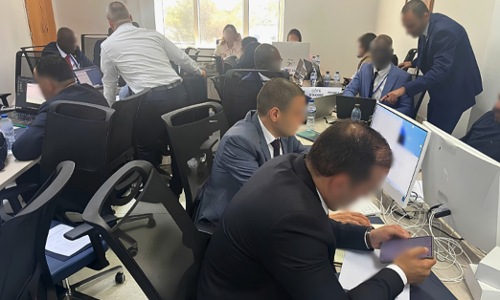
Nigeria has joined 10 other countries in a global counter-terrorism operation coordinated by the International Criminal Police Organization (INTERPOL), in which artificial intelligence was used to help identify 126 Foreign Terrorist Fighters.
Known as Operation Shams II, the five-day operation was conducted from June 1 to 5, 2026, in Tunis, Tunisia, and brought together 28 specialised officers and experts from 11 countries.
According to INTERPOL, law enforcement officers extracted 108,076 facial images from visual content published by jihadist groups during the operation.
SEE MORE: EFCC Warns Lawyers Against Charging Clients in Foreign Currencies
Programmed AI agents and advanced AI-generated scripts were then used to automate parts of the data collection and investigative process, including deduplicating and quality-checking the images.
The technology helped narrow the dataset to 6,362 unique, high-quality facial images, which were subsequently processed through INTERPOL’s Facial Recognition System.
INTERPOL said the AI-generated results were reviewed and verified by trained officers and analysts in accordance with its Rules on the Processing of Data.
“To date, 126 Foreign Terrorist Fighters have been identified from the images processed during Operation Shams II,” the organisation said.
INTERPOL explained that the matches would help enrich existing intelligence on the suspects, including information on their potential locations and social networks.
The intelligence is now being integrated into INTERPOL’s global databases as part of efforts to detect, track and disrupt terrorist movements worldwide.
The operation also received a large intelligence dataset related to terrorism suspects from officers at INTERPOL’s National Central Bureau in Baghdad, Iraq.
INTERPOL said hundreds more images were extracted from the dataset for processing.
Investigative leads generated during the operation are already being used to support judicial procedures in participating countries, including a case involving two currently detained suspected Foreign Terrorist Fighters.
INTERPOL said thousands of additional images are still awaiting processing, meaning further comparisons could produce additional investigative leads.
Beyond facial recognition, Operation Shams II also deployed cryptocurrency tools to trace illicit funding.
According to INTERPOL, the effort resulted in three urgent requests to a Virtual Asset Service Provider for customer data aimed at disrupting terrorist financing flows.
Participating countries also engaged representatives of the online gaming industry on the issue of youth radicalisation in online environments, with discussions focused on strengthening cooperation and information sharing.
INTERPOL Director of Counter-Terrorism, María Carmen Muñoz González, said the operation demonstrated the value of combining international law-enforcement cooperation with responsible AI-assisted analytical capabilities.
The participating countries were Côte d’Ivoire, Ghana, Iraq, Kenya, Malaysia, Nigeria, the Philippines, Qatar, Tajikistan, Tunisia and Uzbekistan.
INTERPOL said Operation Shams II was carried out under the CT TECH+ Project, funded by the European Union’s Foreign Policy Instruments and supported by the United Nations Office of Counter-Terrorism.
Two women have been killed in a fresh attack in India’s northeastern state of Manipur, with the latest incident bringing the number of civilian deaths linked to ethnic violence in the state to 10 in the past three weeks.
The women were killed near their home in Tamenglong district, about 150 kilometres west of the state capital, Imphal.
Confirming the incident on Wednesday, police said the attack occurred on Tuesday afternoon and had triggered a shutdown in the area.
SEE MORE: N59m Withdrawn After Father’s Death as Ondo Commission Arrests Son, Mother
“There is an ongoing shutdown in Tamenglong because of the killing of two women… on Tuesday afternoon,” the district police superintendent, Lanmiyo Luikham, told AFP.
Luikham said the attack appeared to be linked to recent clashes between predominantly Christian Naga and Kuki communities.
“We are carrying out the investigation and necessary formalities, and focusing on maintaining calm in the region,” he said.
The latest killings occurred just days after eight people were killed in three separate incidents across Manipur.
The northeastern state has been plagued by ethnic violence since 2023, primarily involving the predominantly Hindu Meitei majority and mainly Christian Kuki minority.
The conflict has also increasingly drawn in the Naga community.
The violence has been fuelled by competing claims over land and political influence and has claimed more than 250 lives since it began.
Manipur also shares a porous border with war-torn Myanmar, adding to the security challenges facing authorities in the region.
Despite efforts by the Indian government to restore normalcy, fresh outbreaks of violence have continued in parts of the state.
Police said investigations into the latest attack are ongoing as authorities work to maintain calm in the affected area.
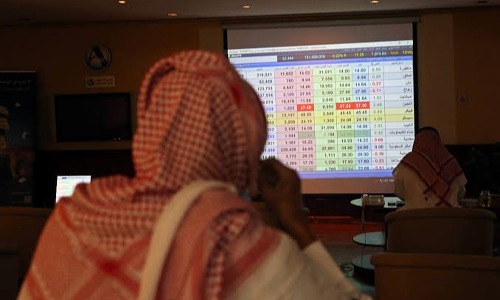
Saudi Arabian shares fell in early trading on Sunday after drone strikes targeted the kingdom’s vital East-West crude oil pipeline, raising fresh concerns over regional oil supplies and infrastructure security.
Saudi Arabia’s benchmark index dropped 1%, weighed down by declines in major companies. Al Rajhi Bank fell 0.8%, while Saudi Arabian Mining Company declined 2.4%.
ALSO READ: Saudi Oil Pipeline Attack: How the Shutdown Could Hit Global Economy
Oil giant Saudi Aramco also slipped 1.1%, while Rabigh Refining and Petrochemical Company plunged 7.3%, making it the session’s worst performer.
The sell-off followed the precautionary shutdown of the East-West pipeline after aerial strikes on Thursday hit installations across the Riyadh and Medina regions, causing several injuries.
Saudi Arabia and Iraq both traced the attacks to Iraqi territory, where Iran-backed militias operate. The Iraqi government subsequently dismissed a senior military commander on Saturday.
Riyadh has so far held off on immediate military retaliation following an appeal from Iraq’s prime minister, while asserting its right to defend its sovereignty and critical infrastructure.
The tensions escalated further after U.S. President Donald Trump directly blamed Iran for the strikes on Saturday.
The East-West pipeline is a critical route for Saudi Arabia because it provides an alternative for crude exports that bypasses the Strait of Hormuz.
The latest disruption has highlighted the vulnerability of regional oil infrastructure.
Previous attacks on Saudi energy facilities cut the kingdom’s crude production by 2.3 million barrels per day to about 6 million barrels per day, its lowest level in three decades, according to the International Energy Agency.
Elsewhere in the Gulf, Qatar’s benchmark index rose 0.2%, bucking the regional trend, helped by gains in petrochemical producer Industries Qatar.
Meanwhile, Gulf foreign ministers are planning to meet their Iranian counterpart as part of an Oman-backed effort to secure an interim agreement on managing traffic through the Strait of Hormuz.






Ogun 2027: APC’s YAYI Donates 30-Seater Bus to Remo Council

Nigeria Joins Global INTERPOL Operation as AI Identifies 126 Foreign Terrorist Fighters

Macron Hosts Tinubu to Private Dinner at Élysée Palace in Paris

Equal Pay Day 2026: UN Women Renews Call for Equal Pay as Women Earn 20% Less

How Can 37 Suspected Illegal Miners Die in Gov’t Custody? Nigerians Demand Answers

Mambilla: ICC Orders Sunrise Power to Pay Nigeria $11.8m After 9-Year Battle

Trump’s Family Unveils New Cryptocurrency Platform

Senate Denies Receiving Petitions Against Tinubu’s Ambassadorial Nominees

Dangote Cement Lights Up Benue Host Communities With CSR Initiatives

Reps Recommend 3-year Jail Term For Aviation minister

Tems Sets New Record On Billboard Hot 100 Chart
