
Other News
Eritrea: UN expert warns about persisting human rights violations linked to the national service


GENEVA – The United Nations Special Rapporteur on the situation of human rights in Eritrea, Sheila B. Keetharuth, today expressed deep concern about persisting human rights violations in the country in the context of the Eritrean national service.
“National service dominates life in Eritrea entirely,” Ms. Keetharuth said at the end of an official visit to Germany and Switzerland from 17 to 28 March 2014 during which she collected first-hand information from Eritrean refugees and migrants on the human rights situation in Eritrea.
The bulk of what the human rights expert documented reconfirmed her earlier findings: “The main reasons spurring Eritreans to flee their country are linked to the indefinite national service and the constant fear of being targeted,” she said.
Young people are conscripted into the military without any prospect of demobilization. Once they complete military training, they are assigned to various Government sectors, including in the civilian administration.
A conscript who spent almost 14 years in national service told the Special Rapporteur that ‘some families have three or four sons and daughters in the national service. The salary is paltry – too low to cover the prevailing cost of living, let alone support family members, especially children, the elderly or siblings.’
During the interviews with the Special Rapporteur, refugees described in great detail the widespread insecurity that every Eritrean citizen experienced, irrespectively of whether he or she was a national service conscript.
“In addition to regular round-ups by the military, citizens are targeted arbitrarily for reasons that remain mostly unknown to the victims or beyond their control, or at times on charges of ‘plotting to leave the country,’” the independent expert explained.
Severe punishment, including of family members of those who fled, often takes the form of arrest and detention, sometimes for prolonged periods in inhumane conditions and systematic ill-treatment. Other forms of punishment may include the payment of heavy fines, thus depriving entire families of their means of livelihood.
Harassment and intimidation of family members, including elderly parents, is routine.
“Accountability mechanisms do not exist, leaving victims without any access to justice and perpetuating a climate of impunity and fear which extends beyond the borders of the country,” the Special Rapporteur warned.
Ms. Keetharuth also expressed concern about the plight of 276 Eritreans detained in Nagad, Djibouti, with two having reportedly died while in custody. “I reiterate my call on the international community to strengthen efforts to ensure the protection of those fleeing from Eritrea by granting at least temporary refuge or protection in line with their obligations under international refugee and human rights law.”
“I request the Eritrean Government to demonstrate its willingness to deal with its human rights challenges by taking immediate positive steps to reverse the climate of impunity and fear and by inviting me to assess the situation of human rights in the country first hand so as to find lasting solutions,” she stressed.
Eritrea continues to refuse to cooperate with the country mandate created unanimously by the UN Human Rights Council and has not yet granted the Special Rapporteur a visa to visit the country.
“Due to lack of access to Eritrea, I will continue to link up with Eritrean refugees and migrants outside of their home country, as well as with all others concerned by human rights in Eritrea, including those who consider themselves to be victims of alleged human rights violations, human rights defenders and other civil society actors,” Ms. Keetharuth said.
The result of her findings, which will be strictly limited to the situation inside Eritrea, will be reflected in her second report to the Human Rights Council in June 2014.

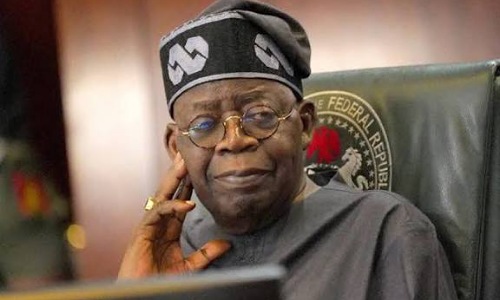
The Social Democratic Party (SDP) and the Inter-Party Advisory Council (IPAC) have disclosed details of their recent closed-door meeting with President Bola Tinubu, explaining that the engagement focused on strengthening Nigeria’s democratic process ahead of the 2027 general elections.
The clarification came amid speculation surrounding the meeting, which took place at the Presidential Villa in Abuja after leaders of several opposition parties attended an Iftar dinner hosted by the president earlier in the week.
ALSO READ: NNPC Secures Tinubu’s Approval for $20bn FID on Bonga Deepwater Project
Speaking during a gathering hosted in Abuja by the SDP’s former presidential candidate, Adewole Adebayo on Friday, the party’s National Chairman, Prof. Sadiq Gombe, said the meeting with Tinubu followed an official invitation from the Presidency and lasted about an hour.
According to Gombe, the discussion centred on the need to strengthen Nigeria’s electoral laws and restore public confidence in the country’s electoral process ahead of the 2027 polls.
He explained that the meeting provided an opportunity for party leaders to remind the president of the importance of conducting transparent, free, and credible elections.
Gombe noted that democracy can only thrive when governments listen to the concerns of citizens and ensure electoral processes that guarantee fairness and accountability.
The SDP chairman also expressed concern over growing voter apathy, pointing to the low turnout recorded in the recent Area Council election in the Federal Capital Territory.
He said the Abuja Municipal Area Council election witnessed only about seven per cent voter turnout, which he described as a clear sign that many Nigerians are losing confidence in the electoral system.
Gombe urged the government and members of the National Assembly to take urgent steps to review electoral laws and rebuild public trust in Nigeria’s democracy.
Also speaking, the National Chairman of IPAC, Dr. Yusuf Dantalle, said political parties used the meeting to raise concerns about aspects of proposed electoral reforms, particularly issues related to indirect primaries and the mandatory electronic transmission of results.
Dantalle explained that the parties appealed to the president to use his influence to encourage legislative review where necessary, noting that reforms should strengthen, rather than complicate, the democratic process.
He expressed optimism that Tinubu would consider the concerns raised and support necessary amendments that would improve the electoral system.
The IPAC chairman also called on the Independent National Electoral Commission (INEC) to strictly adhere to electoral guidelines as preparations for the next election cycle begin.
Earlier in his remarks, Adebayo cautioned political actors against turning the 2027 general elections into a do-or-die contest, stressing that the primary goal of democracy should be the progress and stability of Nigeria rather than personal political victories.
He urged leaders across political parties to encourage citizens to actively participate in the democratic process and ensure that elections are conducted peacefully and transparently.

President Bola Tinubu and Mr. Taiwo Oyedele during his nomination on Wednesday.






Airfares Likely to Rise as Aviation Fuel Price Spikes by 80%

Shell Completes Turnaround Maintenance on FPSO, Resumes Production at Bonga

Sahara Group expands fleet with new 40,000 cbm LPG Carrier

NATO Shoots Down Third Iranian Missile in Turkey

Inside Tinubu’s Closed-Door Meeting With Opposition Leaders – SDP, IPAC Reveal Details

Defections Won’t Break PDP in Sokoto, Says Former Senator Gada

Trump’s Family Unveils New Cryptocurrency Platform

Reps Recommend 3-year Jail Term For Aviation minister

Dangote Cement Lights Up Benue Host Communities With CSR Initiatives

Senate Denies Receiving Petitions Against Tinubu’s Ambassadorial Nominees

Things To Know About Threads, Zuckerberg’s Twitter-like App

849074 707387Yours is actually a prime example of informative writing. I feel my students could learn a good deal from your writing style and your content material. I could share this write-up with them. 354262