
NEWS
Fake Doctor Arrested For Stitching Woman’s Womb & Urinary Tract Together In Ondo


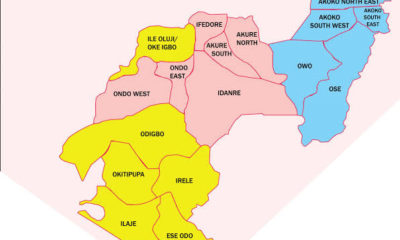
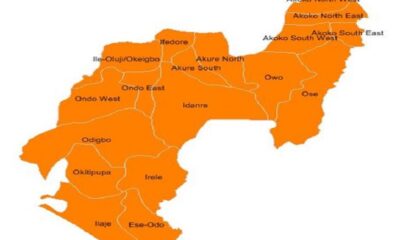
The Ondo State Police Command said it has arrested one Rabiu Olalekan who was allegedly parading himself as a medical doctor in Odigbo Local Government Area of the state before his arrest.
He is among four persons paraded for allegedly participating in criminal activities in the state. The suspects who were arrested over crimes such as murder, vandalism and illegal medical practice include Ebine Adeleke, Aderemi Okiki, Alhaji Magari and Rabiu Olalekan.
Odunlami said, “On December 20, 2022, one Rabiu Olalekan who has been parading himself as a medical doctor of Iremide Private Hospital, Orita Ojo, in the Odigbo Local Government Area was arrested by team of Special Intervention Squad when a report of unprofessionalism was reported against him. The suspect performed caesarean section on a pregnant woman (name withheld) who was later rushed to Mother and Child Hospital due to excessive bleeding from her private parts. It was discovered that the self-acclaimed doctor stitched her womb and the urinary tract together.
“During investigation, it was discovered that the suspect is not a medical doctor but attended School of Health Technology, Ijebu-Ode, Ogun State, where he studied Community Health Extension Work and has been deceiving people that he is a medical doctor. He also claimed that he invited one Dr. Bayo to help him carryout the caesarean section on the victim. But he does not know the address or contact of the said doctor as he said he lost his phone which was the only means of communicating with the doctor.”
The police spokesperson said the suspects would soon be charged to court.








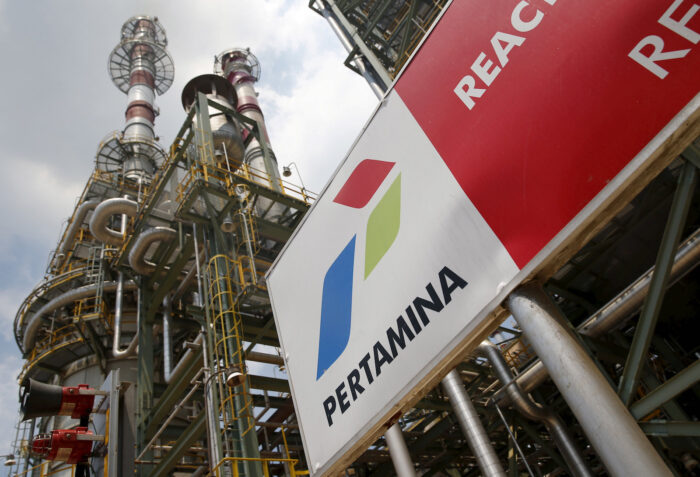
Efforts to attract more foreign participation in Nigeria’s oil industry has seen Pertamina, Indonesia’s state-owned oil company, show strong interest in investing in the 2026 Oil Licensing Round.
Biztellers reports that this has seen strategic meetings between the Nigerian Upstream Petroleum Regulatory Commission (NUPRC) and Indonesia’s Vice Minister of Foreign Affairs, Arif Oegroseno, and Pertamina’s Vice-President, Upstream Business Development, Toriq Abdat.
A statement by the NUPRC Head of Corporate Communications and Media, Eniola Akinkuotu, on Sunday, revealed that the NUPRC Chief Executive, Oritsemeyiwa Eyesan represented Nigeria at the meeting, where investment opportunities in Nigeria and broader cooperation between the two countries as they seek to strengthen energy security and increase domestic oil production were top on the agenda.
READ ALSO: Peter Obi Backs Dangote Refinery IPO, Urges Nigerians to Invest
According to the statement, Eyesan said Nigeria and Indonesia had similar priorities, particularly in energy security, resource utilisation and attracting investment.
The discussions also came against the backdrop of efforts by both countries to increase oil production. Nigeria is targeting three million barrels per day by 2030, compared with current output of about 1.6 million to 1.7 million barrels per day.
Indonesia, which produces about 600,000 barrels per day, is also seeking to increase output and has acknowledged the need to look beyond its domestic fields to meet its energy requirements.
The statement read, “The Nigerian Upstream Petroleum Regulatory Commission has opened discussions with Indonesia on petroleum investments even as the Indonesian national oil company Pertamina signalled an interest in the upcoming 2026 licensing round.”
Explaining Pertamina’s international expansion strategy, Abdat said the company was already seeking opportunities in several countries as declining domestic production and the changing nature of discoveries pushed it to expand abroad.
“We have been given a mandate to expand our business internationally; we are now in other countries outside Indonesia. In Indonesia, we are producing only around 600,000 barrels. We are working on exploration towards deepwater, but we found more gas than oil. That is why we go outside Indonesia, Malaysia, then the Middle East, Iraq and Nigeria,” he said.
Abdat said Pertamina was particularly interested in assets that could deliver production relatively quickly, including existing producing fields and projects close to production.
“We would like to be in projects with governments. Producing assets, or near production, or before FID. Now we are looking at how we can help you reach the 3 million, and also help us provide more energy for our own consumption,” he said.
Responding, Eyesan said Nigeria also had an ambitious production target and was using regular licensing rounds as one of the measures to expand investment and increase output.
“We have very aggressive targets, 3 million barrels per day by 2030, and today we are at 1.6, 1.7. We are committed to the objective and the licensing round is one of the strategies we are utilising,” she said.
The Indonesian delegation noted that it is exploring other opportunities outside crude oil and gas. The national oil company is building a fertiliser plant to reduce its dependence on Middle Eastern supply, and disruptions during the current global conflict.
Food security relates to oil and gas because phosphate and the elements that make fertilizer, the Indonesian delegation said. Nigeria, for its part, is diversifying its own phosphate sourcing, including a long-term transatlantic pipeline project with Morocco to serve West Africa. Nigeria has also simplified fertiliser distribution rules that once ran to about 160 layers of regulation.
Both sides thus agreed to keep the commercial and diplomatic tracks running in parallel.
International News
‘Another Oil Shock Is Coming’ — Badenoch Calls for North Sea Drilling Amid Middle East Supply Disruptions

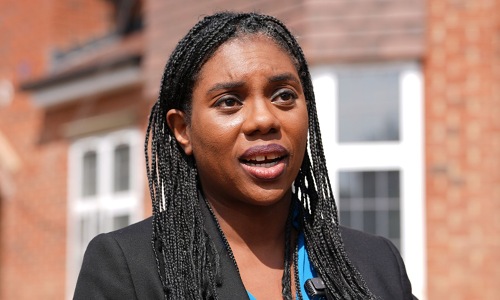
Conservative Party leader Kemi Badenoch has warned that another global oil shock could be looming amid disruptions to key energy infrastructure and shipping routes in the Middle East.
Badenoch made the warning in a post on X on Sunday, September 20, while pointing to the recent drone attack on Saudi Arabia’s East-West oil pipeline, restrictions affecting the Strait of Hormuz and threats to shipping around the Red Sea.
“Saudi Arabia’s East-West oil pipeline has been damaged by drone attacks. The strait of Hormuz is restricted, Houthi bandits threaten shipping routes into the Red Sea. Another oil shock is coming,” Badenoch wrote.
SEE MORE: Middle East Crises Pump Fuel Prices Upwards with Attacks on Iran, Saudi Arabia
She criticised the UK government’s handling of the situation and argued that Britain should increase domestic oil and gas production.
“Yet our Prime Minister and his Cabinet are behaving like a flock of ostriches, heads buried so deep in the sand they could strike oil themselves,” she added.
“The answer is simple: DRILL OUR OWN OIL AND GAS IN THE NORTH SEA.”
Saudi oil pipeline hit by drone attack
The warning comes after Saudi Arabia’s critical East-West oil pipeline was damaged in a drone attack earlier this month.
The 1,200-kilometre pipeline, operated by Saudi Aramco, transports crude oil across Saudi Arabia to the Red Sea port of Yanbu, providing an alternative export route when shipping through the Strait of Hormuz is disrupted.
Saudi officials said the September 11 attack involved drones coming from Iraq. No group had claimed responsibility for the attack in initial reports.
A subsequent Reuters analysis of satellite imagery found that three pumping stations, rather than two previously identified, had been damaged.
Industry sources disclosed that repairs could take between five and six weeks, although partial operations could resume sooner.
The pipeline had been carrying around 4 million to 5 million barrels of crude oil per day, equivalent to approximately 4% to 5% of global oil supply. Its shutdown has therefore raised concerns about additional pressure on already-disrupted global energy supplies.
The attack also affected Saudi oil exports.
Reuters reported on September 18 that Saudi Aramco had informed at least two European refining customers that they would receive no Saudi crude deliveries in October, following the pipeline disruption.
Hormuz and Red Sea disruptions
The pipeline attack has occurred against the backdrop of continuing disruption around the Strait of Hormuz, a major route for global oil shipments.
The East-West pipeline had become particularly important because it allowed Saudi Arabia to move crude to the Red Sea without relying entirely on the Strait of Hormuz. Reuters reported that the pipeline had served as a major alternative route while the strait was largely shut by the ongoing conflict.
Shipping through the Red Sea is also facing renewed security concerns following advances and attacks by Yemen’s Iran-aligned Houthi movement.
According to report on September 17, there is continued tensions involving the Houthis and Saudi Arabia were adding to concerns over regional energy infrastructure and shipping.
Earlier today, there are fresh Houthi claims of missile and drone attacks targeting strategic sites in Riyadh, with the developments contributing to renewed pressure on Saudi and Gulf markets.
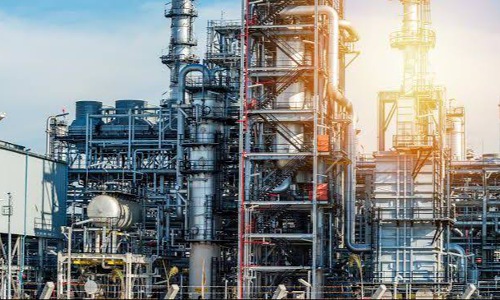
The Arewa Oil and Gas Marketers Association of Nigeria (AROGMA) has challenged the Nigerian Midstream and Downstream Petroleum Regulatory Authority (NMDPRA) over its claim that it does not have the power to determine or influence petrol prices in Nigeria.
AROGMA said the regulator should exercise its statutory oversight responsibilities under the Petroleum Industry Act (PIA), particularly as Nigerians continue to face the impact of rising petrol prices.
The association’s President, Bashir Ahmad Danmalam, made the position known in a statement issued to journalists in Kano on Sunday, September 20, 2026.
ALSO READ: ‘We Don’t Fix Pump Prices’ — NMDPRA Breaks Silence on Rising Petrol Prices
Danmalam said AROGMA participated in the legislative process that produced the PIA and was therefore familiar with the provisions governing the powers and responsibilities of the NMDPRA.
According to him, Section 164 of the PIA gives the regulator oversight functions which should be exercised transparently in the interest of Nigerians.
“Section 164 gives NMDPRA oversight functions, and these must be carried out transparently for the benefit of the people,” Danmalam said.
He added, “The Petroleum Industry Act was not passed in isolation. Stakeholders like AROGMA contributed to its development, and we understand the provisions.”
The association’s position comes days after the NMDPRA clarified that it does not fix the pump price of Premium Motor Spirit (PMS), commonly known as petrol, under Nigeria’s deregulated petroleum market.
The regulator said Section 205(1) of the PIA provides that wholesale and retail prices of petroleum products should be based on unrestricted free-market pricing conditions.
It further explained that Sections 205(2) to 205(4) restrict government intervention in petroleum pricing to exceptional circumstances where there is formal evidence of a declared market failure.
The NMDPRA maintained that no such market failure had been declared and that it therefore does not issue administrative price templates or arbitrarily determine petrol pump prices.
However, the authority also cited Section 216 of the PIA, which empowers it to prevent anti-competitive practices, price-fixing and abuse of market dominance in the petroleum industry.
Reacting to the position, Danmalam said petroleum pricing remained a major concern for marketers and consumers and urged the regulator to acknowledge and exercise its responsibilities within the law.
“The NMDPRA must exercise these powers responsibly and in the interest of Nigerians, rather than denying its mandate,” he said.
He warned that failure to address concerns surrounding petroleum pricing could worsen economic hardship and deepen public distrust in the petroleum sector.
The NMDPRA had said it was “fully sensitive” to the difficulties caused by rising petrol prices and was working to protect consumers and promote fair competition within the existing legal framework.
The authority also disclosed that it was collaborating with the Federal Competition and Consumer Protection Commission (FCCPC) to monitor the petroleum market and investigate practices including price-gouging, collusion and under-dispensing.
AROGMA said the disagreement over the regulator’s role highlights the need for greater clarity and collaboration among government agencies and petroleum industry stakeholders as Nigerians continue to grapple with the impact of petrol prices.






Indonesia’s Pertamina Leads Foreign Interest in Nigeria’s 2026 Oil Licensing Round

Ingentia Energies Focused on Exponential Growth

‘Another Oil Shock Is Coming’ — Badenoch Calls for North Sea Drilling Amid Middle East Supply Disruptions

Petrol Prices: Arewa Marketers Dispute NMDPRA’s Claim It Has No Pricing Powers

ICAN, Police Move to Finalise MoU on Financial Crime Investigation

Police Probe PCRC Chairman Olaniyan Over Alleged ₦178m Financial Crimes

Trump’s Family Unveils New Cryptocurrency Platform

Senate Denies Receiving Petitions Against Tinubu’s Ambassadorial Nominees

Dangote Cement Lights Up Benue Host Communities With CSR Initiatives

Reps Recommend 3-year Jail Term For Aviation minister

Tems Sets New Record On Billboard Hot 100 Chart
