
NEWS
FG Ends NNPC’s Monopoly, Opens Direct Purchase of Petrol From Dangote Refinery

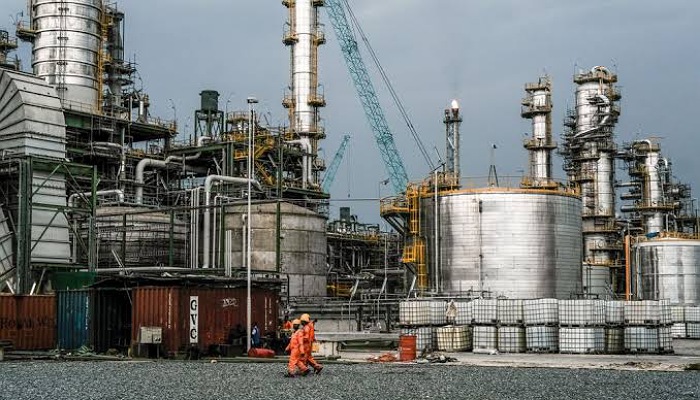
In a landmark move aimed at fully deregulating Nigeria’s downstream oil sector, the federal government has announced that oil marketers can now purchase petroleum products directly from the Dangote Refinery and other local producers, effectively ending the Nigerian National Petroleum Company (NNPC) Limited’s decades-long monopoly as the sole distributor.
The announcement was made on Friday, signaling the government’s resolve to open up the oil market to foster competition and enhance efficiency.
Read Also: BREAKING: Sports Minister Charges Super Eagles To Go For Victory Against Mediterranean Knights
This comes on the heels of the NNPC stepping away from its intermediary role with the Dangote Refinery, allowing for a direct purchase arrangement between marketers and local refineries.
The federal government had already commenced the sale of crude oil to local refineries, including Dangote, in naira as of October 1, an effort to address fuel supply shortages that had been exacerbated by NNPC’s financial challenges.
Under the previous arrangement, Dangote Refinery was only permitted to sell petrol to NNPC in local currency, leaving marketers reliant on the national oil company.
The new policy now enables marketers to bypass NNPC and negotiate directly with refineries for petroleum products.
Wale Edun, Minister of Finance, provided key updates during a post-commencement review meeting of the naira-based crude oil and refined products sale initiative on Thursday.
According to Edun, the initiative is progressing smoothly, in line with directives from the Federal Executive Council (FEC).
He said,“This committee is pleased to report a successful transition in line with the FEC directive. We have established a robust framework for local production and the distribution of crude oil and refined products, all for local consumption in naira.
“With this mechanism fully operational, we are on track to achieving a fully deregulated market for all petroleum products.”
He emphasized that oil marketers are now encouraged to engage in direct commercial negotiations with refineries, a step he believes will increase market competition and drive efficiency across the sector.
The government remains confident that these measures will, in the long run, create a more favorable market for Nigerian consumers.
The federal government’s decision to deregulate the sector comes at a critical time when the country is grappling with petrol shortages and rising energy costs.
By allowing direct purchases from refineries, the government aims to stabilize the supply chain and reduce costs associated with fuel distribution.
Industry stakeholders are now watching closely to see how the deregulated market will evolve and what impact this shift will have on fuel prices and availability for Nigerians.






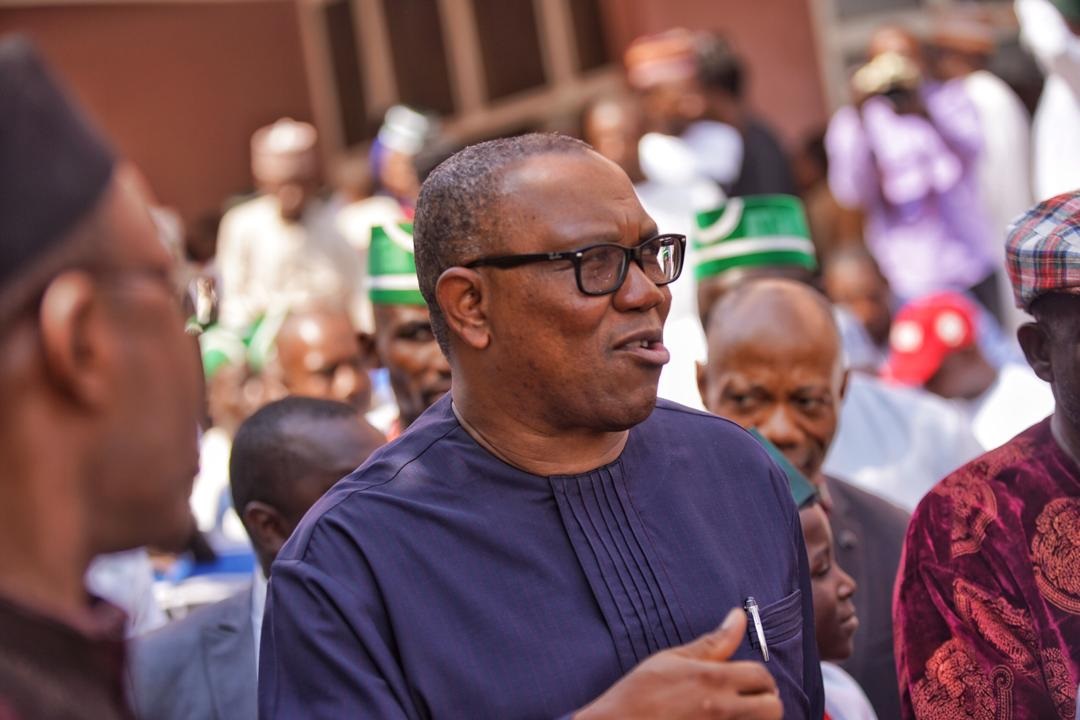

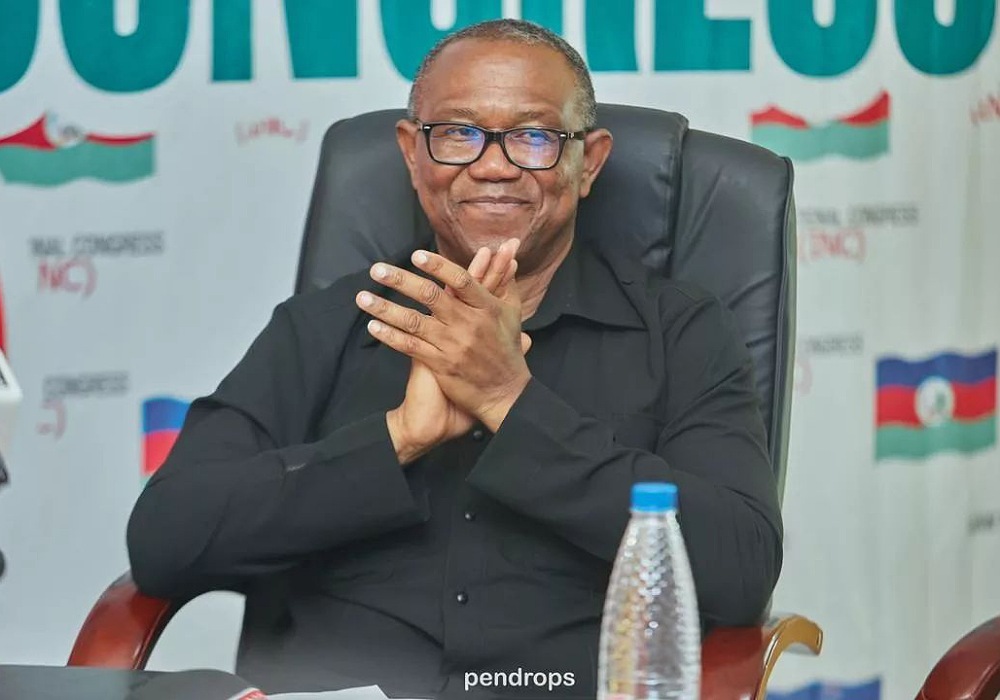
The Anambra State Government has released fresh details challenging former Governor Peter Obi’s claim that he left more than ₦2.13 billion in an ecological fund account before handing over power in 2014.
The state government made the disclosure in a statement released on Saturday, September 26, 2026, titled “Peter Obi’s Debts and Lies: More Questions Than Answers.”
ALSO READ: ‘Obi Knows He Is Lying’ — Soludo Camp Releases Documents on ₦363m Workers’ Arrears Payment
According to the statement, the account number cited by Obi as containing the ecological fund was actually the Anambra State Government’s Internally Generated Revenue (IGR) Consolidated Account.
The government said First Bank, in a letter dated September 16, 2026, confirmed that account 2018779464 was an IGR account and not an ecological funds account.
It further claimed that as of March 17, 2014, the account balance was not close to ₦2 billion and that the account never recorded an inflow or balance of ₦2.13 billion throughout its active period between 2011 and 2018.
The state government consequently questioned the whereabouts of the money Obi said he left as an ecological fund.
The latest development follows Obi’s earlier defence of his administration’s financial record, in which he said the ₦2.13 billion was released for the Oko/Umuchiana erosion control project and was deliberately left for his successor to execute.
Obi had also maintained that the ecological fund was separate from the savings he said his administration left behind.
However, the Anambra Government also challenged Obi’s account of the state’s overall financial position at the time he left office.
It alleged that his handover document highlighted assets and savings while failing to adequately disclose outstanding liabilities.
The government claimed that the document included valuations for incomplete projects such as the Nnewi Shopping Mall, Onitsha Hotel and Agulu Lake Hotel.
It also alleged that a purported ₦10 billion Federal Government refund was included in the stated net balance even though the money had not been received before Obi left office.
On road infrastructure, the government said Obi’s administration had awarded and signed contracts for 101 roads covering 779 kilometres, with outstanding liabilities of about ₦127 billion at the time of handover.
The state government argued that such liabilities should be considered alongside the savings and assets attributed to the administration when assessing the financial position inherited by Obi’s successor.
The fresh statement has therefore reopened questions over the disputed ₦2.13 billion ecological fund and the broader financial position of Anambra State at the end of Obi’s administration.
While the Anambra Government says bank records support its latest position, Obi has continued to defend his administration’s financial record and his account of the ecological fund.
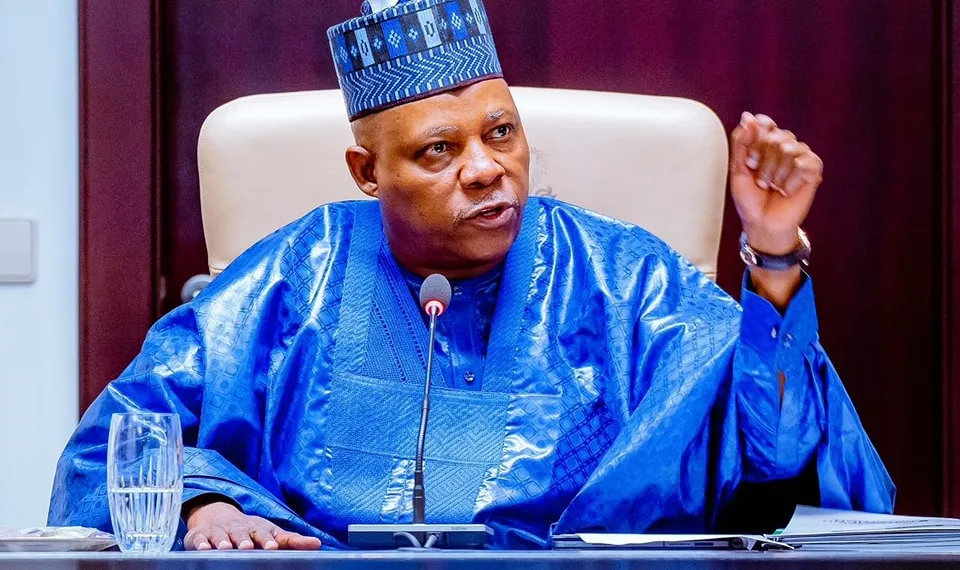
Vice President Kashim Shettima has urged the new leadership of the Economic Community of West African States (ECOWAS) Commission to prioritise regional unity, integration and engagement with the Alliance of Sahel States (AES).
He made the call on Friday in New York, United States, while receiving the new ECOWAS Commission President, General Birame Diop (rtd), and his delegation on the sidelines of the 81st Session of the United Nations General Assembly.
Stanley Nkwocha, Senior Special Assistant to the President on Media and Communications, disclosed this in a statement issued on Saturday, September 26, 2026.
SEE ALSO: ‘A Nation Cannot Escape the Bill’ — Atiku Questions Tinubu’s Third UNGA Absence
Shettima urged the new ECOWAS leadership to prioritise regional integration and build stronger relationships among countries across West Africa.
“Beyond your administrative duties, your leadership of the commission must make deliberate efforts to build bridges of friendship across the sub-region. ECOWAS should be at the forefront of our engagement with emerging blocs in the area such as Alliance of Sahel States (AES).
“I urge ECOWAS under your leadership to champion the cause of regional integration and strengthen the bonds of unity and friendship among our people,” the Vice President said.
He also urged the commission to take private-sector participation seriously in the execution of the Lagos-Abidjan highway project.
Shettima congratulated Diop on his election, noting that he assumed office at a difficult time requiring greater synergy and cohesion among leaders and people of the sub-region.
The Vice President assured the new ECOWAS president of Nigeria’s continued cooperation and support, saying President Bola Ahmed Tinubu remained committed to efforts aimed at transforming the regional body.
“My boss, President Bola Ahmed Tinubu, is a man of honour and conviction who will always support efforts aimed at advancing the transformation of ECOWAS as a regional body, and the progress of the area in general,” Shettima said.
He added that Nigeria would continue to create an enabling environment for ECOWAS to succeed and contribute to the attainment of the vision and objectives set by its founding fathers.
Earlier, Diop commended Nigeria for its role in the establishment and sustenance of ECOWAS, as well as its sacrifices for the stability and prosperity of the sub-region.
He said the commission was facing challenges, including insecurity and lagging development, which required Nigeria’s intervention as a “big brother.”
The ECOWAS president described the organisation as a tool for regional stability that should be encouraged and supported, while urging other countries in the sub-region to cooperate with Nigeria towards achieving inclusive development and a better future for West Africans.
The meeting was attended by Foreign Affairs Minister Bianca Odumegwu-Ojukwu, Minister of Justice and Attorney General of the Federation Lateef Fagbemi (SAN), Nigeria’s Permanent Representative to the United Nations Jimoh Ibrahim and senior officials of the ECOWAS Commission.
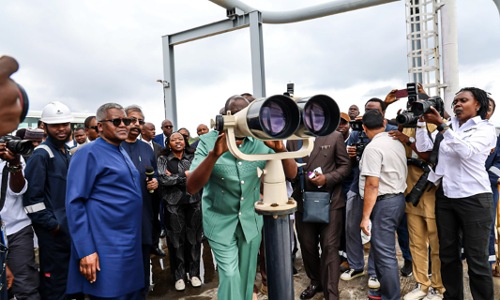
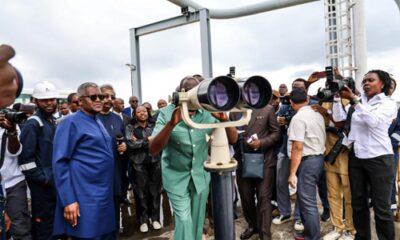
Kenyan President William Ruto on Friday toured the Dangote Petroleum Refinery and Petrochemicals Complex in Lekki, Lagos, where he was hosted by Dangote Group President and Chief Executive Officer, Aliko Dangote.
The visit comes ahead of the planned September 30 groundbreaking of a proposed 700,000-barrel-per-day refinery in Lamu, Kenya, being developed with Dangote.
ALSO READ: Dangote to Support Two Million Women with Refinery IPO Share Ownership
The Dangote Group had earlier confirmed that Dangote would host Ruto during his visit to the Lagos refinery.
The planned Kenyan refinery is expected to expand refining capacity in East Africa and strengthen petroleum supply in the region.
Ruto had earlier said discussions with Dangote and Africa Finance Corporation CEO Samaila Zubairu focused on financing and final preparations for the project.
Dangote is targeting a combined refining capacity of 2.1 million barrels per day through the planned expansion of the Lekki refinery and the proposed Kenyan facility.






‘Peter Obi’s Govt Left 101 Road Projects With ₦127bn Liabilities’, Says Anambra Govt

₦2.13bn Ecological Fund: Anambra Govt Releases Fresh Details on Peter Obi’s Claim

ECOWAS: Shettima Calls For Stronger Unity, Engagement With Sahel Alliance

Warri School Gets Support from NCDMB, Techico

Man City Verdict Puts Trophy-Laden Era Under Fresh Scrutiny As Sanctions Loom

NGX Market Cap Falls to ₦163.65trn As All-Share Index Drops

Trump’s Family Unveils New Cryptocurrency Platform

Senate Denies Receiving Petitions Against Tinubu’s Ambassadorial Nominees

Dangote Cement Lights Up Benue Host Communities With CSR Initiatives

Reps Recommend 3-year Jail Term For Aviation minister

Tems Sets New Record On Billboard Hot 100 Chart
